
India takes Al Jazeera off air in Kashmir map row
JournalismPakistan.com | Published: 22 April 2015
Join our WhatsApp channel
The Indian government has taken Al Jazeera off air for five days due to alleged use of incorrect maps regarding the Kashmir region. This action underscores the continuing censorship issues in India under the current administration.Summary
NEW DELHI: India's government took Al Jazeera news channel off the air on Wednesday for five days after officials insisted it had repeatedly shown wrong maps of disputed Kashmir.
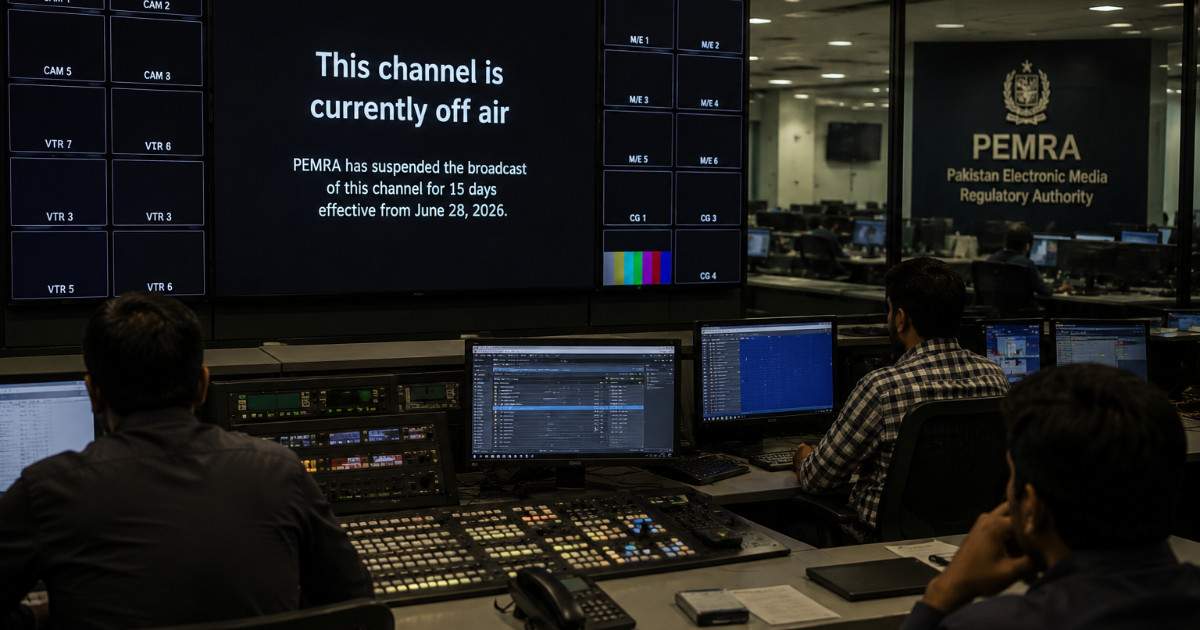
Al Jazeera in India showed a blue screen on Wednesday with a sign saying "as instructed by the ministry of information and broadcasting, this channel will not be available". An official said the order was made earlier this month over the maps that showed parts of the Himalayan Kashmir region in arch rival Pakistan and China, an extremely sensitive issue in India.
"The ban has been imposed for five days and it was done on instructions of an inter-ministerial committee, who took cognisance of an incorrect map of India in which the channel showed parts of Kashmir in Pakistan and China," the official told AFP on condition of anonymity.
The order comes amid a simmering censorship row in India over a series of recent bans that have sparked accusations of a growing climate of intolerance under Hindu nationalist Prime Minister Narendra Modi.
They include a ban on screening a BBC documentary on the fatal gang-rape of a student that sparked mass protests in Delhi.
Al Anstey, managing director of Al Jazeera English, called the ban "a disproportionate response."
"Unfortunately, this is the latest in a series of ongoing issues. Our journalists have not been granted visas for years now," Anstey said in a statement to the media.
"We have though been severely hampered for too long by constraints placed upon us when trying to tell Indian stories to the world," the statement added, urging the information minister to hold talks "that will help us move forward in a constructive way".
According to local media reports, Al Jazeera breached India's broadcasting code over the maps shown in 2014 and 2013 which on some occasions also did not include the Lakshadweep and Andaman islands.
Kashmir is divided between India and Pakistan but both claim the whole of the region and have gone to war twice over its control since partition in 1947.
New Delhi imposes tight restrictions on all printed maps, insisting they show all of Kashmir as being part of India.
The government in 2011 ordered The Economist magazine to cover up a map of disputed borders in Kashmir. The news weekly placed white stickers over a diagram of the borders on 28,000 copies on sale in India.
"Eventually India might realise how idiotic this looks," the magazine's South Asia bureau chief Adam Roberts tweeted over the order against Al Jazeera. - AFP
Key Points
- Al Jazeera banned in India for five days over controversial maps of Kashmir.
- The Indian government insists Kashmir maps must show the entire region as part of India.
- This ban reflects broader censorship issues under Prime Minister Narendra Modi.
- Al Jazeera's managing director described the ban as a disproportionate response.
- Kashmir remains a highly sensitive topic, with historical conflicts between India and Pakistan.
Relevant Topics
Ask AI: Understand this story your way
AI EnabledDig deeper, ask anything — get instant context, background, and clarity.
Disclaimer: This feature is powered by AI and is intended to help readers explore and understand news stories more easily. While we strive for accuracy, AI-generated responses may occasionally be incomplete or reflect limitations in the underlying model. This feature does not represent the editorial views of JournalismPakistan. For our full, verified reporting, please refer to the original article.