.jpg)
Freed reporter Greste vows to fight for colleagues still in Cairo jail
JournalismPakistan.com | Published: 2 February 2015
Join our WhatsApp channel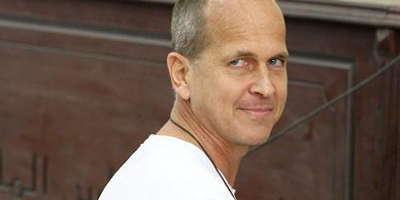
Peter Greste has been released from an Egyptian prison after more than 400 days on charges related to the Muslim Brotherhood. He vows to continue fighting for his fellow journalists, Mohamed Fahmy and Baher Mohamed, who remain incarcerated.Summary
Australian journalist Peter Greste will keep fighting to free his colleagues still jailed in Egypt, his family said Monday, after he was released following more than 400 days in prison on charges of backing the Muslim Brotherhood.
Greste, an award-winning correspondent for Al-Jazeera English television, flew to Cyprus with brother Michael after his release from Cairo's Tora prison on Sunday, Egyptian officials told AFP.
Greste was detained with colleagues Canadian-Egyptian Mohamed Fahmy and Egyptian producer Baher Mohamed in December 2013 for allegedly aiding the blacklisted Brotherhood.
Their arrest sparked worldwide condemnation, with Washington and the United Nations leading calls for their release.
Fahmy's relatives expect him to also be deported under a decree passed by Egypt's President Abdel Fattah al-Sisi that allows for the transfer of foreigners on trial.
His fiancee, Marwa Omara, told AFP in Cairo: "We are expecting Mohamed to be released in the coming days."
Canada said Greste's release was "positive" and that it remained "very hopeful" that Fahmy would also be freed soon.
Greste's family expressed their joy after speaking to Peter on the phone and vowed his colleagues still behind bars would not be forgotten.
"He's not going to forget his two other colleagues," Peter's brother Andrew said after the pair spoke on the telephone.
"He wanted me to pass on to everyone that he won't give up the fight... they are completely innocent as well."
Andrew added: "There's no doubt that his excitement is tempered and restrained and will be until those guys are free."
The Australian's mother, Lois, told a press conference in their hometown of Brisbane: "I'm ecstatic. I just can't say how happy I am about it."
Greste was resting in Cyprus, and father Juris said it was not clear when he would arrive home.
"He is gathering his thoughts for the trip home," said Andrew. "He is safe, healthy, very, very happy to be on his way home."
Andrew expressed relief on Twitter, thanking journalists and others who kept pressure on Egypt.
"Without the worldwide support we could not have got through it. @PeterGreste on his way home," he tweeted.
Australian Prime Minister Tony Abbott spoke of his "personal delight and our nation's relief" at Greste's release.
He also voiced support for a free media and thanked Sisi.
Qatar-based Al-Jazeera also vowed to pursue the campaign to free the other two journalists.
"We will not rest until Baher and Mohamed also regain their freedom," said Mostefa Souag, acting director general of Al-Jazeera Media Network.
The family of Baher Mohamed has pinned their hopes on a presidential pardon or his acquittal on appeal.
Amnesty International said Greste's release should not overshadow the ongoing imprisonment of Fahmy and Mohamed.
"All three men are facing trumped up charges and were forced to endure a farcical trial marred by irregularities," said Amnesty's Hassiba Hadj Sahraoui.
The Committee to Protect Journalists, a media watchdog, welcomed the release and called on Sisi to pardon and free Fahmy and Mohamed "and the other journalists still behind bars for doing their work". - AFP
Key Points
- Peter Greste released after over 400 days in prison
- He vows to support colleagues still jailed in Egypt
- Calls for their release have been made globally
- Canadian-Egyptian Mohamed Fahmy expected to be released soon
- Al-Jazeera continues its campaign for the other journalists' freedom
Relevant Topics
Ask AI: Understand this story your way
AI EnabledDig deeper, ask anything — get instant context, background, and clarity.
Disclaimer: This feature is powered by AI and is intended to help readers explore and understand news stories more easily. While we strive for accuracy, AI-generated responses may occasionally be incomplete or reflect limitations in the underlying model. This feature does not represent the editorial views of JournalismPakistan. For our full, verified reporting, please refer to the original article.