
Free media, a free enterprise
JournalismPakistan.com | Published: 5 January 2014 | Fakiha Hassan Rizvi
Join our WhatsApp channel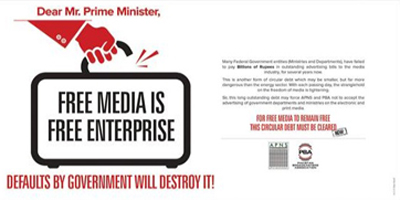
An advertisement in Dawn highlights the impact of unpaid government advertising debts on media freedom in Pakistan. The piece urges immediate action to resolve the issue to ensure a free media landscape.Summary
While sifting through the pages of Sunday's Dawn newspaper (January 5, 2014), I came across an advertisement on Page 4 that delivered a profound and thought-provoking message. Apparently, it seemed to be a “begging letter” with a threatening tone to the Prime Minister, which went on as follows:
Dear Mr. Prime Minister
Many federal government entities (Ministries and Departments), have failed to pay billions of rupees in outstanding advertising bills to the media industry, for several years.
This is another form of circular debt which may be smaller, but far more dangerous than the 'energy sector'. With each passing day, the stranglehold on the freedom of media is tightening.
Sir, this long outstanding debt may force the All Pakistan Newspapers Association (APNS) and the Pakistan Broadcasting Association (PBA) not to accept the advertising of the government departments and ministries on the electronic and print media.
FOR FREE MEDIA TO REMAIN FREE THIS CIRCULAR DEBT MUST BE CLEARED (NOW!)
APNS, PBA
If the claim is valid then it implies that most of the “paid content” by the government is being advertised without receiving payments. This is an alarming scenario for the media that is “commercially-driven” and heavily banks on the money from the advertisers (be it the government or any other private enterprise). According to Aurora (Pakistan’s leading advertising and publication industry), the share of television in the total ad spend was 58% (Rs 18.6 billion) in 2011. Recently, government auditors have expressed resentment over the Rs 3.15 billion spent by the former, PPP-led government to promote the Benazir Income Support Program (BISP). However, the incumbent government of the PML-N shouldn't remain oblivious to the hefty amount dedicated for the media campaign of Daanish School System (let alone the campaigns promoting Punjab Youth Festival and e-youth initiative).
There is another side to this debate. According to the website of Pakistan Think Tank, corruption in Pakistani media is so rampant that even foreign nations like the US are spending 50 million dollars to buy off media channels. The website further elaborates that “Pakistan television channels are owned by rich individuals and require support of government advertisements to fund them. The first part of the problem wouldn’t be that hard to fix, a simple rule banning majority ownership of papers by individuals and certainly banning the owning of multiple papers. The second problem is systemic but a solution can be found by passage of legislation banning government advertisements from appearing in private TV channels”.
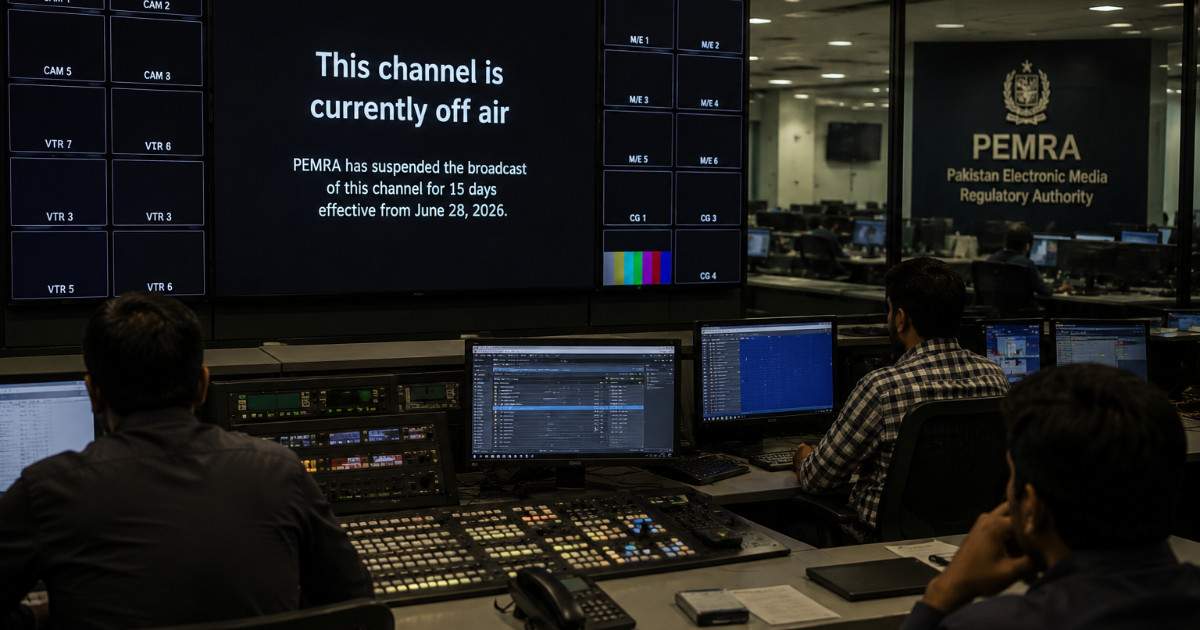
The Pakistan Broadcasting Association along with the All Pakistan Newspaper Society should collaborate with Pakistan Advertisers Society (PAS) and Pakistan Electronic Media Regulatory Authority (PEMRA). A stringent code of conduct needs to be established and implemented (in letter and spirit) in order to regulate government-sponsored advertisements.
However, the underlying meaning of “Free Media” also needs to be redefined in Pakistani context. Media, as an enterprise will inevitably thrive and remain dependent on the advertisers. Therefore, the media is monetarily purported by those who aren't concerned by quality of content being published or broadcast. A free media, on the contrary, struggles and strives to produce quality content that fulfills the “social responsibility” role.
(The writer is a student of Communication Studies at the University of the Punjab and blogs at www.fakihahassanrizvi.wordpress.com).
Key Points
- Unpaid advertising debts threaten media freedom in Pakistan.
- The All Pakistan Newspapers Association (APNS) demands government payment.
- Government advertisements significantly impact media funding.
- Corruption in media influences content quality and independence.
- A robust regulatory framework is needed for government advertising.
Relevant Topics
Ask AI: Understand this story your way
AI EnabledDig deeper, ask anything — get instant context, background, and clarity.
Disclaimer: This feature is powered by AI and is intended to help readers explore and understand news stories more easily. While we strive for accuracy, AI-generated responses may occasionally be incomplete or reflect limitations in the underlying model. This feature does not represent the editorial views of JournalismPakistan. For our full, verified reporting, please refer to the original article.