.png)
Curtailing media's power
JournalismPakistan.com | Published: 25 September 2012 | Ghazanfar Ali
Join our WhatsApp channel
The lifting of the ban on cross-media ownership in Pakistan has allowed significant media concentration, raising concerns about influence on public opinion. Experts argue for amending the PEMRA law to prevent this concentration before the upcoming elections.Summary
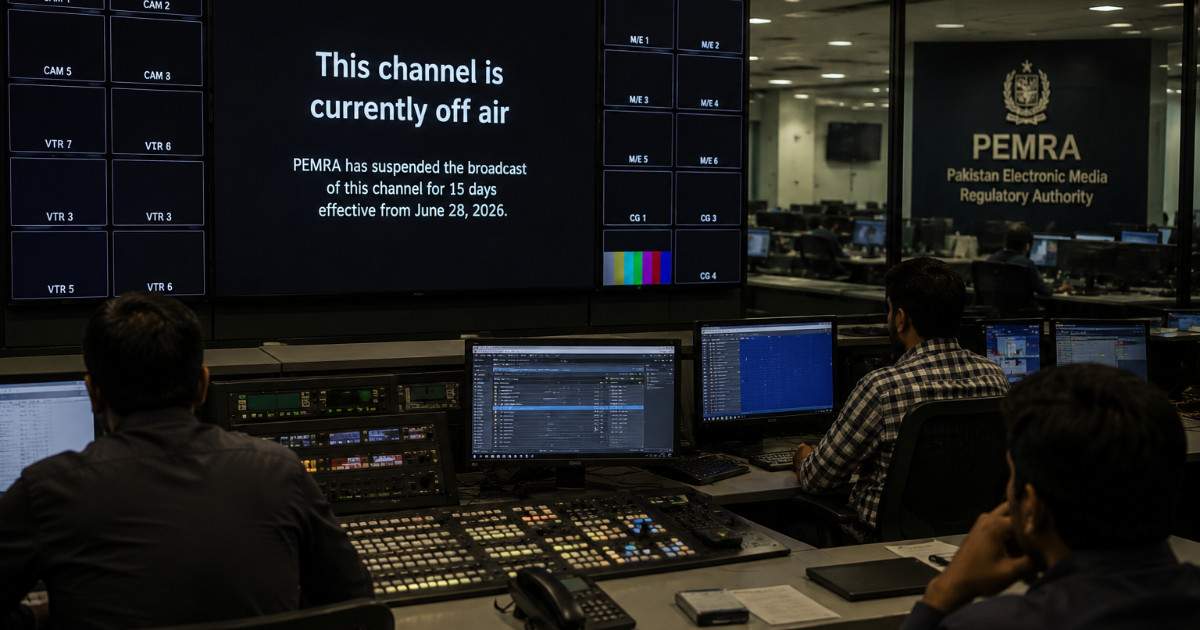
KARACHI: Shaikh Rashid Ahmad takes pride in getting the ban on cross-media ownership lifted, allowing newspaper groups to own also television channels.
The original PEMRA law did not allow cross ownership to prevent concentration of influence. Jang Group, very keen to have television channels, succeeded in persuading Shaikh Rashid to get the law amended. There was opposition in the cabinet but Shaikh had his way and newspapers were allowed to own television channels, and vice versa.
It was believed that Mir Shakil-ur-Rahman wanted to be the Rupert Murdoch of our country, having similar influence on public opinion as Murdoch had in UK.
Other newspaper groups were not keen but had to follow the Jang Group. Soon, all newspaper groups had their channels. The biggest media groups already had several newspapers and now they also own several television channels. As a result, there is great concentration of power. It is a serious problem for the government as well as the people.
Criticism of a government policy is one thing but quite another to pressure it to follow a certain agenda, irrespective of national interest. Jang-Geo, for example have been vigorously promoting American and Indian agenda.
First step
What should be done? As the first step, the government should amend the PEMRA law and disallow cross ownership. The media groups should be asked to choose between electronic and print media within a short period, say three months.
It will be well in time before the general elections, preventing the media groups from influencing heavily the voters. The owners, partners, directors and shareholders of a newspaper must not have any relation with a television channel. Similarly, the employees of one organization should not work for the other.
The media groups will not find it easy to oppose the separation of paper and electronic media. The step will certainly not be against the freedom of media, nor will it be against the interest of the people. Therefore, the government will only need political will to achieve the objective.
Second step
The second step would be to enforce the principle that nobody should own more than one publication or television/radio channel. Any additional publication or channel should be divested through transfer or sale within a specified period. If there are dailies in two or more languages, only one may be retained. Similarly, a daily may no longer own a weekly or monthly magazine.
Third step
The third step should be to require the owner of a publication or a channel not to have any other business or industry, within the country or abroad. In other words, the publication or channel should be his only source of income so that he concentrates all his energy and resources on its operations.
It will prevent him from using his publication or channel for the promotion of his other business interests. If a channel or newspaper suffers financial loss, the owner may be asked to explain how he is covering it. With as many owners as publications and channels, the readers and viewers will have a wide variety of opinions. No owner will have too much influence.
The diversity in media will have a more effective check on the government. It will not be possible to make such a large number of different publications and channels to follow a certain line, nor stop them from having a sharp eye on the government operations.
The wide diversity of ownership will make it difficult for the government or any foreign country or organization to control the media. If an owner gets money, advertisements or some other favor to adopt a certain policy, the rivals will raise hell against him and destroy his credibility. With concentration of media, as at present, there can be an unholy alliance not to criticize each other, whatever anyone does.
(The writer is a Karachi-based media expert. The views expressed by him are not necessarily those of JournalismPakistan.com)
Key Points
- Shaikh Rashid amended PEMRA law to lift cross-media ownership ban.
- Media concentration leads to potential governmental influence.
- Proposed amendments demand separation between print and electronic media.
- Media ownership diversification may enhance accountability and variety.
- Calls for limiting owners to one publication/channel for reduced influence.
Relevant Topics
Ask AI: Understand this story your way
AI EnabledDig deeper, ask anything — get instant context, background, and clarity.
Disclaimer: This feature is powered by AI and is intended to help readers explore and understand news stories more easily. While we strive for accuracy, AI-generated responses may occasionally be incomplete or reflect limitations in the underlying model. This feature does not represent the editorial views of JournalismPakistan. For our full, verified reporting, please refer to the original article.