
Why television broadcasters must rethink their business models
JournalismPakistan.com | Published: 13 July 2026 | Shafaat Yar Khan
Join our WhatsApp channel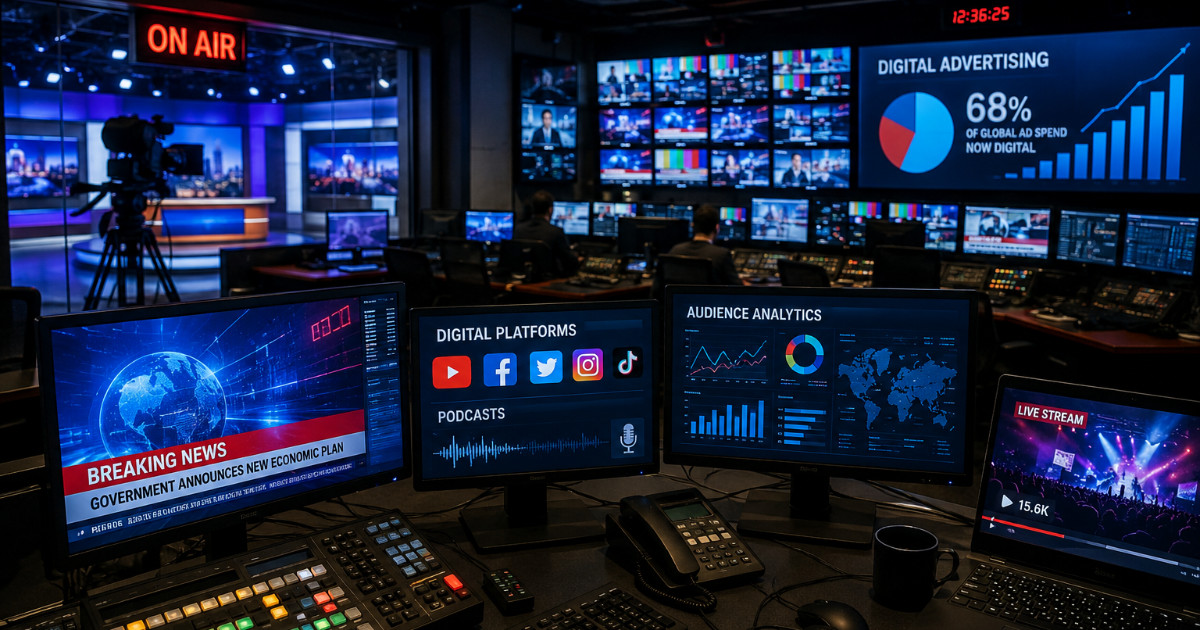
Television broadcasters in Pakistan and comparable markets face shrinking ad revenues, rising costs and fragmented audiences as viewers migrate to digital and OTT services. They must diversify revenue, adopt digital distribution and cut costs.Summary
Television broadcasting still commands prestige across Pakistan and many emerging markets, but prestige no longer guarantees commercial success. As advertising shifts to digital platforms and revenue models evolve, broadcasters face a defining challenge: build resilient, diversified businesses or risk becoming casualties of a rapidly changing media landscape.
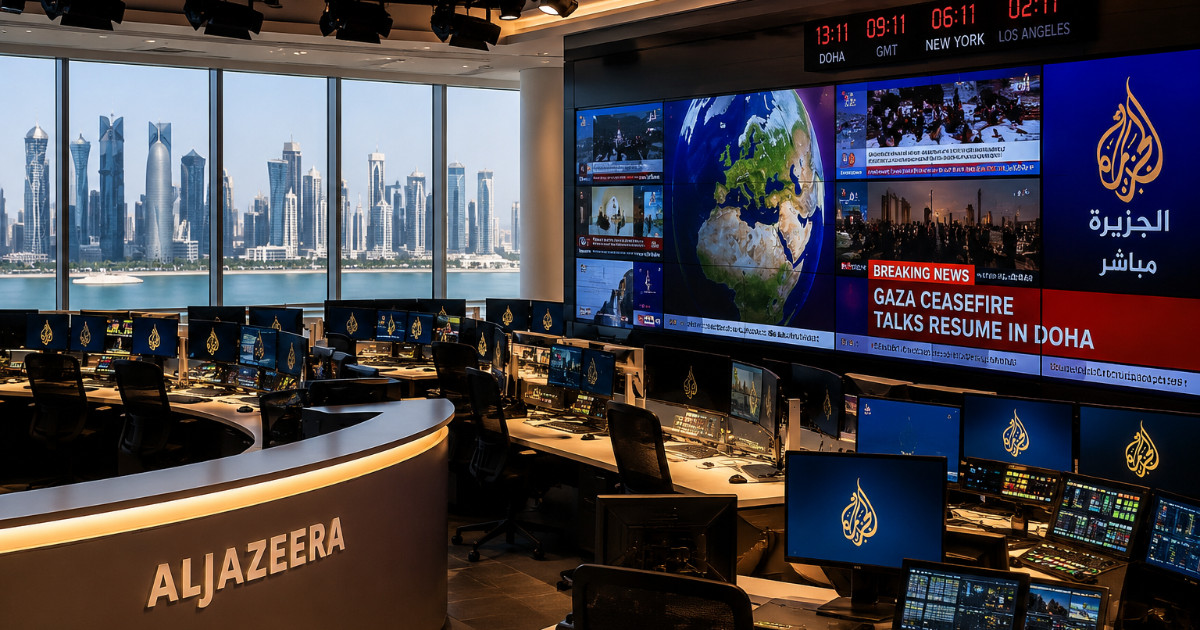
For decades, television broadcasting in Pakistan and across much of South Asia, Africa, and parts of the Middle East has represented far more than a commercial enterprise. Owning or operating a television channel has often been associated with influence, visibility, and public stature. News studios, prominent anchors, political talk shows, and nationwide reach have combined to create an image of prestige that has attracted investors, entrepreneurs, and politically connected business groups alike.
Yet beneath this aura lies a commercial reality that has become increasingly difficult to ignore. Across many emerging media markets, television is confronting structural pressures that challenge long-held assumptions about profitability and growth. Rising operating costs, fragmented audiences, declining advertising shares, and fierce competition from digital platforms have fundamentally altered the economics of broadcasting.
The question facing broadcasters today is no longer how to launch another television channel, but how to build one that can survive in an increasingly competitive, technology-driven media environment.
Prestige does not guarantee sustainability
The history of broadcasting in emerging markets is filled with ambitious launches backed by significant financial resources. New studios have opened with state-of-the-art equipment, experienced presenters, and extensive promotional campaigns designed to capture audiences quickly.
However, many of these ventures have struggled to sustain operations beyond their initial years.
This pattern has been evident across Pakistan as well as markets in the Gulf, the Balkans, and Africa. Entire media hubs that once buzzed with activity now house channels operating with reduced staff, scaled-back programming, or, in some cases, empty studios after broadcasters quietly ceased operations.
The underlying problem is often remarkably consistent. Business plans frequently assume optimistic audience growth, strong advertising demand, and relatively stable economic conditions. Those assumptions rarely survive prolonged exposure to market realities.
Research by the Project Management Institute (PMI) illustrates a challenge that extends well beyond the media industry. Recent PMI studies have highlighted a persistent execution gap across organizations undertaking major strategic initiatives, with many projects failing to deliver their intended business value despite substantial investment. The findings underscore an important lesson for broadcasters: launching a channel is only the beginning. Long-term success depends on disciplined execution, continuous adaptation, and the ability to respond to changing market conditions rather than simply meeting initial launch objectives.
For broadcasters, this means recognizing that television is not merely an infrastructure project. Licences, transmitters, studios, and production equipment are necessary investments, but they do not create sustainable businesses on their own.
Successful broadcasting depends on understanding audiences, consistently producing compelling content, maintaining operational efficiency, investing in digital capabilities, and developing revenue streams that extend beyond conventional advertising.
Pakistan's advertising dilemma
Pakistan's television industry illustrates many of these structural challenges.
While the country continues to support a vibrant broadcast sector, revenue generation remains heavily concentrated among a relatively small group of advertisers. Government advertising has historically played an important role in sustaining many broadcasters, particularly smaller channels with limited commercial reach.
According to information presented before Pakistan's National Assembly and later reported by local media, the federal government spent more than Rs9.28 billion on television, print, and digital advertising between July 2024 and March 2026. Such expenditure provides important liquidity to media organizations, particularly during periods of economic uncertainty.
At the same time, dependence on a limited pool of institutional advertisers creates an inherent commercial vulnerability.
When a significant share of industry revenue originates from government departments or a handful of major corporations, broadcasters become more exposed to policy changes, economic downturns, budget reductions, or shifts in political priorities. Revenue volatility can emerge rapidly, leaving organizations with limited financial flexibility.
The challenge extends beyond commercial risk.
Across many emerging markets, industry observers have long noted that financial dependence can indirectly influence editorial decision-making. Direct interference is not always necessary. Instead, structural dependence may encourage greater caution in editorial choices, programming priorities, or investigative reporting, particularly where advertising relationships are commercially significant.
This dynamic has been debated in Pakistan for many years, but it is far from unique.
A challenge shared across emerging markets
Broadcasters in India, Bangladesh, several Middle Eastern countries, and parts of Africa operate within similarly concentrated advertising ecosystems. Government agencies, state-owned enterprises, large conglomerates, and politically influential businesses often account for a substantial share of advertising expenditure.
These markets experience comparable cycles of vulnerability. During periods of economic slowdown or political transition, advertising budgets are frequently among the first expenditures to be reduced, redirected, or delayed.
The result is an industry that remains highly sensitive to external developments over which broadcasters have little control.
Even mature media markets demonstrate that editorial independence and commercial sustainability exist in constant tension.
The relationship between major American broadcasters and the administration of President Donald Trump illustrated how political pressure, audience expectations, shareholder interests, and advertiser considerations can simultaneously influence strategic decisions within media organizations. Although editorial approaches differed across networks, the broader lesson remained consistent: no broadcaster operates entirely outside commercial or political realities.
The difference is that many established international media organizations have spent years diversifying their revenue models, reducing dependence on any single source of income.
The advertising landscape has fundamentally changed
Perhaps the most significant transformation affecting broadcasters is the redistribution of global advertising expenditure.
For decades, television dominated advertising markets because it offered advertisers the most efficient way to reach mass audiences. That advantage has steadily eroded.
Digital platforms now command an increasing share of global advertising investment. Companies including Google, Meta, Amazon, ByteDance's TikTok, and major streaming services have fundamentally reshaped how advertisers allocate budgets. Rather than purchasing broad audience exposure, advertisers increasingly seek precision targeting, measurable performance, detailed audience analytics, and flexible campaign optimization.
Industry forecasts from organizations including GroupM and WARC indicate that digital advertising now accounts for well over two-thirds of global advertising expenditure, with television's share continuing to decline in many mature markets.
This transition represents more than a technological shift.
It reflects a fundamental change in advertiser expectations.
Modern advertisers increasingly expect campaigns to deliver measurable returns, real-time performance data, sophisticated audience segmentation, and continuous optimization. Traditional television continues to offer scale and credibility, but those strengths alone are no longer sufficient to secure advertising budgets that increasingly demand accountability and measurable outcomes.
For broadcasters in Pakistan and similar markets, this transformation cannot be viewed as a temporary disruption. It represents a permanent restructuring of the media economy.
Reinvention is no longer optional
For television broadcasters, responding to these changes requires more than expanding their presence on social media or launching a mobile application. It demands a fundamental rethinking of what a media organization is and how it creates value.
The traditional model of producing content solely for scheduled television broadcasts is giving way to a multi-platform approach. Today's audiences consume news and entertainment across websites, streaming services, YouTube, podcasts, newsletters, mobile apps, connected televisions, and social media platforms, often moving seamlessly between them throughout the day.
To remain competitive, broadcasters must evolve into integrated content organizations capable of serving audiences wherever they are. Television remains an important distribution channel, but it is increasingly just one component of a broader digital ecosystem.
This evolution also requires a corresponding transformation in revenue generation.
Advertising will continue to play a central role, but relying on advertising alone has become increasingly risky. Broadcasters that successfully diversify their income are likely to be better positioned to withstand economic volatility and changes in advertising markets.
Potential revenue streams include branded content, sponsorships, live events, content licensing, production services, educational and training initiatives, research products, digital subscriptions, membership programs, and partnerships with technology platforms. Each contributes to reducing dependence on a single source of income while strengthening long-term financial resilience.
Diversification is no longer a strategic advantage. It is becoming a prerequisite for survival.
Lessons from international media
Many of the world's leading media organizations have spent years adapting to this new reality.
The BBC has expanded well beyond traditional broadcasting through BBC Studios, international content licensing, digital products, podcasts, educational services, and commercial partnerships. CNN has strengthened its digital presence with subscription products, newsletters, streaming initiatives, and premium journalism aimed at audiences consuming news across multiple devices.
Bloomberg has built one of the most diversified media businesses in the industry by integrating journalism with financial data, research, events, television, radio, podcasts, newsletters, and subscription-based information services. Its success illustrates how media organizations can create sustainable businesses by delivering specialized value rather than relying solely on advertising.
Although Pakistan's media landscape differs significantly in scale and resources, the strategic lesson remains relevant. Sustainable growth increasingly depends on building multiple audience relationships and multiple revenue streams rather than concentrating resources on a single broadcasting platform.
Planning for uncertainty
Another recurring weakness across many emerging broadcasting markets is inadequate feasibility assessment before launch.
Television channels are often established on the assumption that audience growth will be rapid, advertising demand will remain strong, and operating costs will remain manageable. Business plans frequently reflect optimistic scenarios while paying insufficient attention to downside risks.
Robust planning requires a more disciplined approach.
Broadcasters should evaluate how their business models would perform if audience growth is slower than expected, advertising markets weaken, inflation increases production costs, or currency depreciation raises the price of imported technology and equipment. They should also consider how changes in regulation, technology, or consumer behavior could affect long-term sustainability.
Stress-testing business models against adverse scenarios is standard practice in many industries. It should become equally routine in broadcasting.
The objective is not to eliminate risk, which is impossible, but to ensure organizations remain resilient when markets inevitably change.
Content remains the strongest competitive advantage
Technology continues to transform media distribution, but one principle has remained remarkably consistent: audiences ultimately choose content they trust and value.
High-quality journalism, compelling storytelling, credible reporting, investigative work, thoughtful analysis, and original programming remain the foundations upon which sustainable media organizations are built.
Investment in studios and technology can improve production quality, but it cannot substitute for editorial excellence.
As audiences gain access to an ever-expanding range of content choices, broadcasters that consistently produce distinctive, reliable, and relevant journalism are more likely to build lasting audience loyalty. That loyalty, in turn, strengthens opportunities for subscriptions, memberships, sponsorships, events, and other forms of audience-supported revenue.
In a crowded media environment, trust has become one of the industry's most valuable commercial assets.
The next chapter for television
Despite the challenges confronting the industry, the outlook for broadcasting is not one of inevitable decline.
Demand for credible journalism, timely information, trusted news brands, and quality entertainment remains strong. What has changed is the commercial framework through which that value is created, distributed, and monetized.
The era when a television licence, modern studio, and steady flow of advertising could sustain a broadcaster for years is rapidly fading. Success increasingly depends on innovation, financial discipline, technological adaptability, and a deep understanding of evolving audience behavior.
For Pakistan, the transition carries particular significance. The country's television industry has played a central role in shaping public discourse, informing citizens, and reflecting national life for decades. Ensuring its long-term sustainability is therefore not simply a commercial challenge but also an important consideration for the broader information ecosystem.
The broadcasters that thrive over the next decade are unlikely to be those with the largest studios or the greatest number of channels. They will be the organizations that combine editorial credibility with commercial resilience, embrace digital transformation without abandoning journalistic values, and build businesses capable of adapting to constant change.
In the end, broadcasting should no longer be viewed primarily as a symbol of prestige or influence. It is a complex, highly competitive, data-driven business that rewards innovation, disciplined management, and sustained investment in audiences.
Visibility may still attract attention. Sustainability is what will determine survival.
WHY THIS MATTERS: The commercial pressures facing broadcasters are reshaping journalism worldwide. For media organizations, long-term success will increasingly depend on diversifying revenue, strengthening audience trust, and adapting to changing news consumption patterns rather than relying on traditional advertising models alone.
ABOUT THE WRITER: Shafaat Yar Khan is Head of Global Media Operations and a former Al Jazeera executive with more than two decades of experience in international broadcasting. He has played a leadership role in launching five television channels across Europe and the Middle East, specializing in media operations, strategic partnerships, regulatory negotiations, and global broadcast development. He is also a special correspondent for JournalismPakistan.com in Sydney.
PHOTO:
Key Points
- Prestige no longer ensures profitability for broadcasters in emerging markets.
- Advertising revenue is shifting to digital and OTT platforms, fragmenting audiences.
- Rising operating costs and competition strain traditional channel economics.
- Broadcasters must diversify income through subscriptions, events and digital products.
- Cost control, digital integration and new distribution models are key to sustainability.
Key Questions & Answers
Why are television broadcasters losing revenue?
Advertising budgets are moving to digital and OTT platforms, audiences are fragmenting and operating costs remain high, squeezing traditional TV revenue models.
What revenue options can broadcasters explore?
Channels can diversify with subscriptions, paywalls, branded content, events, licensing and digital products or services alongside advertising.
How can digital strategies help traditional broadcasters?
Digital distribution and on-demand offerings help retain viewers, open data-driven monetisation, and create new revenue channels beyond linear advertising.
Do broadcasters need to change newsroom operations?
Yes. Efficiency measures, cross-platform content, audience analytics and investments in digital skills can reduce costs and improve reach without harming journalism.
Relevant Topics
Ask AI: Understand this story your way
AI EnabledDig deeper, ask anything — get instant context, background, and clarity.
Disclaimer: This feature is powered by AI and is intended to help readers explore and understand news stories more easily. While we strive for accuracy, AI-generated responses may occasionally be incomplete or reflect limitations in the underlying model. This feature does not represent the editorial views of JournalismPakistan. For our full, verified reporting, please refer to the original article.