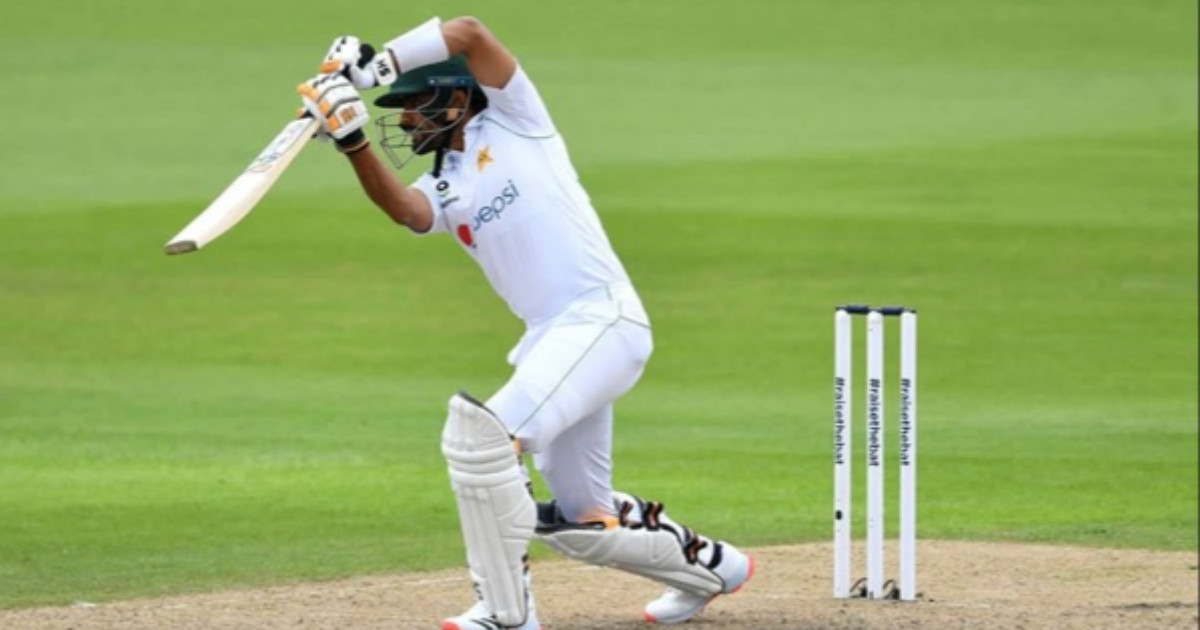

Virat Kohli: The modern blueprint for ODI batting excellence
JournalismPakistan.com | Published: 28 July 2026 | Dr. Nauman Niaz (TI)
Join our WhatsApp channel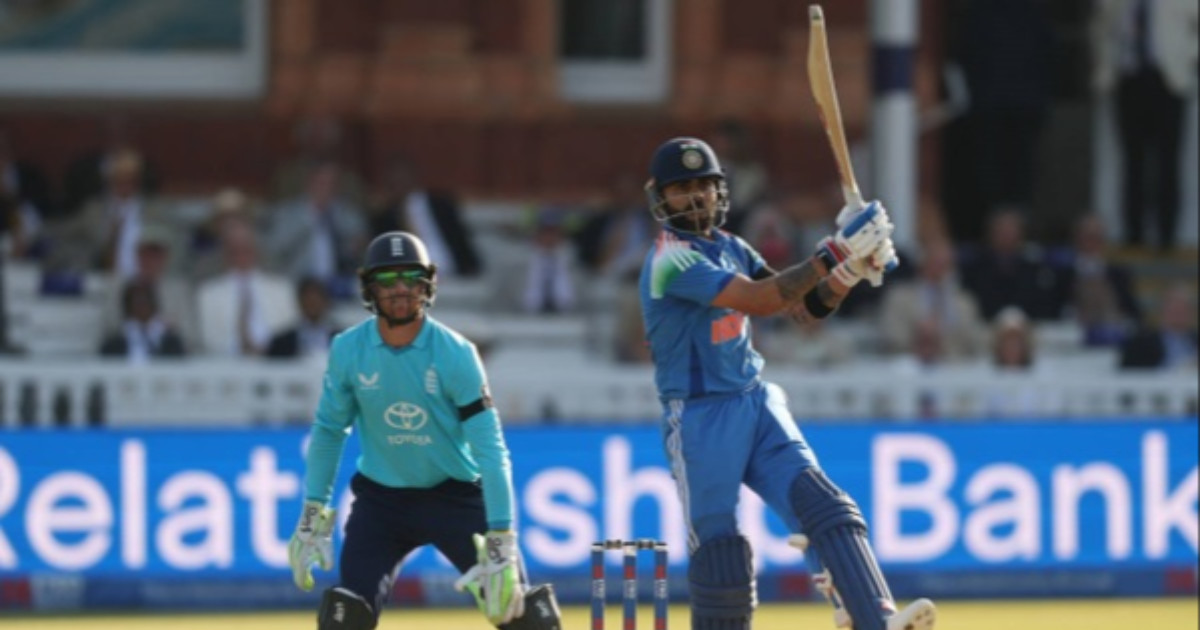
Virat Kohli's career shows a modern ODI batsman whose drive forged a precise, minimalist technique and disciplined method. Across nearly two decades he converted appetite into consistent scoring, placing him among the limited-overs game's all-time elite.Summary
There is a species of batsman who arrives at the crease already convinced of his own inevitability, and cricket has produced perhaps three or four of them in its long, garrulous history. Virat Kohli belongs among them, but he belongs there by a route entirely his own, not the languid, aristocratic inevitability of a batsman for whom greatness always seemed a birthright politely accepted, but the harder-won, more combustible inevitability of a man who appears, even now, to be perpetually proving something, to himself before anyone else, in every innings he plays.
To watch Kohli bat, across the near two decades since a stocky, street-smart Delhi boy first walked out to open for an Under-19 India side, is to watch hunger rendered into technique, appetite disciplined into method, and method, in turn, disciplined into a body of work that now sits, by any reasonable actuarial reading of the modern game's run-scoring record, at or near the very summit of what batsmanship in coloured clothing has ever achieved.
A batting technique built on precision, not power
Kohli's batting technique is, at its foundation, an argument against excess. Where the era that raised him, the T20 age, with its manufactured trigger movements and its premeditated aerial ambition, has tended to reward batsmen who generate power through length of lever and violence of backlift, Kohli has built his entire method on the opposite principle: minimalism married to precision. His stance is unfussy, weight evenly distributed, hands soft on the handle rather than gripped for immediate violence; his backlift is short and controlled, rising barely to the height of the stumps before it begins its descent, a deliberate refusal of the flourish that so many of his contemporaries permit themselves. This compactness is not aesthetic preference; it is biomechanical insurance. A shorter backlift reduces the total distance the bat must travel from the top of its arc to the point of contact, which in turn reduces the margin for timing error and allows a later, more information-rich decision on length and line, the same principle of an extended "decision window" that governs elite bat-ball interception in every fast-ball sport, but exploited here through economy of movement rather than through stillness of head alone, though Kohli possesses that too, his eyes and his nose remaining locked over the ball with a steadiness that coaches the world over now use as visual reference footage for aspiring batsmen.
The biomechanics behind Kohli's iconic cover drive
The signature stroke and every truly great batsman is eventually reduced, however unfairly, to a signature stroke is the cover drive, and it rewards close biomechanical study precisely because it looks so effortless. Kohli's cover drive is built on an exceptionally full extension of the front leg toward the pitch of the ball, a head that arrives ahead of the front knee at the point of contact, and a bat swung down a line so close to true vertical that the ball is met with the full face rather than an angled one, sending it not only through the covers but along the ground with a flatness of trajectory that speaks to near-perfect timing of bat-speed against ball-speed. What separates this from a merely correct cover drive and there are, in truth, hundreds of correct cover drives played in professional cricket every single day is the transfer of weight through the shot: Kohli's front foot plants not tentatively but with full commitment, his hips rotating open just ahead of his shoulders in that same proximal-to-distal kinetic sequencing that governs every efficient striking action in sport, so that the bat arrives at the ball not decelerating, as an over-committed or poorly balanced drive so often does, but still accelerating through the point of contact, the follow-through completing high and wrapped rather than checked. It is a shot that, filmed at high frame rate and broken into its constituent joint angles, would satisfy a biomechanics laboratory as readily as it satisfies a purist in the stands.
A technique designed for longevity
Behind the square, his method reveals the same philosophy translated into a different register. The back-foot punch through point and the paddled work square of the wicket both depend on a base that stays remarkably still through the stroke, knees flexed, weight low, the kind of grounded stability that allows late adjustment to bounce and seam movement without the head drifting off the ball's true line. Against spin, particularly on the increasingly slow and turning surfaces that have come to define subcontinental white-ball cricket, Kohli's game is built on soft hands and a willingness to use his crease coming forward to smother length before it can grip and turn, or rocking back to cut behind square when width is offered rather than the aggressive, pre-committed stride that leaves lesser players exposed to sharp turn or bounce. It is, in sum, a technique built for permanence rather than manifestation, engineered to survive the accumulated overs that a great one-day innings requires rather than merely to decorate a highlights package.
The science of the perfect run chase
If technique is the raw material of Kohli's batting, method is what he has built from it, and nowhere is that method more thoroughly examined, more relentlessly interrogated by statisticians and opposition analysts alike, than in the phenomenon of the successful run chase, the discipline in which Kohli has, across a career now spanning well over three hundred one-day internationals, constructed a case for being not only one of the format's great batsmen but, on the specific evidence of the chase, arguably the single most complete run-chaser the fifty-over game has produced. The numbers are, by this stage, almost too large to be fully absorbed in a single reading: more centuries scored in successful and near-successful run chases than any other batsman in the format's history, a chasing average that dwarfs even his extraordinary career average, and, the statistic that captures the underlying method most precisely, an almost measured relationship between the required run rate and Kohli's own scoring rate across the middle overs of a chase, a relationship so consistent across different grounds, different oppositions, and different eras of bowling attack that former players and commentators have taken, without much exaggeration, to describing his chasing as an act of applied mathematical calculations rather than just batting.
The method itself is built on a refusal to panic that is, on inspection, not really a psychological trait at all but a tactical one: Kohli treats a run chase as a problem to be solved in segments rather than a target to be feared in its totality, breaking two hundred and eighty required off fifty overs into a series of smaller, manageable sub-targets, ensuring the required rate never climbs beyond a threshold he can comfortably clear with the batting still to come, protecting wickets in the first fifteen overs with the discipline of a Test match opener, accelerating through the middle overs against the part of the bowling attack he has identified, through preparation as thorough as any modern cricketer's, as the weakest link, and reserving his most explosive hitting for the final overs, when field restrictions and bowler fatigue combine to offer the highest expected return on aggression. This is not instinct; it is method dressed as instinct, the product of a mind that studies the game with the same intensity it once studied its own technical flaws, and it is why Kohli, alone among his era's batsmen, has earned the informal title of ‘the chase master’, a title that, unlike so much modern cricketing hyperbole, is entirely earned by the underlying data.
The records that define Virat Kohli's greatness
It is worth setting the full ledger down plainly, for the scale of it resists casual summary. Kohli holds the record for the most centuries in one-day international cricket, having overtaken Sachin Tendulkar's long-standing mark and continued to extend it into his late thirties with a hunger that shows no statistical sign of abating; his ODI average sits among the highest ever recorded by a batsman with more than ten thousand runs in the format, a number rendered still more remarkable by the era of flat pitches, shortened boundaries, and bowler-hostile regulations in which the greater part of his career has been played, an era in which one might expect record-breaking to be cheapened rather than made harder, and yet Kohli's numbers have continued to separate themselves from the pack rather than just keep pace with it. In Test cricket, the format he only recently retired from after leading India through one of its most successful periods as a red-ball nation, he leaves behind thirty centuries, a 254 not out as his highest score, and more double centuries than any other Indian batsman in the format's history, a record built not just on flat, docile home surfaces but substantially on the back of era-defining tours of Australia and England, the traditional graveyards of Indian batting, in which Kohli scored with an authority that changed, in real time, the way visiting Indian batsmen were expected to perform overseas.
In T20 International cricket, a format in which his volume of scoring was necessarily lower given its brevity, he nonetheless leaves behind the format's highest individual score by an Indian batsman in a chase for the ages and a strike rate, across a body of work spanning a full decade and a half, that combines control and acceleration in a ratio matched by vanishingly few of the format's specialist hitters. Taken together, Test, ODI, and T20I centuries combined, his tally of international hundreds trails only Sachin Tendulkar's in the entire history of the game, an extraordinary statement for a batsman who, unlike Tendulkar, built the greater share of his volume in an era of vastly more international cricket, more travel, more scrutiny, and less forgiveness for extended lean patches.
Virat Kohli vs. Viv Richards: Comparing two ODI legends
The comparison to Vivian Richards is, in cricketing conversation, almost unavoidable, and it is worth engaging with it seriously rather than dismissing it as mere generational nostalgia, for the comparison illuminates something genuine about what has changed, and what has not, in the art of destructive batting. Richards batted with an aura that was itself a weapon, the swagger of the walk to the crease, the refusal of a helmet long after it had become standard, the calculated contempt with which he would allow a rank long-hop to sail past outside off stump rather than demean himself by hitting it too early in an innings and there is no serious argument to be made that any batsman since, Kohli included, has matched the sheer, era-defining psychological intimidation that Richards exerted on opposition bowling attacks armed with some of the most fearsome fast bowling the game has ever assembled. That much belongs to Sir Vivian Richards alone, a product of his time, his team, and his singular temperament, and it would be both historically careless and unnecessary to claim otherwise.
But intimidation and completeness are not the same exchange, and it is here that the case for Kohli's superiority, made carefully rather than reflexively, begins to acquire real substance. Richards played in an era of substantially less international cricket, against a narrower band of opposition, under fielding restrictions, bat technology, and fitness standards that bear little resemblance to the hyper-professionalised, endlessly scouted, video-analysed environment in which Kohli has operated for the whole of his career; Richards's career ODI average, extraordinary for its time, sits meaningfully below the numbers Kohli has posted across a far larger sample of matches and a far more analytically hostile bowling environment, in which every weakness is catalogued, drilled against, and exploited within a single series rather than discovered by trial and error over years.
Where Richards dominated through aura and improvisation, an approach that, however thrilling, was necessarily uneven across matches and conditions, Kohli has dominated through repeatable method, a method built to travel, to survive scrutiny, and to reproduce itself match after match, series after series, continent after continent, with a consistency that the raw statistical record simply cannot support attributing to Richards in equal measure. It is, in the end, the difference between a batsman who made bowlers afraid and a batsman who made bowlers, over an entire era, statistically irrelevant to the outcome of a chase and if forced to choose, on cold evidence rather than romantic inheritance, which achievement more completely defines "the greatest ODI batsman of all time," the record increasingly points toward Kohli, even as it concedes, gladly, that Richards remains the format's most electrifying spirit.
How fitness transformed Kohli into a modern cricket icon
No account of Kohli's batting is complete without an account of the body that sustains it, for Kohli did more than any cricketer of his generation to convert physical fitness from a peripheral virtue into the central organising principle of a modern cricketing career. The transformation from a talented but visibly soft-bodied young batsman in his early international years to a physique of almost unreasonable leanness and muscular endurance sustained now into his late thirties was neither vanity nor accident but a calculated recognition that the format he wished to dominate, one-day cricket, rewards not just bat skill but the capacity to field with full intensity for fifty overs and then bat with unimpaired hand-eye coordination and muscular control deep into a run chase, when fatigue erodes lesser players' technique precisely at the moment the situation demands its fullest expression. His training regimen, built around functional strength, flexibility, and a diet disciplined to a degree that became, in its own right, a subject of national fascination, has kept him competing at the very highest level of fitness testing administered by his national cricket board years beyond the point at which most of his contemporaries began to visibly decline, and it is this fitness, as much as any purely technical attribute, that explains why his hundreds have continued to arrive with undiminished regularity into a phase of his career when history would ordinarily predict decline.
Beyond statistics: Kohli's presence and influence
There is, beyond the biomechanics and the statistics, a quality to Kohli's batting that resists quantification but cannot honestly be omitted: presence. He walks to the crease trailing a charge in the atmosphere that even hardened opposition players have, in unguarded moments, admitted to feeling: a combination of visible intensity, occasional theatrical combativeness with the opposition, and an unmistakable, almost gravitational pull on the attention of every camera in the ground. Where some batsmen achieve stillness by disappearing into the game, Kohli achieves stillness by seeming to absorb the entire occasion into himself, converting the crowd's noise, the situation's pressure, and the bowler's aggression into fuel rather than distraction. It is a quality that has made him, for the better part of fifteen years, not just India's premier batsman but its central cricketing celebrity, a figure whose innings are covered with the breathless attention usually reserved for elections and film premieres, and whose relationship with the spotlight sought, at times combative within it, but never diminished by it has become as much a part of the modern game's cultural furniture as any statistic in his ledger.
Leadership, pressure, and dressing-room dynamics
It would be dishonest, in a phase aspiring to completeness, to omit the periodic friction that has attended Kohli's long relationship with Indian team management, for a career this dominant, sustained across so many changes of coach, captain, and selection committee, was never likely to proceed entirely without conflict. His tenure as captain ended amid reported strain with the coaching staff of that era over matters of team culture and workload management; more recently, speculation over a cooling of communication with the current head coach during a difficult overseas white-ball assignment made headlines, speculation that the team's own batting and coaching staff subsequently moved to characterise as media amplification of ordinary professional distance rather than genuine discord. What can be said with more confidence than any single report allows is this: friction of this kind is close to inevitable for a player of Kohli's stature and longevity, whose standards for himself and, by extension, for those around him, have rarely bent to accommodate comfort over performance, and whose occasional visible frustration on the field has always been more a symptom of that same demanding self-standard than of any deeper institutional rupture. Whatever the precise temperature of any particular dressing-room relationship at any particular moment, it has not, on the evidence of the scoreboard, meaningfully disturbed his batting, which has continued to accumulate centuries with a serenity that suggests whatever storms pass through the dressing room, they do not follow him to the crease.
A renewed focus on ODI cricket
Having stepped back from Test and T20 International cricket, Kohli has, in the manner of a craftsman narrowing his focus to the single discipline in which his particular gifts find fullest expression, concentrated the whole of his remaining international ambition into the one-day format, and the results of that concentration have been, if anything, a rebuke to those who assumed advancing age would blunt his hunger. Centuries have continued to arrive deep into his late thirties, several of them in home series against South African bowling attacks that represent precisely the kind of high-quality, seam-friendly opposition against which his technique has traditionally been tested most rigorously, and his continued selection in India's touring party for the South Africa assignment reflects not sentimental accommodation of a fading great but the same cold selectorial logic that has governed his career throughout: a player still performing at, or extremely close to, the summit of the format does not get left out of a squad building toward the next World Cup cycle, however settled the succession plan around him may otherwise be.
In a batting order in transition, anchored by a new generation of leadership, Kohli's presence offers exactly what method built over two decades is designed to offer under exactly these circumstances: calm authority in the middle overs, a proven method for controlling a chase against disciplined bowling, and a standard of professional preparation that continues to set the benchmark for the dressing room around him. His fitness, tested and retested by a cricket board that has made such testing mandatory in no small part because of the standard he himself set, remains, by every available account, at a level that permits him to bat, field, and run between the wickets without the visible erosion that typically accompanies a career of this length, and his art, the compact backlift, the still head, the mathematically calibrated chase remains, on the evidence of his most recent centuries, essentially undiminished from the version of it that first announced itself as generational more than fifteen years ago. It is, by any measure, cricket's most persuasive contemporary argument that hunger, properly disciplined into method and sustained by uncompromising fitness, need not obey the calendar in the way lesser careers so reliably do.
The enduring legacy of Virat Kohli
What Virat Kohli has built, across a career that began with a callow, combative teenager scoring twelve runs on debut and has arrived, decades later, at a record that stands comparison with any batsman the one-day game has produced, is not just a body of statistics but a complete, transferable theory of modern batting: compact technique married to obsessive fitness, tactical method married to competitive fire, and an appetite for runs that has refused, across every format, every opposition, and every changing regime of coach and captain, to be sated. Viv Richards taught cricket to fear a batsman's aura. Virat Kohli has taught it something colder and, in its own way, more permanent: to fear a batsman's dynamics, calculations, his preparation, and his simple, undiminished refusal to be finished.
ABOUT THE WRITER: Dr. Nauman Niaz, a Post Doctorate (Oxford), PhD (UWA), FRCP (London), FRCP (Edinburgh), FRCP (Ireland), FRCP (Glasgow), CST (Endo, UK), MSc Biomechanics & Kinesiology (UWA), MRCP (UK), MBBS (Pb) is a civil award winner (Tamagha-i-Imtiaz) in Sports Broadcasting & Journalism, a regular cricket correspondent having covered 54 tours and three ICC World Cups, having written over 3700 articles. He has authored 19 books and is the official historian of Pakistan Cricket (Fluctuating Fortunes IV Volumes - 2005). His signature show, Game On Hai, has been the highest in ratings and acclaim. He is also the sports editor at JournalismPakistan.
Key Points
- Kohli's inevitability stems from relentless drive and continual self-proof at the crease.
- Technique prioritizes minimalism, balance and precise timing over brute power.
- Hands and backlift are controlled, enabling placement and consistency in scoring.
- He converted hunger into a disciplined method that yielded long-term run accumulation.
- Across nearly two decades he sits among the top run-scorers in limited-overs cricket.
Key Questions & Answers
What makes Kohli a modern ODI batsman?
His relentless competitiveness, precise technique and disciplined approach combine to produce consistently high scoring performances in ODIs.
How does his technique differ from T20-era batsmen?
Kohli emphasizes minimalism, balance and timing rather than exaggerated backlifts or premeditated aerial shots, favouring control and placement.
How long has he sustained this level of performance?
For nearly two decades he has remained a mainstay of India's limited-overs side, evolving his game while maintaining consistent run-scoring.
What are his major achievements in one-day cricket?
He ranks among the leading ODI run-scorers, with numerous centuries and match-winning innings that have cemented his legacy.
Relevant Topics
Ask AI: Understand this story your way
AI EnabledDig deeper, ask anything — get instant context, background, and clarity.
Disclaimer: This feature is powered by AI and is intended to help readers explore and understand news stories more easily. While we strive for accuracy, AI-generated responses may occasionally be incomplete or reflect limitations in the underlying model. This feature does not represent the editorial views of JournalismPakistan. For our full, verified reporting, please refer to the original article.