
Lionel Messi's tears signal the end of a football era
JournalismPakistan.com | Published: 21 July 2026 | Dr. Nauman Niaz (TI)
Join our WhatsApp channel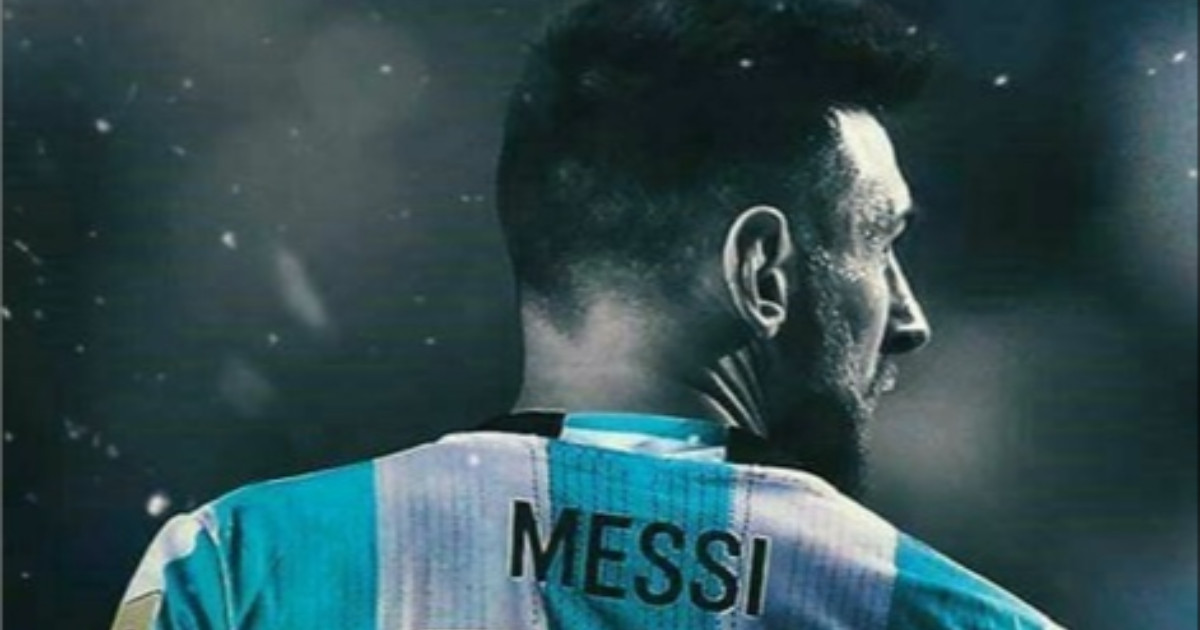
At a packed stadium in East Rutherford, New Jersey, Spain edged Argentina 1-0 in extra time to seal a memorable final. Lionel Messi, 39, was seen visibly emotional, his tearful reaction suggested a poignant close to an unparalleled international career.Summary
There are griefs so vast that they cannot be contained within the compass of an ordinary evening, and yet, on the nineteenth of July in this year of our reckoning, one such grief consented, however reluctantly, to be measured out upon a rectangle of grass in East Rutherford, New Jersey, before the eyes of a watching world. It was there, beneath the clamorous lights of a stadium swollen with eighty thousand souls, that the long and luminous reign of Lionel Andrés Messi, a reign begun in the narrow streets of Rosario and consecrated upon every great lawn of Europe and South America, drew, if not to its final close, then very possibly to the hushed vestibule of one. Spain, youthful, insatiable, and drilled to a precision that recalled the finest instruments of clockwork, defeated Argentina by a single goal in the extra period of a final that shall be spoken of for generations; and in the ruins of that defeat sat a man of thirty-nine years, diminutive of frame but towering in achievement, his head bowed, his composure at last undone.
A career defined by greatness and contradiction
It is not too much to say that football, in its long and quarrelsome history, has produced no figure so strange in his contradictions as this one: a boy who arrived in Barcelona too small for his age, dependent upon injections of growth hormone paid for by a club that saw in his stunted frame some quality invisible to lesser eyes; a player who would grow to be called, without much fear of contradiction, the finest that the game has known. That such a man should end his international career, for end it now appears substantially to have done, not in triumph but in tears, sitting upon the turf as younger legs celebrated around him, is one of those ironies that life, in its indifference to narrative neatness, delights in arranging. Rare it is that history hands us so clean an image: the torch guttering in one hand even as it is lit in another.
Spain's dominance in the final
Let it be said plainly, for plainness is owed to an occasion of such magnitude: Spain did not just defeat Argentina upon that Sunday evening; they mastered them, they besieged them, they held the ball as a miser holds his coin, turning it over and over while their opponents chased shadows across the width of the pitch. The statistics, when they came to be totted up, told a tale of near-total dominion, the greater share of possession resting with Spain, chance after chance manufactured and flung at Argentina's goal, while the South Americans, for all their heart, were reduced in the second half and through the extra period to a kind of dignified retreat. It was Emiliano Martínez, custodian of that beleaguered goal, whose hands and nerve alone kept the scoreline level deep into a contest that seemed, at moments, less a football match than a slow and elegant siege.
But sieges, however long delayed, must fall; and fall this one did, in the one hundred and sixth minute, when Ferran Torres, young, hungry, unburdened by any reverence for the man he was dispossessing of his crown, drove home the goal that separated two nations by the width of a single strike. Argentina, already reduced to ten men after a dismissal that shall be argued over in cafés and taverns for years hence, had no answer left to give. The whistle, when at last it came, fell upon the ear of Lionel Messi like the tolling of some final and irrevocable bell.
When the world's greatest wept
What followed was not the composed grief of a man accustomed to defeat, for defeat, in truth, had visited Messi seldom enough in a career otherwise so gilded that misfortune seemed almost to have forgotten his address. He sank to the turf. He covered his face. Those who watched and there were many millions of them, scattered across every continent, gathered before screens large and small in a communion that transcended language saw a man who had carried, for two decades, the hopes of an entire nation upon shoulders that had never once appeared to bow beneath the weight, bow at last. He wept as a child weeps, without ornament or performance, the tears of a man who understood with sudden and total clarity that something irreplaceable was passing from him even as he sat there upon the grass that had been, in a sense, his truest home.
It is easy, and perhaps too easy, for the writer of these lines to reach for sentiment in describing such a scene; and yet no honest account could do otherwise, for sentiment was precisely what the moment demanded and precisely what it received, unbidden, from every quarter of that vast arena. Even Spanish throats, hoarse with their own triumph, fell quiet in patches to regard him. Even the conquerors, in their hour of conquest, seemed to sense that they stood in the presence of an ending too large to be merely celebrated.
Messi's bond with Argentina
To understand the weight of that weeping, one must first understand what manner of debt a nation believed itself to owe this man, and what manner of penance he believed himself, for so long, unable to pay.
That suspicion, cruel and largely unjust though it was, pursued him through final after final lost — a Copa América surrendered here, a World Cup surrendered there, each defeat greeted at home not just with disappointment but with something closer to accusation.
It is this, this hard-won, thrice-doubted, finally absolute love that made the tears in New Jersey so unbearable to watch. He had given Argentina everything a man can give a country through the accident of his talent, and on this last night, standing at the threshold of his own departure, he had nothing further left to offer but the sight of his own grief, freely given, entirely unguarded.
Barcelona: The making of a legend
If Argentina claimed him by blood, it was Catalonia that claimed him by making him, for it was in the youth fields of La Masia, that modest academy on the outskirts of a great city, that the boy from Rosario was fashioned into the player the world would come to know.
For seventeen years he wore that shirt, and in wearing it, he did not only play for a club; he became, in some manner difficult to articulate to those who did not witness it, the club's own conscience and creative soul.
What made Messi the greatest
It would be a discourtesy to the man's genius to speak only of sentiment and neglect the mechanism by which that genius operated, for Messi's greatness was not a matter of mystique alone; it rested upon foundations that can be described, even if they cannot be entirely explained.
Consider first the body itself...
Then there was the matter of his weaker foot...
But technique alone, however refined, does not explain a career of such sustained dominance...
It is this synthesis, the biomechanical gift, the technical mastery achieved through hour upon patient hour of repetition, and the tactical vision that elevated mere skill into authorship of the game itself that qualifies him, in the judgment of most who have studied the sport across its long history, as its finest practitioner.
A legacy beyond trophies
It is the particular privilege of the very greatest to become not only champions but teachers, whether or not they ever intend the role...
He inspired, too, a style of play, an insistence that beauty and effectiveness need not be opposed...
Lamine Yamal and the passing of the torch
And so we return, as we must, to the image with which this account began, to the sight of Lamine Yamal...
There is a further symmetry here worth the telling...
What did that embrace mean to football? It meant, more plainly than any eulogy could state it, the passing of a torch that had been alight for so long that many had ceased to imagine it could ever be carried by another hand.
The end of an unforgettable era
Lionel Messi will play again, perhaps, in some other shirt, in some other league, for however many seasons his body consents to serve his will. But the man who sat weeping upon the turf at New Jersey, embraced by the very youth who had unseated him, understood as did all who watched that something had concluded there beyond the mere reckoning of a scoreline. An era does not end quietly. It ends, if it is fortunate, in a hug; and Lionel Messi, sovereign of a footballing age that will not soon be equalled, was fortunate indeed in the manner of his ending, even as he wept.
ABOUT THE WRITER: Dr. Nauman Niaz, a Post Doctorate (Oxford), PhD (UWA), FRCP (London), FRCP (Edinburgh), FRCP (Ireland), FRCP (Glasgow), CST (Endo, UK), MSc Biomechanics & Kinesiology (UWA), MRCP (UK), MBBS (Pb) is a civil award winner (Tamagha-i-Imtiaz) in Sports Broadcasting & Journalism, a regular cricket correspondent having covered 54 tours and three ICC World Cups, having written over 3700 articles. He has authored 19 books and is the official historian of Pakistan Cricket (Fluctuating Fortunes IV Volumes - 2005). His signature show Game On Hai has been the highest in ratings and acclaim. He is also the sports editor at JournalismPakistan.
Key Points
- Spain defeated Argentina 1-0 in extra time in the final held in East Rutherford, New Jersey.
- Lionel Messi, aged 39, was visibly emotional after the loss, prompting talk of an era ending.
- The match drew a crowd of around eighty thousand spectators under stadium lights.
- Messi's career is recalled for its contrasts: humble origins in Rosario and peak years at Barcelona and in Europe.
- The result leaves questions about the future of Argentina's team and the legacy of one of football's greatest players.
Key Questions & Answers
Did Lionel Messi announce his retirement after the final?
There was no formal retirement announcement during the match; his visible emotion led many to view the result as possibly marking the end of his international career.
What was the final score and who won?
Spain won 1-0 in extra time to claim victory over Argentina in the final.
Where was the final played?
The final took place at a stadium in East Rutherford, New Jersey, before a crowd of around eighty thousand.
Why is this match considered significant?
The match is significant for its dramatic finish and because it may represent the closing chapter of Lionel Messi's long and celebrated international career.
Ask AI: Understand this story your way
AI EnabledDig deeper, ask anything — get instant context, background, and clarity.
Disclaimer: This feature is powered by AI and is intended to help readers explore and understand news stories more easily. While we strive for accuracy, AI-generated responses may occasionally be incomplete or reflect limitations in the underlying model. This feature does not represent the editorial views of JournalismPakistan. For our full, verified reporting, please refer to the original article.