.jpg)
Vaibhav Sooryavanshi: The Bihar boy who rewrote the game
JournalismPakistan.com | Published: 28 May 2026 | Dr. Nauman Niaz (TI)
Join our WhatsApp channel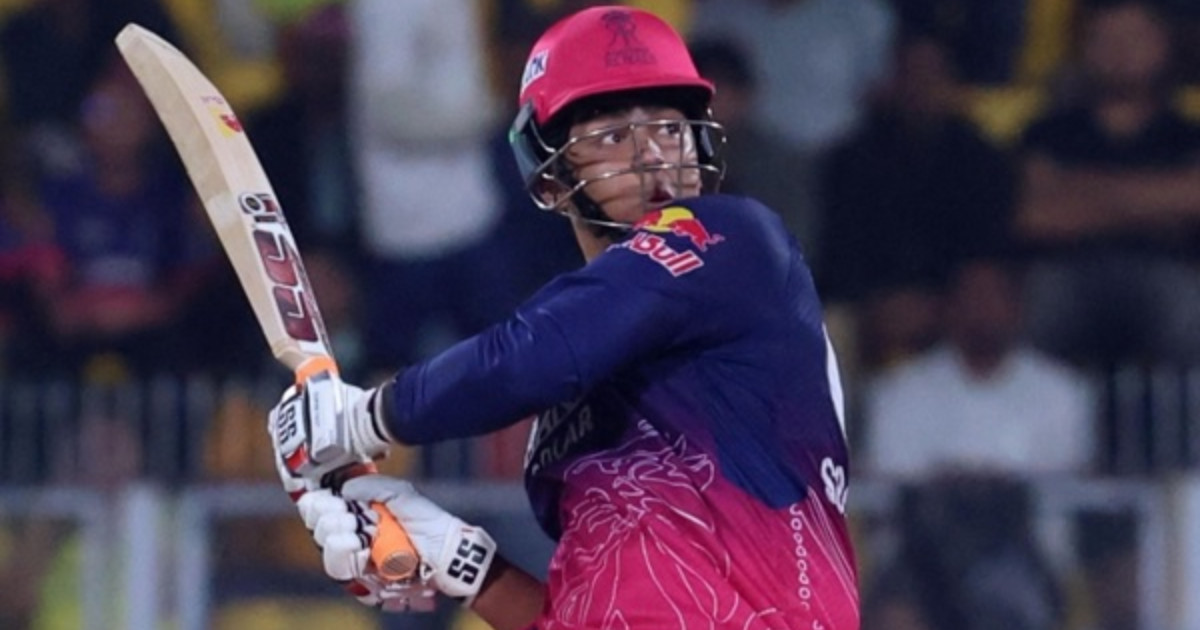
Vaibhav Sooryavanshi, born March 27, 2011, in Samastipur, Bihar, is a fifteen-year-old batsman whose extraordinary perception and relentless terrace practice during the 2020 lockdown have set him apart as a once-in-a-generation talent.Summary
ISLAMABAD — There are moments in the long history of cricket, a game which, more than any other, rewards the patience of those who have waited long enough to see its true wonders, when something arrives on a ground that the existing lexicon of the sport simply cannot accommodate. The idiolect strains. The comparisons dissolve before they are completed. The honest observer shuts down his laptop, watches for a time in silence, and then writes: I have not seen this before.
Vaibhav Sooryavanshi is fifteen years old. He was born on March 27, 2011, in Samastipur, in the flat, ancient plains of Bihar, a place where cricket has always been played with a ferocity entirely disproportionate to its facilities, and where fathers teach sons the game in the way that more prosperous men teach their children languages: early, persistently, and with the understanding that fluency will eventually outrun instruction. His father began teaching him when he was four. He was practicing on his terrace during the great lockdown of 2020, a nine-year-old alone with a ball and a bat and an appetite for repetition that no nine-year-old ought, by any reasonable reckoning, to possess.
One mentions these origins not for the pleasures of the biographical sketch, but because they contain, as origins usually do, the explanation of what followed. The neural architecture of a batsman, the extraordinary web of perception and reflex and calculation that allows a man to read a ball traveling at a hundred and forty kilometers per hour and decide, in less time than it takes to draw breath, what to do with it, is not built in a gymnasium or in a coaching academy. It is built in the ten thousand hours of childhood repetition, on terraces and in back gardens and on any flat surface that will hold a stump and permit a bowling run-up. Sooryavanshi spent those hours. He spent them young, when the brain's plasticity is at its most receptive and its patterns, once laid, endure like the grain in good timber.
What he brings to a cricket pitch in 2026 is the consequence of that formation: a visual processing speed, a length-reading instinct, a hand-eye relationship so refined by years of practice that it operates now not as a learned skill but as something approaching pure reflex. He does not consciously see the ball and decide to hit it. He sees the ball, and the decision has already been made, in some deeper and faster part of his nervous system, before consciousness has been consulted.
The Numbers That Have Not Existed Before
Cricket is a game of numbers accumulated over centuries in scorebooks and almanacs, and the increasingly sophisticated databases of the modern analytical age, and Sooryavanshi's numbers for the 2026 Indian Premier League are, by any standard the game has so far established, numbers of a kind that have not existed before. 680 runs across 15 innings. An average of 45. A strike rate of 242.0. 65 sixes. 55 fours. A ratio of one six struck for every 4.3 balls received.
65 sixes. Consider for a moment what this requires. Chris Gayle, the great left-hander from Jamaica, built like a monument, who arrived at a batting crease with the unhurried authority of a man who regarded bowling attacks as minor inconveniences, hit 59 sixes in an IPL season in 2012 and established a record that endured for 14 years. Gayle is 6 ft 3 inches tall and was, in his pomp, an instrument of pure physical devastation. He needed 456 balls to reach 59. Sooryavanshi needed 266 to surpass him.
The arithmetic of that comparison contains its own astonishment. Gayle at his peak; Sooryavanshi at 15. One powered by the accumulated mass of a great West Indian frame; the other by something that is not, in any simple sense, power at all, but which produces, in its effect, distances that power alone cannot explain.
He is, moreover, the first batsman in the recorded history of the game to score more than six hundred runs in a Twenty20 tournament while striking at better than two hundred. Rilee Rossouw, a fine South African striker of the ball, not a man to be lightly dismissed in any conversation about aggressive batting, is the nearest comparison, and he struck at 192. The gap between that and 242 is not a statistical margin. It is a different category of batting.
The Innings That Defined a Season
A season's statistics are the summation of its individual acts, and the acts that constitute this particular season are worth dwelling upon, not because they prove the numbers, which require no proving, but because they illuminate something that numbers alone, however arresting, cannot convey.
A young seamer called Hinge had dismissed Sooryavanshi's first ball in their earlier match and had collected his Player of the Match award with the declaration that dismissing him first ball had been precisely the intention, the plan, the objective. One files such remarks in the memory and waits to see what the object of them will do when the next opportunity comes.
He started his next innings against these same Sunrisers Hyderabad bowlers with 5 sixes off the first six deliveries he received. He then accumulated thirty runs off nine balls against Hinge alone, with four of those balls disappearing over the rope. By the time his innings had concluded at 103, off 37 deliveries, he had struck 12 sixes and 5 fours. His hundred had arrived off 36 balls, the third-fastest century in the history of the competition. Retaliation, when it is executed at a strike rate of 278.0, requires no words and admits no argument.
In the eliminator, needing seven sixes to surpass Gayle's mark, Sooryavanshi required 15 balls to pass it. At the point of his dismissal -- caught at deep third attempting to upper-cut a short ball, which is perhaps the only entirely reasonable description of how he was eventually separated from his wicket -- the scoreboard recorded 97 from 29 balls, 5 fours and 12 sixes, at a strike rate of 334.0. Gayle's 30-ball century, the fastest in IPL history, was, at the moment of Sooryavanshi's dismissal, only 3 runs and 1 ball away.
One does not record 97 from 29 as a failure. One records it as what it was: one of the most extraordinary exhibitions of hitting that this or any other cricket competition has produced, ended only because the boy — in the ultimate demonstration of his mortality and his youth — tried to upper-cut a short ball from outside off stump and found the fielder rather than the rope. The game, as it always does when it has been pushed too far, pushed back.
Facing Bumrah: Calm Where Others Fear
There is a particular quality of courage — or perhaps a particular quality of something that lies beyond courage, since courage implies the presence of fear that has been overcome -- that manifests itself when a young batsman faces, for the first time, a bowler of the very highest order.
Jasprit Bumrah arrived at his bowling mark. He has, in all likelihood, troubled better batsmen than Sooryavanshi, international batsmen, experienced batsmen, men who have spent years in professional cricket and whose batting technique has been refined against the best in the world. The mechanics of his action, that curious slingy load and explosive delivery, create problems that no amount of preparation fully resolves. He is the finest Twenty20 fast bowler on the planet, and he is generally treated as such.
Bumrah's first ball to Sooryavanshi was dispatched over his head for a six. His third ball was pulled for another. Two sixes in three balls. The boy had seen a problem and had decided that attacking it was more sensible than defending against it. He helped his side to 80-0 inside 5 overs. He made 39 off 14 deliveries.
The greatest T20 fast bowler on the planet had been treated, not dismissively or with theatrical aggression, but with the calm, considered certainty of a batsman who had assessed the situation and concluded that the appropriate response was to hit.
The Season Announced From Ball One
The season had not yet begun when Sooryavanshi announced it. The first match was against the Chennai Super Kings. The third-fastest half-century in IPL history, fifty runs off fifteen deliveries, 4 fours and 5 sixes, a strike rate of three hundred and five. He finished with 52 off 17. This was not a man settling into a season, finding his feet, easing his way into form after the winter. This was a batsman arriving at a cricket ground in the condition that other batsmen spend the first weeks of a tournament attempting to reach.
One has watched batting of all kinds over a long acquaintance with the game — the sculptured correctness of the great English technicians, the swashbuckling extravagance of the West Indians at their pomp, the wristy ingenuity of batsmen from the subcontinent -- and one has arrived at the understanding that what separates the gifted from the genuinely exceptional is rarely what it appears to be. The exceptional batsman is rarely the one with the most elegant method. He is the one whose method, however it appears on the surface, contains within it a more complete and more rapid solution to the problem that bowling presents.
Sooryavanshi's method is, in its outward appearance, the method of the new age: pre-meditation, early commitment, big swing through the hitting zone, the willingness to clear the front leg and attack the ball from a position that would have horrified the coaching manuals of any previous generation. But the surface appearance is not the truth of it. The truth begins with his eyes. He reads the length of a delivery earlier than any of his contemporaries — off the hand, off the wrist, off the first milliseconds of ball-flight -- and this early reading gives him something that no amount of physical strength can substitute for: time. He has more time than the bowler believes he has given him, and he spends that time generating the kind of bat speed that in a heavier man would require muscle and in Sooryavanshi requires something rather more elegant.
The Biomechanics Behind the Power
The mechanics have been compared, by those with more technical terminology than modesty might usually permit, to the biomechanics of the great baseball power hitters: the loading of weight onto a strong back leg; the inward coiling of the torso against the resistance of the hips; the storage of rotational energy in the body's core as a kind of tightly wound spring; and then, at the moment of impact, the explosive uncoiling of that stored tension through bat-swing, multiplying the force of the stroke beyond what the arms alone could produce. Pause a recording of Sooryavanshi at the peak of his backlift, and you see a boy whose upper body is full of torsion, wound, waiting, a mechanism in the last moment before release.
This is why the distances are what they are. He is 15 years old and still developing, not a large man in any physical sense, and yet the ball travels more than 88 meters off his bat. This is not brute force. It is applied physics, arrived at by instinct, honed by the ten thousand hours on the terrace in Bihar, as natural to him now as walking.
His bottom hand does most of the power work -- the lower hand, for a left-hander, is the accelerator through the hitting zone — and the consequence of this dominance is a bat-speed through impact that his physical frame would not otherwise be capable of generating. He commits to his shot earlier than convention allows, pre-meditating his movement before the bowler has released the ball, a decision that would be catastrophic for any batsman whose hand-speed and wrist-flexibility were not sufficient to correct mid-swing should the ball deviate from expectation. His are. He begins the swing early and, if the ball is not quite where he anticipated, his hands adjust in the fractions of a second available. Most batsmen who commit early are exposed. He commits early and finds the middle.
There is one statistical truth that separates him from every other attacker of a cricket ball alive, and it deserves its own moment of attention. The good-length delivery — pitched between six and eight meters from the stumps, the banker ball of every bowling attack in every format for the entirety of cricket's history — is struck for a six by batsmen in general six and a half times in every hundred attempts. It is in the settled understanding of the game, essentially unattackable. The half-volley yields to power; the short ball yields to the pull; the full toss is a gift. But the good length is the ball that cricket has always held as its last bastion against the hitter. Sooryavanshi hits it for six sixteen and a half times in every hundred. He strikes at 218 against it. The average batter strikes at 134.
Ten Biomechanical Differentiators: A CricProcess Analysis
The Stance and Back-Foot Pre-Load is where everything begins. Unlike every batsman coached conventionally, Sooryavanshi does not transfer weight backward in response to a short ball. He is already there. The kinetic chain is pre-engaged.
The Trigger Movement defies every coaching manual in the world. His bat goes laterally instead of behind him, extending his arms fully, the opposite of conventional instructions to press forward to length balls. He leans back and stays there, his front leg a mere spectator. This is not a flaw being tolerated. It is a purposely constructed platform.
The Torso Lean is quantified for the first time with CricProcess pose-estimation data. He achieves a peak torso lean angle of more than 45 degrees, roughly double what a conventional aggressive batsman shows. The lean compresses the rotational spring of the trunk to an extreme degree.
The Backlift connects him directly to Brian Lara and, less obviously, to Donald Bradman. His bat traces a figure-of-eight arc, outwards toward the gully at first, then looping round. Against this sort of ball, it allows him to get his bat around quicker than a straighter backlift would. The bat-head travels further before contact than any current comparable, generating more time for acceleration.
The Body Coil is the baseball connection: the pivoting of the torso inward using the hip, the torso storing rotational energy like the rotating analogue of a loaded spring, the energy of the uncoiling upper body augmenting the energy from the bat swing, multiplying the power of the shot.
The Knee Angles measured by CricProcess show the front leg barely bending throughout, the entire rotation happening around the back hip rather than the conventional front-hip pivot. This is structurally unlike any other high-scoring T20 opener's data.
The Good-Length Anomaly is the smoking gun. Good-length balls are hit for a six 6.6% of the time across the IPL. Sooryavanshi hits 16.4% of them for six, striking at 218 against a field average of 134. The biomechanical explanation is his slightly later interception point was enabled by back-foot pre-loading.
The Space Principle -- the bat always remaining outside the line of the ball, the elbows working away from the body -- is the whip-lever that multiplies rotational velocity into bat-head speed. He shares this with Sachin Tendulkar, AB de Villiers, Sir Viv Richards, and Sunil Gavaskar.
The Ten Enumerated Differentiators close the analysis by establishing that it is not any single factor that makes him exceptional -- it is all ten operating simultaneously as a unified system, each multiplying the others rather than merely adding to them.
The synthesis lands on Michael Vaughan's verdict — "the purest striker of a cricket ball I have ever seen" -- and gives it its precise biomechanical meaning: a system that wastes almost nothing between the stored energy in the coiled body and the kinetic energy in the departing ball.
He is attacking the un-attackable and succeeding at more than twice the rate of everyone else. This is not a technical refinement. It is a redrawing of what the game had considered possible.
Consistency: Not an Accident, Not a Heater
One is aware that the word consistent carries, in cricket, a particular weight, and that it ought not to be applied casually to a batsman whose innings contain a duck alongside a hundred and three. The question of consistency is the question of whether what one is watching is a sustained phenomenon or a spectacular accident -- whether the extraordinary performances are the thing itself, or merely the outliers of a more ordinary average.
The numbers answer. An average of 41.00 across a full IPL season, at a strike rate of 232.0, is not an accident. It is not a heater, a burst of fortune that flatters the statistics for a fortnight and then evaporates. It is the output of a batsman who gets out the way all attacking batsmen get out -- attempting the shot that is at the heart of his game, occasionally misjudging it -- but whose frequency of large scores is so great, and whose rate of accumulation when he is in is so extreme, that the occasional failure barely marks the surface of the aggregates.
He has completed a 50 in the powerplay, in the first 6 overs, against the new ball, against the field restrictions that ought, in theory, to compel some degree of caution, 5 times in this tournament alone. David Warner, one of the most successful T20 openers in the game's history, has done it 6 times in his entire IPL career.
The innings read, match by match, as a sustained argument: 50 off 15 against Chennai, a 137 against Hyderabad, 43 in 16 against Punjab, 93 off 38 against Lucknow, 97 off 29 in the eliminator. Between these, a scattering of lower scores that serve, if nothing else, as confirmation that he is human, that the game occasionally exacts its toll even from the most gifted. But the proportion of extraordinary to ordinary is, for a boy of 15 facing the best bowling attacks on earth, without precedent.
His coach, Manish Ojha, attempted on one occasion to counsel him toward the virtues of strike rotation, the singles and twos and the careful nudges that constitute the supporting essence of the game's most attacking prose. He told him, with the authority of experience, that not every ball could be hit for six; that there would be deliveries where the single was the wiser option; that the management of an innings required more than maximums. Sooryavanshi heard this counsel with the politeness appropriate to a boy addressing his coach and replied, very gently: if he could hit a six off a particular ball, why should he play a single?
One records this not as evidence of arrogance -- it is not arrogance, and one is clear about that distinction -- but as the expression of a young man who has spent eleven years developing, ball by ball and repetition by repetition, a precise internal model of which deliveries he can clear the rope from and which he cannot, and who trusts that model entirely, because at every level of cricket he has played, from the terrace in Bihar to the eliminators of the Indian Premier League, the model has been correct.
This is not recklessness. The reckless batsman is the one who does not know what he cannot do and attempts it regardless. Sooryavanshi knows exactly what he can do, and the range of what he can do is merely wider than any of us had previously understood to be available.
From the U-19 World Cup Final to the IPL Eliminator
It would be incomplete to write of IPL 2026 without acknowledging what arrived immediately before it: the Under-19 World Cup final, played in Harare in early 2026, between India and England.
Sooryavanshi scored a 175 off 80 balls: 8 fours, 15 sixes, a hundred reached in 55 deliveries, the second fastest in Under-19 World Cup history. He was named Player of the Tournament. He then arrived at the Indian Premier League and continued. One pauses at that word: continued. Not begun; not launched himself at the higher level with the freshness and urgency of a man in new territory. Continued. The World Cup form was the same. The method was the same. The fearlessness was the same. He simply moved from one stage to another and refused to acknowledge that there was any difference between them.
The comparisons that suggest themselves are all, in their way, inadequate. He has Chris Gayle's capacity for the six — but Gayle was a physical force of nature, a man whose batting was powered by a frame of unusual dimensions and unusual strength, and Sooryavanshi is powered by something altogether less material and altogether more interesting. He has something of Virender Sehwag's indifference to reputation -- that magnificent quality of the Delhi opener who genuinely did not appear to have been informed that the bowler at the other end was any kind of threat -- but Sehwag was a different tempo and a different method, and comparisons between left-handed fifteen-year-olds from Bihar and right-handed openers from Delhi are inexact at every point.
He has, perhaps most of all, the quality that the very young Sachin Tendulkar had, and which no comparison can quite capture: the quality of a boy who has arrived at the highest level of his sport and is simply not surprised to find himself there. Not arrogant. Not unaware of where he is. But settled, as though the gap between the terrace in Samastipur and the IPL eliminator in Mullanpur were a distance of demography rather than of cricket, which he has always known he would eventually cross.
Something the Game Has Not Seen Before
Cricket has had its prodigies. Tendulkar played a Test match at sixteen. Waqar Younis took ten wickets in his debut series at eighteen. The game has always been capable, at intervals, of producing young men of extraordinary gifts who arrive at its highest theatre before the world has quite decided they are ready. But to produce a boy who walks into the most watched, most competitive Twenty20 competition on earth, against the finest bowlers alive, and averages 41.0 while striking at 243.0 across a full season's 15 innings, having, three months earlier, scored a 175 in a U-19 World Cup final -- this is not a prodigy in the ordinary sense of the word.
This is something that the game has not seen before. And the game, for all its long memory and its deep resistance to surprise, does not quite know what to make of it. Nor, in honesty, do the rest of us. We watch, and the vocabulary fails, and we watch some more. Vaibhav Sooryavanshi was born in Samastipur, Bihar, on March 27, 2011. Currently fifteen years old. Currently, the holder of the record for most sixes in a single T20 tournament in the history of the game. Currently, one suspects, only beginning.
ABOUT THE WRITER: Dr. Nauman Niaz is a civil award winner (Tamgha-e-Imtiaz) in Sports Broadcasting and Journalism, a regular cricket correspondent having covered 54 tours and three ICC World Cups, having written over 3,500 articles. He has authored 19 books and is the official historian of Pakistan Cricket (Fluctuating Fortunes, IV Volumes, 2005). His signature show Game On Hai has been the highest-rated in its category. His latest book, Myth and Reality: Type 2 Diabetes Disease Impact in Pakistan, was launched on May 24, 2026. Dr. Niaz holds a Post Doctorate from the University of Oxford, a PhD from the University of Western Australia, Fellowships from London, Ireland, Glasgow, and Edinburgh, Supra Specialist Training in Endocrinology from the United Kingdom, a Membership of the Royal College of Physicians from the United Kingdom, and a Master's in Biomechanics and Kinesiology from the University of Western Australia.
Key Points
- Born March 27, 2011, in Samastipur, Bihar.
- Started training at age four and practiced intensely during the 2020 lockdown.
- At 15, noted for exceptional perception, reflexes and technical instincts.
- Origins and repetitive practice explain his advanced neural and batting development.
- His style and skill challenge conventional ways of describing batting talent.
Key Questions & Answers
Who is Vaibhav Sooryavanshi?
Vaibhav Sooryavanshi is a fifteen-year-old batsman from Samastipur, Bihar, recognized for his exceptional cricketing talent.
How old is he and when was he born?
He was born on March 27, 2011, and is fifteen years old.
Where did he learn and practice cricket?
He began training under his father from around age four and practised intensively on his terrace during the 2020 lockdown.
Why is he considered notable?
Observers note his rare perceptual and technical gifts, developed through repetitive practice, that make his batting difficult to describe with ordinary cricket terms.
Ask AI: Understand this story your way
AI EnabledDig deeper, ask anything — get instant context, background, and clarity.
Disclaimer: This feature is powered by AI and is intended to help readers explore and understand news stories more easily. While we strive for accuracy, AI-generated responses may occasionally be incomplete or reflect limitations in the underlying model. This feature does not represent the editorial views of JournalismPakistan. For our full, verified reporting, please refer to the original article.