
US documentary filmmakers face prison for filming protest
JournalismPakistan.com | Published: 21 October 2016
Join our WhatsApp channel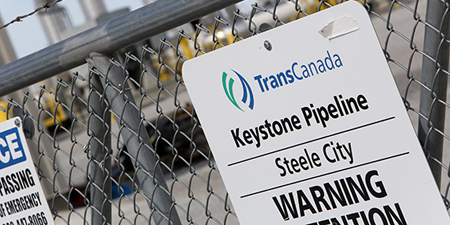
Documentary filmmakers Deia Schlosberg, Lindsey Goodwin-Grayzel, and Carl Davis have been arrested for filming protests against oil pipelines. They face multiple felony charges related to conspiracy and burglary for their actions during these protests.Summary
NEW YORK - Prosecutors in the US states of North Dakota and Washington should drop all charges against three independent documentary filmmakers arrested while filming environmental activists interfering with oil pipelines, the Committee to Protect Journalists said Thursday.
Filmmakers Deia Schlosberg and Lindsey Goodwin-Grayzel, as well as Goodwin-Grayzel's cameraman, Carl Davis, were arrested with activists from the group Climate Direct Action on October 11, and subsequently charged with a range of felonies, including conspiracy and burglary, as participants in the coordinated, multistate protest, according to press reports.
"Recording civil disobedience and arrests is news-gathering, not conspiracy," said Robert Mahoney, CPJ's deputy executive director. "Prosecuting filmmakers for covering protests sends a chilling message.
We call on authorities in North Dakota and Washington to drop these troubling charges and to stop interfering with journalists doing their jobs." Schlosberg, the founder of the Pale Blue Dot Media Company, told CPJ that she faces a maximum sentence of 25 years on conspiracy charges for filming activist Michael Foster as he broke into a facility of the TransCanada Keystone Pipeline in North Dakota and closed a pipeline valve.
Schlosberg said that she was arrested along with Foster and his fellow activist Samuel Jessup on October 11 and jailed for 53 hours before being released on bail. According to the criminal complaint, which CPJ has reviewed, prosecutors claim that Schlosberg conspired with Foster and Jessup to damage the pipeline.
The complaint says that Schlosberg was recruited to film the action and that she traveled in the same vehicle as the activists.
If convicted either of the charge "conspiracy to theft of property" or "conspiracy to theft of service" -- Schlosberg told CPJ that the court could convict her of one or the other felony, but not both - she could face 20 years in prison, in addition to a maximum sentence of five years in prison for "conspiracy to tampering with or damaging a public service." Schlosberg, who recently produced the third film in an Emmy award-winning series about natural gas production in the United States, told CPJ that she was not involved in the protest but that she was recording it as part of her work as a documentary filmmaker who focuses on environmental issues.
She said she traveled with the activists, filming interviews in the car. She told CPJ that she was on public property and that she identified herself as a journalist at the time of the arrest. A spokesperson at the office of North Dakota Pembina County state's attorney, Ryan Bialas, told CPJ that the office had no comment on the case.
In Washington, filmmaker Lindsey Goodwin-Grayzel and her cameraman Carl Davis face felony charges for robbery and trespassing after filming activist Ken Ward as he broke into a Trans Mountain Pipeline facility in Skagit County and attempted to shut down a pipeline. According to her website, Goodwin-Grayzel is working on a short documentary film following Ward.
Her attorney, Neil Fox, told CPJ that she was filming in Skagit County as part of this project. "She's doing a documentary. She's not an activist who is part of some concerted action or the film arm of Greenpeace. Her life's work is to make documentary films," Fox told CPJ in a telephone interview.
If convicted, Goodwin-Grayzel faces a maximum penalty of a total of 30 years in jail, fines of $46,000, or both, on charges of second-degree burglary, trespassing, criminal sabotage, and "assemblage of saboteurs," according to a statement the filmmaker emailed to CPJ. The Skagit County Prosecuting Attorney's Office did not immediately respond to CPJ's request for comment.
Goodwin-Grayzel has previously worked on films about suicides, national parks, and electronic medical records, according to her website. Cameraman Carl Davis's lawyer, Brit Mercer, told CPJ that her client faces the same charges as Goodwin-Grayzel. Davis has worked on documentaries for museums and aquariums, Mercer told CPJ. Davis had not coordinated or worked with the activists in any way, she said.
"This is a terrifying affront to the First Amendment. He was a journalist hired to do a job -- no more, no less," Mercer told CPJ. Activists shut down pipeline facilities in the US states of Washington, Minnesota, Montana, and North Dakota on October 11 to protest global warming.
The arrest of the reporters filming the direct action comes shortly after broadcast journalist Amy Goodman was charged with trespassing for filming protests against a pipeline project in North Dakota. The charges were eventually dropped, and a court dismissed a second charge of rioting, Goodman reported on her show. - Committee to Protect Journalists/Image: Reuters
Key Points
- Filmmakers were arrested while documenting environmental protests in October.
- Charges include conspiracy and burglary related to pipeline activism.
- Schlosberg faces a potential 25-year sentence if convicted.
- The Committee to Protect Journalists urges dropping charges against them.
- Goodwin-Grayzel and cameraman Davis also face felony charges in Washington.
Relevant Topics
Ask AI: Understand this story your way
AI EnabledDig deeper, ask anything — get instant context, background, and clarity.
Disclaimer: This feature is powered by AI and is intended to help readers explore and understand news stories more easily. While we strive for accuracy, AI-generated responses may occasionally be incomplete or reflect limitations in the underlying model. This feature does not represent the editorial views of JournalismPakistan. For our full, verified reporting, please refer to the original article.