
Significant deterioration of legal, political and policy environment for Pakistani media: PPF
JournalismPakistan.com | Published: 3 May 2017
Join our WhatsApp channel
The Pakistan Press Foundation released a report indicating significant deterioration in the environment for Pakistani media from January 2016 to April 2017. The report emphasizes rising violence against journalists and the government's oppressive measures against media freedom.Summary
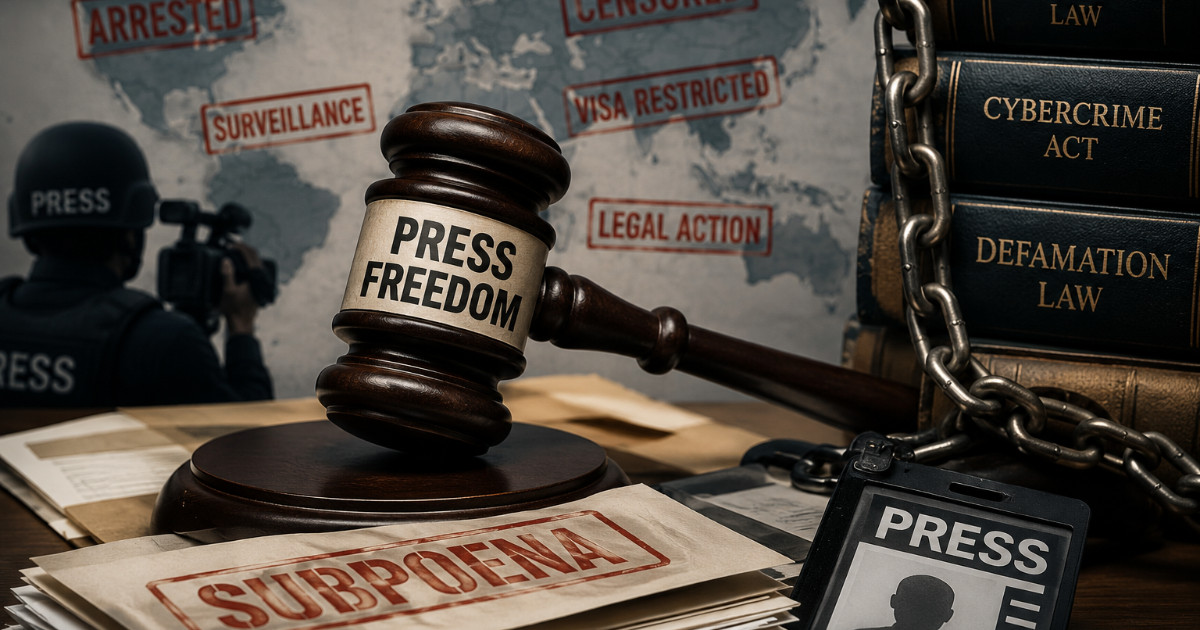
KARACHI - The legal, political and policy environment for Pakistani media deteriorated significantly and Pakistani media professionals continue to face violence while those who attack journalists enjoy impunity from prosecution, a new report released by Pakistan Press Foundation says.
The report covers the period from January 2016 to April 2017. It was released to commemorate the World Press Freedom Day on May 3.
It said actions of the government, and parliament, as well as the judiciary, seemed to indicate that all branches of the state are determined to control the media, rather than promoting a safe and secure environment for the growth of pluralistic democratic media institutions.
The report criticizes the Pakistan government for spending millions of rupees to broadcast and publish advertisements warning citizens that misuse of Article 19 of the Constitution could subject them to fines or imprisonment. The ads listed over a dozen laws that could be used against citizens exercising their right to freedom of speech.
The report cites the draft “Journalists Welfare and Protection” bill as an example of cynical state response to the deplorable safety environment in Pakistan. The draft bill instead of addressing the issue of safety proposes significant restrictions on media freedom and independence. Section 6 of the draft bill requires media organizations to get approval from the government before deputing a journalist for duty in a sensitive area. Section 12 of the draft bill gives the government the authority to ban media organizations for up to three months and to impose fines of up to Rs20 million (about USD190,000) for violations.
The bill is effectively silent on measures the governments at federal, provincial and local levels will take to ensure proper investigation and prosecution of cases of violence against media and holding those in authority responsible for impunity for such crimes.
The report is also critical of the “Prevention of Electronic Crimes Act (PECA) 2016” because it places onerous restrictions on online expression and increases the online surveillance which could potentially have a chilling effect on freedom of opinion and expression.
Contrary to global efforts to decriminalize defamation, Pakistan took a giant regressive step in 2016 by using the Anti-Terrorism Act to jail journalists for defamation. The use of anti-terrorism courts for a case involving defamation makes the enforcement of an already problematic law even more draconian.
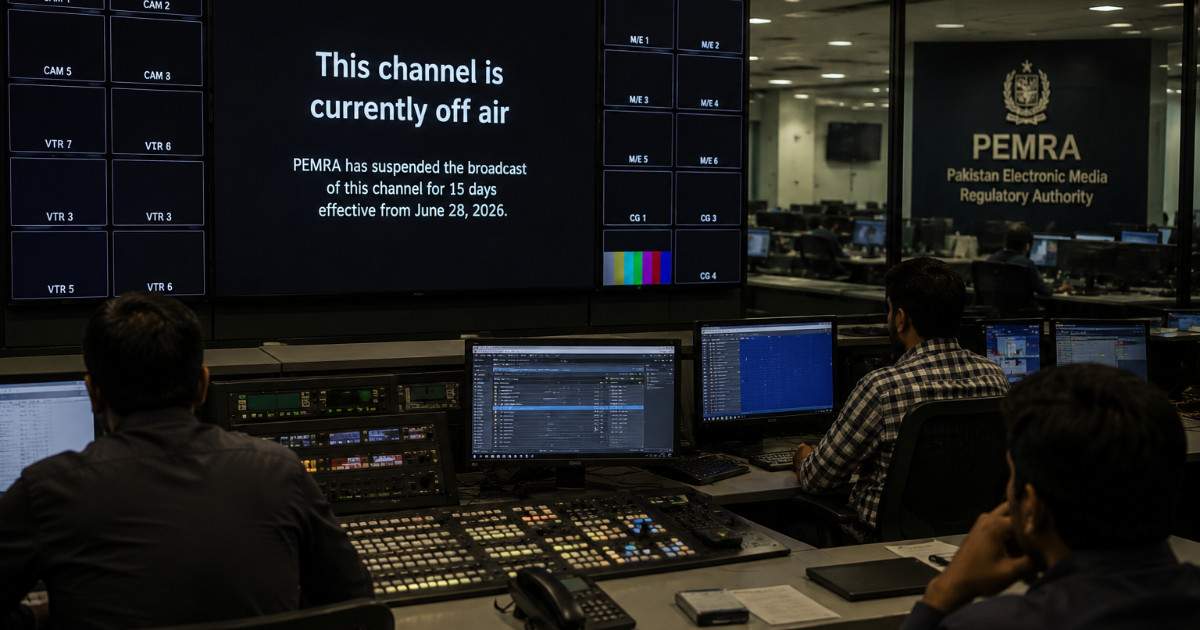
The Pakistan Electronic Media Regulatory Authority (PEMRA), has dramatically increased the intensity and frequency of punitive measures against television channels. PEMRA issued 166 show cause notices to private television channels over violations of ethical codes and had taken 380 actions for airing “unethical” and “unsuitable” programs. PEMRA had imposed fines of over Rs70 million (US$ 650,000) on 50 channels from December 2015 to April 2017. During that period, the authority also suspended the transmission of six television channels and prohibited nine anchorpersons from appearing on eight TV channels.
Using the broad powers to block distribution of films, the Central Board of Film Censorship (CBFC) banned three movies in 2016. The movies that were banned by CBFC include Maalik, Among the Believers and Besieged in Quetta.
As the elections approach, political parties including those in the national and provincial governments have whipped up dangerous rhetoric against mainstream media and social media accusing them of condoning blasphemy and of acting against national aspirations and interests.
Harassment of women media professionals remains endemic and media houses and organizations representing publishers, editors and working journalists remain apathetic to the safety of female staff members. This is evident from the fact that only a handful of media houses have instituted even the minimum safety mechanisms of Protection of Women against Harassment at Workplace Act 2010 that all organizations in Pakistan are legally required to implement.
The report expresses regret that the media became entangled in tensions between the military and civilian authorities, when on October 10, 2016, the federal government imposed an international travel ban on journalist Cyril Almeida by placing his name on the Exit Control List (ECL). The action followed the publication of his story titled “Act against militants or face international isolation, civilians tell military” in Dawn on October 6, 2016. Although the travel ban was lifted soon after, the crisis continues as Major General Asif Ghafoor, Director General of Inter-Services Public Relations (ISPR) rejected the notification issued by the Prime Minister’s Secretariat on April 29, 2017.
The Pakistani media also continued to be subjected to violent attacks, encouraged by a high level of impunity for these crimes. PPF has recorded 73 instances of journalists or media workers being killed for their work since 2002 but there have only been five convictions for murders of journalists.
The problem of impunity is compounded by the lack of political will to hold to account those in positions of power who attack journalists, delays in the judicial process, corruption and incompetence of local police forces, and inadequate resources and training for investigators and prosecutors, particularly in rural areas.
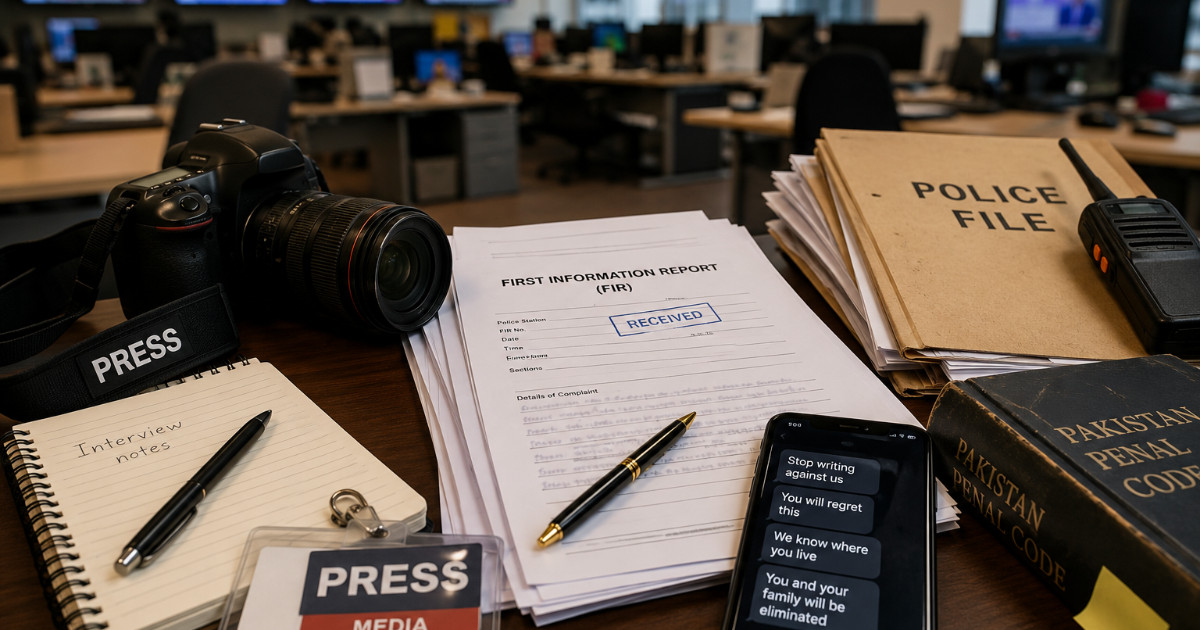
Between January 1, 2016, and April 30, 2017, three media personnel were killed in the line of duty and 19 media professionals were injured in attacks while performing their professional duties. There were also several cases of attacks on media houses and illegal arrests and detentions of journalists by local police at the behest of influential politicians and landlords.
Five bloggers and an executive of Jang Group, Pakistan’s leading media group were abducted by unidentified kidnappers. All except one were returned after some time in mysterious circumstances. One blogger Samar Abbas remains missing to this day although his family has filed a petition in the Islamabad High Court. There has been no attempt to investigate the abduction and no one has been held accountable for the kidnapping and alleged torture.
While the state of freedom of expression is disappointing, there were a few positive developments. These include the enactment of the Sindh Transparency and Right to Information Law 2016, which is an important step in creating the legal framework to implement Article 19-A of the Constitution of Pakistan that recognizes access to information as a constitutionally guaranteed right.
Another positive development in 2016 was the lifting of the ban on YouTube after more than three years. The government of Sindh took another step forward by appointing a focal person responsible for monitoring the crimes against journalists and media houses and to act as a bridge between police and other law enforcement agencies and media for better coordination and following up the cases of killed journalists.
Key Points
- Media professionals in Pakistan face increasing violence with attackers often unpunished.
- Government advertisements threaten citizens against exercising their right to free speech.
- Proposed media protection laws impose heavy restrictions on journalists and media organizations.
- The Pakistan Electronic Media Regulatory Authority has intensified punitive actions against TV channels.
- A culture of impunity persists, with very few convictions for attacks on journalists.
Relevant Topics
Ask AI: Understand this story your way
AI EnabledDig deeper, ask anything — get instant context, background, and clarity.
Disclaimer: This feature is powered by AI and is intended to help readers explore and understand news stories more easily. While we strive for accuracy, AI-generated responses may occasionally be incomplete or reflect limitations in the underlying model. This feature does not represent the editorial views of JournalismPakistan. For our full, verified reporting, please refer to the original article.