
Red lines and free speech: What Pakistan's warning to media means
JournalismPakistan.com | Published: 11 March 2026 | JP Special Report
Join our WhatsApp channel
Pakistan Law Minister Azam Nazeer Tarar's warning about 'red lines' in foreign policy commentary has sparked debate about press freedom, the limits of public discussion, and the role of journalism in scrutinizing diplomacy.Summary
ISLAMABAD — Who decides what journalists can say about a country’s foreign policy? In Pakistan, that question has taken on renewed urgency after Law Minister Azam Nazeer Tarar warned journalists and analysts not to cross constitutional “red lines” when discussing the country’s diplomatic relations. His remarks have triggered debate about the limits of press freedom, the responsibilities of media professionals, and whether foreign policy can realistically be placed beyond public scrutiny in a modern information environment.
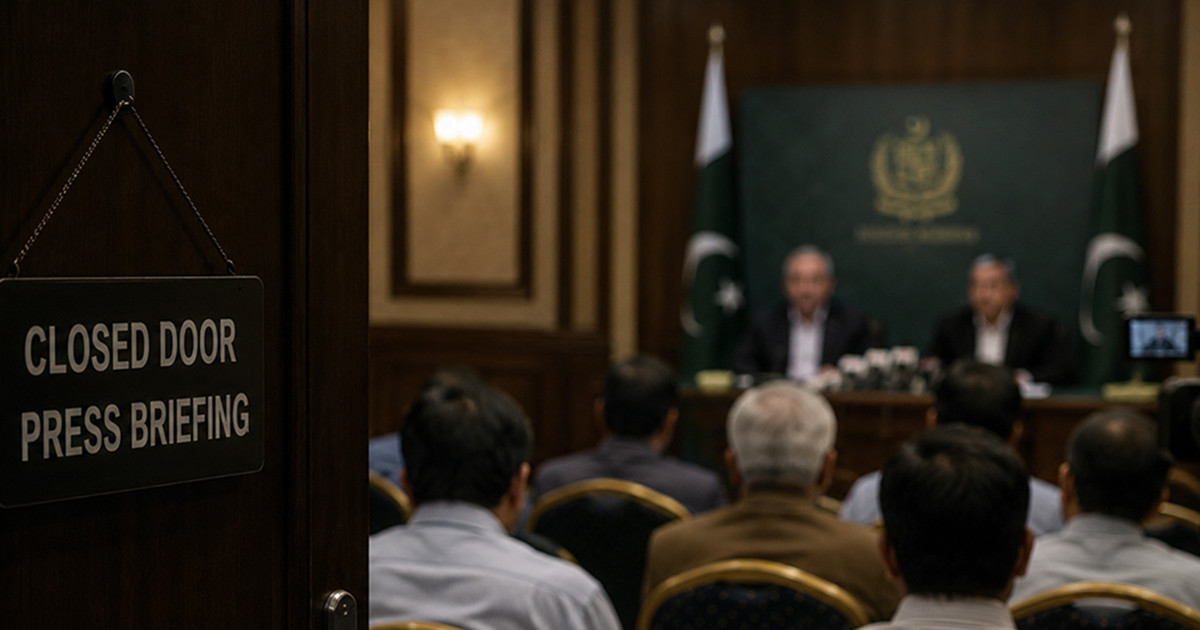
Tarar made the comments during a press conference in Islamabad on March 10, 2026, cautioning the media against commentary that could affect Pakistan’s relations with other countries, particularly in the Gulf region. The minister said legal action could follow if journalists or analysts crossed constitutional boundaries while discussing foreign policy.
Understanding the warning
The law minister framed his warning within the context of Article 19 of Pakistan’s Constitution, which guarantees freedom of expression but allows restrictions in the interest of national security, public order, and the country’s relations with foreign states. Tarar argued that while citizens have the right to information and expression, commentary on diplomatic relations must remain within those constitutional limits.
According to the minister, speculative commentary or criticism regarding relations with allied countries could create misunderstandings internationally. He suggested that discussions about sensitive diplomatic matters should be approached with extreme caution and, in many cases, left to the state.
His remarks also came against the backdrop of rising tensions in the Middle East, where shifting alliances and geopolitical rivalries often reverberate in Pakistan’s domestic debate. Officials fear that commentary on television talk shows, digital platforms, or social media may sometimes be interpreted abroad as representing the government’s official position.
But the warning has raised broader questions: what exactly constitutes crossing a “red line”? And who ultimately decides where that line lies?
A potential chilling effect
For journalists and analysts, the ambiguity surrounding such warnings can be as significant as the warning itself. While the minister did not announce new laws or regulations, the suggestion that legal action could follow critical or speculative commentary may influence how reporters approach coverage of foreign policy.
Media professionals often describe this phenomenon as a “chilling effect.” When the boundaries of permissible speech are unclear, journalists may choose to avoid sensitive topics altogether rather than risk legal consequences.
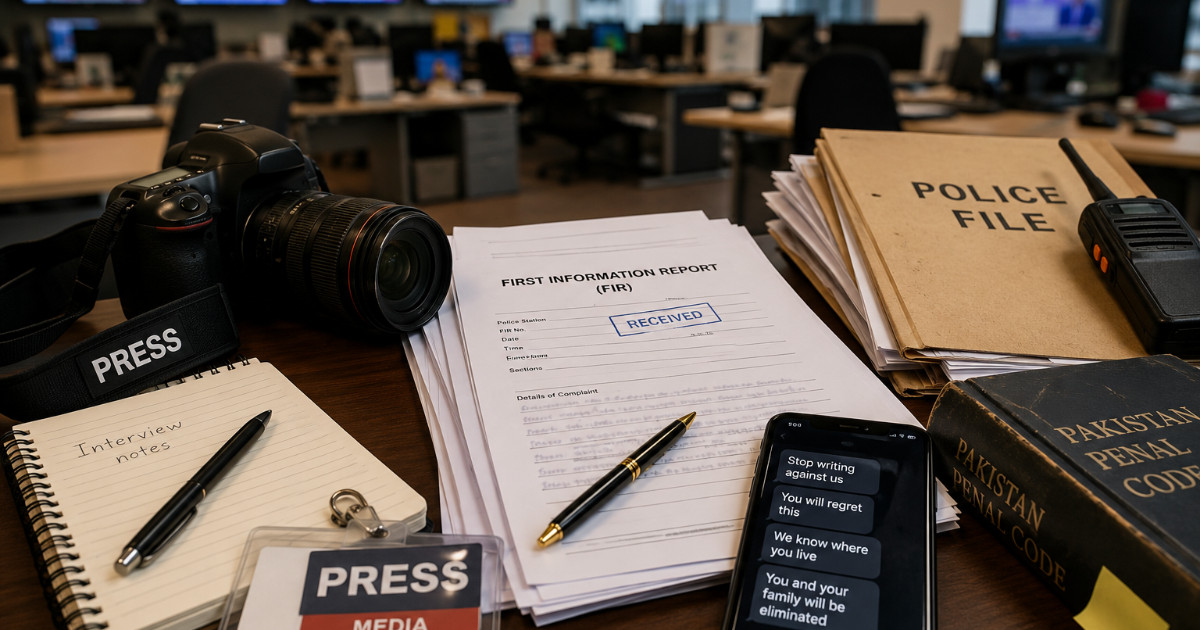
Pakistan’s media environment has already experienced significant debate over the limits of speech in recent years, particularly in relation to digital platforms. Laws governing online expression, such as the Prevention of Electronic Crimes Act, have been used in cases involving journalists and social media users, fueling discussion about how to balance national security concerns with freedom of expression.
In such an environment, warnings about foreign policy commentary may lead editors and analysts to tread more carefully when discussing diplomatic relationships or international alliances.
Foreign policy debate in global democracies
Yet foreign policy has historically been one of the most widely debated areas of public life in democratic societies. In countries such as the United States, media organizations regularly scrutinize diplomatic strategy, military alliances, and international negotiations. Journalists and analysts openly debate decisions ranging from military interventions to trade agreements and diplomatic outreach.
The United Kingdom offers another example. British foreign policy is frequently debated in Parliament and analyzed extensively in the press. Newspapers, television networks, and academic commentators routinely examine diplomatic decisions, sometimes sharply criticizing government policy.
In India, television debates and digital commentary on foreign relations are a constant feature of the media landscape, particularly during periods of tension with neighboring countries. Similarly, across Europe, journalists and analysts regularly discuss regional conflicts, alliances, and international negotiations.
These debates often shape public understanding of global affairs and, in some cases, influence policymaking itself. Scholars studying the relationship between media and foreign policy have long argued that journalism can play an important role in informing citizens about international developments and encouraging accountability in decision-making.
When national security enters the debate
At the same time, governments around the world sometimes invoke national security concerns to justify limits on speech about sensitive diplomatic issues. The line between legitimate security considerations and restrictions on press freedom can become blurred.
One prominent example is Hong Kong, where authorities have used the national security law to prosecute media figures and activists. The case of media entrepreneur Jimmy Lai, who faces charges related to national security offenses, has been widely cited by press freedom organizations as an example of how national security laws can affect media operations.
Such cases illustrate a broader global pattern: when governments link media commentary to national security risks, debates about press freedom often intensify.
Voices from Pakistan’s media and policy circles
In Pakistan, the law minister’s remarks quickly drew responses from journalists, analysts, and former diplomats, many of whom took to social media to express concern.
Maleeha Lodhi, a former Pakistani ambassador to the United Nations, the United States, and the United Kingdom, questioned the logic of restricting debate. “Anything designed to limit and suppress free speech should be unacceptable,” she wrote. “Open discussion is not only a democratic right but also what should help policy makers. What is there to be scared of from open debate?”
Anything designed to limit and suppress free speech should be unacceptable. Open discussion is not only a democratic right but also what should help policy makers. What is there to be scared of from open debate? https://t.co/JV6zVw6j4h
— Maleeha Lodhi (@LodhiMaleeha) March 10, 2026
Senior journalist and author Zahid Hussain described the warning as a troubling development. “This is yet another curb on freedom of expression,” he wrote. “Never before we have seen ban on discussion on foreign policy.”
Broadcast journalist Absa Komal also warned of the implications. “Law minister Azam Nazeer Tarar warning that discussing foreign policy could lead to criminal cases sets a new, dangerous precedent for public debate and media freedom in Pakistan,” she wrote.
Veteran journalist Mariana Baabar responded with a pointed remark: “Go take a long walk and read the law. We will not be dictated by foreign governments.”
Go take a long walk and read the law.
— Mariana Baabar (@MarianaBaabar) March 10, 2026
We will not be dictated by foreign govts.
Law Minister tells media to exercise caution when discussing matters related to🇵🇰foreign policy amid escalating tensions in Mid East citing unease voiced by friendly countries.https://t.co/R5VqdM8hEG
These reactions reflect a broader concern within Pakistan’s media community: that vague warnings could discourage legitimate debate on issues that affect the country’s international standing and national interests.
The role of journalism in foreign policy
Journalism has long played a central role in shaping public understanding of foreign affairs. By reporting on diplomatic negotiations, international conflicts, and global alliances, journalists help citizens understand how decisions made in foreign capitals affect domestic life.
Foreign policy coverage also provides a platform for debate. Analysts, academics, and former diplomats often use media outlets to offer differing interpretations of diplomatic strategies or international developments. This exchange of ideas can help policymakers gauge public opinion and refine their approaches. In democratic systems, such debate is often considered a normal and healthy part of political discourse.
At the same time, journalists acknowledge that reporting on foreign policy requires careful judgment. Diplomatic relationships can be sensitive, and misinformation or speculation during times of crisis can have real consequences.
Balancing caution and openness
From the government’s perspective, the law minister’s warning reflects concern that irresponsible commentary could complicate diplomatic relations or create misunderstandings with partner countries.
In an era when statements made on television or social media can spread globally within minutes, officials worry that speculative analysis may be interpreted abroad as representing official policy.
But critics argue that restricting discussion may carry its own risks. Limiting public debate could reduce transparency and make it more difficult for citizens to understand or evaluate foreign policy decisions that ultimately affect the nation.
Finding the right balance between caution and openness has long been a challenge for governments and journalists alike.
Where the line should be drawn
The debate sparked by the law minister’s remarks highlights a fundamental question facing media professionals in Pakistan and elsewhere: where should the line be drawn between national interest and freedom of expression?
If foreign policy is considered too sensitive for public debate, journalists may struggle to fulfill their role as observers and interpreters of international developments. Yet if commentary becomes reckless or poorly informed, it can complicate diplomatic relationships.
Ultimately, the challenge lies in defining those boundaries clearly and consistently.
For journalists, the answer may lie in the principles that guide the profession: accuracy, context, and responsible analysis. For governments, the challenge is to safeguard national interests without undermining the open discussion that is central to democratic life.
And for audiences, the question remains as relevant as ever: in an age when information travels instantly across borders, who gets to decide where the “red lines” are drawn?
WHY THIS MATTERS: The law minister’s warning highlights a growing tension between national security considerations and press freedom in Pakistan. For journalists and analysts, the debate underscores the importance of clearly defined boundaries when reporting or commenting on foreign policy. The issue also raises broader questions about how media can responsibly cover diplomacy while maintaining the openness and scrutiny essential to democratic discourse.
ATTRIBUTION: Commentary and analysis by JournalismPakistan based on statements made by Law Minister Azam Nazeer Tarar at a press conference in Islamabad on March 10, 2026, and publicly available reactions posted by Pakistani journalists and analysts on X.
Key Points
- The law minister warned media against crossing constitutional 'red lines' in foreign-policy commentary.
- Tarar framed the warning within Article 19, noting permissible restrictions for security and foreign relations.
- He cautioned that speculative or critical commentary could damage ties, particularly with Gulf states.
- The minister said legal action is possible if journalists breach constitutional limits.
- The remarks have spurred debate over press freedom, journalistic responsibility, and oversight of foreign-policy discourse.
Key Questions & Answers
What did the law minister say?
He warned journalists and analysts not to cross constitutional 'red lines' when discussing foreign policy and invoked Article 19 limits.
What is Article 19?
Article 19 guarantees freedom of expression but allows restrictions in the interest of national security, public order, and relations with foreign states.
Could journalists face legal action?
The minister said legal measures could follow if commentary crosses constitutional boundaries and harms diplomatic relations.
Why has this sparked debate?
The warning raises questions about the balance between press freedom, journalistic responsibility, and protecting state diplomacy.
Relevant Topics
Ask AI: Understand this story your way
AI EnabledDig deeper, ask anything — get instant context, background, and clarity.
Disclaimer: This feature is powered by AI and is intended to help readers explore and understand news stories more easily. While we strive for accuracy, AI-generated responses may occasionally be incomplete or reflect limitations in the underlying model. This feature does not represent the editorial views of JournalismPakistan. For our full, verified reporting, please refer to the original article.