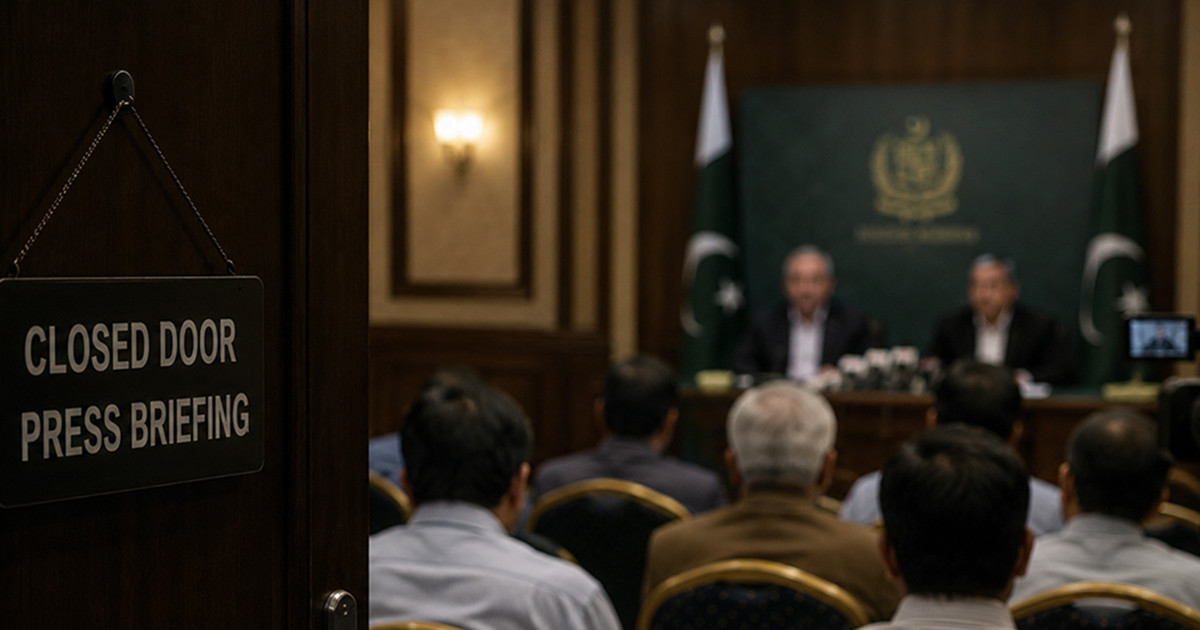

Pakistan court ends suo moto case on Arshad Sharif killing
JournalismPakistan.com | Published: 3 February 2026 | JP Staff Report
Join our WhatsApp channel
The Federal Constitutional Court dismissed its suo moto case on Arshad Sharif's Oct. 23, 2022 killing in Kenya, saying it lacked jurisdiction over cross-border probes; it said investigations proceed under mutual assistance and heirs may seek remedies.Summary
ISLAMABAD — The Federal Constitutional Court of Pakistan on Tuesday disposed of the suo moto case initiated into the October 23, 2022, killing of journalist Arshad Sharif in Kenya, ruling that it lacked jurisdiction to provide continued judicial oversight of the cross‑border probe.
Sharif, a well‑known investigative reporter who left Pakistan in August 2022 amid sedition charges and threats tied to his reporting, was shot dead by Kenyan police near Nairobi; Kenyan authorities initially described the incident as mistaken identity, but a Kenyan High Court later found the force used unlawful.
Judgment stresses limits of court oversight
In a detailed judgment authored by Justice Aamer Farooq, the Federal Constitutional Court said that while it “acknowledge[s] and share[s] the grief felt by our nation and the journalist community over the death of our citizen,” it could not extend its suo moto proceedings because ongoing investigation and coordination with Kenyan authorities was being carried out under a mutual legal assistance agreement. The judgment added that if Sharif’s legal heirs have specific grievances, they can approach the courts of competent jurisdiction.
Justice Farooq also noted that Pakistani courts must adhere to the law and not allow sentiment or external pressures to dictate judicial action, stressing that judicial legitimacy comes from applying constitutional and legal frameworks rather than emotional considerations.
Family reaction and international context
Sharif’s widow, Javeria Siddique, expressed deep disappointment on the social media platform X, saying the decision was a setback for justice and press freedom and lamenting government inaction that led her to pursue legal avenues abroad. Kenyan legal proceedings in July 2024 found that police actions were arbitrary and unlawful and ordered compensation to Sharif’s family, a ruling welcomed by media unions.
The injustice and grief of Arshad's killing has broken me. The government's inaction and silence is deafening. I had to take matters into my own hands, reaching out to the Kenyan Court and rapporteur office in personal capacity. Today, the court's decision disappointed me deeply.… pic.twitter.com/kXPbAN9ypm
— Javeria Siddique (@javerias) February 3, 2026
Background of Sharif’s death and legal response
Before his death, Sharif faced multiple sedition cases in Pakistan, including allegations tied to his criticism of powerful institutions, prompting his departure from the country. His killing sparked sustained calls from journalists, press freedom organizations, and international bodies for transparent investigations, underscoring persistent concerns about threats to reporters covering sensitive political and security issues.
WHY THIS MATTERS: The Federal Constitutional Court’s decision highlights the tension between legal limits of domestic courts and the pursuit of accountability for attacks on journalists that cross national borders. For Pakistani media professionals, the outcome underscores the complexity of securing justice in politically sensitive cases and the need to strengthen legal protections, international cooperation mechanisms, and transparent investigative practices to safeguard press freedom and credibility.
ATTRIBUTION: Reporting based on Federal Constitutional Court statement and Kenyan High Court ruling.
PHOTO: From Arshad Sharif’s official YouTube channel
Key Points
- Federal Constitutional Court disposed of its suo moto case into Arshad Sharif's killing, ruling it lacked jurisdiction for continued oversight.
- The court noted investigations and coordination with Kenyan authorities are being handled under a mutual legal assistance agreement.
- Justice Aamer Farooq stressed courts must apply law and not be driven by sentiment or external pressures.
- Kenyans police shot Sharif near Nairobi; Kenyan authorities first cited mistaken identity and a Kenyan High Court later found the force unlawful.
- Sharif's widow expressed disappointment; the court said legal heirs can pursue specific grievances in competent Pakistani courts.
Relevant Topics
Ask AI: Understand this story your way
AI EnabledDig deeper, ask anything — get instant context, background, and clarity.
Disclaimer: This feature is powered by AI and is intended to help readers explore and understand news stories more easily. While we strive for accuracy, AI-generated responses may occasionally be incomplete or reflect limitations in the underlying model. This feature does not represent the editorial views of JournalismPakistan. For our full, verified reporting, please refer to the original article.