.png)
Japanese reporter shot dead in Syria
JournalismPakistan.com | Published: 22 August 2012
Join our WhatsApp channel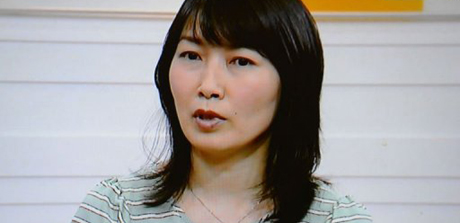
Mika Yamamoto, a well-known Japanese war correspondent, was shot dead while reporting from Aleppo. Her death highlights the dangers journalists face in conflict zones.Summary
A veteran Japanese war reporter died after she was shot in the neck when coming under fire from up to 15 apparently pro-government troops in Syria's second city, a colleague said on Tuesday.
Mika Yamamoto was covering the anti-regime movement in Aleppo, which has borne the brunt of the conflict since fighting erupted there last month, her long-time colleague Kazutaka Sato told Japanese broadcasters.
The death of the 45-year-old takes to four the number of foreign journalists who have lost their lives in the country since the uprising began against the regime of President Bashar al-Assad in March 2011.
Yamamoto is the first of them to die in Aleppo, with the other three - two French men and an American woman - killed in Homs. Her death was confirmed by Japan's foreign ministry.
Three other journalists were also reportedly missing on Tuesday, two of them from a US-funded Arabic language broadcaster. It was not clear if the incidents were connected.
Sato, a colleague from the small but respected Japan Press, said he and Yamamoto had been with anti-regime forces when they were shot at on Monday by what appeared to be government soldiers.
"We saw a group of 10 to 15 troops ahead on the right, who were walking in double file," he told national broadcaster NHK.
"When they started shooting, I dashed towards my left, where I saw a Free Syrian Army soldier."
Sato, who also worked with Yamamoto in Iraq, told NTV: "The one at the front (of the group of troops) was wearing a helmet and I immediately thought they were government troops.
"I think I told her to run. At that moment, they started shooting.
"We all ran and scattered. After that, I couldn't see Yamamoto and was told to go to hospital. I found Yamamoto's body there."
Sato was told by a hospital official that Yamamoto was already dead when she arrived, NHK said. The TBS network cited Sato as saying she had been shot in the neck.
Yamamoto was a known face on Japanese television who came to prominence after surviving a US tank shelling on the Palestine Hotel in Baghdad in 2003 in which two journalists, one from Reuters and one from a Spanish broadcaster, were killed.
The dead woman's father, retired journalist Koji Yamamoto, said reports of her death were "too much to bear".
"She was always talking about tragic people who were caught in conflicts, human lives and world peace. She was more than I was... she is a wonderful reporter and daughter," he told Jiji Press.
Abu Raashid, commander of the Liwa Asifat al Shamal, one of the groups that make up the opposition Free Syrian Army, told an AFP reporter near Aleppo the dead journalist had been "targeted by regime forces".
He said his men had transported the body to nearby Turkey through the Bab al-Salam crossing.
A total of 23,000 people have been killed in Syria since March last year, according to the Britain-based Syrian Observatory for Human Rights, a non-governmental organization.
The UN puts the death toll at around 17,000.- AFP
Key Points
- Mika Yamamoto was shot in the neck by pro-government troops in Aleppo.
- She is the fourth foreign journalist killed in Syria since the uprising began.
- Her colleague Kazutaka Sato witnessed the incident and reported the events.
- Yamamoto was known for her courageous reporting in conflict areas.
- 23,000 people have died in Syria since March 2011 due to the ongoing conflict.
Relevant Topics
Ask AI: Understand this story your way
AI EnabledDig deeper, ask anything — get instant context, background, and clarity.
Disclaimer: This feature is powered by AI and is intended to help readers explore and understand news stories more easily. While we strive for accuracy, AI-generated responses may occasionally be incomplete or reflect limitations in the underlying model. This feature does not represent the editorial views of JournalismPakistan. For our full, verified reporting, please refer to the original article.