Amar Guriro: Journalism's future is human-AI partnership The JournalismPakistan Global Media Brief | Edition 23 | June 5, 2026 As AI reshapes news, publishers seek a sustainable future Every frame at a cost: The safety crisis facing Pakistan's camerapersons Why journalists are increasingly targeted in conflict zones What the 60 Minutes controversy means for TV journalism Zee secures FIFA World Cup rights in India through 2030 How fact-checkers verify viral videos during breaking news Pentagon restrictions on reporters draw media backlash Israel-Lebanon talks proceed as conflict hinders reporting Why governments are tightening controls on foreign journalists China condemns US restrictions on Xinhua reporter Taiwan condemns China over New York Times reporter expulsion The biggest threats facing journalism in Asia today Press freedom review: The many faces of pressure on the press Amar Guriro: Journalism's future is human-AI partnership The JournalismPakistan Global Media Brief | Edition 23 | June 5, 2026 As AI reshapes news, publishers seek a sustainable future Every frame at a cost: The safety crisis facing Pakistan's camerapersons Why journalists are increasingly targeted in conflict zones What the 60 Minutes controversy means for TV journalism Zee secures FIFA World Cup rights in India through 2030 How fact-checkers verify viral videos during breaking news Pentagon restrictions on reporters draw media backlash Israel-Lebanon talks proceed as conflict hinders reporting Why governments are tightening controls on foreign journalists China condemns US restrictions on Xinhua reporter Taiwan condemns China over New York Times reporter expulsion The biggest threats facing journalism in Asia today Press freedom review: The many faces of pressure on the press
Logo
Janu
AI in Media and Journalism

Handcuffed and online: How a viral image may have helped Bilal Ghauri's release

 JournalismPakistan.com |  Published: 9 February 2026 |  JP Staff Report

Join our WhatsApp channel
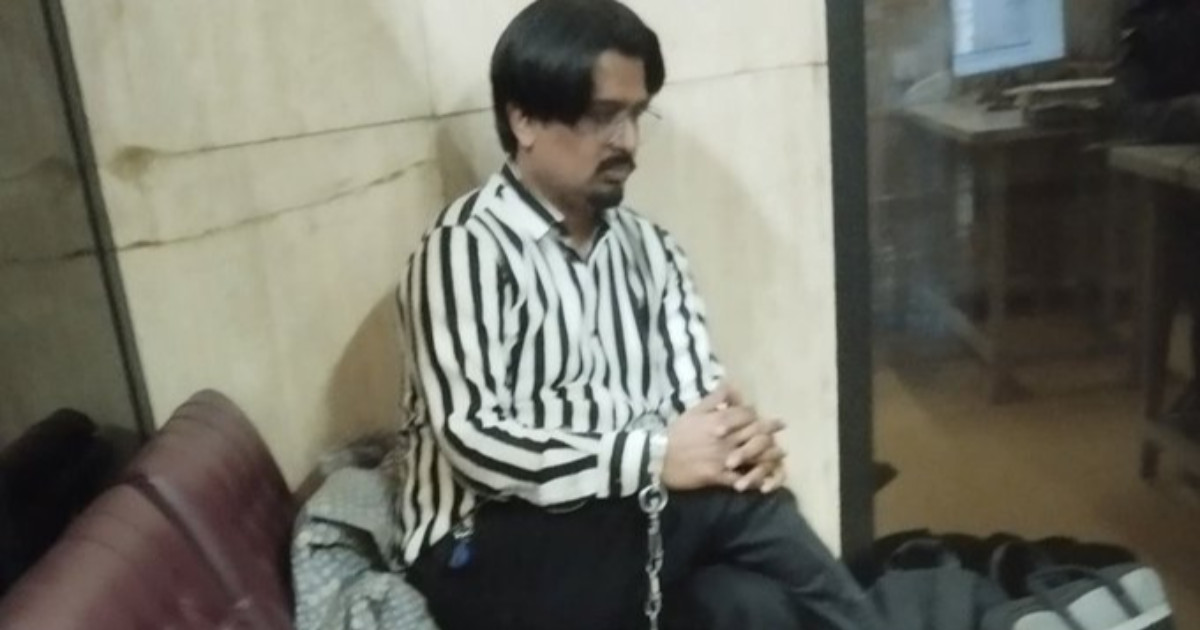
Handcuffed and online: How a viral image may have helped Bilal Ghauri's release
An image of journalist Bilal Ghauri handcuffed after his detention at Karachi Airport went viral and provoked media and public outcry. Ghauri was released the next day, and observers say the viral attention may have hastened authorities' response.

ISLAMABAD — A handcuffed photo of journalist Bilal Ghauri went viral after his detention at Karachi Airport on Saturday, drawing widespread attention from media colleagues, civil society, and the public. The image sparked discussions about press freedom, transparency, and the treatment of journalists in Pakistan.

Release and possible influence of social media

Ghauri was released the following day. The journalist described the detention as the result of a “technical glitch,” though observers noted that the viral photo and the ensuing public attention may have contributed to his swift release. While the exact impact of social media cannot be confirmed, the incident demonstrates how digital visibility can accelerate scrutiny of government or law enforcement actions affecting journalists.

Context of journalist safety in Pakistan

Pakistan has seen many instances where journalists have faced arbitrary detention, harassment, or operational obstacles. In several cases, there are limited institutional safeguards, and recourse depends on rapid public or professional attention. The Ghauri case suggests that viral attention can serve as a catalyst, shining a spotlight on individual incidents and prompting quicker responses from authorities.

The limits of digital accountability

Experts caution, however, that public outcry is not a substitute for systemic protections. Reliance on social media for accountability is reactive rather than preventive, and without clear procedures and stronger institutional frameworks, journalists remain vulnerable to similar incidents.

Implications for press freedom and media accountability

The Ghauri incident highlights both the promise and the limitations of social media in supporting press accountability. Viral attention can amplify scrutiny of actions affecting journalists and may help secure rapid responses in individual cases. At the same time, such visibility cannot replace formal protections or address the underlying structural challenges journalists face. Strengthening institutional transparency, establishing clear procedures, and ensuring systemic safeguards remain essential to truly protect press freedom and the safety of media professionals.

Key Points

  • A photo of Bilal Ghauri handcuffed at Karachi Airport circulated widely online.
  • Ghauri was released the following day after his detention, described as a technical glitch.
  • Observers say the viral image and ensuing public scrutiny may have influenced the swift release.
  • The case highlights recurring risks to journalists in Pakistan and limited institutional safeguards.
  • Experts warn that social media-driven accountability is reactive and cannot replace systemic protections.

Ask AI: Understand this story your way

AI Enabled

Dig deeper, ask anything — get instant context, background, and clarity.

Not sure what to choose? Try one of these.

The AI generates results based on your selected options
Your AI-generated results will appear here after you click the button.

Disclaimer: This feature is powered by AI and is intended to help readers explore and understand news stories more easily. While we strive for accuracy, AI-generated responses may occasionally be incomplete or reflect limitations in the underlying model. This feature does not represent the editorial views of JournalismPakistan. For our full, verified reporting, please refer to the original article.

Explore Further

Why X no longer drives traffic to publishers

Why X no longer drives traffic to publishers

 May 27, 2026: News publishers say X's algorithm changes and a shift toward native content have sharply reduced referral traffic and visibility for external links to news websites.

Newsroom
Amar Guriro: Journalism's future is human-AI partnership

Amar Guriro: Journalism's future is human-AI partnership

 June 05, 2026 Amar Guriro, founder of Pakistan's first AI-powered news platform, says journalism's future rests on human-AI collaboration to improve reporting while preserving editorial oversight.


The JournalismPakistan Global Media Brief | Edition 23 | June 5, 2026

The JournalismPakistan Global Media Brief | Edition 23 | June 5, 2026

 June 05, 2026 Global Media Brief reviews pressures reshaping journalism, press freedom, AI and platform power, and reports BBC's Emmy, 60 Minutes turmoil and Taiwan's protest.


As AI reshapes news, publishers seek a sustainable future

As AI reshapes news, publishers seek a sustainable future

 June 05, 2026 At the World News Media Congress in Marseille, publishers discussed how generative AI is altering newsroom workflows, audience engagement and content licensing.


Every frame at a cost: The safety crisis facing Pakistan's camerapersons

Every frame at a cost: The safety crisis facing Pakistan's camerapersons

 June 05, 2026 Pakistani camerapersons face serious risks covering floods, protests and attacks, often without training, protective gear or employer support.


Why journalists are increasingly targeted in conflict zones

Why journalists are increasingly targeted in conflict zones

 June 04, 2026 Journalists in conflict zones face rising danger as combatants, states and militias increasingly target independent reporting to control narratives.


Popular Stories