.png)
Afghan court sentences AP journalist's killer to 20 years
JournalismPakistan.com | Published: 29 March 2015
Join our WhatsApp channel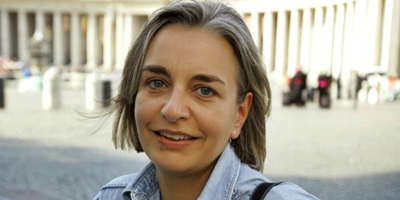
An Afghan court has sentenced Naqibullah to 20 years in prison for the murder of AP photographer Anja Niedringhaus. The sentence follows an appeal process that reduced an initial death penalty recommendation.Summary
KABUL, Afghanistan: Afghanistan's highest court has ruled that the police officer convicted of murdering Associated Press photographer Anja Niedringhaus (pictured) and wounding AP correspondent Kathy Gannon almost one year ago should serve 20 years in prison, according to documents sent to the country's attorney general on Saturday.
The final sentence for former Afghan police unit commander Naqibullah was reduced from the death penalty recommended by a primary court last year. Twenty years in prison is the maximum jail sentence in Afghanistan, said Zahid Safi, a lawyer for The Associated Press who had been briefed on the decision by the Supreme Court. The Supreme Court ruling upholds an intermediate court's decision, which was opposed by the Military Attorney General's office.
Naqibullah, who uses only one name, opened fire on Niedringhaus and Gannon without warning on April 4 as the two were covering the first round of the country's presidential election outside the city of Khost in southeastern Afghanistan.
An award-winning German photographer, Niedringhaus was renowned for her humane depictions of ordinary life as well as for her coverage of conflict zones from the Balkans to Iraq, Libya and Afghanistan. She died instantly of her wounds at the age of 48.
Gannon, a senior correspondent for Afghanistan and Pakistan with decades of experience in the region, was hit with six bullets that ripped through her left arm, right hand and left shoulder, shattering her shoulder blade. She is recovering from her injuries while undergoing physical therapy in her native Canada.
"It is almost exactly a year since Anja was murdered and Kathy wounded while reporting in the country they both loved," said Kathleen Carroll, AP's executive editor. "We are glad the judicial system in Afghanistan has completed the case against their attacker and trust the sentence will be carried out in full. And as the sad anniversary approaches, our thoughts and care are with Anja's family and with Kathy."
"Neither Anja nor I believe in the death penalty," said Gannon on Saturday after learning of the ruling. "I know I speak for Anja, as well as for myself, when I say one crazy gunman neither defines a nation nor a people, and covering Afghanistan and Afghans was a joy for both of us and is what I will return to once the surgeries and healing is completed. I will return for both of us."
According to witnesses and court testimony, Gannon and Niedringhaus were seated in the back seat of a car parked in a crowd of police and election officials at a police station when Naqibullah walked up to the vehicle, shouted "Allahu Akbar," and fired on them with a Kalashnikov assault rifle. He surrendered immediately. Witness and official accounts suggested the shooting was not planned.
Naqibullah, believed to be 26, was convicted of murder and treason. During his trial, Naqibullah did not offer a reason for why he opened fire but said at one point he was "not a normal person." He denied judges' claims that he once traveled to Pakistan to be trained by extremists, saying he only received medical care while there.
Judges in the original trial also sentenced Naqibullah to four years in prison for wounding Gannon in the attack. It was not clear whether that sentence would be served concurrently with the 20-year term.
Court documents showed that Naqibullah was sentenced to death by Afghanistan's Primary Court on July 22. He appealed the sentence to the Appeals Court, which decided on Jan. 6 to commute the punishment to 20 years in prison. Naqibullah then appealed that reduced sentence to the country's Supreme Court, while the military attorney general's office also appealed and asked for the death penalty. The Supreme Court sentence of 20 years in prison is final, although under Afghan law the time in prison can be reduced if a prisoner shows evidence of "social rehabilitation."
The German foreign ministry said its embassy in Afghanistan has been following the court proceedings. It said Germany respects the independence of the Afghan judiciary but also regularly expresses its rejection of the death penalty as a matter of government policy. Niedringhaus's family in Germany also said it opposed the death penalty, but urged that Naqibullah not be "spared from life in prison," according to a letter provided by Niedringhaus's sister, Elke Niedringhaus-Haasper. - AP
Key Points
- Naqibullah convicted for killing journalist Anja Niedringhaus.
- The sentence was reduced from the death penalty to 20 years imprisonment.
- Kathy Gannon, who was also injured, is recovering in Canada.
- The ruling was met with support from the Associated Press.
- Germany's foreign ministry respects Afghan judicial independence but opposes the death penalty.
Relevant Topics
Ask AI: Understand this story your way
AI EnabledDig deeper, ask anything — get instant context, background, and clarity.
Disclaimer: This feature is powered by AI and is intended to help readers explore and understand news stories more easily. While we strive for accuracy, AI-generated responses may occasionally be incomplete or reflect limitations in the underlying model. This feature does not represent the editorial views of JournalismPakistan. For our full, verified reporting, please refer to the original article.