.jpg)
Why news subscriptions struggle in Pakistan
JournalismPakistan.com | Published: 17 March 2026 | JP Special Report
Join our WhatsApp channel
Global publishers are moving to reader-funded models, but Pakistan faces obstacles: long-standing free-access habits, dominant social platforms, and limited disposable income. These factors make persuading readers to pay for news difficult.Summary
ISLAMABAD — As global news organizations pivot toward reader-funded journalism, subscription models have emerged as a cornerstone of sustainability. Publications such as The New York Times and Financial Times have built thriving digital businesses on paid content. In Pakistan, however, the same model continues to face deep structural, economic, and cultural challenges.
A culture shaped by free access
For decades, news in Pakistan has been largely free to consume. Television broadcasts, widely accessible and often dominant in shaping public opinion, have conditioned audiences to expect information without cost. The rise of digital platforms has reinforced this expectation.
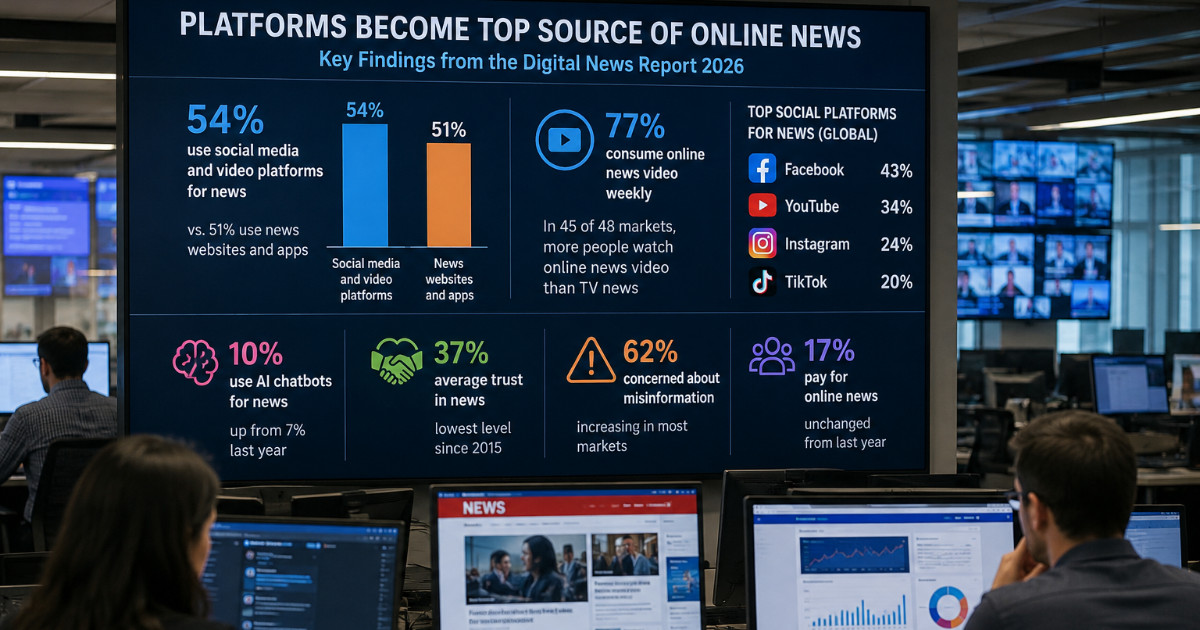
Today, millions consume news through platforms like Facebook and YouTube, where content is freely available and endlessly shared. In such an environment, the idea of paying for online news remains unfamiliar, and, for many, unnecessary.
This behavioral pattern creates a fundamental barrier: convincing users to pay for something they have never had to pay for before.
Economic realities limit adoption
Pakistan’s broader economic landscape also plays a significant role. With rising inflation and limited disposable income, consumers prioritize essential expenses over digital subscriptions. Even modest monthly fees can feel unjustifiable when compared to everyday costs such as mobile data, electricity, and transportation.
Unlike in wealthier markets, where subscriptions are often bundled into lifestyle spending, paid news in Pakistan competes with basic financial needs. This makes scaling a subscription-based model particularly difficult.
Trust deficit and perceived value
Another critical factor is trust. Public confidence in media institutions in Pakistan has fluctuated in recent years, with audiences often questioning editorial independence and credibility.
When users perceive content as biased, repetitive, or easily replaceable, the incentive to pay diminishes further. Many readers see little distinction between outlets, especially when similar news stories are published across multiple platforms with minimal differentiation.
Without exclusive, high-value journalism, subscription models struggle to justify their cost.
Content commodification in a crowded market
Pakistan’s digital news ecosystem is highly saturated. Dozens of websites, aggregators, and social media pages publish near-identical content, often driven by the same news wires or trending topics.
This commodification of news reduces its uniqueness. If the same information is available across multiple free sources, audiences have little reason to subscribe to a single platform.
Even established outlets such as Dawn Media Group, The Express Tribune, and Geo News operate in an environment where competing on exclusivity is both resource-intensive and commercially uncertain.
Payment barriers and digital friction
Beyond willingness, there is also the issue of access. Digital payment infrastructure in Pakistan, while improving, still presents hurdles.
Credit card penetration remains relatively low, and many users are hesitant to enter payment details online. While mobile wallets and fintech solutions are growing, seamless recurring payment systems, essential for subscriptions, are not yet universally adopted.
This friction adds another layer of resistance to subscription uptake.
Advertising still dominates the business model
Most Pakistani media organizations continue to rely heavily on advertising revenue. This dependence incentivizes high-traffic, click-driven content rather than in-depth, subscriber-focused journalism.
As a result, the industry remains caught in a cycle: free content drives traffic, traffic drives advertising, and advertising discourages the shift toward paid models.
Breaking this cycle would require a fundamental restructuring of editorial and business priorities, something few outlets are currently positioned to undertake.
The path forward: adaptation, not imitation
While subscription models face clear challenges in Pakistan, this does not mean that reader revenue is impossible. Instead, it suggests that direct replication of Western models may not work.
Hybrid approaches, combining advertising, memberships, donations, and niche paid content, may offer a more viable path. Specialized reporting, investigative journalism, and industry-specific insights could create value that audiences are willing to support.
Ultimately, the question is not whether audiences in Pakistan will ever pay for news, but what kind of journalism they would consider worth paying for.
WHY THIS MATTERS: For Pakistani journalists and media organizations, the difficulty of building subscription revenue highlights the need to rethink digital strategies beyond paywalls, including memberships, niche reporting, and audience engagement. It also underscores the importance of rebuilding trust and offering distinct, high-value journalism that stands out in a crowded market. Without adapting to these realities, newsrooms risk continued financial instability and limited editorial independence.
PHOTO: AI-generated; for illustrative purposes
Key Points
- Long history of television and freely shared digital content has normalized free news consumption.
- Social platforms like Facebook and YouTube distribute news for free, reducing the perceived value of paid content.
- High inflation and limited disposable income make subscriptions a lower priority for many households.
- Price sensitivity differs from wealthier markets, where subscriptions are bundled into lifestyle spending.
- These structural and cultural factors make scaling paid-news models difficult in Pakistan.
Key Questions & Answers
Why do subscriptions struggle in Pakistan?
Free-access norms, limited disposable incomes, and dominant social platforms reduce the willingness of many readers to pay for news.
Are price and affordability the main issues?
Affordability is a major factor; even modest fees compete with essential household expenses for many people.
Do social platforms prevent paywalls from working?
Platforms do not make paywalls impossible; however, their free distribution lowers the perceived need to subscribe.
Can Pakistani publishers succeed with subscriptions?
Industry approaches include localized pricing, bundling, and trust-building; success depends on execution and audience acceptance.
Relevant Topics
Ask AI: Understand this story your way
AI EnabledDig deeper, ask anything — get instant context, background, and clarity.
Disclaimer: This feature is powered by AI and is intended to help readers explore and understand news stories more easily. While we strive for accuracy, AI-generated responses may occasionally be incomplete or reflect limitations in the underlying model. This feature does not represent the editorial views of JournalismPakistan. For our full, verified reporting, please refer to the original article.