.png)
What is the NCCIA and what powers does it have?
JournalismPakistan.com | Published: 9 June 2026 | JP Staff Report
Join our WhatsApp channel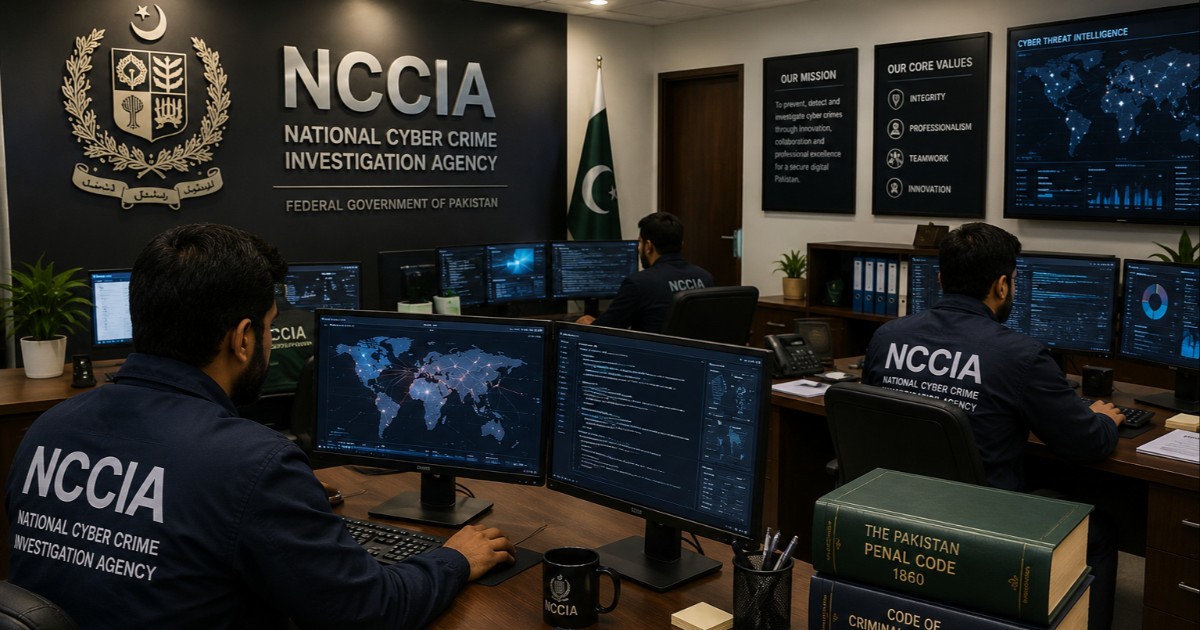
The National Cyber Crime Investigation Agency (NCCIA) is Pakistan's federal body enforcing PECA and other cyber laws. It investigates online offences, including complaints against journalists, content creators and social media users.Summary
ISLAMABAD — Pakistan's National Cyber Crime Investigation Agency (NCCIA) has increasingly come into public focus as journalists, YouTubers, social media users, and digital content creators face investigations under cybercrime laws. The agency is now responsible for investigating a wide range of online offenses, making it one of Pakistan's most significant law enforcement bodies in the digital sphere.
Understanding what the NCCIA is, how it operates, and what powers it possesses has become important not only for media professionals but for anyone active online.
What is the NCCIA?
The National Cyber Crime Investigation Agency was established by the federal government as a specialized body dedicated to investigating cybercrime and enforcing laws related to digital offenses. It assumed responsibilities previously handled by the cybercrime wing of the Federal Investigation Agency (FIA).
The agency's mandate is primarily linked to the enforcement of the Prevention of Electronic Crimes Act (PECA) and other laws governing cyber-related offenses in Pakistan. Its creation was intended to provide a dedicated institutional framework for tackling increasingly complex digital crimes.
Why was the agency created?
Governments around the world have expanded cybercrime enforcement capabilities in response to growing threats such as online fraud, identity theft, hacking, financial scams, cyberstalking, and digital harassment.
Pakistan's authorities have argued that a specialized agency is needed to address these challenges effectively. The rapid growth of social media platforms, digital banking, e-commerce, and online communication has created new opportunities for both legitimate activity and criminal abuse, increasing the need for dedicated cybercrime investigations.
What powers does the NCCIA have?
The NCCIA has investigative powers granted under relevant laws and regulations governing cybercrime investigations.
Its responsibilities include:
Receiving and examining cybercrime complaints.
Conducting inquiries and criminal investigations.
Collecting and preserving digital evidence.
Seeking court-approved search and seizure warrants where required by law.
Arresting suspects in cases covered by applicable legislation.
Coordinating with prosecutors for criminal proceedings.
Working with domestic and international law enforcement agencies on cybercrime matters.
Like other law enforcement bodies, the agency's powers are subject to legal procedures, judicial oversight, and court review.
What types of cases does it investigate?
The NCCIA investigates a broad range of cyber-related offenses, including:
Online fraud and financial scams.
Unauthorized access to computer systems.
Hacking and data theft.
Identity theft.
Cyberstalking and online harassment.
Electronic forgery and impersonation.
Child online exploitation offenses.
Digital extortion and blackmail.
Offenses involving online content that authorities allege violates applicable cybercrime laws.
The nature of investigations can vary from individual complaints to cases involving organized cybercriminal networks.
How does the NCCIA affect journalists and content creators?
The agency's role has attracted particular attention from journalists, media organizations, bloggers, YouTubers, and digital creators.
Because many investigations involve online speech, social media activity, or digital publishing, media professionals may find themselves affected by inquiries, notices, complaints, or legal proceedings initiated under cybercrime laws.
Several recent cases involving journalists and online commentators have generated debate about the relationship between cybercrime enforcement and freedom of expression. Supporters of stronger enforcement argue that digital platforms should not be exempt from legal accountability, while critics warn that broadly interpreted provisions may create a chilling effect on journalism and public debate.
Why is the NCCIA controversial?
Much of the public debate surrounding the NCCIA stems from broader concerns about cybercrime legislation rather than the agency itself.
Digital rights advocates, press freedom organizations, and some legal experts have argued that certain cybercrime provisions can be interpreted broadly and may affect legitimate journalism, political commentary, or public-interest reporting.
Government officials and law enforcement authorities, meanwhile, maintain that cybercrime laws are necessary to combat fraud, harassment, misinformation, online abuse, and other harmful activities that increasingly occur through digital platforms.
The debate often centers on how laws are applied, what safeguards exist against misuse, and whether sufficient judicial oversight is available.
What rights do citizens have during an investigation?
Individuals who become subjects of investigations continue to enjoy legal protections provided under Pakistan's legal system.
These protections may include:
Access to legal counsel.
The right to challenge investigative actions before courts.
Judicial review of certain enforcement measures.
Bail where available under applicable law.
The presumption of innocence until proven guilty.
Legal outcomes ultimately depend on the facts of each case and decisions made by courts.
Why this matters
The NCCIA is playing an increasingly prominent role in Pakistan's digital landscape at a time when journalism, public discourse, and civic engagement are increasingly conducted online. For journalists, media organizations, and content creators, understanding the agency's powers and legal framework is essential for navigating a rapidly evolving regulatory environment.
As cybercrime investigations become more common, awareness of both legal obligations and legal protections is likely to become increasingly important for media professionals and ordinary citizens alike.
Key takeaways
The NCCIA is Pakistan's specialized cybercrime investigation agency.
It investigates offenses ranging from online fraud to cyberstalking and hacking.
The agency has powers to conduct inquiries, collect digital evidence, and pursue criminal investigations.
Journalists, content creators, and social media users may be affected by investigations under cybercrime laws.
Debate continues over balancing cybercrime enforcement with freedom of expression and press freedom concerns.
ATTRIBUTION: Reporting by JournalismPakistan, based on publicly available laws, government notifications, official information regarding the National Cyber Crime Investigation Agency, and reporting by credible news organizations where applicable.
PHOTO: AI-generated; for illustrative purposes
Key Points
- Established as a dedicated federal agency to investigate cybercrime.
- Enforces the Prevention of Electronic Crimes Act (PECA) and related laws.
- Assumed responsibilities formerly handled by the FIA cybercrime wing.
- Investigates a wide range of online offences including fraud, hacking, harassment and scams.
- Has become particularly relevant for journalists, YouTubers, social media users and content creators.
Key Questions & Answers
What is the NCCIA?
The National Cyber Crime Investigation Agency is Pakistan's federal body created to investigate cybercrime and enforce laws such as the Prevention of Electronic Crimes Act (PECA).
Which laws does it enforce?
Its mandate is primarily tied to PECA and other laws governing digital offences in Pakistan.
Who can be investigated by the NCCIA?
The agency investigates online offences that can involve journalists, content creators, social media users and members of the public accused of cyber-related crimes.
Did NCCIA replace any existing body?
Yes. NCCIA assumed responsibilities previously handled by the Federal Investigation Agency's cybercrime wing to provide a specialized institutional framework for digital investigations.
Relevant Topics
Ask AI: Understand this story your way
AI EnabledDig deeper, ask anything — get instant context, background, and clarity.
Disclaimer: This feature is powered by AI and is intended to help readers explore and understand news stories more easily. While we strive for accuracy, AI-generated responses may occasionally be incomplete or reflect limitations in the underlying model. This feature does not represent the editorial views of JournalismPakistan. For our full, verified reporting, please refer to the original article.