.png)
U.S. judge orders Pentagon to restore press access
JournalismPakistan.com | Published: 11 April 2026 | JP Staff Report
Join our WhatsApp channel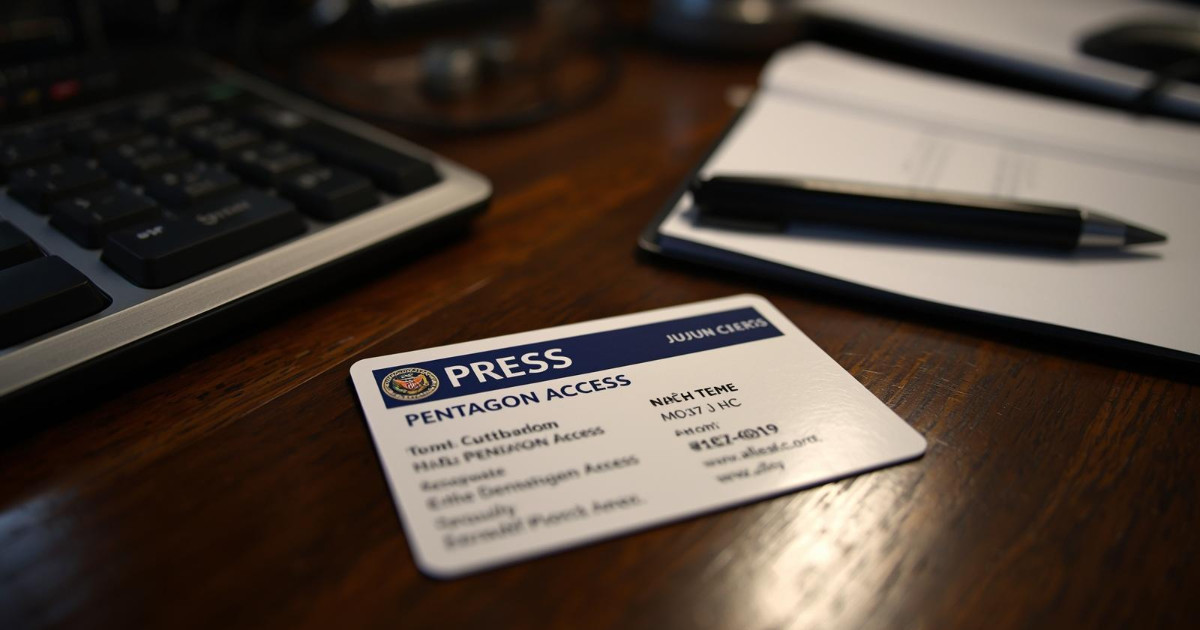
A federal judge found that the Pentagon's revised media policies continued to unlawfully limit reporters' activities and ordered restoration of press access at defense facilities. The court required a compliance report from the DoD by April 16.Summary
WASHINGTON — A U.S. federal judge has ruled that the Pentagon violated a prior court order restricting journalists’ access to defense facilities, finding that revised policies still unlawfully limited reporting inside the institution and ordering full restoration of press access.
The ruling specifically impacts journalists from major news organizations, including The New York Times, and reinforces earlier judicial instructions that the Pentagon must not impose restrictions that undermine constitutional protections for the press.
Press access restrictions found unlawful
The court concluded that the Pentagon’s updated media policies did not comply with the earlier order and continued to prevent reporters from carrying out core journalistic functions within the defense headquarters. The judge directed the Pentagon to immediately restore proper access conditions and ensure compliance with constitutional standards governing press freedom.
Compliance deadline set for April 16
The court further ordered the Department of Defense to submit a compliance report by April 16, outlining the steps taken to fully implement the ruling. The directive adds legal pressure on the Pentagon to demonstrate that journalists will regain the ability to report from inside the facility without undue restriction.
Background to the legal dispute
The case stems from ongoing tensions between defense authorities and media organizations over access to sensitive national security environments. Earlier court intervention had already flagged concerns that access rules were being applied in ways that limited legitimate newsgathering activities by accredited reporters.
Reaffirming press protections in national security spaces
The latest decision underscores judicial scrutiny of government attempts to regulate press activity in secure federal institutions. It signals that even in national security contexts, restrictions must meet strict constitutional standards and cannot disproportionately hinder journalistic oversight of public institutions.
WHY THIS MATTERS: For Pakistani journalists, the ruling highlights how courts can serve as critical checks on executive overreach in restricting press access to powerful state institutions. It reinforces the principle that even national security arguments do not automatically override newsroom rights to report from within government spaces. The case offers a comparative example of how legal systems can be used to defend transparency in sensitive reporting environments.
ATTRIBUTION: Reporting by JournalismPakistan, based on publicly available court ruling and judicial proceedings involving the U.S. Department of Defense and media organizations, including The New York Times.
PHOTO: AI-generated; for illustrative purposes.
Key Points
- A federal judge ruled the Pentagon violated a prior court order by imposing unlawful media restrictions.
- The decision found revised policies still limited reporters' core functions within defense headquarters.
- The ruling specifically notes impacts on journalists from major outlets, including The New York Times.
- The judge ordered immediate restoration of press access and compliance with constitutional standards.
- The Department of Defense must file a compliance report by April 16 detailing corrective steps.
Key Questions & Answers
What did the judge order?
The judge ordered the Pentagon to restore press access at defense facilities and to comply with constitutional protections for the press.
Who is affected by the ruling?
The decision impacts journalists from major news organizations, including The New York Times, and applies to media inside the defense headquarters.
Why was the case brought to court?
The dispute arose from tensions over access rules at sensitive national security sites after earlier findings that restrictions were being applied unlawfully.
What must the Pentagon do next?
The Department of Defense must immediately restore proper access conditions and submit a compliance report by April 16 explaining steps taken to implement the ruling.
Relevant Topics
Ask AI: Understand this story your way
AI EnabledDig deeper, ask anything — get instant context, background, and clarity.
Disclaimer: This feature is powered by AI and is intended to help readers explore and understand news stories more easily. While we strive for accuracy, AI-generated responses may occasionally be incomplete or reflect limitations in the underlying model. This feature does not represent the editorial views of JournalismPakistan. For our full, verified reporting, please refer to the original article.