.png)
Media layoffs accelerate shift to digital newsrooms
JournalismPakistan.com | Published: 11 May 2026 | JP Staff Report
Join our WhatsApp channel
A new wave of layoffs at major international and Pakistani news organizations is reshaping newsroom culture and accelerating a shift toward digital-first operations. Companies are prioritizing subscriptions, AI-assisted workflows, streaming audiences and cost reductions.Summary
ISLAMABAD — A new wave of media layoffs across major international and Pakistani news organizations is reshaping newsroom culture, accelerating digital restructuring, and raising concerns about the long-term sustainability of journalism. From legacy newspapers in the United States to television networks and digital platforms in Pakistan, media companies are cutting jobs, consolidating operations, and freezing recruitment as advertising revenues weaken and audience habits continue to shift.
Recent restructuring moves at major Western media organizations have highlighted the scale of the industry’s transition. In February, The Washington Post began sweeping layoffs affecting hundreds of employees across newsroom departments, while CBS News announced workforce reductions tied to broader restructuring plans aimed at digital expansion and cost management. CNBC also moved to merge digital and television news operations as part of a newsroom overhaul linked to its evolving subscription strategy.
Digital restructuring reshapes editorial priorities
Industry analysts say the latest cuts reflect bigger structural changes in journalism rather than short-term financial turbulence alone. Media organizations are increasingly prioritizing digital subscriptions, streaming audiences, AI-assisted workflows, and lower-cost production models, while reducing investment in traditional reporting desks and regional coverage.
At The Washington Post, newsroom reductions reportedly affected international, metro, editing, and sports coverage, underscoring concerns that cost-cutting may reduce reporting depth and investigative capacity. Reuters reported that CBS News executives described the industry as changing “radically,” with management emphasizing the need to redirect resources toward digital growth areas.
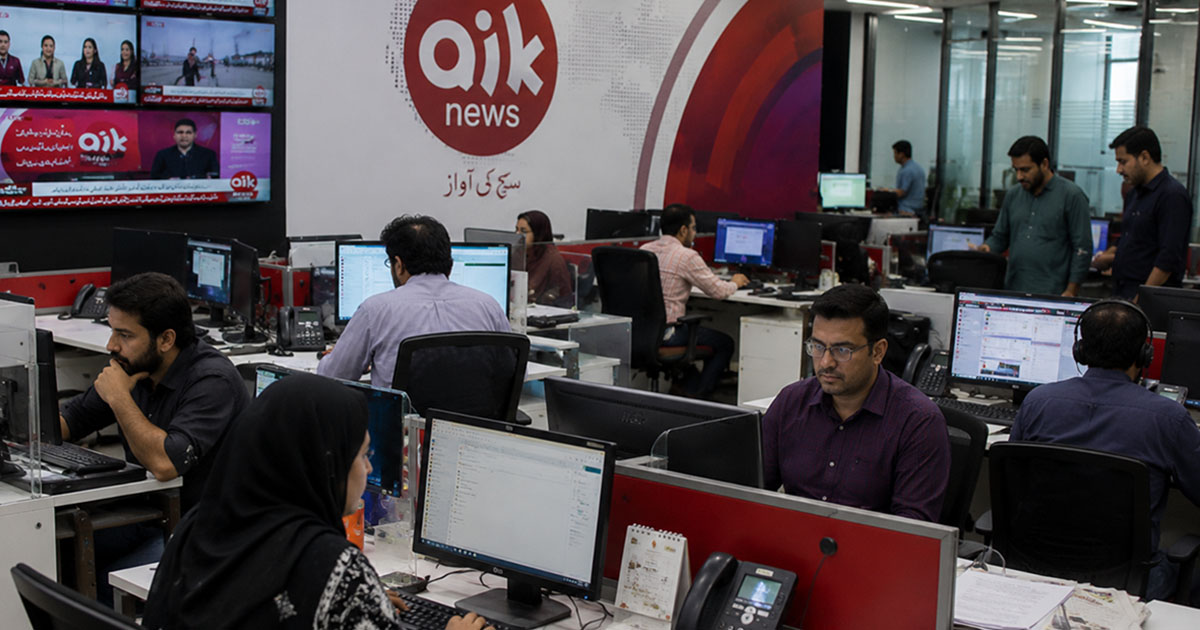
In Pakistan, media professionals say similar pressures are becoming increasingly visible. Television channels and digital outlets have reportedly slowed hiring, reduced staffing levels, and increased workloads for remaining employees amid economic uncertainty and declining advertising income. Industry observers note that shrinking revenues have also affected training opportunities and entry-level hiring for young journalists entering the profession.
Pakistani newsrooms face mounting pressure
The economic strain on Pakistani media organizations has coincided with broader financial pressures affecting the country’s advertising and technology sectors. Journalists and newsroom managers increasingly report concerns over job security, delayed salaries, and reduced editorial resources, particularly in regional and smaller-market newsrooms.
Media researchers say newsroom downsizing can alter editorial culture by pushing journalists toward faster production cycles and heavier reliance on syndicated or digital-first content. Some editors also fear that prolonged staffing cuts may weaken investigative journalism and reduce institutional memory within news organizations.
Globally, layoffs have extended beyond journalism into technology and corporate sectors, reinforcing broader anxieties about automation, the integration of artificial intelligence, and changing labor patterns. Several companies, including Amazon and major technology firms, have announced significant workforce reductions in recent months as businesses restructure operations and increase their adoption of AI.
Journalism adapts to a leaner media economy
Despite the uncertainty, some media organizations are simultaneously investing in new digital roles, audience engagement teams, and subscription products. Reuters reported that CNBC’s restructuring included plans to add dozens of new positions even as layoffs were implemented, suggesting many companies are reallocating resources rather than abandoning newsroom expansion entirely.
Media strategists say future newsroom models are likely to prioritize multimedia reporting, direct audience relationships, newsletters, podcasts, and platform diversification. However, labor unions and journalism advocates continue to warn that repeated layoffs risk undermining newsroom morale and reducing the public-service capacity of journalism at a time of growing misinformation and political polarization.
WHY THIS MATTERS: Pakistani media organizations are facing many of the same financial and technological pressures affecting international newsrooms. The global shift toward leaner digital-first operations highlights the importance of audience diversification, sustainable revenue models, and skills development for journalists working in increasingly unstable media environments.
ATTRIBUTION: Reporting by JournalismPakistan, based on publicly available reporting by Reuters (February–March 2026), JournalismPakistan reports published April–May 2026, and publicly available newsroom restructuring statements by international media organizations.
PHOTO: AI-generated; for illustrative purposes only.
Key Points
- Wave of layoffs across international and Pakistani news organizations.
- Editorial priorities are shifting toward digital subscriptions and streaming audiences.
- Newsrooms are adopting AI-assisted workflows and merging digital and TV operations.
- Cost-cutting is reducing investment in traditional desks and regional coverage.
- Analysts warn of long-term sustainability and reduced reporting capacity.
Key Questions & Answers
Why are media organizations cutting jobs?
Publishers cite weakening advertising revenue, changing audience habits, and a strategic shift toward digital subscriptions and lower-cost production models.
How are newsrooms being restructured?
Many outlets are merging digital and broadcast operations, adopting AI-assisted workflows, freezing recruitment, and prioritizing subscription and streaming strategies.
What coverage is most affected by cuts?
Reports indicate reductions in international, metro, regional and some specialist desks as organizations streamline resources and focus on scalable digital output.
What are the wider implications for journalism?
There are concerns about reduced local and investigative reporting, thinner editorial capacity, and long-term sustainability of independent journalism.
Ask AI: Understand this story your way
AI EnabledDig deeper, ask anything — get instant context, background, and clarity.
Disclaimer: This feature is powered by AI and is intended to help readers explore and understand news stories more easily. While we strive for accuracy, AI-generated responses may occasionally be incomplete or reflect limitations in the underlying model. This feature does not represent the editorial views of JournalismPakistan. For our full, verified reporting, please refer to the original article.