
Legal pressures on journalists in South Asia deepen as cases surge
JournalismPakistan.com | Published: 27 February 2026 | JP Asia Desk
Join our WhatsApp channel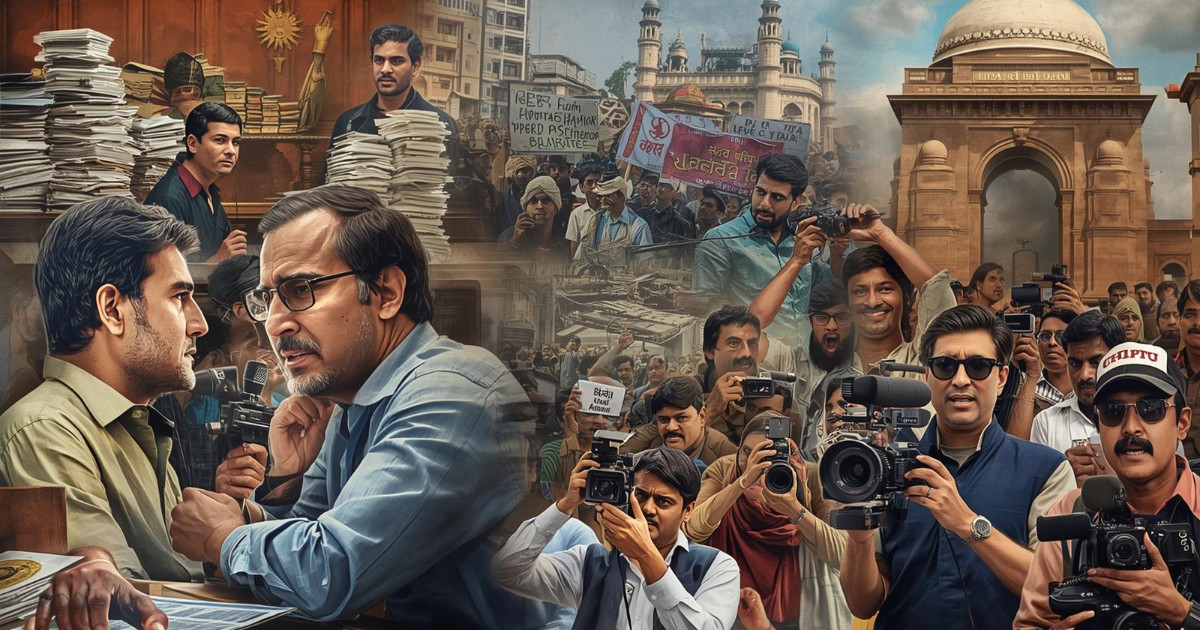
Legal pressures on journalists across South Asia have surged amid political shifts and protests; TIB reported over 1,073 media workers affected, while Pakistan has used anti-terror and digital laws to target reporters, including arrests and channel bans.Summary
ISLAMABAD — Across South Asia, legal pressures on journalists have surged sharply over the past year, driven by a mix of political transitions, protests, and the strategic use of national security, criminal, and digital laws to target critical reporting.
In Bangladesh, Transparency International Bangladesh (TIB) documented more than 1,073 journalists and media workers affected by legal action, threats, harassment, or detention between August 2024 and November 2025, including at least 140 journalists facing criminal charges such as murder linked to their reporting during political unrest. These cases have included repeated court appearances, travel restrictions, and growing self‑censorship inside newsrooms as reporters weigh legal risks before publishing sensitive information. Legal challenges have also intensified elsewhere in the region.
Pakistan’s use of anti‑terror and digital laws sparks concern
In Pakistan, an Islamabad anti‑terrorism court sentenced four journalists in exile to life imprisonment in absentia on charges of “inciting violence” related to riots in May 2023, a verdict widely criticized by press freedom advocates as equating journalism with terrorism. The crackdown has included blocking 27 YouTube channels under the Prevention of Electronic Crimes Act (PECA) for allegedly broadcasting “anti‑Pakistan content”, and an Islamabad court declaring independent investigative journalist Ahmad Noorani a “wanted person” for alleged propaganda against the military, leading to an arrest warrant and multiple charges tied to his reporting.
India’s restrictive environment fuels legal and regulatory threats
In India, press freedom indices reflect sustained constraints on journalism, with the country ranked 151st out of 180 nations in the 2025 World Press Freedom Index compiled by Reporters Without Borders. The ranking highlighted widespread use of defamation, sedition, national security, and digital regulations that critics say suppress critical voices and foster an environment where legal threats and intimidation are common for journalists covering political and governance issues.
Regional pattern of legal harassment and its implications
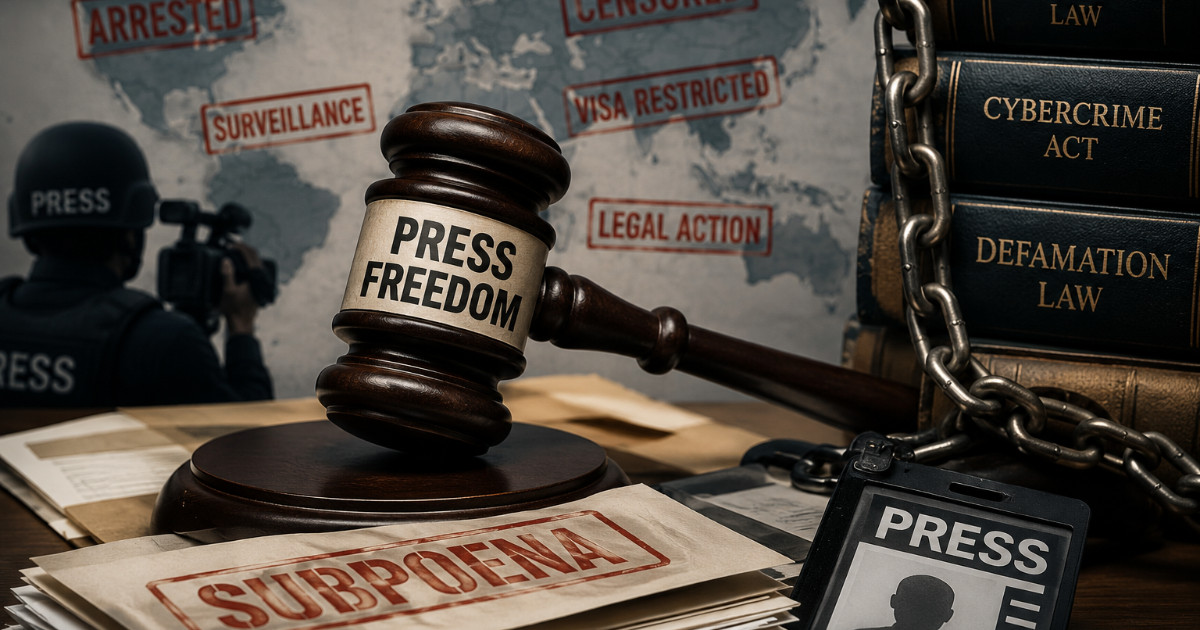
Experts and rights groups say the pattern across South Asia illustrates how criminal and digital laws, often justified as tools for national security, public order, or counter‑disinformation, are increasingly weaponised against independent media and dissenting voices. This includes vague legal provisions that allow for arbitrary arrests, prolonged court cases, travel restrictions, and digital censorship, effectively creating a climate of legal uncertainty that pressures journalists to self‑censor and limits investigative reporting.
WHY THIS MATTERS: Rising legal pressures on journalists in South Asia signal broader threats to independent reporting, the rule of law, and democratic accountability, core issues for media professionals in Pakistan. Understanding how laws are applied to suppress press freedom highlights the need for stronger legal protections, newsroom strategies to mitigate risks, and alliances with rights organizations to uphold journalists’ constitutional and human rights.
ATTRIBUTION: Reporting based on Transparency International Bangladesh documentation; Reporters Without Borders press freedom indices and coverage; global and regional press freedom assessments.
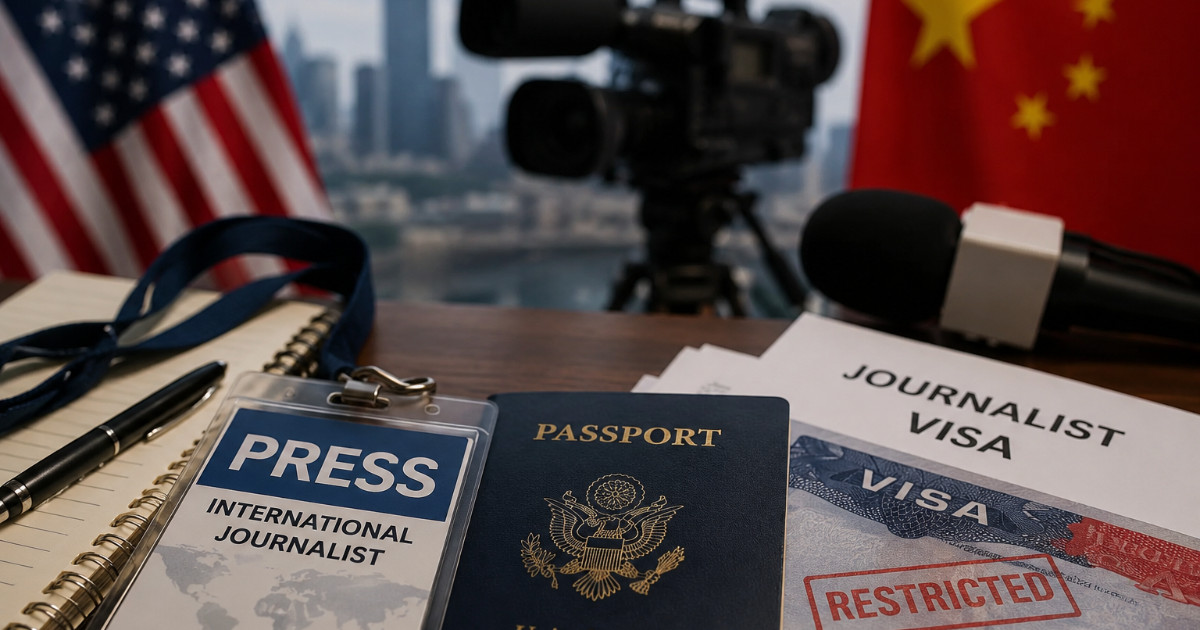
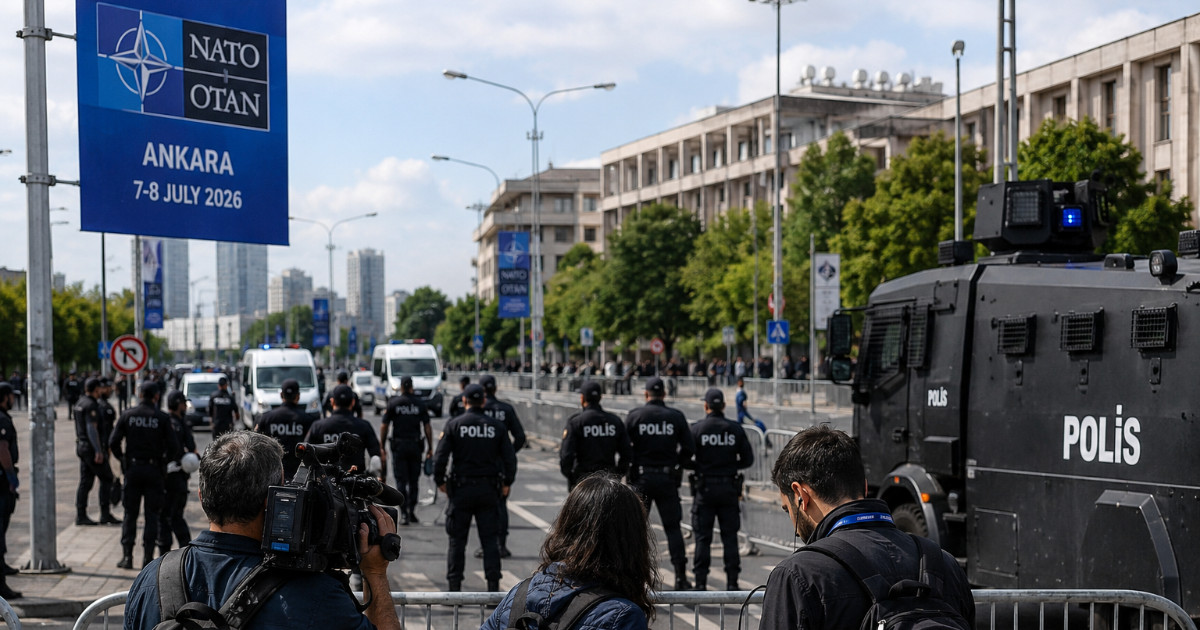
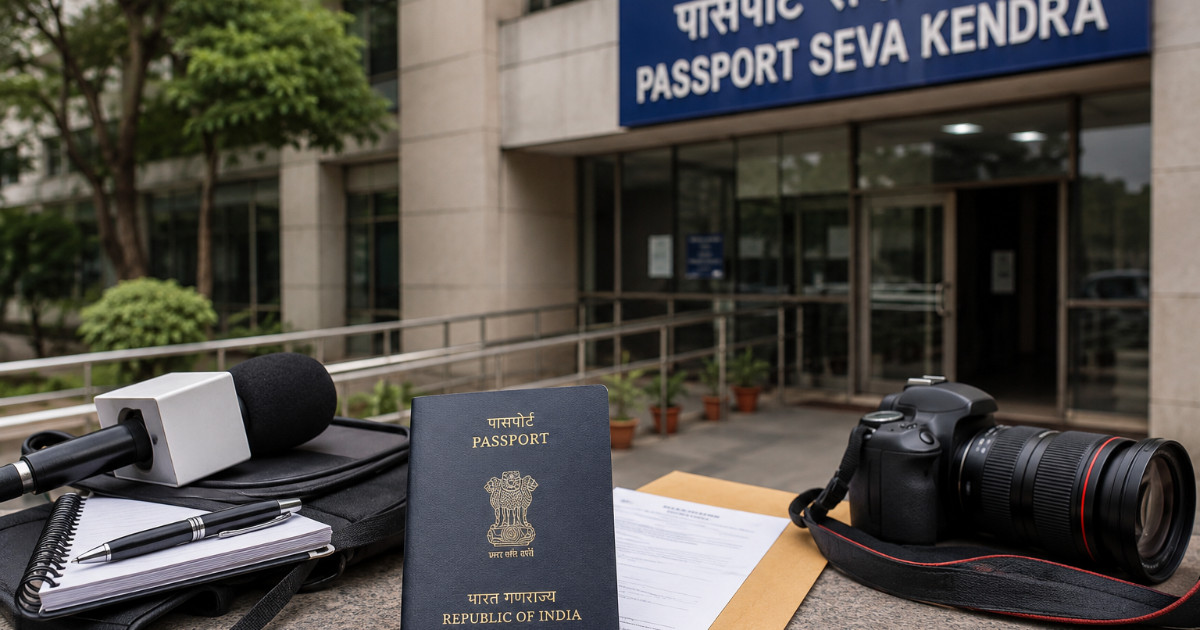
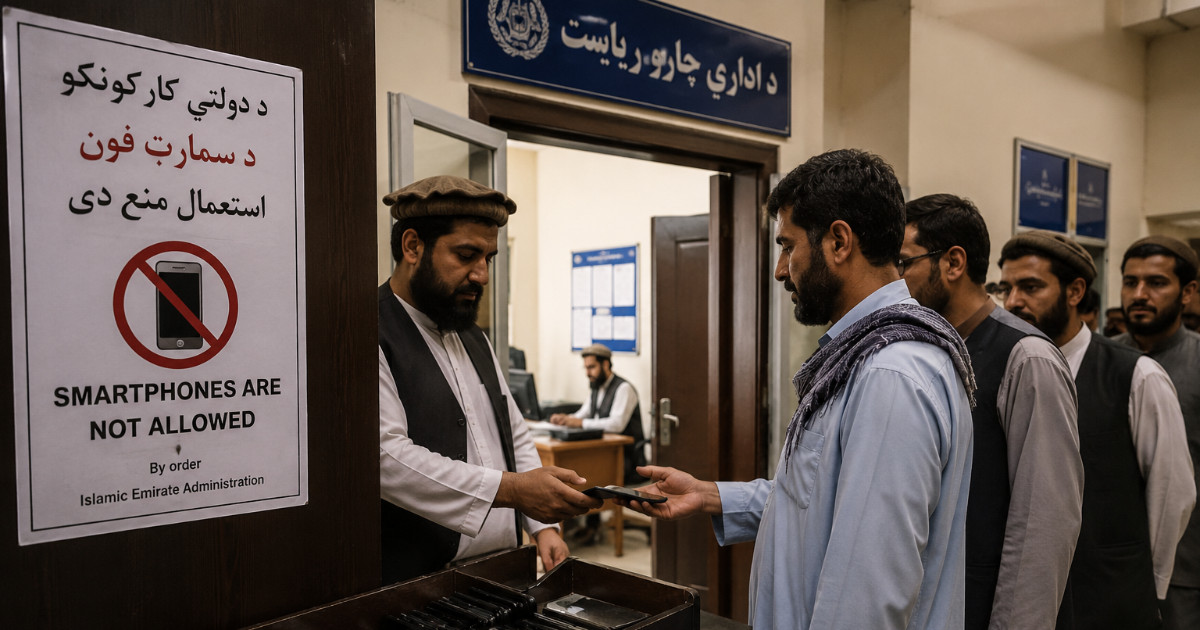
PHOTO: AI‑generated; for illustrative purposes only.
Key Points
- Regional surge in legal actions against journalists linked to political transitions and protests.
- TIB recorded more than 1,073 journalists and media workers affected in Bangladesh between Aug 2024 and Nov 2025.
- At least 140 Bangladeshi journalists faced criminal charges connected to reporting during unrest.
- Pakistan has employed anti-terror and digital laws, including PECA, to block channels and pursue reporters.
- Consequences include repeated court appearances, travel restrictions and growing self-censorship.
Key Questions & Answers
What is driving the rise in legal actions against journalists?
Political transitions, protests and a broader tendency to invoke national security, criminal and digital laws have driven the increase.
How many media workers were affected in Bangladesh?
Transparency International Bangladesh documented more than 1,073 journalists and media workers affected between August 2024 and November 2025.
How has Pakistan targeted journalists?
Authorities have used anti-terror and digital laws to seek severe penalties, block YouTube channels under PECA, and issue arrest warrants for investigative reporters.
What impact are these legal pressures having on reporting?
Reporters face repeated court appearances, travel restrictions and increasing self-censorship as newsrooms weigh legal risks before publishing.
Relevant Topics
Ask AI: Understand this story your way
AI EnabledDig deeper, ask anything — get instant context, background, and clarity.
Disclaimer: This feature is powered by AI and is intended to help readers explore and understand news stories more easily. While we strive for accuracy, AI-generated responses may occasionally be incomplete or reflect limitations in the underlying model. This feature does not represent the editorial views of JournalismPakistan. For our full, verified reporting, please refer to the original article.