.png)
Global media rewrites Pakistan's image amid Islamabad Talks
JournalismPakistan.com | Published: 11 April 2026 | JP Special Report
Join our WhatsApp channel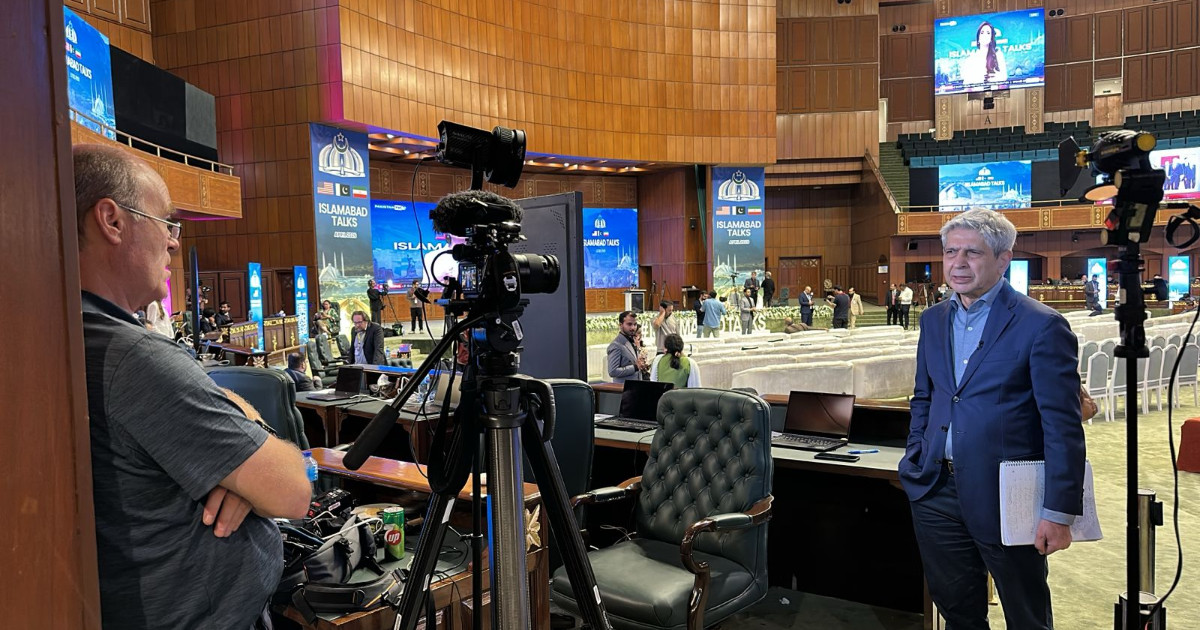
International coverage of the US-Iran Talks in Islamabad is increasingly portraying Pakistan as a neutral host and diplomatic facilitator, marking a shift away from earlier security-centric narratives. Reports now emphasize the country's geographic positioning, access, and logistical role in enabling dialogue between the two sides.Summary
ISLAMABAD — Pakistan is being cast in an unfamiliar role in global headlines, not as a security concern, but as a facilitator of high-stakes diplomacy, as Islamabad hosts sensitive US–Iran talks that have drawn sustained attention from international media.
What stands out in the coverage is not just the event itself, but how Pakistan is being described. In reporting across major global outlets, the country is increasingly appearing as a “host” and “facilitator” rather than a subject of security-focused narratives that have often defined its international image.
Instead of framing Islamabad through the lens of instability or crisis, several reports now place it within a diplomatic context, one where geography, access, and neutrality matter more than political symbolism alone.
A shift in how global media frames Pakistan
Coverage from Reuters has consistently highlighted Pakistan’s role as a host of negotiations, focusing on its ability to provide a workable setting for indirect engagement between Washington and Tehran. In parts of its reporting, the tone reflects what it describes as a broader recalibration of Pakistan’s diplomatic position, including language that suggests a “reversal in fortunes” in how its international role is perceived.
Similarly, Associated Press has emphasized the logistical and diplomatic function Pakistan is performing, portraying Islamabad less as a negotiating party and more as the neutral ground enabling rare contact between two long-hostile states.
The emphasis across both outlets is subtle but significant: Pakistan is not being narrated as the story’s problem space, but as its enabling environment.
From instability narrative to diplomatic utility
This framing marks a quiet but noticeable departure from older international coverage patterns, where Pakistan was often discussed in terms of internal volatility, security risks, or regional instability. In the current reporting cycle, however, the emphasis is shifting toward diplomatic utility and geopolitical relevance.
That does not mean the earlier narrative has disappeared. Instead, it sits in the background while a newer framing, focused on facilitation and strategic hosting, takes prominence in stories tied to the Islamabad talks.
Competing tones in global and regional coverage
The tone in The Guardian and similar Western outlets has generally been measured and analytical, highlighting the significance of Islamabad as a venue for sensitive negotiations without overstating Pakistan’s political role. The focus tends to remain on the diplomatic mechanics and broader geopolitical stakes.
Regional coverage, by contrast, has at times been more questioning in tone, particularly around issues of neutrality and strategic intent. Rather than assuming diplomatic success or neutrality, it often places greater weight on political implications and historical skepticism.
The result is a layered media landscape where the same development produces different narratives depending on geography and editorial tradition.
A gradual redefinition of image through coverage
What is emerging is not a sudden rebranding of Pakistan, but a gradual accumulation of framing choices across international reporting. Word by word, host, facilitator, venue, neutral ground, the language builds a different image than the one that has often dominated headlines in previous years.
The Islamabad talks have simply accelerated that shift, providing a high-visibility moment where Pakistan’s role is being interpreted through a diplomatic rather than security-first lens.
WHY THIS MATTERS: For Pakistani journalists and media professionals, this shift highlights how international perception is shaped less by official messaging and more by recurring narrative framing in global outlets. It underscores the importance of understanding how language choices, such as “host” versus “instability”, can gradually reposition a country’s image in global discourse. For newsrooms, it is a reminder that media framing is itself a form of influence.
ATTRIBUTION: Reporting by JournalismPakistan, based on publicly available coverage and framing in Reuters, Associated Press, and The Guardian (April 2026).
PHOTO: JournalismPakistan
Key Points
- Major outlets frame Islamabad as a host and facilitator of US-Iran indirect talks.
- Reuters highlights a perceived recalibration of Pakistan's diplomatic role.
- Associated Press emphasizes logistical support and neutral ground for engagement.
- Coverage marks a shift away from security-centric narratives toward diplomatic context.
- Reports focus on geography, access and practical conditions enabling talks.
Key Questions & Answers
Why is Islamabad hosting these talks?
Pakistan is portrayed as offering neutral territory and practical access for contacts.
Which international outlets highlighted this shift?
Coverage from Reuters and the Associated Press is cited most prominently for describing Pakistan as a host and facilitator.
Does this reporting change Pakistan's global image?
The coverage suggests a reframing toward diplomacy rather than security; long-term perception will depend on continued engagement and outcomes.
Is Pakistan acting as a negotiator in the talks?
No, reporting consistently presents Pakistan as a neutral host enabling US-Iran engagement, not as a direct negotiating party.
Ask AI: Understand this story your way
AI EnabledDig deeper, ask anything — get instant context, background, and clarity.
Disclaimer: This feature is powered by AI and is intended to help readers explore and understand news stories more easily. While we strive for accuracy, AI-generated responses may occasionally be incomplete or reflect limitations in the underlying model. This feature does not represent the editorial views of JournalismPakistan. For our full, verified reporting, please refer to the original article.