
Every frame at a cost: The safety crisis facing Pakistan's camerapersons Why journalists are increasingly targeted in conflict zones What the 60 Minutes controversy means for TV journalism Zee secures FIFA World Cup rights in India through 2030 How fact-checkers verify viral videos during breaking news Pentagon restrictions on reporters draw media backlash Israel-Lebanon talks proceed as conflict hinders reporting Why governments are tightening controls on foreign journalists China condemns US restrictions on Xinhua reporter Taiwan condemns China over New York Times reporter expulsion The biggest threats facing journalism in Asia today Press freedom review: The many faces of pressure on the press Five warning signs for global journalism in May 2026 Cybercrime, courtrooms, and newsroom cuts: What defined Pakistan media in May Gaza journalists win 2026 Golden Pen of Freedom award Every frame at a cost: The safety crisis facing Pakistan's camerapersons Why journalists are increasingly targeted in conflict zones What the 60 Minutes controversy means for TV journalism Zee secures FIFA World Cup rights in India through 2030 How fact-checkers verify viral videos during breaking news Pentagon restrictions on reporters draw media backlash Israel-Lebanon talks proceed as conflict hinders reporting Why governments are tightening controls on foreign journalists China condemns US restrictions on Xinhua reporter Taiwan condemns China over New York Times reporter expulsion The biggest threats facing journalism in Asia today Press freedom review: The many faces of pressure on the press Five warning signs for global journalism in May 2026 Cybercrime, courtrooms, and newsroom cuts: What defined Pakistan media in May Gaza journalists win 2026 Golden Pen of Freedom award
Logo
Janu
Women in Media

Cases against journalists a worrying trend: HRCP official

 JournalismPakistan.com |  Published: 25 September 2020

Join our WhatsApp channel
Cases against journalists a worrying trend: HRCP official
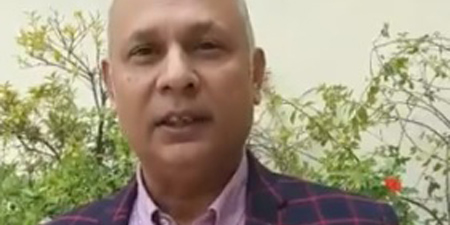
Harris Khalique of HRCP has condemned the 49 cases filed against journalists in Pakistan for criticizing national institutions. This trend raises concerns about the state's tolerance for dissent.

ISLAMABAD— Harris Khalique, Secretary-General of Human Rights Commission of Pakistan (HRCP), has said the registration of 49 cases against journalists and social media activists over defamation of national institutions shows the state had become weak and unable to take criticism.

In the talk show Zara Hut Kay on DawnNews TV, he termed the cases a worrying trend, which is even not good for the state and its institutions.

When asked to comment on the cases, he said he was going to talk openly. However, Wasatullah Jan, one of the three program hosts, on a lighter note, asked him not to be so open to close down the talk show.

Mubashir Zaidi, also a presenter, asked him if he too wanted to be booked.

Harris responded that there was no harm if the 50th case was also registered. “But seriously, I condemn this (registration of cases). When the kingdom is weak, it does not even like a joke. When the kingdom is strong, it even rewards over criticism and satire.”

Key Points

  • 49 cases registered against journalists and social media activists in Pakistan.
  • Harris Khalique describes the situation as a worrying trend.
  • He emphasizes that a strong state welcomes criticism and satire.
  • The discussion took place on DawnNews TV's show Zara Hut Kay.
  • Khalique questions the government's reaction to criticism.

Ask AI: Understand this story your way

AI Enabled

Dig deeper, ask anything — get instant context, background, and clarity.

Not sure what to choose? Try one of these.

The AI generates results based on your selected options
Your AI-generated results will appear here after you click the button.

Disclaimer: This feature is powered by AI and is intended to help readers explore and understand news stories more easily. While we strive for accuracy, AI-generated responses may occasionally be incomplete or reflect limitations in the underlying model. This feature does not represent the editorial views of JournalismPakistan. For our full, verified reporting, please refer to the original article.
Dive Deeper

Newsroom
Why journalists are increasingly targeted in conflict zones

Why journalists are increasingly targeted in conflict zones

 June 04, 2026 Journalists in conflict zones face rising danger as combatants, states and militias increasingly target independent reporting to control narratives.


What the 60 Minutes controversy means for TV journalism

What the 60 Minutes controversy means for TV journalism

 June 03, 2026 The 60 Minutes controversy at CBS exposes tensions over leadership, editorial independence and pressures on legacy TV journalism amid political polarization.


Zee secures FIFA World Cup rights in India through 2030

Zee secures FIFA World Cup rights in India through 2030

 June 03, 2026 Zee Entertainment has secured broadcasting and digital rights in India for the 2026 and 2030 FIFA World Cups, reshaping the country's sports media landscape.


How fact-checkers verify viral videos during breaking news

How fact-checkers verify viral videos during breaking news

 June 02, 2026 Fact-checkers use source tracking, metadata, visual analysis and geolocation to verify whether viral videos in breaking news are authentic and timely.


Pentagon restrictions on reporters draw media backlash

Pentagon restrictions on reporters draw media backlash

 June 02, 2026 New Pentagon rules requiring official escorts for reporters in some areas have drawn criticism from press groups and major news organizations over transparency.


Popular Stories