.jpg)
Print dwindles, tweet count rises
JournalismPakistan.com | Published: 29 November 2013 | Arsalan Altaf
Join our WhatsApp channel
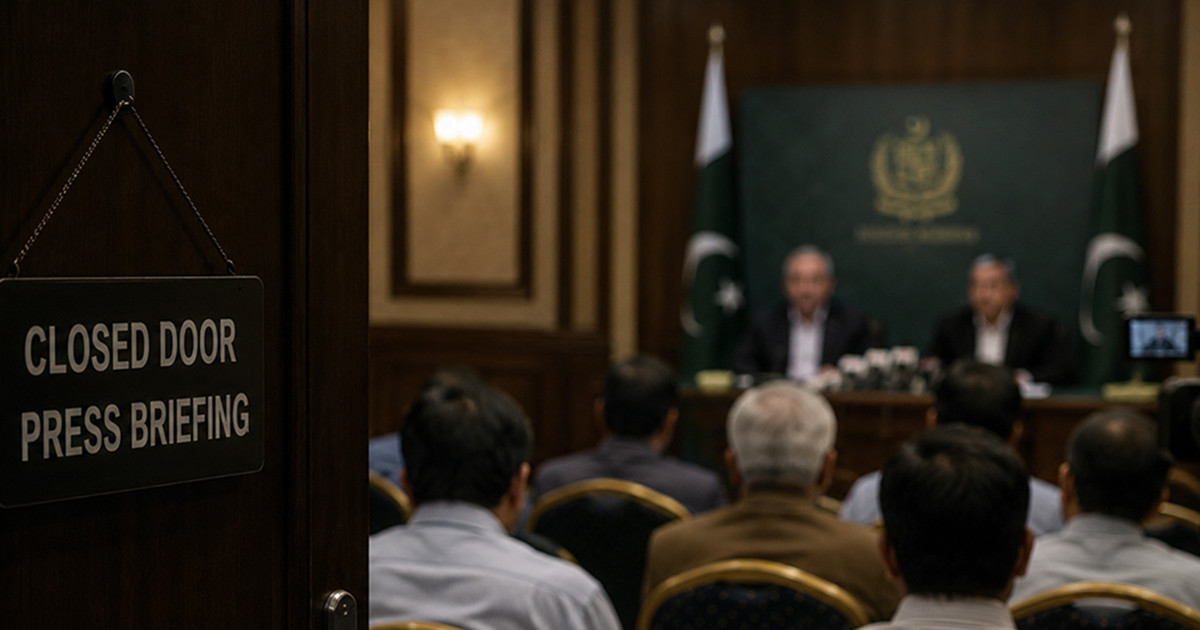
The National Media Conference discussed the evolving landscape of journalism in Pakistan and the impact of social media on traditional news formats. Experts highlighted the transition from print to digital and the need for media reform in the coming years.Summary
ISLAMABAD: How will we be consuming news 10 years down the line, and what shape the newspaper will take in 2024?
With these questions, Kamal Siddiqi, Editor The Express Tribune, opened the session ‘Pakistani Media in 2024’ at the National Media Conference, convened by Individualland Pakistan which concluded Thursday in Islamabad.
Senior journalist Ikram Hoti observed that the media has been an anti-democracy force in Pakistan and hasn’t exposed the mullah, military, and the political right, which he said have caused the most damage to this society. “If it goes on like this, in 2024 it will be called a terrorist media.”
Murtaza Solangi, under whom Radio Pakistan saw many new developments including an active social media presence, said the media influences the society and vice versa. “Today, there are more smart phones in Pakistan than PCs. Print is dwindling and tweet count is rising. The audience are active media consumers today and have their own pressure.”
The state media will either have to reform itself or it perishes, he warned.
Solangi said print’s shape might change but it will remain a source of in-depth coverage and analysis over the coming years.
“Future newspapers might not be on paper but will essentially provide the optimum tools for perspective building. Although future newspapers might have some sections of the breaking stories and updates but primarily they would provide depth and deeper analyses,” said Solangi, who himself has over 27,000 Twitter followers.
The chair, Kamal Siddiqi, said definitions of journalism and journalist are changing due to the social media and the emerging trend of citizen journalism. “Some on social media have more followers than many papers print copies. It’s a wake-up call for the so-called traditional journalists.”
Farieha Aziz, Director Bolo Bhi, dispelled the mainstream media’s impression of social media as a non-serious business. She said the traditional media is moving towards the social media. “Journalists should embrace it; it is here to stay.”
Farieha said investigative journalism is vanishing from the mainstream media but the online media is keeping it alive.
Nighat Dad, Executive Director Digital Rights Foundation, thought social media is facilitating the mainstream journalism today. She highlighted how the social media broke the Bin Laden raid story and how it compelled the TV screens to pick up the Shahzaib murder case.
“Not everything on social media is positive. Good cyber laws can check negativity on online platforms.”
Replying to a question on how to curb hate speech and other negative things on social media, Murtaza Solangi said bans and curbs are not the solution. “Where is the state on social media? To tackle disinformation on social networking sites, the state needs to come up with the right information using the same tools.”
Key Points
- Print media is declining while social media usage is rising in Pakistan.
- Experts predict that future newspapers will offer in-depth analysis rather than just breaking news.
- Citizen journalism is changing the definitions of traditional journalism.
- Investigative journalism is surviving through online platforms despite its decline in mainstream media.
- Social media has played a crucial role in breaking major news events.
Relevant Topics
Ask AI: Understand this story your way
AI EnabledDig deeper, ask anything — get instant context, background, and clarity.
Disclaimer: This feature is powered by AI and is intended to help readers explore and understand news stories more easily. While we strive for accuracy, AI-generated responses may occasionally be incomplete or reflect limitations in the underlying model. This feature does not represent the editorial views of JournalismPakistan. For our full, verified reporting, please refer to the original article.