
Media condemns proposed new media control bill in Maldives
JournalismPakistan.com | Published: 20 August 2025 | IFJ Media Release
Join our WhatsApp channel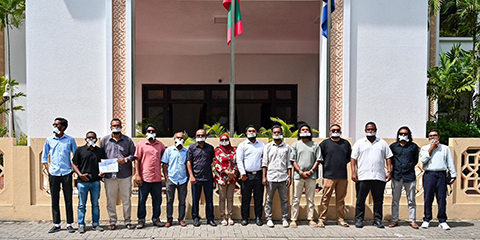
A controversial media bill in the Maldives aims to establish a super media regulator with extensive powers, raising concerns about press freedom. The Maldives Journalists Association and the International Federation of Journalists have condemned the proposals.Summary
A controversial media bill revived before the Maldivian parliament on August 18 is seeking to create a new super media regulator with sweeping punitive powers. The International Federation of Journalists (IFJ) joins its affiliate, the Maldives Journalists Association (MJA), in condemning the controversial bill and calling for its immediate withdrawal.
The proposed bill, introduced by MP Abdul Hannan Abubakr, seeks to dissolve the current Maldives Media Council (MMC) and Maldives Broadcasting Commission (BroadCom), replacing the bodies with a new “Maldives Media and Broadcasting Commission” with excessive controls and powers.
The proposed bill’s stringent measures include fining journalists between MVR 5,000 and 25,000 (USD 325 and USD 1,620) and media outlets up to MVR 100,000 (USD 6,490) for non-compliance with currently undrafted commission rules. It would also allow the commission to suspend media registrations during any investigations, block newspaper websites, and halt broadcasts.
MJA members took to the streets to protest the bill on August 19, calling it a “grave threat” to press freedom that would criminalise journalism in the Maldives. In its statement, the MJA said the bill included “vaguely defined terms that are ripe for abuse” and introduced draconian penalties and other severe punishments for journalists.”
A bill similar to the current proposed controversial bill was first tabled in the People’s Majlis in November 2024 by the same politician, but was subsequently withdrawn after strong opposition from the media, including the MJA. Under the latest iteration of the bill, a new seven-member commission would be created, comprising three presidential appointees and four positions nominated from the media sector. It also proposes the chair to be appointed by the Maldivian President with significant authority - a key departure from the previous model.
The MJA said the current bill was drafted without consultation with journalists, their unions, and media outlets, calling the bill’s true intention into question. The MJA and critics contend the proposed bill would ultimately stifle independent reporting and create a climate of fear and intimidation for journalists. A provision allowing members elected by media outlets to be dismissed via a parliamentary no-confidence vote would also undermine its independence and autonomy.
The opposition Maldivian Democratic Party echoed industry concerns, with chairperson Fayyaz Ismail calling the proposal “another poorly concealed attempt” to dismantle media freedom.
The MJA said: “The MJA has consistently advocated for media reform. We champion a robust, independent mechanism where journalists, free from government influence, establish and uphold their own professional standards. We wish to remind the government that establishing such a system was a key pledge of President Dr Mohamed Muizzu.”
The IFJ said: “Regulating the media requires genuine industry consultation and engagement. Bypassing such engagement with journalists and their unions shows a fundamental misunderstanding of the ultimate purpose of such a body, that is to strengthen journalism and safeguard democracy and press freedom.”
Photo caption: On August 19, the Maldives Journalists Association protested outside the Maldivian Parliament against the proposed media bill and requested a meeting with President Dr Mohamed Muizzu.-MJA
Key Points
- Proposed bill seeks to create a super media regulator with punitive powers.
- Journalists could face fines and media outlets could incur major penalties for non-compliance.
- The bill has prompted protests by journalists and press freedom advocates.
- Critics argue the bill undermines independent reporting and journalism standards.
- Past attempts to introduce similar legislation faced strong media opposition.
Relevant Topics
Ask AI: Understand this story your way
AI EnabledDig deeper, ask anything — get instant context, background, and clarity.
Disclaimer: This feature is powered by AI and is intended to help readers explore and understand news stories more easily. While we strive for accuracy, AI-generated responses may occasionally be incomplete or reflect limitations in the underlying model. This feature does not represent the editorial views of JournalismPakistan. For our full, verified reporting, please refer to the original article.