
Even a win can't hide Pakistan's structural collapse in cricket
JournalismPakistan.com | Published: 11 June 2025 | Dr. Nauman Niaz (TI)
Join our WhatsApp channel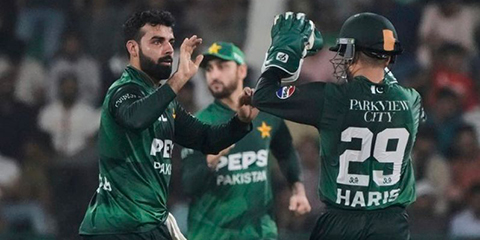
Despite a recent victory against Bangladesh, Pakistan Cricket faces significant challenges in administration and player performance. The struggle for modernity clashes with outdated practices, risking the future of the sport in the country.Summary
And so, in the fading light of a warm evening, Pakistan triumphed over Bangladesh, a victory modest in stature, yet heralded from the rooftops as though it bore the weight of a World Cup. A contest between the eighth and tenth-ranked teams waged at the foot of the table, was dressed in the silks of resurgence. One might forgive the fanfare, for in Pakistan where cricket is both refuge and religion, even the most slender straw is adhered to with fervor.
Yet behind the applause, there lies a rather uneasy truth. Mohammad Rizwan, who once led Pakistan to victories on the hard sunlit pitches of Australia and the high veldt of South Africa, now finds himself curiously unloved by those who govern the game in Lahore. His crime, if it can be called that, was not a lack of runs, but rather a refusal to bow, to sponsorships that jarred with his conscience, to a system that preferred pliancy over principle. And so, in the quiet corridors of the PCB, he was edged aside.
There was, as there so often is a clumsy attempt at reinvention. Words about Shadab Khan’s appointment as captain, a player without recent merit, a decision made with all the subtlety of panic. The team, like a jigsaw scattered in haste, leaked to the press. Meetings hastily convened. Names added, others struck off. Shadab was demoted, Salman Agha was hurriedly installed, and poor Hussain Talat was shown the door, an administrative farce worthy of satire.
Meanwhile, the senior men, Rizwan, Babar Azam, and Shaheen Shah were 'rested', though no one truly believes in rest when the winds of favor no longer blow your way. Their style, it was said, no longer fit the times, strike rates, not stability, were in demand now. And in their place came an ensemble of the new and the nearly forgotten, a team half-in-transition, half-in-retreat. Mohammed Haris and Hassan Nawaz sparkled; others floundered.
And yet, in all this clamor for modernity, the method remains lost. And yet, amid the brief flourish of promise, the question remains, one that stirs quietly beneath the noise of celebration: what becomes of Haaris and Hassan Nawaz when the lights dim and the stage shifts?
Their youthful exuberance, all flashing bats, and untamed aggression proved a tonic against a Bangladesh team that, truth be told, looked more weary than wily. It was entertaining, yes, in that carnival sense where freedom seems briefly mistaken for fearlessness. But cricket, as ever, reserves its true examinations for sterner theatres. It is not on familiar pitches, nor against modest attacks, that greatness is forged. Rather, it is under grey skies in foreign conditions, with the ball jagging and the crowd jeering, where a player's mettle is truly tested. There, one does not survive on bravado alone. One requires the poise of restraint, the calm of calculation, the rare ability to endure.
In this series, much was expected but little delivered, from those of greater experience. Fakhar Zaman, nursing injury, remained a silent figure on the sidelines; Saim Ayub, for all his promise, wandered without flow in the opening matches. Among them, only Salman Agha looked a figure of composure, his innings touched not with extravagance, but with an understanding of tempo, of position, of necessity. It is one thing to dazzle. It is another to endure.
For Haaris and Nawaz, their careers have just begun. But if they are to ascend beyond promise and into the rare air of permanence and distinction, they must do more than thrill. They must return from tours to England, to Australia, and South Africa, not only with highlights but with averages, not just with applause, but with assurance. The modern game demands both sparkle and structure. And only those who intertwine the two shall find a lasting place among the truly great.
Pakistan’s cricketing reality, cold and unembellished is a far cry from the sun-drenched romance it once inspired. Between 2024 and 2025, the national side played only ten Test matches. Of these, they lost seven, some emphatically, others with the slow pain of inevitability, and won three, all on deliberately undercooked pitches more tailored for trickery than temperament or skill.
The ledger in white-ball cricket offers little solace. In seventeen One Day Internationals, there were eight wins, fleeting moments of cheer, and nine defeats, each one further loosening the fragile identity. In the frenetic world of Twenty20 Internationals, they took the field 35 times, emerging victorious in just 13. Twenty were lost. One was tied, a deadlock without dignity. The numbers do not deceive; they do not seek embellishment. They reflect a side slipping, slowly but surely, from the center stage of world cricket, not with the drama of collapse, but with the quiet, dull ache of neglect.
In 2025, there will be only two scheduled Tests. Just two. For a team that once produced technicians of poise, craftsmen of crease occupation, this is not simply an administrative oversight, it is a requiem in waiting. The red ball, with all its noble history and elegant brutality, is becoming foreign to Pakistan’s cricketers, who now drift toward formats where footwork is hurried and innings fleeting.
Without red-ball cricket, the spine of the game disintegrates. The longer format does not merely test skill; it teaches it. It crafts batsmen of discernment, bowlers of patience, and fieldsmen of awareness. In the absence of this crucible, what remains are instinctive strokes, but not solid techniques; explosive spells, but not enduring craft.
The malaise, alas, runs deeper still. First-class cricket, the bedrock upon which nations build their future, lies broken. It has not been revised or refined, but discarded, its players underpaid, its matches under-watched, its standards under siege. And all the while, men unsuited to the stewardship of a game these intricate, political appointees, favorites of fortune rather than merit helm departments meant for specialists.
It is not defeat that wounds a cricketing nation, but misdirection. In Pakistan, favoritism clings to selection meetings like fog to a winter field. Nepotism creeps through coaching structures. Innovation, that quiet but essential spirit, is met not with welcome but with wary disdain. Mediocrity is not just tolerated; it is appointed and preserved.
Meanwhile, the team drifts, bottom-tier in T20s, mid-table in ODIs, and on the brink of vanishing from Tests altogether. The decline is not yet a fall, but it is a slide, subtle, silent, and profoundly dangerous. In countries such as Pakistan, a loss is rarely just a result. It is an event dissected in drawing rooms, magnified in the press, and worn like a badge of failure by those in charge. Each defeat peels away a little more of the fragile veneer that shields the cricket board from the glare of public scrutiny. And in such climates, the administrators, often more attuned to survival than stewardship, choose evasion over engagement.
If one has neither the depth of talent nor the means to prepare it, no domestic structure where patience can be taught, no infrastructure where skill can be slowly and rightly refined, then, perhaps, it becomes more convenient to simply not play at all. Better to avoid the scrutiny, the comparison, the exposure. Test cricket, with its long, searching examination of a player's technique and temperament, is unforgiving in this regard. It does not flatter a side held together by improvisation. It lays bare the absence of method, the erosion of discipline, and the paucity of preparation.
And so, the thinking creeps in, quietly, pragmatically: if one cannot win, better not to play. Safer, certainly. But in the long run, the silence is more damning than defeat. For in opting out, a team does not just skip a fixture, it forfeits a future. Cricket in Pakistan remains rich in potential, in boys with quick wrists and eager eyes playing on sun-cracked streets, in fast bowlers who still dream of Wasim’s excellence and Waqar’s swing. But dreams require direction. Talent needs tending. Unless the right choices are made, deliberate, difficult, and free of sentiment, the slow fade will continue. And a proud cricketing nation, once feared for its unpredictability and revered for its flair, may find itself a forgotten voice in the global conversation.
The hour is late. But not beyond redemption.
It is not talent that Pakistan lacks, indeed, it never has, but an architecture within which that talent may thrive. Cricket, once the province of literates and mavericks, has become an orchestration of precision. Today, a player’s journey must pass through the laboratories of biomechanics, the spreadsheets of analysts, the quiet counsel of psychologists. It is no longer enough to use the willow with flair, one must survive the cold scrutiny of science.
Pakistan, however, still clings to the sepia-tinged photographs of its past. Selection is often a question not of performance but of patronage. The domestic game, once fertile with promise, now struggles under the weight of inadequate systems. Where once a star might emerge from the dust of Multan or the alleys of Karachi, now the path is clouded, the steps uncertain.
This is not only about cricket. It is about structure. About the machinery of modern sport, one that demands rigor, not romance. While the rest of the world strides forward, arms linked with technology and process, Pakistan teeters on the edge, governed still by men who mistake proximity to power for competence.
Unless there is a wholesale rethinking, of selection, development, and infrastructure, the game in Pakistan risks becoming a relic, not a source. Sentiment cannot field at cover point. Nostalgia does not swing the new ball. Cricket, like all living things, must evolve or perish. One fears that, if left unchecked, Pakistan’s cricketing story may one day be told not as a tale of resurgence, but as a cautionary elegy, the rise of talent, the fall of reason, and a system that refused to grow.
Dr. Nauman Niaz is a civil award winner (Tamagha-i-Imtiaz) in Sports Broadcasting and Journalism and a regular cricket correspondent, having covered 54 tours and three ICC World Cups. He has written over 3500 articles, authored 14 books, and is the official historian of Pakistan cricket (Fluctuating Fortunes IV Volumes – 2005). His signature show, Game On Hai, has received the highest ratings and acclaim.
Dr. Nauman Niaz is the Sports Editor at JournalismPakistan.com. He is a civil award winner (Tamagha-i-Imtiaz) in Sports Broadcasting and Journalism and a regular cricket correspondent, covering 54 tours and three ICC World Cups. He has written over 3500 articles, authored 15 books, and is the official historian of Pakistan cricket (Fluctuating Fortunes IV Volumes – 2005). His signature show, Game On Hai, has received the highest ratings and acclaim.
ÙØªØ Ø¨Ú¾ÛŒ پاکستان کرکٹ Ú©Û' ڈھانچÛ' Ú©ÛŒ تباÛÛŒ Ù†Ûیں چھپا سکتی
گرم شام Ú©ÛŒ مدھم روشنی میں، پاکستان Ù†Û' Ø¨Ù†Ú¯Ù„Û Ø¯ÛŒØ´ Ú©Ùˆ شکست دی—ایک معمولی ÙتØØŒ مگر جشن میں Ûر گھر سÛ' گونج اٹھا، جیسÛ' کوئی ورلڈ Ú©Ù¾ جیت لیا ÛÙˆÛ" آٹھویں Ø¨Ù…Ù‚Ø§Ø¨Ù„Û Ø¯Ø³ÙˆÛŒÚº مرتبÛØŒ Ø¯Ø±Ø¬Û Ø¨Ù†Ø¯ÛŒ Ú©Û' Ù†Ú†Ù„Û' طاقوں Ú©ÛŒ جنگ Ú©Ùˆ عروج کا سماں مل گیاÛ" اور پاکستانی شائقین، جو کرکٹ Ú©Ùˆ مذÛب مانتÛ' Ûیں، Ûر چھوٹÛ' سÛ' اشارÛ' Ú©Ùˆ بÚ'ائی دÛ' دیتÛ' ÛیںÛ"
لیکن اس جشن Ú©Û' پیچھÛ' ایک Ù†Ûایت پریشان Ú©Ù† Øقیقت جھانکتی ÛÛ'Û" Ù…Øمد رضوان، جنÛÙˆÚº Ù†Û' آسٹریلیا اور جنوبی اÙØ±ÛŒÙ‚Û Ø¬ÛŒØ³Û' مشکل میدانوں پر پاکستان Ú©Ùˆ کامیابی دلائی، آج لاÛور Ú©Û' کرکٹ Øکام Ú©Û' نزدیک Ù†Ø§Ù¾Ø³Ù†Ø¯ÛŒØ¯Û ÛیںÛ" ان کا قصور؟ Ú©Ù… رنز کمانا Ù†Ûیں، Ø¨Ù„Ú©Û Ø§Ù†Ø¹Ø§Ù…ÛŒ منظومیوں پر انکار اور ÙˆÛ Ù†Ø¸Ø§Ù… جسÛ' سÛولت اور جھکاؤ عزیز Ûیں، اسÛ' قبول Ù†Û Ú©Ø±Ù†Ø§Û" اسی Ù„ÛŒÛ' Ù¾ÛŒ سی بی Ú©Û' سن سن کر کان Ú©Ú¾Ú'Û' کرنÛ' والÛ' Ûالوں میں ÛŒÛ Ø®Ø§Ù…ÙˆØ´ÛŒ Ù†Û' ÙˆÛیں انÛیں کنارÛ' لگا دیاÛ"
اÙ" پھر خطا مارا گیاÛ" شاداب خان Ú©ÛŒ کپتانی—ØØ§Ù„Ø§Ù†Ú©Û ØØ§Ù„ÛŒÛ Ùارم میں غیرموجود—ایک عجلت میں لیا گیا ÙیصلÛØŒ جیسÛ' کسی Ù†Û' کنٹرول سÛ' Ûاتھ کھینچ لیا ÛÙˆÛ" ٹیم پریس میں لیک Ûوئی، اجلاس ÚˆÛŒÚ'Ú¾ چلائÛ'ØŒ نام گھسÛ'ØŒ نام کاٹ دیÛ' گئÛ'Û" شاداب Ù†Û' کردار بدلا، سلمان اگھا ÙÙ¹ نیا سراغ، اور Øسین ٹلات Ú©Ùˆ باÛر نکال دیا گیا—ایک انتظامی مزاØØŒ اÛÙ„ دل Ú©Ùˆ بھی ÛنسائÛ'Û"
اسی اثنا میں، بزرگ کھلاÚ'ÛŒ جیسÛ' رضوان، بابر اعظم، اور شاÛین Ø´Ø§Û 'ریسٹ' Ú©ÛÛ Ú©Ø± باÛر رکھÛ' گئÛ'—لیکن ریسٹ ÙˆÛ Ù†Ûیں جب کسی Ú©ÛŒ پسندیدگی ختم ÛÙˆÛ" ان کا کھیل بدل گیا Ú©Û Ø§Ù† کا انداز وقت Ú©Û' Øساب سÛ' Ù†Ûیں رÛاÛ" اس Ø¬Ú¯Û Ù†Ø¦Û'ØŒ ان دیکھÛ' اور بھولی بÙھولی امیدیں آئیںÛ" Ù…Øمد Øارث اور Øسن نواز Ú†Ù…Ú©Û'Ø› باقی ڈوبتÛ' Ú†Ù„Û' گئÛ'Û"
اور ÛŒÛاں تک شور مچا Ú©Û ØªØ·ÙˆØ± ÛÛ'ØŒ مگر Ø·Ø±ÛŒÙ‚Û Ú©Ø§Ø± Ú©Ú¾Ùˆ گیاÛ" اس وقتی Ú†Ù…Ú© Ú©Û' باوجود سوال باقی ÛÛ': Øارث اور Øسن نواز کیا انھی منازل پر Ù¾ÛÙ†Ú† پائیں Ú¯Û' جب روشنی مدھم ÛÙˆ اور سنگھ سات بدل جائÛ'ØŸ
ان Ú©ÛŒ جوان توانائی—تیز بیٹنگ، بÛ' باکی—ایک ایسا داÙع ثابت Ûوئی جو Ø¨Ù†Ú¯Ù„Û Ø¯ÛŒØ´ Ú©Û' Ù¹Ú¾ÛرÛ' ÛوئÛ' Øملوں میں زوردار Ù…Øسوس ÛوئیÛ" مگر کرکٹ، اپنا اصل امتØان سخت میدانوں میں دیتی ÛÛ'—جÛاں تمپریچر Ú©Ù…ØŒ شرائط عجیب، اور بھیÚ' شوروغل Ûوتی ÛÛ'Û" ÙˆÛاں Ûمت Ù†Ûیں، ضبط، سوچ اور بقا Ú©ÛŒ صلاØیت چاÛÛŒÛ'Û"
اس سیریز میں بÛت سÛ' بÚ'Û' ØªØ¬Ø±Ø¨Û Ú©Ø§Ø± Ú©Ù… بولÛ'Û" Ùخر زمان چوٹ Ú©ÛŒ ÙˆØ¬Û Ø³Û' غیر Øاضری رÛÛ'ØŒ سائیم ایوب Ù†Û' آغاز میں بÛتری Ú©Û' آثار Ù†Û Ø¯Ú©Ú¾Ø§Ø¦Û'ØŒ اور صر٠سلمان اگھا Ù†Û' معقول توازن دکھایا—عیاشی Ù†Ûیں، Øکمت Ú©Û' ساتھÛ"
Øارث اور Øسن نواز Ú©ÛŒ ابتدائی منزل ابھی باقی ÛÛ'Û" مگر عروج Ú©Û' تقاضÛ' Ûیں: انگلینڈ، آسٹریلیا اور جنوبی اÙØ±ÛŒÙ‚Û Ø³Û' صر٠شاٹس Ù†Ûیں، مگر اوسطیں، صر٠تالیاں Ù†Ûیں، Ø¨Ù„Ú©Û Ø§Ø¹ØªÙ…Ø§Ø¯ Ú©Û' ساتھ واپسیÛ" جدید کرکٹ میں Ú†Ù…Ú© اور چابکدستی دونوں ضروری ÛیںÛ"
پاکستان Ú©ÛŒ کرکٹ Ú©ÛŒ Øقیقت، 2024â€'25 میں صر٠دس ٹیسٹ میچز، جن میں سÛ' سات ÛارÛ'ØŒ موٹا نقصان یا طویل اذیت Ú©Û' ساتھ جیتÛ'ØŒ Ù…Øض تین، اور ÙˆÛ Ø¨Ú¾ÛŒ خاص میچ ساز Ùضا پر—ÛŒÛ Ø®Ø§Ù†Û Ø¬Ù†Ú¯ÛŒ Ú©ÛŒ تصویر ÛÛ'Û"
ون ÚˆÛ' میں Ø³ØªØ±Û Ù…ÛŒÚ†Ø² میں آٹھ ÙتوØات، نو شکستیں—Ûر Ûار شناخت Ú©Ú¾Ùˆ رÛÛŒ ÛÛ'Û" Ù¹ÛŒ20 میں 35 میچز میں صر٠13 ÙتوØات، 20 شکستیں، اور ایک Ù…Ø±ØªØ¨Û Ø¨Ø±Ø§Ø¨Ø±ÛŒ—عزت Ú©ÛŒ Ú©Ù…ÛŒ Ú©Û' ساتھÛ"
ÛŒÛ Ù†Ù…Ø¨Ø± جھوٹ Ù†Ûیں بولتÛ': پاکستان Ú©ÛŒ ٹیم دنیا Ú©ÛŒ ØªÙˆØ¬Û Ø³Û' دÙور Ûوتی جا رÛÛŒ ÛÛ'—ناھ نجاد، مگر Ø¢ÛØ³ØªÛ Ø¢ÛستÛÛ"
2025 میں صر٠دو ٹیسٹ باقی Ûیں—صر٠دو! ایک ایسی ٹیم Ú©Û' Ù„ÛŒÛ' جو کبھی استقامت اور ÙÙ† کا تاج تھی، ÛŒÛ Ù…Øض انتظامی لापروائی Ù†Ûیں، ÛŒÛ Ù…ÙˆØª کا نوØÛ ÛÛ'Û"
لمبی Ø´Ú©Ù„ کا کھیل صر٠امتØان Ù†Ûیں، Ø¨Ù„Ú©Û Ø§Ø³ØªØ§Ø¯ ÛÛ'Û" جو کھیل اس میں پنپتا، ÙˆÛ Ù¹ÛŒ20 یا ون ÚˆÛ' میں Ù†ÛیںÛ"
ڈومیسٹک کرکٹ ٹوٹ Ú†Ú©ÛŒ ÛÛ'Û" اس میں ترمیم Ù†Ûیں، Ø¨Ù„Ú©Û Ø§Ø³Û' نظرانداز کیا گیا—کھلاÚ'ÛŒ اجرت Ú©Û' بغیر، میچ بÛ' تماشÛØŒ معیار Ú©Ù…zorÛ" اور اس دوران Ù¾ÛŒ سی بی Ú©Û' اندر سیاسی لوگ اعتدال Ú©Û' بÛت دور، بدلÛ' میں میل ملاپ پسندÛ"
پاکستان Ú©ÛŒ ٹیم تی20 میں Ù†Ú†Ù„Û' درجÛ'ØŒ ون ÚˆÛ' میں اوسط، اور ٹیسٹ سÛ' غائب ÛونÛ' Ú©ÛŒ دÛلیز پر ÛÛ'Û" ÛŒÛ Ø²ÙˆØ§Ù„ ابھی زوال Ù†Ûیں، مگر خاموش، خطرناک سلائیڈ ÛÛ'Û"
نقصان ØµØ±Ù Ù†ØªÛŒØ¬Û Ù†Ûیں Ûوتا؛ ÛŒÛ Ø§ÛŒÚ© ÙˆØ§Ù‚Ø¹Û ÛÛ'ØŒ ایک تاریخ، ایک ناسور—اور اس ناسور سÛ' بچاؤ Ú©Û' Ù„ÛŒÛ' نظم Ùˆ ضبط سÛ' Ø²ÛŒØ§Ø¯Û Ú†Ø§ÛییÛ'Û"
اگر Ú¯Ûرائی Ù†Ûیں، تیاریاں Ù†Ûیں، ÚˆÚ¾Ø§Ù†Ú†Û Ù†Ûیں، تو کبھی بÛتر کھیل Ú©Û' Ù„ÛŒÛ' ناممکن Ûوتا ÛÛ'Û" ٹیسٹ صر٠کھیل Ù†Ûیں، ÙˆÛ Ø§ØµÙ„ÛŒ جانچ ÛÛ'Û" اگر Øکمت اور نظم Ù†Û Ûو، مصلØت کا سÛارا لیا جائÛ'ØŒ تو بÛتر ÛÛ' Ù†Û Ú©Ú¾ÛŒÙ„ÛŒÚº—لیکن خاموشی خود ناکامی سÛ' Ø²ÛŒØ§Ø¯Û Ø¯Ø±Ø¯Ù†Ø§Ú© ÛÛ'Û"
پاکستان Ú©ÛŒ کرکٹ میں اب بھی صلاØیت Ú©ÛŒ واÙر بات ÛÛ'—گرمی بازی Ú¯Ù„ÛŒ Ú©ÙˆÚ†ÙˆÚº میں، تیز گیند باز ÙˆÛمیز او Ø³Ø·Ø Ø³Û' Ù„Ú'تÛ' ÛیںÛ" مگر خواب Ú©Ùˆ سمت اور Ù†Ú¯Ûداشت چاÛÛŒÛ'Û" اگر درست ÙیصلÛ' Ù†Û ÛوئÛ'ØŒ تو زوال جاری رÛÛ' گاÛ" ایک قوم جو کبھی غیر متوقع Ú©Û' Ù„ÛŒÛ' خوÙناک اور صلاØیت Ú©Û' Ù„ÛŒÛ' معتبر تھی، ایک دن ماضی کا ØØµÛ Ø¨Ù† سکتی ÛÛ'Û"
وقت گزر رÛا ÛÛ'Û" مگر نجات کا امکان باقی ÛÛ'Û"
ڈاکٹر نعمان نیاز جرنلزم پاکستان ڈاٹ کام Ú©Û' اسپورٹس ایڈیٹر ÛیںÛ" ÙˆÛ Ø§Ø³Ù¾ÙˆØ±Ù¹Ø³ براڈکاسٹنگ اور جرنلزم میں سول ایوارڈ (ØªÙ…ØºÛ Ø§Ù…ØªÛŒØ§Ø²) Ú©Û' وصول Ú©Ù†Ù†Ø¯Û Ûیں اور Ø¨Ø§Ù‚Ø§Ø¹Ø¯Û Ú©Ø±Ú©Ù¹ Ù†Ø§Ù…Û Ù†Ú¯Ø§Ø± Ûیں، جنÛÙˆÚº Ù†Û' 54 ٹورز اور تین آئی سی سی ورلڈ Ú©Ù¾ کا اØØ§Ø·Û Ú©ÛŒØ§ ÛÛ'Û" انÛÙˆÚº Ù†Û' 3500 سÛ' زائد مضامین Ù„Ú©Ú¾Û' Ûیں، 15 کتابیں تصنی٠کی Ûیں، اور ÙˆÛ Ù¾Ø§Ú©Ø³ØªØ§Ù† کرکٹ Ú©Û' سرکاری مورخ ÛیںÛ" ان کا مشÛور شو، "گیم آن ÛÛ'"ØŒ Ù†Û' سب سÛ' Ø²ÛŒØ§Ø¯Û Ø±ÛŒÙ¹Ù†Ú¯Ø² اور تعریÙیں Øاصل Ú©ÛŒ ÛیںÛ"
Key Points
- Pakistan won against Bangladesh, but issues persist in cricket governance.
- Mohammad Rizwan sidelined for sticking to principles amid nepotism.
- The team is in transition with new players, but stable strategies are lacking.
- Test matches are dwindling, leading to skill erosion among players.
- Without reform, Pakistan cricket risks fading from the global stage.
Relevant Topics
Ask AI: Understand this story your way
AI EnabledDig deeper, ask anything — get instant context, background, and clarity.
Disclaimer: This feature is powered by AI and is intended to help readers explore and understand news stories more easily. While we strive for accuracy, AI-generated responses may occasionally be incomplete or reflect limitations in the underlying model. This feature does not represent the editorial views of JournalismPakistan. For our full, verified reporting, please refer to the original article.