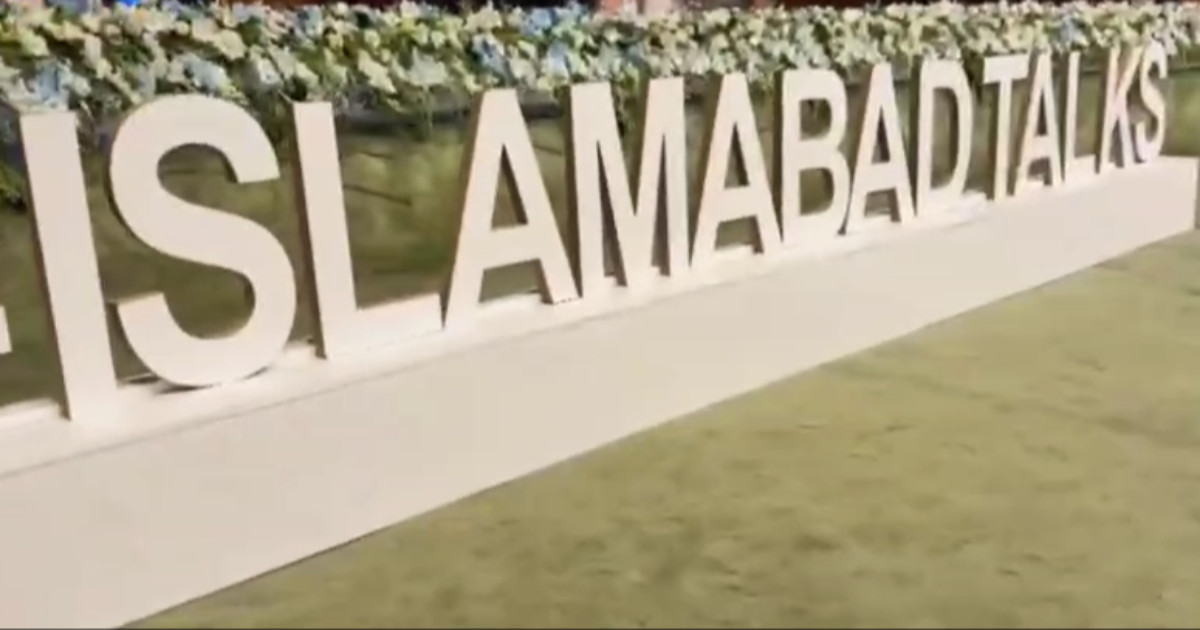

Pakistan's bold stand against ICC: What it means for cricket's future
JournalismPakistan.com | Published: 2 February 2026 | Dr. Nauman Niaz (TI)
Join our WhatsApp channel
Pakistan's withdrawal from its India match at the ICC T20 World Cup 2026 is a measured political stance that challenges the ICC's response, recalls past forfeits and prompts questions about selective participation, governance and future tournament scheduling.Summary
ISLAMABAD — There are moments in world cricket that announce themselves loudly, all theatre and slogans, and then there are those that arrive softly and linger. Pakistan's withdrawal from its match against India at the ICC T20 World Cup 2026 belongs unmistakably to the latter. It did not seek attention, nor did it wear the costume of rebellion.
It was, simply, a refusal. And cricket is not especially used to hearing that word spoken so plainly.
ICC's Confused Response and Historical Precedents
The ICC's prompt press release on a Sunday and late in the night, read less like authority and more like confusion. It carried a warning against 'selective participation', curiously detached from memory. Australia and the West Indies forfeited matches in Sri Lanka in 1996. England did not travel to Harare in 2003. New Zealand declined to play in Nairobi. Zimbabwe, after players were denied visas, did not tour England in 2009 and was still compensated with its participation fee. None of these moments fractured cricket's moral spine. None were treated as existential threats. Why, then, the sudden rigidity? Is it panic?
Forfeiting a match is neither unlawful nor illegal. The political premise, too, was not invented by Pakistan. India first invoked it in the Asia Cup 2025, not shaking hands, refusing to receive the trophy from ACC's chair Mohsin Naqvi. And when the ICC appealed to the PCB to reconsider to 'maintain cricket's ecosystem,' and the concluding remarks included 'it expects the PCB to explore a mutually acceptable resolution, which protects the interests of all the stakeholders'. An obvious question hovered unanswered: what ecosystem has survived India not playing Pakistan bilaterally for the last 18 years? For once, Pakistan declined the role of the obliging extra in a production it does not control. This is the same organisation Sharda Ugra recently, and memorably, described ICC as the BCCI's Dubai office.
February 15th, 2026: The Day Pakistan Said No
As for now, Pakistan wouldn't be playing against India at Colombo on February 15th, 2026, when the calendar of international cricket reached what was meant to be its most incandescent hour, Pakistan forfeiting their scheduled match. The decision was not announced with flourish, nor clothed in defiance. It arrived instead with the quiet finality of a door closed after long deliberation. To the casual observer, it appeared sudden, almost abrupt. To those who have watched the slow weathering of cricket's moral landscape, it carried the weight of inevitability.
Such a decision could not have been taken lightly. It could not have been reached without a reckoning with consequence, cost, and reprisal. In the councils where it was shaped, every legal implication would have been examined, every financial repercussion measured, every diplomatic tremor anticipated. One does not decline a match at a World Cup without understanding the seriousness and repercussions of the decision. And yet refusal came, not as an act of impulse, but as the terminus of a long journey in which Pakistan found itself compelled to choose between participation without agency and withdrawal with dignity.
Cricket's Struggle Between Neutrality and Power
Cricket has always insisted that it is larger than politics, yet it has never escaped power. From its earliest spread across empire and dominion, it learned to wear neutrality as a vestment while absorbing the inequalities of the world that sustained it. The modern International Cricket Council was conceived as a corrective to that inheritance, an institution meant to govern the game in common trust, balancing nations unequal in wealth, voice, and reach. Its constitutional promise lay in collective stewardship, in the belief that cricket's future would be shaped by consensus rather than command. Over time, that promise began to erode.
The Rise of BCCI's Financial Dominance
By the opening years of the 21st century, the centre of seriousness in world cricket had shifted decisively. Financial power accumulated for the BCCI and India, not only as influence, but as leverage. Broadcast rights became instruments of persuasion. Scheduling became a form of sanction. Silence was rewarded, resistance penalized. What had once been a council began to resemble a court, not of law, but of patronage.
This transformation did not announce itself with a single rupture. It unfolded through episodes that, taken alone, might be dismissed as disputes of the moment. Taken together, they formed a pattern. In 2003, during India's tour of South Africa, match referee Mike Denness made a determination that touched the game's most sensitive nerve. Allegations of ball tampering were leveled against Sachin Tendulkar, a figure whose stature transcended sport and entered the realm of national reverence. The charge itself mattered less than the response it provoked. Objection hardened into resistance. Authority was challenged not through appeal alone, but through pressure exerted by the BCCI on South Africa's cricket board beyond the field. The result was unprecedented. A Test match was played without its appointed referee, and though the cricket unfolded, its official status was eventually dissolved. Law remained written, but obedience was suspended. The precedent lingered.
The Harbhajan Singh Controversy and Erosion of Authority
Five years later, in 2007-08 in Australia, another crisis emerged from words spoken in anger and interpreted through the long shadows of race and history. Harbhajan Singh was accused of directing a racial slur at Andrew Symonds. The charge, the hearing, the initial sanction, all followed the rituals of due process. Yet the outcome did not. The penalty was overturned amid mounting pressure of the BCCI exerted on Cricket Australia, and with it came a message that echoed far beyond that single tour. Mike Proctor, the match referee, found himself isolated. Andrew Symonds, a player who had spoken of hurt and insult, found himself alone. The governing structures, meant to protect both fairness and dignity, appeared pliant before the threat. These were not just controversies. They were signals.
In their wake, an unease spread quietly through the smaller boards of world cricket. The laws still existed. The codes were still cited. Yet their application seemed contingent, their force uneven. Compliance increasingly flowed in one direction. The language of equality endured in charters and communiques, but practice drifted elsewhere.
The Lord Woolf Review and Unfulfilled Promises
It was this dissonance that prompted a reckoning of a different order. The commissioning of an independent governance review under Lord Woolf, with PricewaterhouseCoopers engaged to examine the architecture of the ICC itself, was an admission that something essential had been compromised. Sixty-five recommendations emerged from that inquiry, measured and sober in tone, but profound in implication. Among them stood one which cut to the bone of the matter. It was declared essential, for the good of cricket, that the ICC act in the interest of the game as a whole, rather than in the interests of individual members.
The recommendation was not radical. It was restorative. It sought to return cricket to the idea of common guardianship. Yet the years that followed saw limited translation of principle into practice. Structures remained. Power continued to concentrate.
Understanding Pakistan's Calculated Decision
Against this backdrop, Pakistan's decision in February 2026 must be understood. It was not the result of a single grievance, nor of a solitary moment of defiance. It arose from accumulated experience, from repeated encounters with a system in which participation increasingly required acquiescence, and silence was the price of survival. To play that match would have been to accept a condition long resisted. It would have been to concede that cricket's highest stage could be governed by influence rather than law, by commerce rather than covenant. To step away was to affirm, however quietly, that there are moments when abstention speaks more clearly than presence.
History will judge whether the decision altered the course of the game or just marked a pause in its long drift. What is certain is that it was not reckless. It was deliberate, weighted, and conscious of sacrifice. Pakistan understood what it risked. It also understood what it stood to lose by continuing as before.
In the end, this was not a refusal to play cricket. It was a refusal to play a particular version of it, one in which the balance between authority and power had tilted too far to be ignored. February 15th would become, therefore, not a blank space in a fixture list, but a moment of testimony. It asks whether a game that has survived empire, partition, and war might yet find the will to govern itself with fairness, or whether it would continue to mistake dominance for destiny. That question lingers still, unanswered, hanging over the field long after the Pakistan team will not arrive.
The Economics Behind Pakistan's Bold Stand Against ICC and BCCI
In a sport where power structures are no longer discreet, Pakistan chose to test where that power actually rests. The economics explain why this matters. An India-Pakistan fixture is not a match; it is an asset. Remove it, and the tremors are immediate and uneven. A 2026 ICC World Cup without India-Pakistan contests hurts most where the investment is heaviest. JioStar alone has committed USD 911 million. The rest of the world's broadcasters combined paid roughly USD 60 million. This is not market dominance; it is market dependence. That dependence has already shown its fragility. After losses incurred during the ICC T20 World Cup 2024 in the USA and West Indies, JioStar reportedly explored forfeiting ICC rights valued at USD 3 billion.
There were no takers. Eventually, the ICC is said to have stepped in with a subsidy of up to USD 1 billion to keep Star India in place. When a governing body begins underwriting its broadcaster, the line between regulator and stakeholder has long since dissolved. Within this structure, Pakistan's value is often downplayed publicly but rarely misunderstood privately. Rankings fluctuate; relevance does not. Pakistan remains a premium brand in ICC tournaments. Advertising rates tell this story more honestly than any press release. A 10-second spot during the Champions Trophy 2017 cost USD 12,000. The same slot rose to USD 20,000 in the ICC T20 World Cup, USD 25,000 in 2022, USD 36,000 by the 2023 World Cup, and now stands at USD 45,000 for the Champions Trophy 2025. One India-Pakistan match on digital alone generates USD 4-6 million, with sponsorships adding USD 38-45 million more.
The Viewership Numbers That Define Cricket's Economics
Viewership mirrors the same truth. Global audiences reached 400 million in 2017, 167 million in 2021, and 265 million in 2022. The ICC World Cup 2023 recorded 173 million TV viewers and 225 million digital viewers. India-only metrics in 2021 reached 15.9 billion. Jio Hotstar crossed 600 million digital viewers, while TV viewership touched 206 million for the Champions Trophy. Around 63% of ICC global tournament revenue flows from India-Pakistan games. India contributes roughly 78% of ICC revenue overall, with close to 70% of broadcast income originating there. This is the leverage & also the vulnerability.
Looking Back: The Pattern of BCCI Influence
One could assess the present situation only by looking back, for the present did not arise in isolation. It carries the sediment of earlier seasons, layered year upon year, each dispute settling upon the last until a recognizable pattern emerges. In that pattern lies the enduring precedence that allows any careful observer to understand the reach of BCCI and India's market power, and the quiet hegemony of unsolicited influence that has come to define the governance of international cricket. It is not an influence conferred by statute, nor one openly proclaimed, yet it has become unmistakable in effect.
The Asia Cup 2025 Crisis and Procedural Sabotage
The Asia Cup 2025 was to be held in India, and with that announcement came unrest. Pakistan, designated as the host, was not inclined to travel to India. What followed was not a routine disagreement over logistics, but a contest over authority itself. The first response was coercive. The BCCI chose to boycott the Asian Cricket Council's Annual General Meeting, a meeting chaired by the Chairman of the PCB and Federal Minister for Interior of Pakistan, Mohsin Naqvi. Afghanistan and Sri Lanka were expected to join hands with the BCCI, and within the group of 5 Full Members of the ICC from Asia, a postponement of the tournament was anticipated by a margin of 3-2, Bangladesh standing with Pakistan.
Since Full Member boards held the decisive voting power, a minimum of 3 votes was required to boycott, suspend, change venue, or shift hosting rights. This dynamics was well understood. Yet what followed went beyond simple calculations. Such was the reach of BCCI's dictates and its hegemony that Sri Lanka and Afghanistan cricket boards also threatened to abstain from attendance. They refused to attend physically, declined hybrid or virtual legitimacy, and questioned procedural neutrality and control of the agenda. This was not symbolism. It was procedural sabotage.
How BCCI's Market Dominance Shaped Cricket's Governance Crisis
Without physical or legitimate virtual presence, quorum legitimacy collapsed. And without the quorum, the machinery of governance ground to a halt. Hosting confirmations could not be ratified. Commercial tenders could not be finalized. Broadcast and sponsorship assurances stalled, suspended in uncertainty. In the language of the ACC, the AGM became procedurally toothless. Authority remained written, but power had withdrawn consent.
India, meanwhile, played upon its acknowledged leverage as the largest revenue generator in Asian cricket and the broadcast anchor of the Asia Cup. The BCCI dictated openly, abandoning the fiction of political neutrality. The message was plain. Without Indian participation, the tournament faced commercial collapse. This was not a threat by implication, but by demonstration.
The Forced Compromise and UAE Solution
A compromise was forced under compelling circumstances. Yet it soon became clear that India was not a viable host, for Pakistan had refused to travel and play in India. The hybrid model, India alongside a neutral venue, did not lack numerical consensus, for India's bloc still held a majority. But it lacked commercial viability without the participation of Pakistan. Broadcasters balked as costs of production rose phenomenally. Political optics hardened into liability. The tournament teetered.
Then the UAE entered the picture. It offered neutrality, established infrastructure, broadcaster-friendly time zones, and zero bilateral travel objections. Reportedly, the softening of BCCI and India's stance owed less to accommodation than to pressure exerted by broadcasters. Sony Pictures Network India had acquired broadcasting rights at USD 170 million, ten times the price of the previous cycle when JioStar held them. Commercial seriousness reasserted itself.
Pakistan's Indispensability Proven
What followed was revealing. India and Pakistan did not meet once or twice, but three times. For broadcasters, it was a dream tournament. The format had been deliberately structured to maximize marquee match-ups. It proved beyond dispute that Pakistan remained a vital cog, commanding extraordinarily high viewership and commercial attraction for both ACC and the ICC. Market indispensability was laid bare. And yet, despite possessing a handful of legal tools with which to confront Pakistan's later decision, the ICC responded with haste rather than deliberation. On a Sunday late in the night, it issued a press release that read:
"The ICC notes the statement that the government of Pakistan has made regarding the decision to instruct its national team to selectively participate in the ICC Men's T20 World Cup 2026," the ICC statement said. "While the ICC awaits official communication from the Pakistan Cricket Board (PCB), this position of selective participation is difficult to reconcile with the fundamental premise of a global sporting event where all qualified teams are expected to compete on equal terms per the event schedule.
"ICC tournaments are built on sporting integrity, competitiveness, consistency, and fairness, and selective participation undermines the spirit and sanctity of the competitions."
"While the ICC respects the roles of governments in matters of national policy, this decision is not in the interest of the global game or the welfare of fans worldwide, including millions in Pakistan."
"The ICC hopes that the PCB will consider the significant and long-term implications for cricket in its own country as this is likely to impact the global cricket ecosystem, which it is itself a member and beneficiary of."
"The ICC's priority remains the successful delivery of the ICC Men's T20 World Cup, which should also be the responsibility of all its members, including the PCB. It expects the PCB to explore a mutually acceptable resolution, which protects the interests of all stakeholders."
The Contradiction in ICC's Response
The contradiction was striking. On one end stood admonition, warning that selective participation could not be reconciled with the event's premise. On the other lay supplication, urging reconsideration in the name of a threatened ecosystem and mutual accommodation. It was an appeal that revealed institutional anxiety as much as authority.
That Pakistan had taken a bold decision was evident. It arose from multifactorial etiology: BCCI and India's overpowering presence, the visible toothlessness of the ICC, and India's evidence-based support of terrorism in Balochistan. Such a decision could not have been taken lightly. It is inconceivable that the PCB and the Government of Pakistan did not review every connotation and repercussion, for selective refusal to play one opponent while participating in the remainder of the tournament carries its own manifestations.
Strategic Analysis and Support for Pakistan's Stand
It is therefore necessary to dissect the possibilities. I do so while strongly supporting the decision of the Government of Pakistan and the PCB, congratulating them for standing against wrongful authority and institutional tail-wagging. Where Australia and England, alongside other boards, have become sidekicks, Afghanistan and Sri Lanka cricket boards have behaved as lapdogs of the BCCI. Yet even conviction requires strategy. The Asia Cup 2025 experience stands as firm evidence that broadcasters will not permit Pakistan to slip away from the foray. That indispensability itself becomes leverage. Inevitably, the matter must return to the negotiating table, where Pakistan may succeed in correcting course and exposing the fault lines in international cricket's governance.
Understanding ICC's Governing Instruments
We must contemplate the following: ICC's Governing Instruments first. Financial sanctions for a willful forfeit arise from three ICC instruments acting together:
1. ICC Constitution
2. ICC Disciplinary Regulations (Members & Participants)
3. ICC Event Playing Conditions + Event Financial Terms
All are binding on the Pakistan Cricket Board as a Full Member of the International Cricket Council. Yes, undeniably there is ICC's Constitution referring to power to impose financial consequences. Article 2.9 & Article 2.10 (Objects & Powers).
These articles establish the ICC's authority to:
• Protect the commercial value of ICC events
• Enforce compliance through financial controls
The ICC may take such action as it considers appropriate to protect the interests, reputation, and commercial integrity of ICC Events. This is the constitutional gateway that allows revenue withholding and distribution adjustments. Then there is Member Obligations, a critical clause:
Article 11.2 (Obligations of Members)
Members must:
• Participate in ICC Events in good faith
• Comply with ICC regulations and tournament commitments
• Avoid conduct prejudicial to the interests of cricket
A selective refusal to play a scheduled match after accepting tournament entry is treated as a prima facie breach of Article 11.2. Once a breach is established, financial sanctions become lawful and enforceable. More, the ICC Disciplinary Regulations, & the financial penalties according to ICC Disciplinary Regulations (Members), Clause 2.1 & 2.2. These clauses empower the ICC to sanction Member Boards, not just players.
Financial Penalties and Legal Framework
Sanctions expressly include:
• Fines
• Withholding of payments
• Other financial penalties deemed appropriate
The language is deliberately broad to allow proportional punishment.
Clause 4.1 (Sanctions Available)
Permissible sanctions include:
• Reprimand
• Monetary fine
• Suspension or withholding of ICC funding
• Conditions attached to future participation
This is the direct legal basis for reducing or delaying ICC distributions. That is the case of a match forfeiture the penalties are automatic, not discretionary.
Event Playing Conditions and Revenue Implications
Event Playing Conditions (World Cup-specific)
Across ICC events:
• A team that fails to take the field without ICC-approved force majeure:
o Forfeits the match
o Forfeits match participation fees
o Bears associated operational costs
This is automatic, not subject to negotiation.
Tournament Revenue Withholding (Most Misunderstood Power)
ICC Financial Regulations + Event Participation Agreement
Each Full Member signs:
• A Participation Agreement for ICC Events
• Acknowledging ICC's right to:
o Adjust revenue shares
o Withhold payments for non-compliance
A high-value fixture (India-Pakistan) forfeiture is legally framed as:
Commercial damage caused by a Member's breach
The ICC can therefore offset losses against future distributions.
This does not require:
• Arbitration
• Court proceedings
• Unanimous board approval
It is an administrative set-off, a powerful tool.
There may well be a reduction in future ICC Distributions.
ICC revenue sharing is:
• Not an entitlement
• Subject to compliance, participation, and good standing
A Member found in breach may face:
• Delayed disbursement
• Reduced cycle allocation
• Conditional future payments
This has occurred previously in cases involving:
• Governance failures
• Non-compliance
• Event disruption
(ICC does not always publicly disclose amounts) while ICC settlements are often confidential:
• The ICC has and can withhold restructured payments to Full Members for:
o Event non-compliance
o Governance breaches
o Contractual defaults
In marquee events, India-Pakistan fixtures account for a disproportionate share of broadcast value, making multi-million dollar offsets legally justifiable under ICC financial doctrine. This is why the risk is described as "highly likely," not speculative. But we must also be sure what the ICC cannot do.
What ICC Can and Cannot Do
• ICC cannot impose punitive damages
• ICC cannot fine beyond contractual frameworks
• ICC cannot act arbitrarily without invoking a clause
But it can:
• Withhold
• Offset
• Condition
• Delay
• Reduce
All of which can be financially impactful without litigation.
A forfeit exposes Pakistan to lawful ICC financial sanctions because:
• Article 11.2 establishes breach
• Disciplinary Regulations authorize fines and withholding
• Event agreements permit revenue adjustment
• ICC Constitution protects commercial integrity above politics
This is black-letter ICC law, not conjecture. A word on financial exposure mapping, the estimated ranges.
ICC figures are confidential; ranges below are derived from broadcast valuation, prior ICC revenue cycles, and proportional allocation models.
Direct Financial Exposure for Pakistan
A. Direct Financial Exposure (Forfeiture Scenario)
Pakistan may well see into this where match participation fees could have an estimated exposure between USD 0.5 to USD 1 million, the forfeited event revenue share to the tune of USD 8-12 million, ICC administrative fines up to USD 2 to 5 million, ICC could offset against future grants up to USD 10 to 20 million, so the expected exposure may well be up to USD 20-40 million.
Pakistan's Legal and Moral Case
For years, cricket has lived with a contradiction: India refuses bilateral cricket with Pakistan, yet Pakistan is expected to sustain ICC tournaments without dissent. Pakistan has now challenged that logic, not rhetorically but structurally. There may be consequences, financial penalties, procedural disputes, familiar pressure points. But Pakistan's case is unlikely to be weak, whether before the ICC's Dispute Resolution Committee or, if it comes to it, the International Court of Arbitration for Sport. It will not be evident in an ICC press release. It will surface at the negotiation tables. If bilateral cricket is permanently off the table, the moral coherence of compulsory multilateral participation becomes harder to defend.
A Reckoning Long Postponed
In the end, Pakistan's decision did not spring from impulse, nor from the theatre of defiance that so often masquerades as courage. It rose instead from a reckoning long postponed, shaped by years in which the language of international cricket quietly altered its meaning. Law yielded ground to leverage. Collective guardianship thinned into financial command. What unfolded on this February day is not simply the absence of a team from a fixture list. It is the refusal of a nation to consent to a form of the game in which authority speaks without answer and power is mistaken for right.
Cricket's Moral Inheritance Under Question
Cricket has always arrayed itself in moral inheritance. It has spoken, with solemn assurance, of fairness, of equal contest, of law applied without fear or favor. Yet such claims falter when governance grows selective, when procedure bends beneath pressure, and when institutions entrusted with neutrality bow repeatedly before a single market's will. The record traced here shows that this yielding was not momentary but cumulative. Authority drained from match officials. Regional governance stalled into a paralysis. Reformist counsel was set aside with quiet efficiency. The pattern, once discerned, could not be unseen. Power gathered itself steadily, while resistance was subdued not by argument, but by economics.
A Corrective Rather Than Destructive Stand
Pakistan's stand must therefore be understood as corrective rather than destructive. It sought no conflagration. It did not set out to raze the house of cricket, but to mark the cracks spreading through its foundations. The cost of doing so was never in doubt. Financial sanctions, political isolation, and institutional pressure were all plainly foreseeable. That these were accepted only affirms the gravity of the choice. Penalty is not embraced unless the alternative has grown unbearable.
The response of the ICC laid bare the central contradiction of the modern game. It spoke earnestly of integrity while appealing to expedience. It warned of principle even as it urged compromise. It invoked collective responsibility while having presided over its gradual dilution. Its statement carried less the certainty of authority than the unease of an institution conscious of its own erosion. A body confident in its governance does not plead. It governs.
Pakistan's Market Indispensability as Leverage
What lends Pakistan's position its unusual strength is not sentiment, but evidence. The Asia Cup 2025 demonstrated beyond dispute that Pakistan is not expendable. Broadcasters understand this. Sponsors understand it. Administrators, however reluctantly, understand it too. The very commercial ecosystem now invoked to discipline Pakistan is the one that depends upon its presence. This is not bravado. It is a pragmatic contemplation, plain and unyielding.
A Plea for Recalibration Not Rupture
Yet this moment is not an argument for rupture. It is a plea for recalibration. Cricket does not require another schism to scar its history. It requires a return to its own constitutional promise. It requires an ICC that acts in the interest of the game entirely, rather than circling the gravitational pull of a single market. It requires laws that bind because they are laws, not because obedience is affordable.
If negotiation follows, as it surely must, it should proceed in candor rather than coercion. Pakistan has already endured the cost of speaking first. Others will, in time, profit from that courage, whether they choose to acknowledge it or not. History has a habit of remembering those moments when silence was broken, and of forgetting the comfort of those who remained quiet.
The Enduring Question for Cricket's Future
This episode will pass, as all episodes do. But the question it has forced into the open will endure. Can international cricket still claim to be governed by principle, or has it resigned itself to administration by power alone. Pakistan's decision did not answer that question. It compelled it to be asked. And in doing so, it may yet have served the game with greater fidelity than compliance ever could.
This feels like a shift. Not loud. Not performative. Just firm. Post-May 10th, Pakistan appears uninterested in being managed by cricket's invisible hierarchies. For once, it has chosen to test the system rather than accommodate it. This will redefine international cricket's economic & governance patterns, the future equilibrium, and above all Pakistan has robustly highlighted the fault lines in the existing structure predominantly overpowered by India (BCCI). India has held international cricket hostage; time for the ICC to come out of BCCI's influence. Sooner the better. And for that, quietly and without exaggeration, it deserves to be said: well done. Very well done.
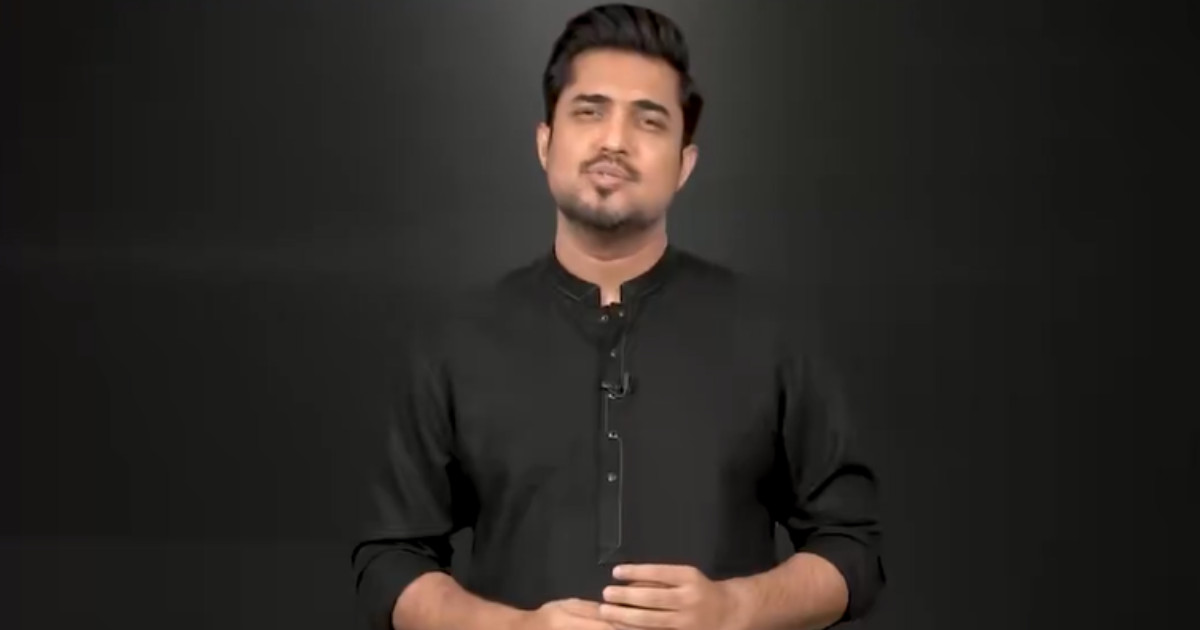
ABOUT THE WRITER: Dr. Nauman Niaz is a civil award winner (Tamagha-i-Imtiaz) in Sports Broadcasting & Journalism, and is the sports editor at JournalismPakistan.com. He is a regular cricket correspondent, having covered 54 tours and three ICC World Cups, and having written over 3500 articles. He has authored 15 books and is the official historian of Pakistan Cricket (Fluctuating Fortunes IV Volumes - 2005). His signature show, Game On Hai, has been the highest in ratings and acclaim.
Key Points
- Pakistan withdrew from its scheduled match against India at the ICC T20 World Cup 2026.
- The ICC issued a late-night statement warning against 'selective participation', which the article describes as confused.
- Historical precedents cited include forfeits/refusals by Australia and the W. Indies (1996), England (2003), New Zealand and Zimbabwe (2009).
- Forfeiting a match is not unlawful; the political premise was earlier invoked by India at the Asia Cup 2025.
- The move raises questions about governance, selective participation policies and the future scheduling of international cricket.
Ask AI: Understand this story your way
AI EnabledDig deeper, ask anything — get instant context, background, and clarity.
Disclaimer: This feature is powered by AI and is intended to help readers explore and understand news stories more easily. While we strive for accuracy, AI-generated responses may occasionally be incomplete or reflect limitations in the underlying model. This feature does not represent the editorial views of JournalismPakistan. For our full, verified reporting, please refer to the original article.