
Dr. Nauman Niaz revisits Pakistan's cricket legacy in two new books
JournalismPakistan.com | Published: 17 February 2026 | JP Staff Report
Join our WhatsApp channel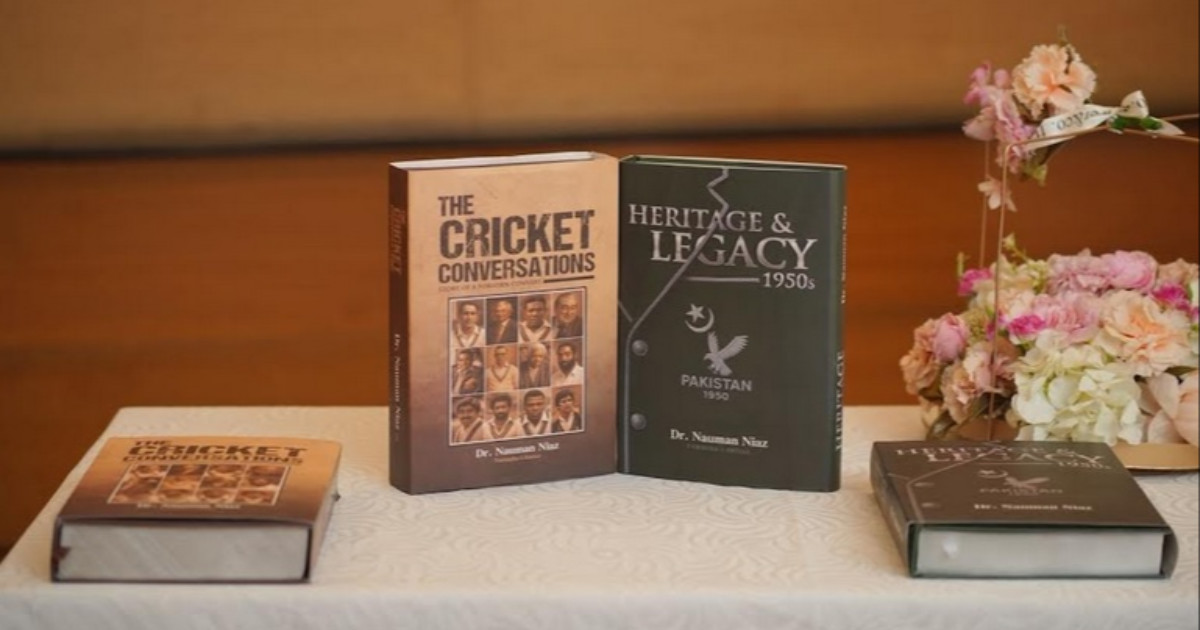
At Islamabad Club on February 14, 2026, Dr. Nauman Niaz unveiled two books tracing Pakistan's cricket history and the voices that shaped it. The launch framed cricket as both exuberant live spectacle and a repository of national memory.Summary
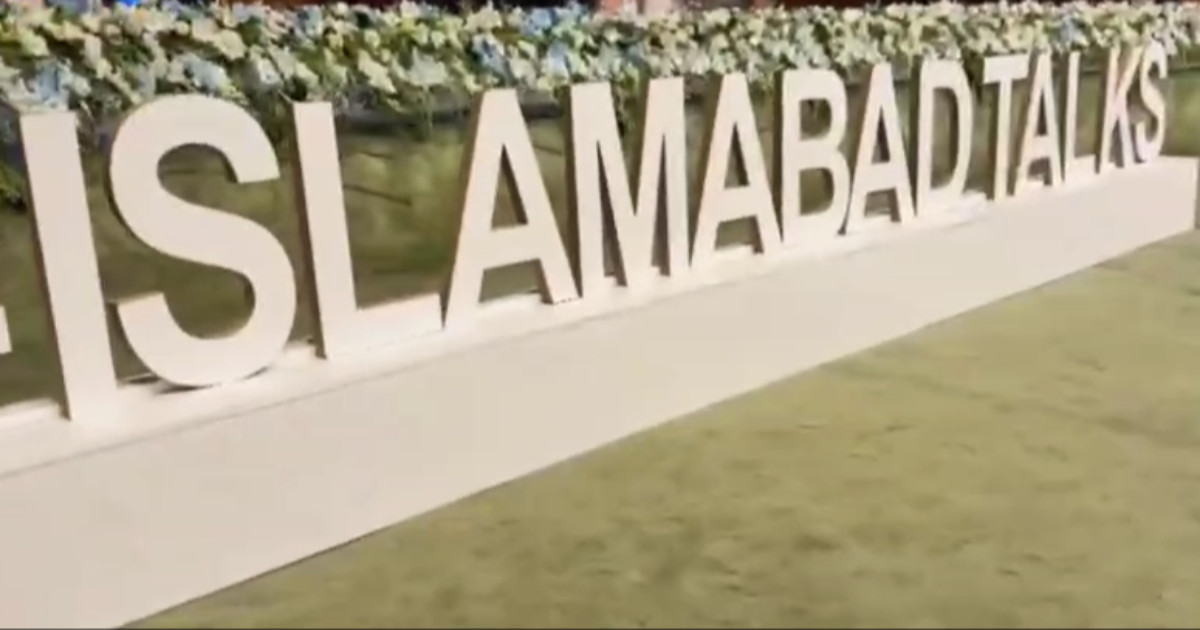
ISLAMABAD - There are evenings when time does not pass so much as it gathers. It pools quietly in corners, lingers in the folds of curtains, settles into the grain of old wood. February 14th, 2026, was one such evening in Islamabad, a night when memory itself seemed to take a seat among the guests. The Islamabad Club, with its colonial poise and its unspoken catalogue of power dinners and private reckonings, became something else entirely: a sanctuary for cricket's unfinished sentences.
Outside, the Margalla Hills stood in their habitual silence, indifferent yet somehow complicit. A winter breeze threaded through the capital, cool enough to remind one of transience, sharp enough to make the air feel honest. Inside, however, there was warmth, not just of temperature but of anticipation. Conversations hummed in low tones, like a dressing room before the first morning of a Test match. No one quite said it aloud, but everyone sensed it: this was not just another book launch. It was an invocation.
Cricket in Pakistan has always existed in two forms. One is loud and immediate, the roar of Gaddafi Stadium, the fever of a last-over finish, the combustible ecstasy of triumph. The other is quieter, almost subterranean, the long memory of Partition, the ghostly fields of the 1950s, the voices of commentators whose words once drifted together afternoons across continents. On this evening, those two rolls converged.
An invocation of memory: the books that changed the room
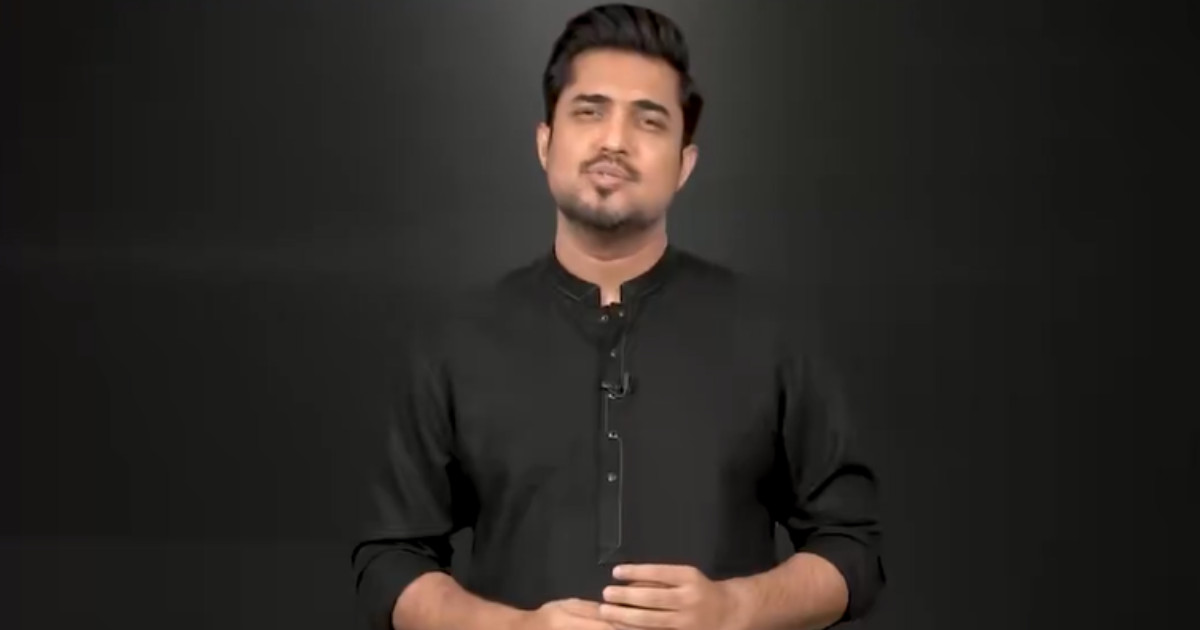
Dr. Nauman Niaz did not arrive bearing trophies or televised highlights. He arrived with weight, literal and metaphorical. Two books, his 16th and 17th, lay on display: Legacy & Heritage - The 1950s and Cricket Conversations - Story of a Forlorn Convert. They were not books that one flips through idly. They were books that required a table, a posture, an intention.
Printed on 150 art gram paper of the highest quality, hard bound, glazed, and embossed with dust wrappers that seemed less protective covering and more ceremonial attire, they had the quiet authority of objects built to endure. You could feel their heft before you read a word. They did not apologise for their presence. They declared it.
In an age of scrolling thumbs and vanishing tabs, to produce coffee table books of such uncompromising encumbrance is almost an act of resistance. It suggests faith, in memory, in erudition, in the tactile experience of turning a page and feeling history resist your fingers. These were not books designed for the ephemeral. They were built for shelves that would outlast fashions.
A convocation of memory: the gathering at the Islamabad Club
As guests gathered, cricketers, generals, doctors, journalists, custodians of narrative, and guardians of institutions, it became clear that the evening was not about ceremony alone. It was about reclamation. About retrieving the 1950s from the margins of anecdote and restoring them to the centre of Pakistan's sporting consciousness. About listening once more to the great voices of cricket, not through fragmented clips but through sustained, reflective conversation.
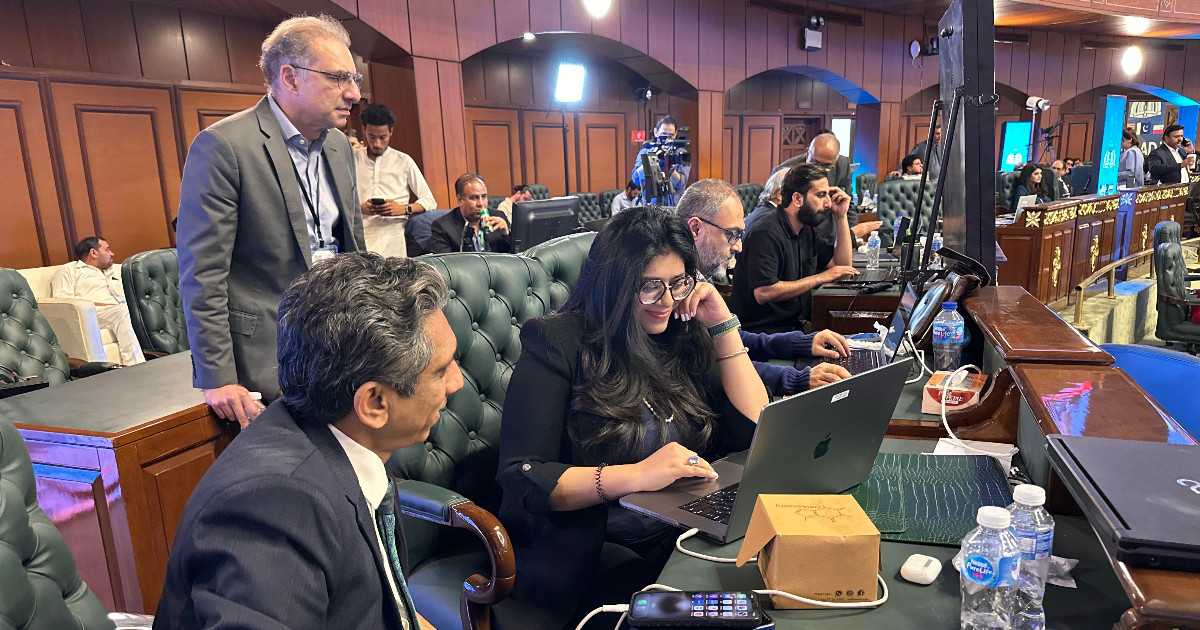
The room felt aware that something rare was unfolding: a moment when the past was not being commemorated as nostalgia, but interrogated as inheritance. And so the evening began, not with spectacle, but with a kind of reverence, hosted by Rabeea Shahzad, an eminent anchorperson, the master of the ceremony, with the reverence reserved for stories that have waited too long to be told properly.
Memories glowed with the amber hush of expectation; cricket gathered not as spectacle but as scripture. Dr. Nauman Niaz stood at the centre of it, flanked not by trophies or television screens, but by two books. Legacy & Heritage - The 1950s and Cricket Conversations - Story of a Forlorn Convert. They did not only rest on the table; they occupied it, the way a century occupies a nation's imagination.
Coffee table books, yes, but the phrase feels almost inadequate. Printed on 150 art gram paper of the highest quality, hard-bound, glazed, and embossed with dust wrappers so aesthetically assertive they seemed almost ceremonial, these were objects crafted to resist time. They were built like pavilions, sturdy, elegant, inviting entry.
Published by Boundary Books in Oxfordshire, United Kingdom, and in Pakistan distributed by Vanguard Books, a geography steeped in cricket's own ancestral myths, they had travelled back to the subcontinent, as if completing some quiet historical arc. By the third week of February, they would be available across Pakistan, though that night, in the Club's softly lit hall, they belonged to the few who had gathered to witness their unveiling.
And what a gathering it was. Saqlain Mushtaq, Pakistan's world-renowned off-spinner, carried the easy humility of a man who once made the doosra seem like a caress from the future. Lieutenant General (Retired) Tauqir Zia, former Chairman PCB, was the chief guest, his presence a reminder that cricket in Pakistan has always been entangled with power and structure. Arshad Khan, ex-Chairman PTVC, moved through the room with the air of someone who has seen cricket broadcast into millions of homes. Dr. Rauf Niazi and Dr. Salim Qureshi, eminent clinicians from Islamabad, stood in animated discussion, their medical precision perhaps recognising a similar rigour in Niaz's archival craft.
There was a glitterati of heads of departments from the Army Medical Corps, many of them Dr. Niaz's colleagues, their respect tinged with pride. The media fraternity, too, was present: Absar Alam, Shahzad Iqbal, Samar Abbas, Maria Memon, Mohammad Malick, Imran Naeem Ahmad, each a custodian of narrative in his or her own right. It was not just a book launch; it was a convocation of memory.
Heritage & Legacy - The 1950s: Archaeology of a nation's cricketing soul
Heritage & Legacy - The 1950s spans 500 pages, but in truth, it stretches much further. It begins before Pakistan, before even the notion of Pakistan was resolved into geography. It begins in a combined India, when representative cricket was already a theatre of identity. Communal cricket, Hindus, Muslims, Parsis, was not just a tournament structure; it was a rehearsal of anxieties and solidarities. Dr. Niaz writes of it not as a distant curiosity but as a lived phenomenon, where the cricket field became an arena for myth-making.
The mythical reality of cricket's cultural impact in those years feels almost implausible now. A forward defensive could be an act of defiance; a cover drive, an aesthetic assertion of belonging. The two-nation theory did not simply unfold in legislative halls; it flickered, sometimes ominously, on cricket fields. Niaz traces that flicker with a scholar's patience and a novelist's instinct for drama.
He moves through the politics and geopolitics of the era with unflinching clarity. Cricket in combined India was never insulated from the empire, nor from the stirrings of independence. It absorbed the rhetoric of leaders, the frustrations of communities, and the quiet ambitions of players who carried both bat and burden.
After Partition, when Pakistan stepped onto the field as a sovereign cricketing entity, the narrative shifted but did not simplify. The early 1950s were not just formative; they were fragile. Infrastructure was thin, resources were thinner, yet ambition was uncontainable. Dr. Niaz delineates, session by session, every representative match played in Pakistan after 1947. The detail is astonishing. Each over is contextualised, each session situated within the emotional weather of the time.
It is intriguingly authentic, not because it fetishises minutiae, but because it understands that detail is dignity. A nation finding its sporting voice deserves to have its early syllables recorded with care. Thirty-five profiles of cricketers who debuted for Pakistan in Tests during the 1950s anchor the book in human narrative. These were men who wore a new emblem on their chest, often with inherited techniques and borrowed kits. Some had learned their cricket in pre-Partition circuits; others emerged from the improvised academies of a new country. Niaz sketches them not as sepia-toned relics but as breathing, striving individuals, their hesitations, their courage, their private doubts.
The rarest paintings reproduced in the volume lend the work a museum-like sobriety. Legends of the past, and those who were interviewed or worked with Dr. Niaz, appear in brushstroke and colour, not frozen in black-and-white nostalgia but reimagined in rich pigment. There is something almost devotional about these images. They do not decorate the text; they converse with it.
Even first-class cricket receives the diligence it so often lacks in mainstream narratives. Grounds that rarely feature in highlight reels are resurrected. Scorecards from domestic contests are treated as cultural artefacts. Niaz understands that a nation's cricketing DNA is often encoded in its domestic rivalries, in the slow burn of provincial pride. The result is an impressive, exhaustive coverage of cricket in Pakistan in the 1950s. It is history rendered not as chronology but as texture, layered, sometimes contradictory, always alive.
Cricket Conversations: a pilgrimage across generations
If Heritage & Legacy is archaeology, then Cricket Conversations - Story of a Forlorn Convert is pilgrimage. At 620 pages, it is expansive in a different way. Here, the field is not confined to a decade or a geography. It stretches across continents and eras, through dressing rooms and commentary boxes, into private studies where cricket was discussed as literature and life. The title alone is telling. A forlorn convert. It suggests a man who did not simply adopt cricket; he surrendered to it. There is vulnerability in that surrender, a sense of longing.
Dr. Niaz met his childhood heroes. That sentence carries a boyhood dream within it. He sat with C.L.R. James, the Trinidadian intellectual who asked what they knew of cricket that only cricket knew. Conversations with James are not just interviews; they are dialogues with philosophy. Through Niaz's lens, James emerges not only as a thinker of empire and sport but as a man wrestling with the moral weight of the game.
Niaz had the distinction of working with Richie Benaud, whose voice once seemed to hover above the game like a benevolent ghost. With Christopher Martin-Jenkins, whose prose could make a rain delay sound lyrical. He engaged in detailed conversations with Jim Swanton, Brian Johnston, John Arlott, custodians of cricket's golden age of commentary, when language was as much a craft as cover driving.
And then there are the interviews with Sir Walter Hadlee, Kerry Packer, Sir Everton Weekes, Sir Clyde Walcott, Sir Garfield Sobers, Sir Wesley Hall, Keith Miller, Ray Lindwall, Lala Amarnath, Syed Mushtaq Ali, the modern day legends, Steven Waugh, Ricky Ponting, from Pakistan Asif Iqbal, Wasim Hassan Raja, Javed Miandad, Hanif Mohammad, Sir Vivian Richards, Brian Charles Lara, and a constellation of other legends. And then there are deep, insightful conversations with Berry Richards, Sir Colin Cowdrey, Mike Proctor, A.H. Kardar, even the relatively unknowns Morappakam Gopalan, Polly Umrigar, Subash Gupte, and Allan Davidson; they reveal their careers not as fairy tales but as contested terrains. Politics knitted itself around their journeys, racial tensions in the West Indies, class divides in England, and media revolutions in Australia. Through these conversations, cricket's romantic veneer is gently lifted to reveal its complex underpinnings. And ultimately, South Africa's banishment in 1969.
What makes these exchanges spellbinding is not just access but trust. Niaz listens with an attentiveness that invites candour. The legends speak not in rehearsed platitudes but in reflective tones, aware that they are being archived by someone who values nuance over sensation. First, getting the manuscripts done from the old audio tapes and then rewriting with their quotes was an ordeal.
Intriguingly, and perhaps tantalisingly, he has held back most of his interviews with Pakistan's own legends. Those will form Volume II, he promises, a work devoted exclusively to Pakistan players. The withholding feels deliberate, almost strategic, as if the convert is saving his most intimate confessions for another time.
The language of Cricket Conversations is refined, assured, and effortlessly compatible with the finest literary writings from the West. Some validations feel like essays in cultural history; others read like letters between old friends. It is cricket writing elevated to literature, without losing the game's earthy pulse.
Speeches, signings, and a shared sense of milestone
Back at the Islamabad Club, as speeches were delivered and copies signed, the room seemed to hum with a collective recognition: this was not a routine publication event. It was a milestone.
Lieutenant General Tauqir Zia, in his address as chief guest, spoke of cricket's institutional evolution in Pakistan, acknowledging the importance of scholarship in sustaining its legacy. He also got deep into Dr. Niaz's personality and thought his prodigy was unstoppable, also recalling how he had approved the compilation of the official history of Pakistan Cricket and the doctor had come up with IV Volumes, 4768 pages in 2005.
Saqlain Mushtaq, ever reflective, spoke of learning from history, of how understanding the 1950s deepens appreciation for contemporary craft. His words carried the quiet authority of someone who has himself become part of that history. And having known Nauman since both played for the University Grants Commission together, some lighter moments shared, and then working in the studios, he thought that Niaz had a deep understanding of biomechanics and technical aspects to an extent that they could seek answers from his questions and explanations.
Absar Alam and Shahzad Iqbal exchanged notes on how narratives shape public memory. Maria Memon and Mohammad Malick leafed through the pages, pausing at the reproduced paintings, their journalist's eyes lingering on details. The doctors from the Army Medical Corps, colleagues of Dr. Niaz, seemed almost protective of his achievement, aware of the discipline required to balance clinical life with literary ambition. There was warmth in the room, but also gravitas. These books demanded seriousness.
At PKR 8,000 for Heritage & Legacy - The 1950s and PKR 10,000 for Cricket Conversations - Story of a Forlorn Convert, they were described by more than one attendee as throwaway prices for absolute pieces of literature. In a cultural economy where superficiality often commands a premium, such pricing felt almost rebellious. But perhaps that is fitting. These books are not commodities; they are commitments.
An evening that settled into the spine of a nation's story
As the evening wore on, conversations deepened. Old matches were recalled, forgotten players rediscovered. Younger attendees listened as elders recounted the early days of Pakistan cricket, not as nostalgia but as lived testimony. The books, still pristine in their glazed covers, had already begun to crease at the edges, not physically but metaphorically, entering discourse. It was an evening to cherish.
In a country where memory is often fragile and archives precarious, Dr. Nauman Niaz has built something solid. With Heritage & Legacy - The 1950s and Cricket Conversations - Story of a Forlorn Convert, he has offered Pakistan not just two coffee table books, but two mirrors. One reflects the nation's cricketing infancy, with all its anxieties and aspirations. The other reflects its global dialogues, its conversations with empire and excellence.
As guests filtered out into the Islamabad night, the Margallas now shadowed and serene, copies tucked under arms like treasured manuscripts, there was a quiet sense that something enduring had occurred. Not a spectacle, but a consolidation. Cricket in Pakistan has always been more than a game. It has been an argument, an identity, a refuge, a stage. On February 14th, it became once again what it has always threatened to be at its best: literature.
As the evening drew towards its unhurried close, there was no abrupt dispersal, no scramble for exits. Instead, there was lingering. Small clusters of guests remained gathered around the long table where the books lay, their hands resting on covers as though steadying something alive. The Islamabad Club, so often a theatre for strategy and status, felt unusually intimate, almost domestic in its quiet pride.
Outside, the city resumed its usual flow. Traffic lights blinked dutifully. The Margallas receded into darkness. Yet something had shifted, however imperceptibly. For a few hours, cricket had not been reduced to scoreboard and slogan. It had been restored to literature.
When the last guest finally stepped out into the cool February night, Islamabad felt subtly reconfigured. Not louder, not brighter, but steadier. As if its past had been placed, carefully and beautifully bound, into safer hands.
Some evenings pass. And some evenings settle into the spine of a nation's story. February 14th, 2026, was the latter, an evening when cricket, once again, found its most enduring form: the written word.
Key Points
- Dr. Nauman Niaz presented two new books on Pakistan's cricket history at Islamabad Club.
- The launch blended live-event atmosphere with reflective discussion of archival material and commentary.
- Attendees noted the books' focus on both memorable matches and the broadcasters, writers and historians who recorded them.
- The setting near the Margalla Hills underscored the event's contemplative tone and cultural resonance.
- Organisers positioned the works as contributions to preserving and interpreting Pakistan's sporting memory.
Key Questions & Answers
What are the books about?
The books examine Pakistan's cricket history, combining archival commentary, personal recollections and analysis of key matches and figures.
When and where was the launch held?
The launch took place at the Islamabad Club on February 14, 2026.
Who is Dr. Nauman Niaz?
Dr. Nauman Niaz is a cricket writer and broadcaster known for his work on Pakistan's cricket history and commentary.
Are the books scholarly or popular in tone?
The books appear to bridge archival research and personal narrative, aiming to be accessible to general readers while engaging with historical material.
Ask AI: Understand this story your way
AI EnabledDig deeper, ask anything — get instant context, background, and clarity.
Disclaimer: This feature is powered by AI and is intended to help readers explore and understand news stories more easily. While we strive for accuracy, AI-generated responses may occasionally be incomplete or reflect limitations in the underlying model. This feature does not represent the editorial views of JournalismPakistan. For our full, verified reporting, please refer to the original article.