
Pakistan cricket's $1.3 billion gamble: ICC T20 World Cup 2026 boycott decision
JournalismPakistan.com | Published: 28 January 2026 | Dr. Nauman Niaz (TI)
Join our WhatsApp channel
Pakistan's government will decide whether to direct the Pakistan Cricket Board to boycott the ICC T20 World Cup 2026, a move with major financial and diplomatic costs. Advocates say a boycott would challenge perceived BCCI dominance and ICC politicization.Summary
Pakistan stands at a moment that refuses to be hurried, a moment that demands thought sharpened by consequence rather than comfort. The question before it is neither patterned nor procedural. It is whether Pakistan will boycott the ICC T20 World Cup 2026 or step onto the field against India and accept, once more, the terms written for it by others. The Government has resolved to respond, either on Friday or on Monday next, and whatever answer is returned will bind the Pakistan Cricket Board. The line between state and sport has already been crossed. What remains is the courage to acknowledge it.
Opinion fractures, as it always does when cricket is forced to carry the weight of power. Some argue for complete withdrawal, and their logic is not born of petulance. It is born of fatigue. Fatigue with an economic matrix that has become predatory, fatigue with a brazen abuse of authority that has hollowed out the ICC, fatigue with the BCCI's hegemonic presence that has turned an international institution into a political instrument. For this camp, a boycott is not just a protest. It is correction. It is the refusal to legitimize a system that has confused dominance with entitlement and commerce with conscience.
This argument does not exist in isolation. It is not simply about challenging India's interference in the ICC's running and decision-making, though that interference is now so routine it barely provokes outrage. It is about arresting the steady polarization of cricket itself. A sport that once survived on the illusion of neutrality now teeters on the edge of alignment, where silence is rewarded and dissent punished. To continue participating under such conditions is to accept a role scripted by others, to become, slowly and willingly, a compliant appendage. For the more alert observers, refusal alone preserves dignity. It is not withdrawal from cricket, but a defense of it.
The Three Strategic Options
Opposing this view are those who counsel restraint. They speak of cricket as a sanctuary that should not be surrendered to political score-settling. They argue that sport, however bruised, must remain above the fray. Participation, even under strain, they believe, sustains presence, preserves relevance, and keeps Pakistan visible in a world where absence is easily misinterpreted. This position, too, is reasoned. It fears isolation more than indignity, erosion more than explosion.
Between these positions lies the fault line on which Pakistan now stands. The difference is not moral clarity but estimation of consequence. One side sees a boycott as leverage. The other sees it as a risk. Both are correct, but only one recognizes the asymmetry of the moment.
There is, of course, a third path, one more precise and far more unsettling for the system that governs the game. Pakistan may choose not to boycott the tournament entirely, but to refuse to play India. Not once. Not as a gesture. But as policy, sustained until conditions change. This option acknowledges geopolitical reality, the recent deterioration of relations, the indiscriminate extremist rhetoric, and the false accusations that have become routine. It weaponizes economics rather than rhetoric. It strikes at the core of the ICC's business model, where a single fixture underwrites global tournaments.
The India-Pakistan match: cricket's economic keystone
Such a refusal would not be symbolic. It would be seismic. The India-Pakistan match is not merely a contest. It is the keystone of the ICC's global commercial structure. Remove it, and the arches strain. Broadcast projections collapse. Rights valuations tremble. The future of ICC tournaments becomes uncertain not because Pakistan is absent, but because the most monetized rivalry in sport has been rendered unavailable. That is the brutal arithmetic of modern cricket.
This is why the moment matters. Pakistan is not choosing between dignity and relevance. It is choosing between submission and agency. Cricket has already been politicized, not by those who resist power, but by those who wield it without restraint. To pretend otherwise is to participate in the fiction that neutrality still governs a game long since captured by capital and control.
Pakistan stands here not as a petitioner, but as a stakeholder with leverage it has rarely acknowledged, let alone used. The decision it takes will not just determine participation in a tournament. It will determine whether Pakistan accepts the present order as inevitable, or whether it is prepared, finally, to test how fragile that order really is.
Beyond Bangladesh: exposing ICC governance fault lines
It is important, at the outset, to clarify what a boycott would and would not signify. It would not be, in any meaningful sense, an act of solidarity with Bangladesh alone. That gesture has already been made in part, most visibly through Pakistan's vote in Bangladesh's favor on the ICC Board, when fourteen other members chose to stand aside. That vote had moral value, but moral value, when unaccompanied by structural pressure, rarely alters institutions. The deeper purpose of a boycott lies elsewhere. It lies in exposing the fault lines of global cricket governance and in questioning the concentration of authority that has accumulated, with increasing boldness, in the hands of the BCCI and the Indian state that stands behind it.
A comparison is instructive. FIFA, for all its flaws, remains recognizably the governing body of football. Authority there is diffuse, contested, and occasionally corrected. The ICC, by contrast, functions as a legislative body in which each of its twelve full members possesses one vote purely democratic. Its charter is founded on host board activity, tournament integrity, broadcast commitment, and a commercial disruption threshold. These principles are reasonable in themselves. What is unreasonable is the ease with which they have been bent. The removal of Bangladesh on what were described as logistical and contextual grounds was not the product of careful governance. It was an exercise in convenience. The BCCI has, over time, politicized the ICC, not by formal declaration, but by repeated demonstration that its preferences carry disproportionate weight. The fourteen-to-two vote was therefore not a judgment of conscience. It was a measurement of isolation. Bangladesh, a middling cricket nation with limited influence at the ICC table, was set aside despite offering a population of 170 million viewers and a broadcast revenue and sponsorship value that exceeds Pakistan's.
What followed exposed the fragility of the ICC's professed principles. Bangladesh, a full member, was replaced by Scotland, an associate member that had failed in the European qualifiers after losses to Italy and Jersey. The decision reduced Asian representation, weakened the competitive integrity of the tournament, and rendered hollow the ICC's language of inclusivity. When institutions abandon their own justifications, it is usually because those justifications have become inconvenient.
BCCI's imperial presence in global cricket
India's position within this arrangement is not difficult to describe. It is the financial center of world cricket. Its market dominance has gradually assumed a character that resembles imperial presence, not always declared, but persistently felt. As Sharda Ugral has observed, under Jay Shah and the Indian-appointed CEO Sanjog Gupta, the ICC increasingly operates as the 'BCCI's office in Dubai'. The significance of this observation lies not in its rhetoric, but in its accuracy. An international body that appears to function as an extension of one national board forfeits its claim to neutrality.
It is, of course, true that India contributes the bulk of broadcast revenue. Bilateral series involving India shape the global calendar. Its domestic league has altered player priorities, and its absence from any major tournament would produce severe disruption. These facts are not contested. What is contested is the inference drawn from them. Economic contribution does not confer moral authority, nor does it justify the projection of a domestic political narrative into international sport. Wealth may explain influence, but it does not legitimize its unchecked exercise.
Pakistan's quantifiable value: the $1.3 billion rivalry
Pakistan, though ranked seventh in the ICC T20 standings and no longer the dominant force it once was on the field, remains indispensable within the ICC framework. Its value is not sentimental. It is quantifiable. A ten-second commercial slot during an India-Pakistan broadcast in India sells for USD 18,750. Fifty minutes of airtime (total for one T 20 International) is valued at USD 5.27 million, before subscriptions are counted. Digital platforms add another 4 to 6 million dollars. Collateral sponsorships and title arrangements contribute between USD 25 and 30 million. Worldwide returns for sports channels are estimated at USD 1.3 billion. These figures explain, more clearly than rhetoric ever could, why Pakistan occupies the position it does.
This economic reality accounts for the ICC's persistent tendency to place India and Pakistan in the same group, regardless of competitive logic. During the ICC Champions Trophy 2017, Pakistan entered ranked eighth and India first. They were initially placed in separate groups. Broadcasters and rights holders intervened. The groups were rearranged. Two matches followed, and with them two significant revenue surges. Since that tournament, the pairing has become habitual. Pakistan's role in the ICC's commercial structure has been regularized.
The Asia Cup 2025 precedent
The Asia Cup T20 2025 offered further evidence of how this system functions. Under pressure from the Indian Government, the BCCI sought a postponement, citing political tensions. Broadcast interests prevailed. The tournament was relocated from India to the United Arab Emirates, and three India-Pakistan matches were played. Sony Pictures Network India, having acquired Asia Cup rights for USD 170 million, was unwilling to absorb the loss. Star India, through a consortium involving Viacom 18 and Disney US, had already invested heavily in cricket properties, including ICC rights initially valued at USD 3.1 billion, IPL rights worth USD 6.02 billion, and streaming rights at USD 3.05 billion. Jio Star's control of 40% of the Indian broadcast market reflects the scale of this investment and the vulnerability that accompanies it.
Losses during the ICC T20 World Cup 2024 in the United States and the West Indies revealed the strain beneath this expenditure. Production costs rose sharply. Returns faltered. Jio Star considered relinquishing ICC rights. The ICC, unable to find an alternative buyer, reduced the value of the contract from USD 3.1 billion to USD 2.1 billion to retain the broadcaster. The episode illustrated a simple truth. The ICC's financial architecture depends heavily on a single market, and dependency limits independence.
Political weaponization of cricket
The politicization of cricket did not end with contracts. The BCCI, aligned with the posture of the Indian Government, compelled Kolkata Knight Riders to terminate the contract of Mustafizur Rahman, Bangladesh's only IPL player. Of the four KKR owners, Shah Rukh Khan, a Muslim, was singled out for intimidation. Mustafizur Rahman faced threats from BJP politicians and officials. Had he been permitted to play, the matter would likely have ended quietly, without noise. Its escalation signaled something more troubling: that participation itself had become conditional.
Under Jay Shah and Sanjog Gupta, the ICC crossed from accommodation into partisanship. Financial influence displaced fairness. Governance became reactive. International cricket, at times, approached parody. The ICC's credibility has suffered not through sudden collapse, but through steady erosion, the kind that leaves structures standing but belief diminished.
The $50 Million Question
A Pakistan boycott of the ICC T20 World Cup would disrupt this economy and compel reconsideration. Pakistan would lose perhaps USD 50 million. That loss is tangible. So too is what might be regained: relevance, agency, and the possibility of restoring a measure of neutrality to the sport. If Pakistan chooses inaction, it risks joining those boards that have accepted marginalization in exchange for short-term security. Grants may be recalculated. Neutral venues beyond 2027 may become inaccessible. These outcomes are not speculative. They are consistent with how power operates when unchallenged.
Bangladesh has already accepted sacrifice. It rejected tours of India and banned IPL and ICC broadcasts domestically, forfeiting up to USD 50 million. Pakistan has made symbolic gestures, including the absence of a handshake during the Asia Cup and India's refusal to receive the trophy from Mohsin Naqvi. Symbolism, however, decays without action.
India has brought the game into disrepute on several occasions and faced no sanction. Pakistan toured India in 2012, 2016, and 2023. India has avoided Pakistan since 2008. The asymmetry is documented. Mohsin Naqvi has now placed the decision where it belongs, having announced the squad and fulfilled the PCB's obligations. Responsibility now rests with the Government.
Broadcaster pressure and Olympic scrutiny
If Pakistan refuses to play India in ICC events, broadcasters will object, revenues will decline, and the ICC will be compelled to negotiate. Other members will feel the disturbance. Cricket is wealthy, but not immune to pressure. The World Cup remains the third most valuable broadcast property in global sport, and with cricket entering the Olympics in 2028, the International Olympic Committee will observe ICC's governance failures closely.
This is not a moment for hesitation. Opportunities of this magnitude are rare. Pakistan must decide whether it wishes to influence the future of the game or continue to operate within arrangements shaped by others. The question is not simply what Pakistan should do, but what it believes international sport ought to be.
Inside Indian Broadcasting: Where Cricket Actually Lives
Pakistan's leverage in world cricket is not an abstract theory. It is a measurable asset, counted in viewers, priced in advertising inventory, and baked into broadcast contracts that now sit at the heart of the ICC's business model. The question of whether Pakistan should boycott the ICC T20 World Cup 2026, refuse only to play India, or turn up and play the whole tournament under protest is therefore not a question of optics. It is a question of how the modern cricket economy works, and who has learned to treat it like a private instrument.
To write about this moment properly, you have to begin where contemporary cricket actually lives: inside Indian broadcasting. The ICC may speak in the language of integrity, participation, and member equality, but its balance sheet speaks in a different tongue. India is not one market among many. It is the market. It is where rights are bid up into the billions, where subscription ambitions are built, where production spend is rationalized as long-term acquisition cost, and where the absence of a single premium fixture can distort the valuation of an entire tournament cycle.
JioStar: The broadcasting consolidation story
JioStar is now the clearest symbol of how cricket's commercial architecture has consolidated. Formed from the merger of Disney's India television (acquired for USD 8 billion) and streaming assets with Reliance-backed Viacom18 (purchased for USD 576 million), it sits on an unprecedented stack of cricket rights across TV and digital. Its importance is not only what it owns, but what it is trying to become: the default pipe through which India consumes sport, entertainment, and prestige content at scale. Reuters reported on the wider Reliance and Viacom18 consolidation, including Reliance's move to acquire Paramount's stake in Viacom18, as part of this broader restructuring of Indian media power.
The ICC's India media rights from 2024 to 2027 are tied to this universe. Reports in December 2025 suggested tension around the deal, but the ICC and JioStar issued a formal statement saying the agreement remained fully in force and that reports of withdrawal were incorrect. That public denial matters because it indicates how sensitive the ecosystem is. Even rumors of instability in the ICC-India rights chain carry consequences, because broadcasters, sponsors, and the ICC itself live on predictability.
The larger truth is that rights inflation has been followed by a monetization anxiety. The same forces that drove valuations to historic heights have created pressure on production and distribution spend. Several industry reports around late 2025 described JioStar's mounting costs and provisions linked to sports rights. One such report described a sharp rise in loss provisions, reflecting how expensive cricket has become to carry even when audiences are enormous. This is the paradox modern cricket refuses to confront openly. It is watched by hundreds of millions, yet broadcasters can still bleed. The game has never been more popular, and never more financially precarious at the level of rights holders.
The IPL: cricket's economic engine
The IPL is the economic engine that taught India's media market how to price cricket like a premium utility. In 2022, ESPNcricinfo reported the IPL's rights deal crossed the six-billion-dollar mark as Disney Star and Viacom18 split key packages. Variety also reported on the same rights battle and valuation, underlining how the IPL became the central prize in India's streaming wars.
But the IPL is not just a revenue stream. It is a behavior-changing machine. It created a generation of viewers trained to consume cricket daily, to accept wall-to-wall studio programming, to engage with multi-language feeds, and to treat digital streaming as a normal home for live sport. It also created the modern Indian broadcast playbook: premium rights used as subscriber magnets, with production spending rising to match the scale and expectations of the event.
By 2025, the scale of this machine was being described in terms usually reserved for global entertainment giants. The Financial Times reported that JioHotstar had surged to over 280 million subscribers, driven heavily by IPL interest, nearly matching Netflix's global subscriber count at the time. The same report also described claims of combined IPL reach around 900 million across TV and digital, while noting overlap is likely.
The 169 million viewer benchmark
The IPL's television ceiling is now so high it is setting records that outgrow even the India-Pakistan benchmark. The Times of India reported that the IPL 2025 final drew 169 million television viewers, surpassing the previous record which it said was held by India vs Pakistan at the 2021 T20 World Cup. This matters because it tells you two things at once. One, the Indian market can now deliver historic numbers even without Pakistan. Two, India-Pakistan remains the gold-standard international fixture, used as the benchmark for comparison precisely because it has long represented the top of the global rivalry economy.
The ICC has become increasingly transparent about its digital scale, partly because digital metrics are now the marketing language for rights-holders and sponsors. In its post-event release for the Men's T20 World Cup 2022, the ICC said the tournament generated 6.58 billion video views across all ICC platforms and described it as the most digitally engaged ICC event ever. SportsPro's coverage of the same ICC release noted that India vs Pakistan was the most watched match of that World Cup in India, delivering 256 million viewing hours.
The match that changes how tournaments are sold
The point is not just that the match is watched. It is watched at a rate that changes how tournaments are sold. It becomes the pillar around which ad sales teams build inventory projections, around which sponsors activate campaigns, and around which production teams justify expensive multi-camera deployments, AR graphics, multi-language commentary rosters, and high-grade studio programming.
The ICC has also emphasized total "viewing minutes" as a global yardstick for modern tournaments. The Times of India reported that the ICC Champions Trophy 2025 delivered 368 billion global viewing minutes, with the final accounting for 65.3 billion live viewing minutes worldwide. Even allowing for the way such numbers are measured across markets and platforms, the direction is obvious: ICC tournaments have become industrial-scale entertainment, and the biggest fixtures are economic cornerstones.
India-Pakistan is the purest example of a single fixture acting like a financial event. A Pakistan daily, Dawn, reported an ICC statement saying the India-Pakistan match at the 2021 Men's T20 World Cup had a television reach of 167 million, described as the most viewed international match of the format. Put those numbers next to what advertisers pay. Once you do, you begin to see why the ICC's public language can feel disconnected from its private incentives.
The $3 billion rights deal
Rights in India are not sold like rights elsewhere. In many markets, cricket rights are an add-on. In India, cricket rights are a cornerstone. ESPNcricinfo reported in 2022 that Disney Star won ICC media rights for the Indian market through 2027. Variety reported that Disney Star paid about US $3.01 billion for those ICC rights. Those numbers were set in a climate of intense competition, where broadcasters were not just purchasing matches, but purchasing the right to build streaming ecosystems. The logic is similar to the IPL logic, only broader. ICC rights include global events, national pride fixtures, and tournaments that bring users back repeatedly across years.
The commercial structure then has a habit of turning into a governance structure. Once a single market funds a dominant share of the ICC's value, the pressure to keep that market satisfied becomes structural, not episodic. Boards begin to calibrate their decisions. Administrators begin to read the room. Tournament designs begin to serve commercial logic as much as cricket logic.
Pakistan: the biggest multiplier
This is where Pakistan's leverage becomes real. Pakistan is not the biggest market, but it is the biggest multiplier, because it completes the single fixture that consistently over-delivers. The rivalry is the product. Without Pakistan, India has cricket. With Pakistan, India has cricket's most reliable super-event.
Any precise, audited figure for "how much India-Pakistan contributes" to the ICC is difficult to state without access to internal rights contracts, which are not fully public. But you can build a credible picture from publicly reported benchmarks.
- India's ICC rights deal is worth about US$3 billion for the 2024-2027 cycle, as reported widely, including in the ICC's own references to the deal and media coverage of it.
- The ICC's own event reporting shows India-Pakistan can be the most-watched match of a World Cup, with 256 million viewing hours in India for the 2022 T20 World Cup.
- ICC and media reports have identified India-Pakistan matches as record-setting properties, including the 167 million TV reach figure for the 2021 T20 World Cup match.
- Despite no competition between India and Pakistan at Dubai during the ICC Champions Trophy 2025 match, it attracted the highest CANTAR ratings.
- Indian cricket consumption has proven capable of generating historic TV numbers, with the IPL 2025 final at 169 million TV viewers, a level used explicitly in comparison to India-Pakistan.
From these, you can credibly infer the following without pretending to have the ICC's ledger: the India-Pakistan fixture is one of the ICC's highest-yield inventory units in India, and likely among its highest-yield units globally, because it pulls not only match audiences but also pre-match, post-match, news coverage, highlights consumption, and sponsor activation value. In simpler terms, it is not only a match. It is a week of attention compressed into a few hours. Now we come to what you asked for directly: the impact if Pakistan abstains from playing, if it only stops playing against India, or if it protests but plays the entire competition.
What Broadcasters Actually Sell
To understand the impact, you have to understand what broadcasters actually sell. They sell reach. They sell predictability. They sell peak spikes. The rivalry delivers peak spikes with unmatched consistency.
Scenario A: Complete tournament boycott
Pakistan abstains from the tournament entirely.
This is the cleanest political statement and the most disruptive commercial action. It would remove Pakistan's matches from the schedule, reduce viewing minutes in Pakistan and diaspora markets, and remove the India-Pakistan fixture entirely if tournament design does not allow replacement.
The immediate commercial impacts would likely include:
- Rights-holder shock in Pakistan: local broadcasters, advertisers, and sponsors lose the biggest tournament window of the cycle.
- ICC sponsor friction: sponsors buying global packages would lose a major spike market and one of the flagship fixtures that anchors campaign planning.
- India rights-holder recalibration: if the tournament loses India-Pakistan, the Indian broadcaster still has India matches, but it loses the rivalry super-event that historically over-delivers. That does not necessarily collapse the tournament, which it is likely to depending upon Uganda at 21 on the ICC rankings or if Bangladesh replaces them, but it can reduce the ceiling of ad rates for the biggest slot. And under the given circumstances, Bangladesh is unlikely to betray Pakistan's trust, replacing them if they vacate their position. It may or may not be.
Would the ICC lose billions? Not automatically. The ICC rights are bundled. But the ICC would face a meaningful drop in the single most powerful lever it uses to justify premium pricing, especially when the market is already anxious about rights inflation and profitability. Reports around late 2025 already showed sensitivity to cost and value in the India rights ecosystem.
The political risk for Pakistan is also real. The ICC has rules, contracts, and sanctions frameworks. But the ICC is also commercially constrained. When a board can credibly threaten a major commercial event, the negotiation space changes. The severity of the sanction becomes a business decision, not only a legal one.
Scenario B: Selective India refusal
Pakistan plays in the tournament but refuses to play India
This is the most strategically precise form of disruption. It reduces Pakistan's own loss exposure, keeps Pakistan engaged with global cricket, and targets the specific asset that the ICC and Indian broadcasting value most.
The commercial consequences here concentrate sharply:
- Indian broadcaster loses the one match that typically delivers the biggest spike. The ICC's own tournament reporting and media coverage identify India-Pakistan as record-setting.
- Ad inventory becomes harder to price because a major chunk of premium inventory depends on predictable spikes.
- Tournament narrative weakens: ICC events are sold partly as sport and partly as spectacle. Removing the biggest spectacle reduces global campaign momentum.
This scenario would likely create maximum negotiating pressure with minimum self-harm, but it also carries the highest risk of ICC enforcement action, because it is selective non-participation. It is an assertion that Pakistan will participate in the tournament's legitimacy but will deny the tournament its biggest commodity. That contradiction is precisely what makes it powerful.
Scenario C: Protest while playing
Pakistan protests, but plays the entire competition
This is the least commercially disruptive and the easiest path for the ICC and broadcasters to absorb. It allows Pakistan to claim principle while keeping revenue streams intact. It avoids sanctions, preserves grants, and keeps Pakistan's players on the global stage.
But there is a cost: it gives away leverage at the moment leverage is most valuable. The ICC's governance culture, shaped by its revenue dependence, tends to interpret participation as acceptance. Even if Pakistan protests loudly, once it walks onto the field, the broadcaster still gets the product.
In this scenario, the India-Pakistan match remains the same commercial event it has always been, with the same ability to deliver record reach and engagement, as seen in prior tournaments. The ICC loses nothing. The broadcaster loses nothing. The sponsor loses nothing. The protest becomes content. And modern broadcasting has learned how to monetize even protests. It becomes an angle. A panel topic. A pre-match package. A "context" segment. The match still happens, the ad slots still sell, and the system survives another cycle unchanged.
The ICC's commercial constraints
The ICC is not just a governing body. It is an organizer of premium media inventory. Its strongest instinct is to protect continuity. That is why the official statement with JioStar in late 2025 was so unequivocal: stability is the product being protected.
If Pakistan acts in a way that threatens stability, the ICC will weigh several factors:
- Can the ICC enforce sanctions without causing a bigger commercial crisis?
- Would sanctions push Pakistan further away, risking future cycles?
- Would other boards quietly sympathize, even if they do not support publicly?
- Would broadcasters accept a diluted product, or would they push back?
This is where Pakistan's leverage sits. Not in outrage, but in market structure. If Pakistan wants maximum influence, it must choose the action that the ICC cannot easily absorb. That action is not rhetoric. It is disruption of the rivalry inventory.
The System Understands Money, Not Lectures
If Pakistan wants minimum risk, it will play the tournament and protest symbolically. That preserves money and reduces confrontation, but does not change governance. It also confirms what the system already believes: that when the moment comes, cricket will win and politics will be adjusted around it. If Pakistan wants to change the system, it must force the system to pay a price for how it behaves. The system already understands money. It does not understand lectures.
Cricket's modern economy has trained administrators to listen most carefully when viewing hours, viewing minutes, subscriber surges, and rights stability are threatened. The ICC's own communications about digital scale and engagement are not just celebratory press releases. They are sales documents. The Champions Trophy viewing minutes headlines serve the same function. So Pakistan's choice is not simply whether to play. It is how to deploy the one asset it has that the market reliably cannot replace: the match that turns cricket into a continental event.
Commercial inequality vs. sporting equality
The tragedy of modern cricket is that it still speaks reverently of sporting equality while living on commercial inequality. It is a sport that wants to believe in fair play, but is governed increasingly by bargaining power. Pakistan, for once, is not powerless in that bargain. It is not the richest board, nor the most influential, nor the loudest. But it is essential to the one event that most reliably forces the global market to look up, pay attention, and spend.
If Pakistan plays and protests, the system will affirm and move on. If Pakistan refuses the tournament, the system will be forced to respond, but may choose punishment. If Pakistan refuses only India, the system will feel the pressure most sharply, because it touches the nerve that runs from stadium to studio, from broadcaster to balance sheet. In the end, cricket will not be changed by anyone's sense of grievance. It will be changed only when a stakeholder makes the cost of ignoring integrity higher than the cost of upholding it.
Pakistan holds, in its hands, the rare ability to set that cost. It could lead to financial penalties since they are signatories to participation agreements, hist Rights contracts, etc.
Understanding Pakistan's value
Pakistan does not arrive at this moment by accident. It arrives here because history has been patient, money has been relentless, and cricket has been asked, again and again, to carry burdens far heavier than the game itself. What now confronts Pakistan is not a scheduling inconvenience or a diplomatic footnote. It is a moment in which the country must decide how it understands its own value, and whether it is prepared to use it.
Their value can be assessed from the fact ICC never treats Pakistan casually. Pakistan is deliberately in the same group as India in all the global tournaments. During the Champions Trophy 2017, Pakistan entered ranked eighth, India first. Initially drawn into separate groups, they were brought together because the tournament needed them. Two matches followed. Two revenue spikes followed them. Since then, the practice has hardened into policy. Competitive logic is secondary. Commercial logic is decisive.
The Mohsin Naqvi moment
Pakistan now stands before a similar calculation, but with a different set of cards. The Asia Cup T20 2025 provided a preview of how this balance of power operates in practice. Pressured by the Indian Government, the BCCI sought to delay or derail the tournament, citing bilateral tensions. Broadcast realities intervened. The tournament was relocated from India to the United Arab Emirates. Three India-Pakistan matches were scheduled. Sony Pictures Network India, which had invested USD 170 million in Asia Cup rights, was not prepared to walk away.
These are not abstract figures. They shape governance decisions. They explain why the ICC listens more closely to markets than to members. The forced termination of Mustafizur Rahman's IPL contract by Kolkata Knight Riders marked another turning point. As the only Bangladeshi player in the league, Mustafizur became collateral in a political struggle. Shah Rukh Khan, one of the franchise owners, faced pressure. The player himself faced threats. The message was unmistakable. Participation was conditional. Neutrality was optional.
Under Jay Shah and CEO Sanjog Gupta, the ICC's posture shifted further. It became reactive rather than principled, accommodative rather than impartial. Financial leverage replaced deliberation. Integrity became negotiable.
Cricket's capital abundance
The ICC understands money. It understands viewing minutes, subscriber growth, ad inventory, and rights stability. Its own communications emphasize digital engagement, global reach, and record-breaking numbers. These are not celebrations. They are sales documents.
Cricket today is awash with capital. The World Cup is the third most valuable broadcast property in global sport. Cricket's inclusion in the 2028 Olympics places additional scrutiny on governance credibility. The International Olympic Committee does not ignore instability lightly. Pakistan is not the richest board. It is not the loudest. But it occupies a rare position. It completes the fixture that turns cricket into a continental event. It is the multiplier.
Fourteen years of bilateral denial
India has denied Pakistan the ordinary benefits and flow of bilateral cricket for more than fourteen years. Since Pakistan toured India in 2012, the relationship has existed in name only, sustained by multilateral necessity rather than mutual consent. Home and away series have vanished, replaced by a pattern of dictation in which India's preferences were followed, often gentlemanly, always in the name of the larger interest of the game. That larger interest, however, has long ceased to be neutral. It has been shaped, protected, and advanced from one direction alone.
That is why the moment created by Mohsin Naqvi, ahead of the ICC Champions Trophy 2025, matters. For the first time in years, Pakistan did not simply absorb the imbalance and move on. It questioned it. It challenged the idea that acquiescence was the price of participation. And in doing so, it performed a small but significant act of reclamation. The dominance was not dismantled, but it was confronted. And confrontation, once attempted, alters the moral dynamics of a system.
Counterweight to India's trumpian presence
Now is the time when that challenge must be understood not as an episode, but as an opening. Pakistan finds itself, unexpectedly perhaps, in a position to reassert itself as a serious stakeholder in world cricket's decision-making. Not as a supplicant seeking accommodation, but as a participant insisting on equilibrium. The game does not need another power center that behaves like a strongman. It does not need India's Trumpian presence, loud, transactional, impatient with restraint. It needs a counterweight. It needs friction. It needs someone willing to remind it that authority without accountability corrodes from within.
The "Government Permission" Precedent
Fear of penalties is the weakest argument against action, and the most revealing. India has already set the precedent. It was not the BCCI alone that refused tours or stalled engagement. Its decisions were accepted by the ICC under the convenient umbrella of being "subject to government permission." That phrase did more than excuse absence. It normalized it. It transformed political obstruction into an administrative routine. If that logic holds for India, it must, by any defensible standard, hold for Pakistan as well.
The distinction matters. Had the PCB acted unilaterally, outside governmental mandate, the consequences might indeed have been different. As a Full Member, the PCB remains bound by the ICC's Articles of Association, its laws, and its penalties. Defaults invite sanction. But Pakistan has been careful. The locus of decision has been placed where India has always placed it, with the state. India sold its political narrative openly, even brazenly, and was indulged. It brought the international game into disrepute by refusing to accept the Asia Cup 2025 trophy, and nothing followed. No rebuke. No sanction. No moral accounting.
Historical precedents: South Africa and World Series Cricket
The ICC understands precedent even when it refuses to acknowledge principle. It would think carefully before penalizing Pakistan, before imposing heavy fines, before threatening suspension of Full Member status. The cost would not be symbolic. It would be structural. And history offers reminders that such costs, while painful, are not fatal.
South Africa knows this better than most. Cast out of international cricket because of apartheid, its Full Membership suspended, it spent twenty-one years in isolation. Its cricket did not wither. It adapted. It built infrastructure. It reimagined pathways for players. It rebuilt domestic competition. It attracted sponsorship. It hosted an unofficial series that carried consequences, but also continuity. When it returned, it did so with depth, resilience, and a clearer sense of itself. Exclusion did not destroy South African cricket. It forced it to grow inward before it could return outward.
World Series Cricket tells a similar story, though born of different motives. It emerged from a war of egos between Kerry Packer and the Australian Cricket Board, triggered by a dispute over broadcast rights. The establishment resisted. The insurgent persisted. What followed changed the entire landscape of international cricket, from player remuneration to presentation to scheduling. Authority resisted, then capitulated, then adapted. The game survived not because authority was preserved, but because it was challenged.
The cycle always turns
History does not flatter those who believe themselves indispensable. Civilizations once thought impenetrable vanished quietly, leaving behind ruins and footnotes. Power, when abused absolutely, invites its own erosion. India may command the present, but time has never been loyal to dominance. The cycle always turns.
That is why this moment matters. History rarely offers second chances in governance disputes. When they arrive, they do not announce themselves politely. They demand courage rather than consensus. Pakistan stands at such a juncture now. If it plays and protests, the system will affirm, absorb the noise, and continue unchanged. If it withdraws entirely, the system will react, perhaps harshly, but it will also be forced to acknowledge disruption. If it refuses only the rivalry, the system will feel pressure where it is most vulnerable, in the space where commerce, habit, and expectation converge.
Cricket has always been taken from Pakistan
Cricket has always taken from Pakistan what it needed. It's talent. It's passion. Its audience. Its rivalry. Now the game asks something else, though it does not say so aloud. It asks whether Pakistan understands its own weight. And whether, having finally recognized it, Pakistan is prepared to use it.
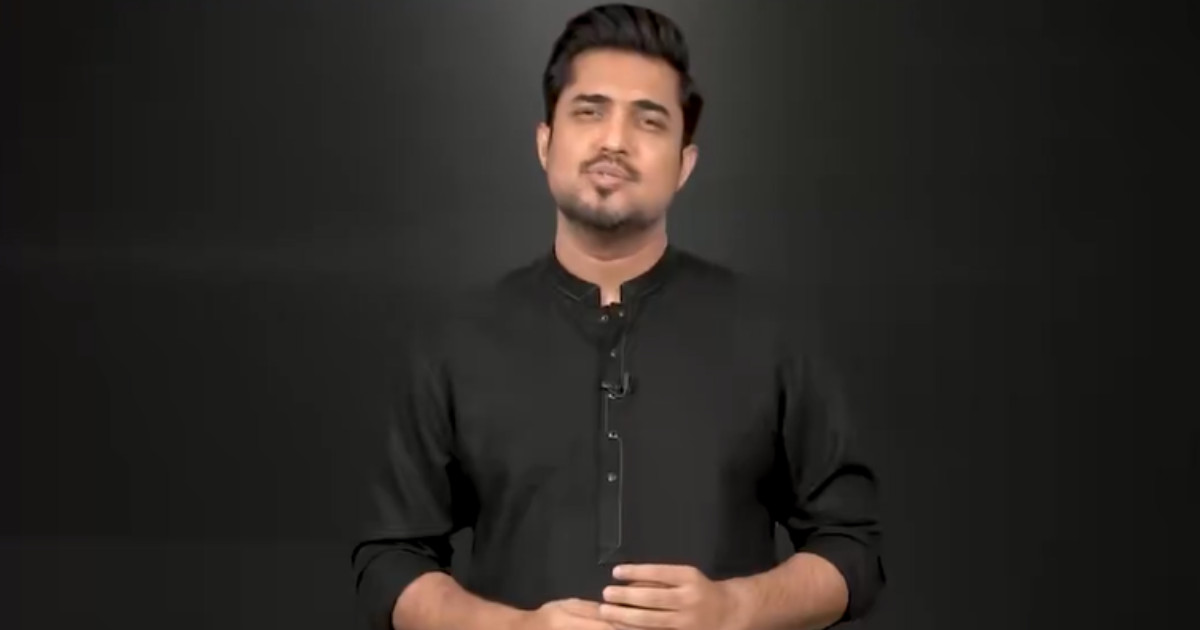
Dr. Nauman Niaz is a civil award winner (Tamagha-i-Imtiaz) in Sports Broadcasting & Journalism, and is the sports editor at JournalismPakistan.com. He is a regular cricket correspondent, having covered 54 tours and three ICC World Cups, and having written over 3500 articles. He has authored 15 books and is the official historian of Pakistan Cricket (Fluctuating Fortunes IV Volumes - 2005). His signature show, Game On Hai, has been the highest in ratings and acclaim.
Key Points
- Government to announce a binding decision for the Pakistan Cricket Board on boycott participation.
- Supporters view withdrawal as a corrective protest against alleged BCCI hegemony and ICC politicization.
- Opponents warn of significant financial and diplomatic costs from a boycott of the 2026 T20 World Cup.
- The debate reflects broader tensions as sport becomes entwined with state policy and international power dynamics.
Ask AI: Understand this story your way
AI EnabledDig deeper, ask anything — get instant context, background, and clarity.
Disclaimer: This feature is powered by AI and is intended to help readers explore and understand news stories more easily. While we strive for accuracy, AI-generated responses may occasionally be incomplete or reflect limitations in the underlying model. This feature does not represent the editorial views of JournalismPakistan. For our full, verified reporting, please refer to the original article.