
Pakistan and Bangladesh unite against BCCI's cricket dominance
JournalismPakistan.com | Published: 8 February 2026 | Dr. Nauman Niaz (TI)
Join our WhatsApp channel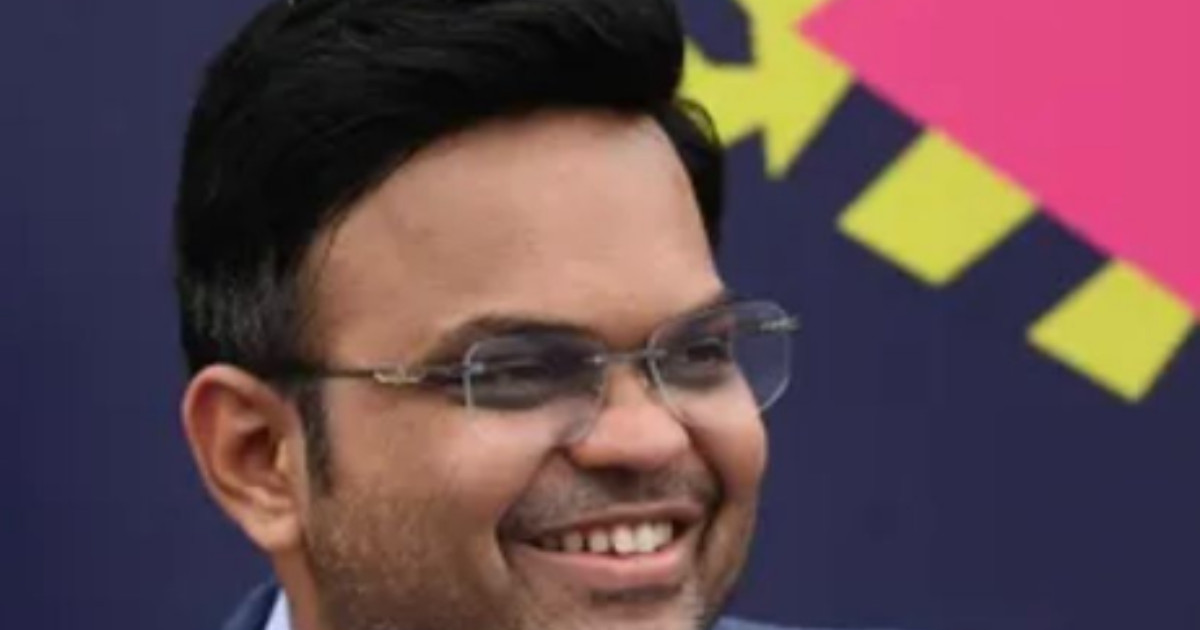
Pakistan and Bangladesh have united to resist the BCCI's dominance in cricket governance and seek fairer influence, while Pakistan's team grapples with selection disputes, an ageing core and tactical stagnation, leading to calls for urgent structural reform.Summary
ISLAMABAD — Pakistan did not so much win as survive. They staggered, they flinched, they forgot themselves, and then, almost by accident, remembered who they were. Rana Fahim Ashraf, arriving not as a saviour but as a reminder, dragged them across the line against a Netherlands side that asked honest questions and received confused answers. Nothing about it was unforeseen. This is the reality of Pakistan cricket now: stutter, panic, collapse, followed, if fate allows, by a late reprieve.
Pakistan Cricket's Declining Relevance in the Modern Game
The deeper malaise has long ceased to be subtle. Pakistan's skill set, once traded with awe, has depreciated in the markets of modern cricket. Outside one or two exceptional individuals, relevance to modern cricket is no longer assumed; it must be argued for, sometimes pleaded. Selection delineates the familiar fingerprints of nepotism and indulgence, talent filtered through whim rather than design.
The game elsewhere has evolved into a science; here, it remains an inheritance, guarded, mishandled, and slowly squandered. Victories arrive in carefully controlled conditions: against lesser opposition, under home skies, on pitches prepared like arguments already won.
Test success, when it comes, leans precariously on two ageing spinners, summoned like relics from a fading era. One-day cricket offers a little more comfort, though even there the reassurance is relative, not real. What Pakistan cricket needs is not another rescue act but a reckoning, intellectual, institutional, unsentimental.
It needs modernity not as an accessory but as a foundation: multidisciplinary structures, scientific integration, a domestic system that mirrors the demands of the present rather than romanticising the past. Without that, revival will remain a rumour.
United States Emerges as Serious Cricket Threat
What unfolded against the Netherlands, then, was not drama but confirmation. And the road ahead offers no indulgence. The United States loom next, an associate only by name. In the warm-ups they crossed 200 with ease; against India, in the opening act of the ICC T20 World Cup 2026, they reduced them to 77 for 6, thirteen overs into submission. Like the Netherlands before them, the Americans eventually yielded, not to intimidation, but to Suriyakumar Yadav's experience, that quiet authority which still understands how to finish what others cannot.
Yet for all Pakistan's fragility on the field, their brand off it remains undiminished. Within the ICC's economic cosmos, Pakistan is still a fixed star. Broadcasters, many of them Indian, cannot imagine the tournament without them. Brand equity, once built on excellence, now survives on memory, rivalry, viewership and necessity.
Pakistan are indispensable not because they dominate, but because the game, commercially, has not yet learned how to do without them. That, perhaps, is the most unsettling truth of all.
India-Pakistan Match Cancelled: Cricket's Biggest Spectacle Withdrawn
With the state standing immovable, unyielding, not in anger but in resolve, the decision has settled like a verdict already pronounced. There will be no India-Pakistan match. No evening when history is coaxed back into the present. No ritual collision of flags, anthems, memories. International cricket's most incandescent spectacle has been withdrawn, not postponed, not negotiated, simply removed. Radical, some call it. Yet in its finality, it feels almost inevitable, the last line in history long written by politics, fatigue, and fracture.
USD 1.13 Billion Revenue Loss Threatens ICC Broadcasting Empire
Around this absence, panic blooms, not among governments, but among corporations. Boardrooms fall silent. Spreadsheets begin to stutter. Broadcasters and conglomerates, accustomed to certainty masquerading as demand, now find themselves staring into a void priced between USD 280 and 400 million from India alone. Add another USD 4 to 6 million from global digital streams, and the chasm widens, ultimately yawning into a projected loss of USD 1.13 billion worldwide. Estimates are the India-Pakistan match in an ICC tournament attracts up to 62% of the total championship revenue, and it's about 80% in the Asia Cups. An absence, it turns out, can be monetised almost as precisely as presence.
History explains why. In 2017, when India met Pakistan in the Champions Trophy final, some 400 million people gathered across television screens and mobile devices as though summoned by instinct. Ten seconds of commercial time in India sold for USD 12,000, a blink priced like a luxury. By 2021, at the T20 World Cup, that blink cost USD 20,000, watched by 167 million on television and measured, in India alone, at an almost incomprehensible 15.9 billion viewing impressions. In 2022, the audience swelled again, 265 million viewers, and the ten-second slot climbed to USD 25,000. The 2023 World Cup pushed the figure to USD 36,000, with 175 million television viewers and 225 million digital participants. Even the modestly received Champions Trophy of 2025 could not blunt the phenomenon: USD 45,000 for ten seconds, 206 million on broadcast, 602 million online.
This was not just cricket. It was the serious depth. Jio Hotstar understood this better than most. Acquired through a USD 8 billion Disney-Reliance deal, reinforced by Viacom18's USD 576 million purchase, and underwritten by staggering ambition, the platform spent USD 3 billion securing ICC rights for 2024-2027, another USD 3.02 billion on digital cricket rights, USD 6.02 billion on the IPL, and USD 720 million on Indian cricket alone. To build a habit, to manufacture dependence, it offered the 2023 World Cup for free. The gamble worked. When India met Pakistan again in 2025, digital viewership soared to 602 million. Free, it turned out, was the most expensive strategy of all and the most profitable.
Jio Hotstar's USD 3 Billion Gamble Collapses Under Financial Strain
Yet success curdled into strain. Losses mounted. Regulation intervened. Advertising slowed when real-money gaming was restricted. Dream11 stepped away from Indian jersey sponsorship. The IPL retreated behind a paywall. Jio Hotstar, bleeding despite scale, quietly sought escape. It wished to walk away from its USD 3 billion ICC deal. The ICC, desperate but pragmatic, reportedly agreed to lower the price to USD 2.4 billion. Still, the numbers refused to align.
When Jio Hotstar signalled its intent to forfeit the ICC broadcast cycle altogether, the ICC went shopping for salvation. None arrived. SPNI hesitated. Amazon demurred. Netflix declined. The market, saturated and wary, blinked first.
And everyone remembers what saved the Asia Cup. Removed from India, transplanted to the UAE, darned back together by three India-Pakistan matches, the tournament found its breath again. Sony paid USD 170 million, approximately ten times the previous valuation, because rivalry, however uneasy, remains the most reliable financial denominator cricket has ever known.
Mukesh Ambani's Reliance Threatens ICC with Litigation Over Match Boycott
Now that the denomination has been suspended. Pakistan's boycott restores the old silence. Jio Hotstar, owned by Reliance and by extension Mukesh Ambani, has warned the ICC: if there is no appearance on February 15, 2026, in Colombo, litigation will follow. Damages will be claimed.
The rights may be abandoned. The cycle itself could fracture. And this will also set the course for the next cycle of ICC Broadcast 2027-2031 and may well have no buyers. It's not only about the white economy; it's also about the surrogate advertising, the gaming apps, and the grey and black economy. With surrogate advertising and gaming banned, it will deter the investors.
And yet, beneath the hysteria and the manufactured urgency, one truth sits stubbornly unmoved. For all its mythmaking, for all the fevered insistence that rivalry is sacred, the IPL remains the real centre of gravity in Indian sport. More valuable than any bilateral, more dependable than any World Cup, more obedient to market logic than international cricket could ever hope to be. India-Pakistan is memory and mythology. The IPL is infrastructure.
Once again, cricket finds itself stranded between meaning and money, between the theatre of absence and the glut of excess. Perhaps that is the quiet lesson of this moment: that the most powerful match in the world is no longer played under floodlights, but negotiated elsewhere in rooms where silence costs more than noise, where absence becomes leverage, and where sometimes, not playing at all is the loudest act available.
ICC's Force Majeure Clause and the Politics of Cricket Compliance
It is, of course, true that the ICC retains the authority to discipline its members. Selective participation is neither unprecedented nor unexpected, and the constitution is unambiguous in spelling out the consequences. Clauses pile upon clauses, the language clinical, precise, unforgiving. Like cricket itself, the rulebook leaves little room for romance.
And yet, buried quietly within the Members Participation Agreement is a clause that acknowledges what administrators often prefer to forget: that the world is untidy. Clause 12 - force majeure concedes that governments can overrule boards, that war, terror, and catastrophe bend sporting intent. In such moments, compliance is replaced by explanation, and persuasion becomes the currency of survival.
India's financial dominance of cricket, an IPL valued at nearly ten billion dollars, generating the bulk of global broadcast revenue, was never meant to authorise intimidation. Money was supposed to sustain the game, not contort it.
The ICC, after all, was conceived not as a monarchy but as a parliament: one member, one vote. Trophies, ratings, and audiences were never meant to tilt that table.
How BCCI Transformed from Cricket Board to Political Instrument
Somewhere along the way, that balance was hollowed out without a single clause being rewritten. Influence quietly replaced independence. The ICC shed its ballast, its spine, until it began to resemble something ceremonial, authority in name, a forwarding address in practice.
Cricket, pliable and beloved, was gradually pressed into political service, its moral centre thinned, its regional ties strained. As the BCCI folded deeper into the architecture of state power, institutions meant to arbitrate fairness instead amplified spectacle.
What should have been neutral became majoritarian. What should have united became performative. Cricket did not simply lose equilibrium; it lost innocence.
In modern India, power rarely strengthens institutions; it consumes them. The BCCI has joined that procession. It may insist it is not civic, not governmental, not political. But it can no longer convincingly pretend it is only sporting either. Muscle and appetite have shaped it for years, and through it, the direction of Indian cricket itself.
The IPL carried on as funeral pyres burned through the summer, marred by an epidemic, cricket and cremation sharing the same air. When reality intruded, the league simply migrated, because nothing, grief, death, and mourning were permitted to interrupt revenue. The tournament survived. Something else did not.
Cash-rich, indispensable, seemingly untouchable, the BCCI's grip on world cricket has been near total. And yet power, left unchecked, turns inward. As another global tournament approached, the board stood exposed, not autonomous, but aligned, advancing division with the quiet confidence of inevitability.
Cricket as Weapon: Hyper-Nationalism and the Mustafizur Rahman Controversy
In this climate, cricket has become an accelerant for hyper-nationalism. It trades in binaries, in suspicion, in digital mobs and physical menace. The game has acquired colours, and they are no longer team colours. They are religious. In such a palette, Bangladesh, Muslim, neighbouring, inconvenient can only be wrong.
Stadiums have become theatres of allegiance, joy drowned by hostility, nationalism performed rather than felt. Some days, the distance between a cricket match and a jingoistic spectacle is measured only by the length of the interval.
The moral descent found its moment when Mustafizur Rahman, the lone Bangladeshi in the IPL, was released amid online fury. A contract worth crores became collateral damage in an information war. Shah Rukh Khan's surname was once again deemed explanation enough. Patriotism slipped another rung.
Bangladesh Refuses Compliance, Chooses Dignity Over Safety Concerns
Bangladesh chose not to comply. When safety concerns were waved away, it chose dignity instead, declining travel and requesting neutrality. There was precedent. India itself had once played an entire Champions Trophy from Dubai, unmoved while others travelled to it. The template already existed.
This time, Bangladesh refused to look away. The ICC, long since declawed, offered no resistance. With Jay Shah at its helm, neutrality was always improbable. Bangladesh stayed home. Scotland stepped in. As ever, the players were not asked. Then Pakistan followed.
The subcontinent has always been adept at undoing itself, running itself out through emotion and opportunism. Pakistan's decision to boycott the match in Colombo was taken at the highest levels, cricket once more drafted into diplomacy's shadow theatre. And in a turn heavy with irony, India's posture succeeded in aligning Pakistan and Bangladesh, nations once severed by history against a common hegemon.
The Paradox of India-Pakistan Cricket: Rivalry Without Bilateral Matches
India and Pakistan do not play bilateral cricket, yet they always meet when money requires it. Even as borders burned and rhetoric hardened, they shared pitches, sold optics, and mistook presence for progress. Refused handshakes became statements. Sportsmanship thinned. The pitch became a political front. And somewhere along the way, the game forgot why it existed at all.
Jay Shah's 2023 financial distribution model tilted the ICC further towards India, shrinking the shares of Pakistan, Bangladesh, and even Sri Lanka. Pakistan resisted. It proposed a fairer model. It was voted down. The message had been clear long before the boycotts began.
Pakistan's Principled Stand: Demanding Equity, Not Charity from ICC
Now, the spell has cracked. Pakistan has made a call that is not theatrical but definitive. Negotiations are underway despite the hysteria in the Indian media. The ICC is exposed, financially over-dependent on one rivalry, one market, one narrative. Sanctions, lawsuits, and deductions, none of it frightens a country acting on principle. This is not about money. It is about integrity. For the first time in a long while, the ICC has been forced to the table.
What Pakistan should ask for is not charity but equity. Compensation for Bangladesh's exclusion. Neutral venues for future contests. A redistribution that reflects brand value without enabling tyranny. Not five per cent. Not seven. Something closer to what fairness demands.
Cricket was once a language shared across borders. Today it is spoken in slogans. But even now, the game can be reclaimed. Freed from the grip of a single board, from the intoxication of power, from politics masquerading as patriotism. Let cricket return to play. Let politics stay off the pitch.
Legal Precedent: BCCI's Own Actions Support Pakistan's Force Majeure Case
Any board withdrawing from their commitments needs to provide mitigating evidence that they had tried convincing the government, but the circumstances were compelling. But if the final decision rests immovably with the state, Clause 12 steps in, indemnifying the board, sparing it sanctions, accepting that cricket does not always get the last word. It could always be challenged, eventually taken to ICC's independent DRC or the International Court of Arbitration. It hardly matters. Pakistan's case is strong; very strong.
That precedent was not imagined in abstraction; it was lived. It was set, ironically, by the BCCI itself. As the eminent Sharda Ugra once observed, the BCCI has long ceased to be a cricketing body, evolving instead into a political office of the BJP, with the ICC reduced, in her memorable phrasing, to a Dubai outpost. India's politicisation of cricket is no longer subtle, nor particularly careful. It is evident, sometimes bizarre, always consequential.
Fuelled by financial muscle and institutional clout, the BCCI has come to hold international cricket in a gentle but suffocating grip. Stronger boards wag their tails, lured by revenue and relevance; weaker boards curl closer still, lapdogs in a system that rewards obedience. Power, once accumulated, has proved intoxicating. And somewhere along the way, as influence hardened into hegemony, world cricket began to lose not just its balance but its sense of self.
ICC Deputy Chairman Imran Khawaja Arrives in Pakistan for Negotiations
Amin Ul Islam, president of the BCB, has touched down in Pakistan, while Imran Khawaja of the Singapore Cricket Association and the ICC's deputy chairman since 2017, arrives in Lahore this afternoon.
When Shashank Manohar stepped aside in 2020, it was Khawaja who assumed the role of interim ICC chairman, inheriting not just a title but a system perpetually balancing on the edge of politics and pragmatism.
Pakistan's decision to boycott, firm, unembellished, and stubbornly principled has sent tremors through the ICC's operational machinery, potentially unsettling a financial ecosystem built on predictability and compliance.
The reality, however, is less dramatic than the noise filtering in from across the border, and far more consequential than its detractors would like to admit.
Pakistan Stands Firm: Waiting for Negotiation Based on Parity Not Pressure
For now, Pakistan remains where it has chosen to stand: unmoved, watchful, open only to negotiation that respects parity rather than pressure. Until then, this is a theatre best observed with patience, perhaps even popcorn as the game beyond the pitch unfolds at its own deliberate pace.
Let this serve as a quiet wake-up call to those busy manufacturing narratives: the PCB did not go knocking on the ICC's door. If anything, the evidence, circumstantial yet insistent, suggests the knock came from the other side.
In a sport where undertones are often mistaken for fact and repetition masquerades as truth, the direction of approach matters. And here, the trail does not lead where some would like it to.
Pakistan has chosen the harder courage, the kind that does not shout, but refuses to bend. In drawing a line against the BCCI's hegemonic presence, it has said, quietly but unmistakably, that enough is enough.
This is not defiance for its own sake; it is the insistence that the game breathe beyond one centre of gravity, that cricket remember it belongs to more than a single voice.
ABOUT THE WRITER: Dr. Nauman Niaz is a civil award winner (Tamagha-i-Imtiaz) in Sports Broadcasting & Journalism, and is the sports editor at JournalismPakistan.com. He is a regular cricket correspondent, having covered 54 tours and three ICC World Cups, and having written over 3500 articles. He has authored 15 books and is the official historian of Pakistan Cricket (Fluctuating Fortunes IV Volumes - 2005). His signature show, Game On Hai, has been the highest in ratings and acclaim.
PHOTO: Jay Shah (ICC Chairman)
Key Points
- Pakistan and Bangladesh have allied to challenge the BCCI's dominance in cricket governance.
- Pakistan narrowly beat the Netherlands after Rana Fahim Ashraf's late intervention.
- Observers note a wider decline in Pakistan cricket marked by inconsistent selection and reliance on ageing players.
- Nepotism and indulgent selection practices are cited as barriers to modernization and competitiveness.
- Calls grow for institutional reform and a shift to modern cricketing structures and talent development.
Relevant Topics
Ask AI: Understand this story your way
AI EnabledDig deeper, ask anything — get instant context, background, and clarity.
Disclaimer: This feature is powered by AI and is intended to help readers explore and understand news stories more easily. While we strive for accuracy, AI-generated responses may occasionally be incomplete or reflect limitations in the underlying model. This feature does not represent the editorial views of JournalismPakistan. For our full, verified reporting, please refer to the original article.