
The JournalismPakistan Global Media Brief | Edition 47 | November 20, 2026
JournalismPakistan.com | Published: 20 November 2026 | JP News Desk
Join our WhatsApp channel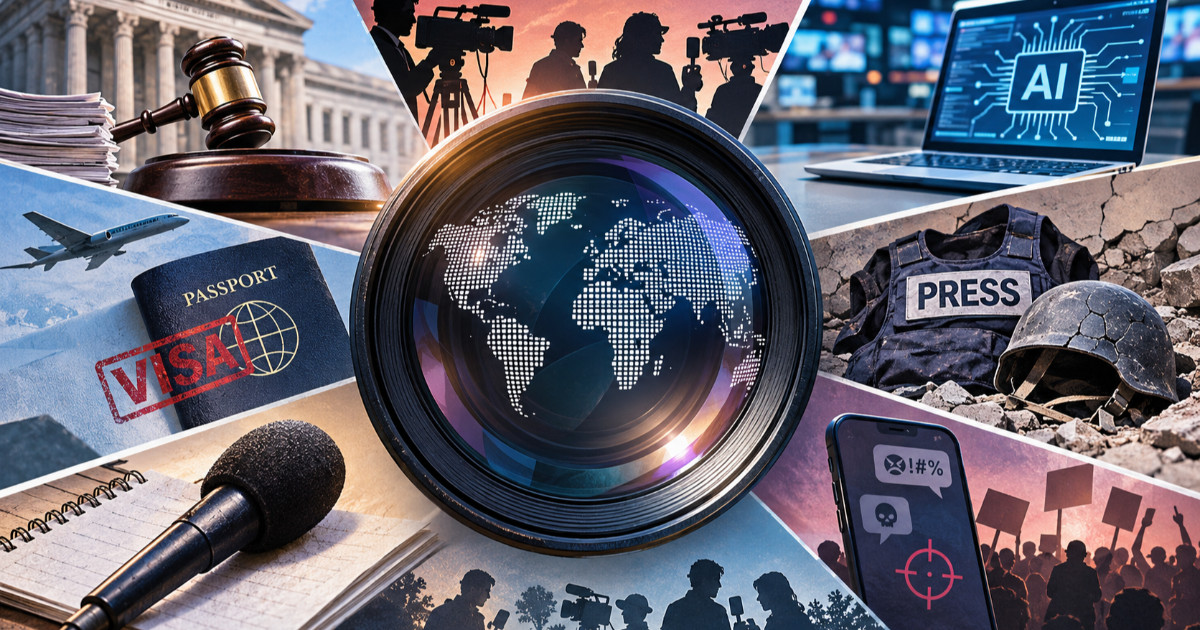
This Global Media Brief exposes a paradox: while technology makes producing and distributing news easier, political, legal and financial pressures, targeted attacks, and AI-driven newsroom changes are hampering independent reporting and public trust.Summary
Editor's note
This week's Global Media Brief reveals a troubling contradiction in journalism: while technology is making it easier to produce and distribute news, political, legal, and financial pressures are making independent reporting increasingly difficult.
From China restricting a Bloomberg journalist's access to a diplomatic meeting to legal proceedings against investigative reporters in Nigeria and the United States, the struggle over who can report, what can be published, and who controls the news continues across borders.
The dangers are not confined to courtrooms or government restrictions. Journalists have been killed in Costa Rica and Ukraine, while Palestinian media workers face detention and physical attacks. Meanwhile, McClatchy's AI-led restructuring and a Reuters union dispute highlight growing uncertainty over newsroom jobs, professional rights and the future of journalism.
This edition also examines a less visible problem: the weakening relationship between news organizations and their audiences. As artificial intelligence transforms publishing, questions about newsroom transparency, editorial accountability and public trust are becoming harder to ignore.
For independent journalism, the challenge is no longer simply to survive. It is to remain credible, accessible and accountable in a media environment where the rules are changing faster than many newsrooms can adapt.
Global media power shifts
US court strikes down foreign journalist visa restrictions — A federal court struck down a Department of Homeland Security rule that would have limited admission periods for most foreign correspondents to 240 days and certain Chinese passport holders to 90 days. The Committee to Protect Journalists welcomed the November 16 ruling, describing it as a significant development for foreign journalists working in the United States.
(Sources: Committee to Protect Journalists, November 18, 2026; US District Court for the District of Massachusetts, November 16, 2026; JournalismPakistan, August 20, 2026.)
Why it matters: The ruling removes proposed restrictions that press freedom organizations warned could create uncertainty for foreign correspondents and interfere with independent reporting.
Trump's $15bn lawsuit against New York Times advances — A US federal judge ruled on November 19 that part of President Donald Trump's $15 billion defamation lawsuit against The New York Times and Penguin Random House could proceed. Judge Steven Merryday dismissed two claims and excluded 27 of 34 disputed statements, leaving seven under consideration. The decision represents a partial legal victory for Trump but does not establish that the reporting was defamatory.
(Sources: Reuters and Bloomberg Law, November 19, 2026.)
Why it matters: The case highlights the legal and financial pressures facing news organizations investigating powerful political figures and raises questions about protections for independent journalism.
Asia media watch
India offers no explanation for Norwegian journalist's visa ban — India's foreign ministry declined to explain why Norwegian journalist Helle Lyng Svendsen's visa was cancelled shortly before she was due to attend a media and press freedom discussion in Hyderabad. Norwegian media organizations questioned the decision, while reports of visa restrictions affecting more than 100 international speakers added to the controversy.
(Sources: Press Trust of India/ThePrint, The Times of India and Norwegian media outlet M24, November 13, 2026.)
Why it matters: Unexplained visa cancellations raise concerns about transparency, press freedom, and the ability of foreign journalists to participate in international discussions.
Journalists face police harassment during ASEAN protests — The National Union of Journalists of the Philippines reported harassment involving at least 22 journalists and media workers during protests surrounding the ASEAN Summit in Manila. Allegations included arrests, attempted detentions and physical restraint.
(Sources: National Union of Journalists of the Philippines and Altermidya Network, November 15, 2026; Daily Tribune and Philstar, November 16, 2026.)
Why it matters: The reported incidents raise concerns about journalist safety during major regional gatherings, when independent coverage of public demonstrations is particularly important.
Taliban prohibit cricket coverage on Kandahar radio — Taliban authorities reportedly instructed radio stations in Kandahar on November 14 to stop broadcasting cricket news, live commentary, special programmes and match results. Local broadcasters confirmed the verbal directive to AFP, but authorities offered no public explanation. The restriction follows earlier Taliban controls on broadcast content, including the removal of BBC television news bulletins from Afghan stations in March 2022.
(Sources: AFP and Hasht-e Subh, November 15, 2026.)
Why it matters: The restriction demonstrates how editorial controls can extend beyond political reporting into routine sports coverage, limiting broadcasters' independence and audiences' access to information.
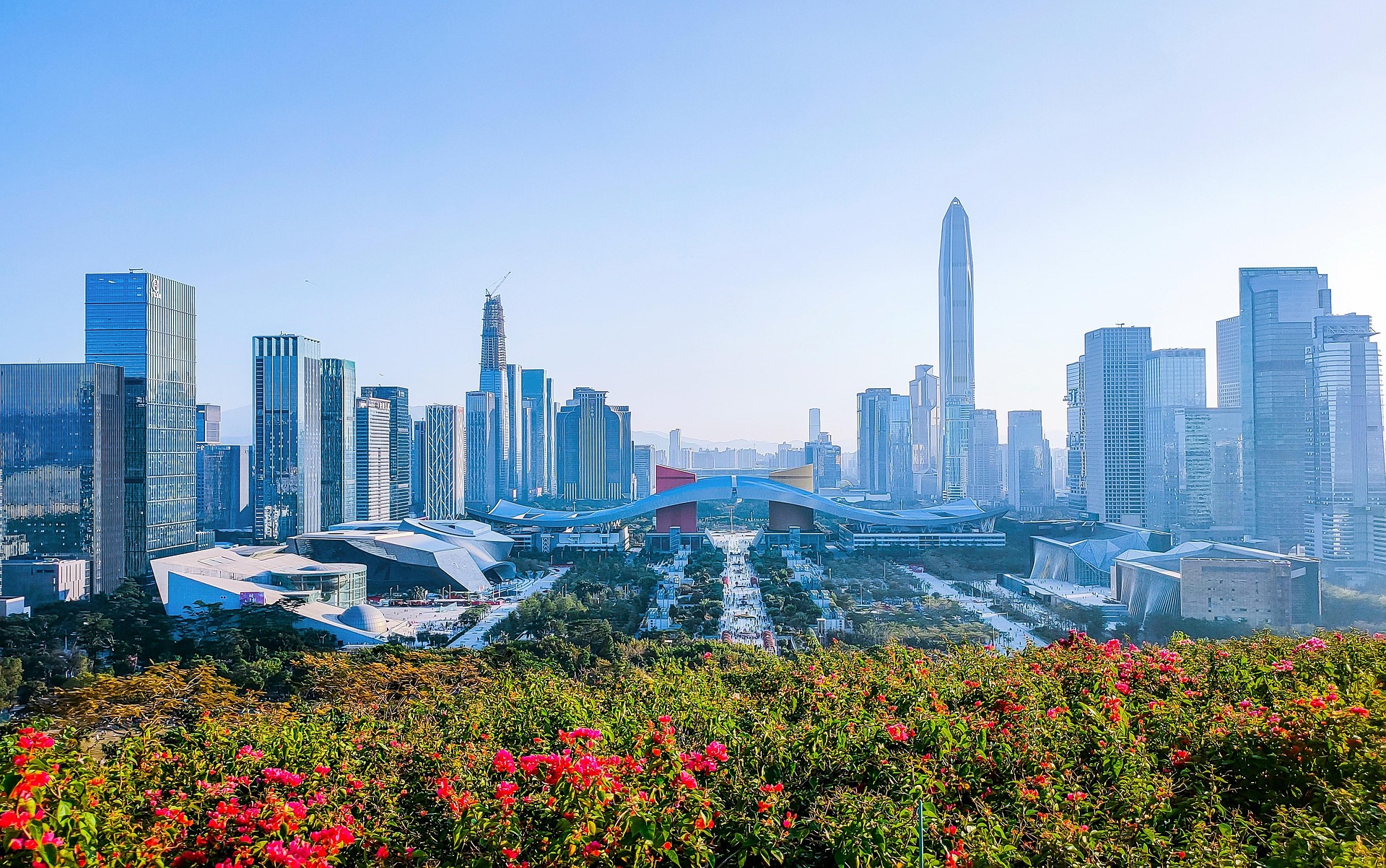
China bars Bloomberg journalist from leaders' meeting — Chinese officials prevented Bloomberg Television journalist Annmarie Hordern from covering a November 19 meeting involving Donald Trump, Xi Jinping and Vladimir Putin in Shenzhen after she shouted a question at an earlier event. The exclusion reportedly remained in place despite White House objections.
(Sources: Associated Press and The Washington Post, November 19, 2026.)
Why it matters: The incident highlights the vulnerability of international journalists' access during high-level diplomatic meetings, particularly when host governments restrict unscripted questioning.
Middle East media
Israeli forces detain journalist in West Bank — Israeli forces detained journalist Mohammed Ali Atiq following a raid on his home in Burqin, according to Palestinian news agency WAFA, citing the Palestinian Prisoners' Society. Al-Araby Al-Jadeed identified him as an AFP photojournalist and reported his father's account of the raid.
(Sources: WAFA and Al-Araby Al-Jadeed, November 15, 2026.)
Why it matters: The detention raises concerns about the ability of Palestinian photojournalists to work independently, particularly when the legal grounds and circumstances of their detention remain unclear.
WAFA photographer reportedly assaulted near Jericho — Palestinian news agency WAFA reported that Israeli soldiers assaulted photographer Suleiman Abu Srour on November 17 while he was covering events near Jericho. He reportedly suffered fractures and bruises and was detained for six hours before being released. The Palestinian Journalists' Syndicate called for international intervention and accountability.
(Sources: WAFA and EFE, November 17, 2026.)
Why it matters: The reported assault highlights the physical dangers facing Palestinian photojournalists documenting confrontations and violence in the occupied West Bank.
Israel records sharp rise in foreign journalist restrictions — Israel barred or deported at least 10 foreign journalists in October 2026, the highest monthly total documented by the Committee to Protect Journalists since July 2025. The figure compares with six recorded cases between January and September 2026, according to CPJ's November 17 report.
(Source: Committee to Protect Journalists, November 17, 2026.)
Why it matters: Restrictions on foreign correspondents reduce opportunities for independent reporting and international scrutiny of developments in Israel and the occupied Palestinian territory.
Africa media update
Nigerian editors demand release of investigative journalist — The Nigerian Guild of Editors condemned the prosecution and detention of investigative journalist Daniel Ojukwu, who faces cyberstalking and criminal defamation charges linked to reporting on alleged irregularities in public expenditure. Ojukwu pleaded not guilty and was remanded at Kuje Correctional Centre, with his bail hearing scheduled for December 1. The Guild called for his release and warned against using cybercrime legislation to discourage investigations into government spending.
(Sources: Nigerian Guild of Editors, November 15, 2026; TheCable and The Punch, November 15–16, 2026.)
Why it matters: The case illustrates the legal risks facing investigative journalists examining public expenditure. Criminal proceedings arising from such investigations can discourage scrutiny of government officials and weaken journalism's accountability role.
Media business and sustainability
McClatchy outlines AI-led restructuring after newsroom cuts — US newspaper publisher McClatchy outlined Project Catalyst, a companywide initiative to integrate artificial intelligence into editorial and business operations following September layoffs affecting more than 90 unionized employees. Executives cited declining digital subscriptions and traffic as reasons for restructuring.
(Sources: Nieman Lab and GV Wire, November 18, 2026; Associated Press, September 12, 2026; TheWrap, April 21, 2026.)
Why it matters: The restructuring illustrates how publishers are turning to automation to address financial pressures, even as newsroom cuts raise concerns about the future of local reporting and public accountability.
Reuters journalists authorize strike over pay and AI protections — Unionized Reuters journalists voted overwhelmingly to authorize strike action following more than a year of contract negotiations. The NewsGuild reported that 94% of participating members supported the move, citing disputes over wages, managerial work, and protections concerning AI-generated content, job losses, and licensing revenue derived from journalists' work. The authorization allows union leaders to call a strike, but employees have not yet stopped work.
(Source: NewsGuild of New York, November 17, 2026.)
Why it matters: The dispute places journalists' rights, compensation, and editorial safeguards at the centre of negotiations over how major news organizations deploy and profit from artificial intelligence.
JournalismPakistan analysis
Are news websites losing their connection with readers? — A JournalismPakistan analysis examines the growing difficulty news publishers face in maintaining direct relationships with audiences as social media, search engines and artificial intelligence reshape news consumption. It explores declining direct readership, audience loyalty, and ways independent newsrooms can encourage readers to return.
(Source: JournalismPakistan analysis, November 14, 2026.)
Why it matters: News publishers increasingly need loyal, returning audiences rather than relying primarily on traffic generated by search engines and external platforms.
Pakistan's newsrooms face competing pressures — A JournalismPakistan analysis explores the limits of editorial independence in Pakistan, examining how media owners, advertisers, regulators and powerful institutions can influence newsroom decisions. It considers how financial vulnerability and self-censorship can further weaken editors' authority over news coverage.
(Source: JournalismPakistan analysis, November 17, 2026.)
Why it matters: Pakistan illustrates a broader challenge for journalism worldwide: editorial independence can be undermined by financial dependence and external influence even without explicit censorship.
Asian journalists face multiple forms of legal pressure — A JournalismPakistan regional analysis examines documented concerns involving cybercrime investigations, criminal defamation, national security prosecutions and administrative controls across six Asian jurisdictions. Published on November 18, the analysis considers how legal uncertainty, potential prosecution and litigation costs can influence editorial decisions and encourage self-censorship.
(Source: JournalismPakistan analysis, November 18, 2026, drawing on reporting by CPJ, Reporters Without Borders, Freedom Network and other sources.)
Why it matters: Legal proceedings can restrict press freedom even before a conviction. Effective judicial oversight, clearly defined laws and safeguards for public-interest journalism are therefore essential.
Media law and regulation
Nepal journalists oppose proposed Press Council amendments — The International Federation of Journalists and the Federation of Nepali Journalists opposed proposed amendments that would expand the Press Council's oversight of online media, social media content and foreign journalists. The proposal was forwarded to the president on November 3, while journalists announced protests against the changes.
(Sources: International Federation of Journalists, November 18, 2026; Federation of Nepali Journalists, November 17, 2026.)
Why it matters: Proposed powers to initiate investigations without complaints could increase regulatory pressure on independent journalism and digital publishers.
Platforms and technology
US news website raises questions about newsroom transparency — A JournalismPakistan original feature examines the Winchester Gazette, an American local news website that published thousands of stories without publicly identifying its journalists or editors. Investigative reporting raised questions about disputed interviews, unclear ownership and alleged AI-assisted reporting.
(Sources: JournalismPakistan original feature, November 20, 2026; Virginia Center for Investigative Journalism at WHRO, October 6 and 20, 2026.)
Why it matters: As artificial intelligence makes publishing faster and cheaper, identifying who produces news and who accepts editorial responsibility is becoming increasingly important to public trust.
Press freedom and journalist safety
Costa Rican journalist shot dead in suspected targeted attack — Costa Rican journalist Camilo Rodríguez was shot dead on November 16 while driving in Heredia province. Investigators are examining whether the killing was connected to his public allegations involving organized crime and suspected corruption. Press freedom organizations have demanded a thorough investigation. Authorities have not established a motive.
(Sources: La Nación and Teletica, November 16, 2026; Reuters, November 17, 2026.)
Why it matters: The killing raises serious concerns about journalist safety in Costa Rica, where such murders have historically been rare, and underscores the need for a credible investigation into the motive.
Russian strike kills Odesa television producer — Khrystyna Lysenko, a longtime producer and coordinator at local television channel Pershiy Miskiy, was killed in Odesa on November 18 while travelling to work. Reporters Without Borders confirmed her death, drawing attention to the continuing risks facing Ukraine's media workforce.
(Source: Reporters Without Borders, November 18, 2026.)
Why it matters: The killing shows how attacks on civilian areas can threaten media workers and disrupt the local newsrooms that depend on them.
Mexican journalist's death raises fresh safety concerns — The death of journalist Eduardo Flores Salado in Acapulco has prompted demands for a credible investigation from international press freedom organizations. Prosecutors are investigating his November 14 killing, but a connection to his reporting has not been established.
(Sources: Committee to Protect Journalists, November 18, 2026; Reporters Without Borders, November 17, 2026; Reuters, November 15, 2026.)
Why it matters: The case highlights continuing risks facing local journalists covering sensitive public-interest issues and the importance of establishing motives through credible investigations.
Digital harassment adds to risks facing Islamabad journalists — A contributed feature by Muhammad Faizan Aslam Khan, published by JournalismPakistan on November 20, examines online threats, trolling, harassment and digital security risks facing journalists in Islamabad. Drawing on interviews with Sheeraz Ahmed Shirazi of 365 News and Syeda Sabeen of GNN, the report highlights the professional and personal consequences of online intimidation, particularly for women journalists. It also examines whether newsrooms, unions and institutions provide adequate protection.
(Source: JournalismPakistan contributed feature by Muhammad Faizan Aslam Khan, November 20, 2026.)
Why it matters: Digital intimidation can undermine independent reporting, expose journalists and their sources to security risks, and encourage self-censorship.
The bigger picture
The events covered in this week's Global Media Brief point to a common problem: journalism is being reshaped by forces that increasingly operate beyond the control of journalists themselves.
Governments are restricting access, legal systems are being used to challenge reporting, and media companies are turning to artificial intelligence while reducing newsroom staff. At the same time, journalists face physical violence, online intimidation, and growing uncertainty about their professional future.
These pressures take different forms across countries. A foreign correspondent barred from a diplomatic meeting, an investigative reporter detained over public-interest reporting, and a local newsroom struggling to retain readers may appear to face unrelated problems. Yet each development raises a fundamental question about journalism's independence and ability to serve the public.
Artificial intelligence adds another dimension. It may help smaller news organizations operate more efficiently, but it also creates new challenges involving jobs, transparency, editorial responsibility, and public confidence. Technology can improve the production of news; it cannot, by itself, guarantee journalism's credibility.
The larger challenge is therefore not simply protecting journalists from censorship or violence. It is preserving the conditions that make independent journalism possible: editorial autonomy, financial sustainability, public trust, legal protections and professional accountability.
As this week's developments demonstrate, those conditions are under pressure across very different media systems.
ABOUT THIS BRIEF: The Global Media Brief is a flagship product of JournalismPakistan.com, published every Friday. Read previous editions here.
ATTRIBUTION: Compiled and analyzed by JournalismPakistan.
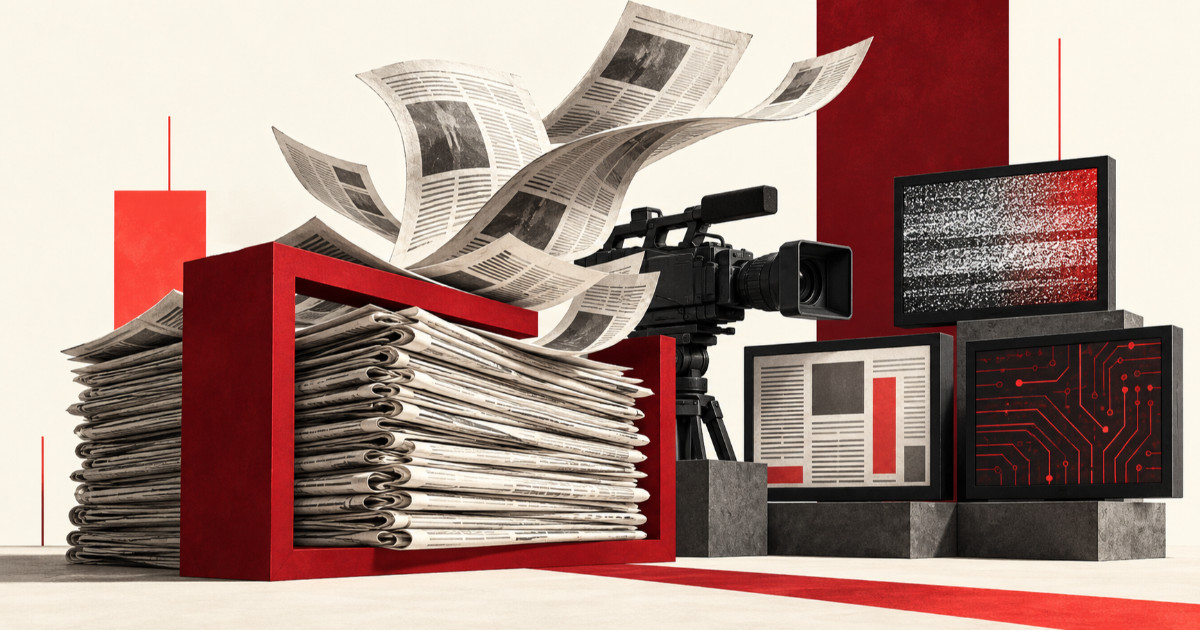
PHOTO: AI-generated illustration depicting threats to journalists and newsrooms worldwide. For illustrative purposes only.
Key Points
- Technology eases news production and distribution but does not guarantee press freedom.
- Governments and legal systems in multiple countries are restricting reporters and access.
- Journalists face violence, killings and physical attacks in diverse regions.
- AI-driven restructuring and newsroom disputes are creating job and editorial uncertainty.
- Cases include visa rules in the US, access limits in China, legal actions in Nigeria and the US.
- Weakened audience trust and lack of newsroom transparency compound threats to independent journalism.
Key Questions & Answers
What are the main threats to independent journalism highlighted in the brief?
The brief points to political and legal restrictions, financial pressures, targeted violence, and newsroom disruption from AI and restructuring as major threats.
How is artificial intelligence affecting newsrooms?
AI is prompting restructuring, job cuts and changes to editorial workflows, raising concerns about employment, standards and accountability.
Are journalists facing physical danger?
Yes. The edition cites killings and attacks in countries including Costa Rica and Ukraine and physical assaults and detentions of Palestinian media workers.
What can audiences do to support independent journalism?
Audiences can support independent outlets financially, demand transparency and accountability, subscribe, and raise awareness about attacks on press freedom.
Relevant Topics
Ask AI: Understand this story your way
AI EnabledDig deeper, ask anything — get instant context, background, and clarity.
Disclaimer: This feature is powered by AI and is intended to help readers explore and understand news stories more easily. While we strive for accuracy, AI-generated responses may occasionally be incomplete or reflect limitations in the underlying model. This feature does not represent the editorial views of JournalismPakistan. For our full, verified reporting, please refer to the original article.