
The JournalismPakistan Global Media Brief | Edition 46 | November 13, 2026
JournalismPakistan.com | Published: 13 November 2026 | JP News Desk
Join our WhatsApp channel
This edition links Fox's $22 billion Roku acquisition to broader shifts: media consolidation, financial instability, AI and political pressure. It reports newsroom closures, industry resistance, regulatory strains and efforts to sustain independent journalism.Summary
Editor's note
The future of journalism is increasingly being shaped by forces beyond the newsroom. Media consolidation, financial instability, artificial intelligence, and political pressure are changing who controls information, how it reaches audiences and whether independent reporting can survive.
This week's edition opens with Fox Corporation's $22 billion acquisition of Roku, a deal that brings content and distribution under one corporate umbrella. Elsewhere, the closures of Salon and Straight Arrow News, alongside the financial collapse affecting a Paraguayan media group, underline the fragility of newsroom business models.
There are signs of resistance and adaptation. Publishers have pushed Meta to suspend disputed commercial terms, journalists have challenged automated news summaries, and AFP is expanding specialist reporting through philanthropic support.
JournalismPakistan also examines three interconnected questions: how exiled Asian newsrooms sustain their work, who holds Pakistan's media regulators accountable, and whether smaller independent publishers can survive without advertising.
The common thread is clear: journalism's independence depends not only on the freedom to report, but also on control over distribution, financial resilience and institutions willing to defend editorial accountability.
Global media power shifts
Fox completes $22 billion Roku acquisition — Fox Corporation completed its $22 billion cash-and-stock acquisition of Roku on November 6, combining its news, sports and entertainment operations with a connected-TV platform reaching more than 100 million households. Roku, Tubi and Fox One now operate within the Fox Digital Platforms division, co-led by Anthony Wood and Paul Cheesbrough. Fox expects approximately $400 million in annualized cost savings within two years. (Fox Corporation; Reuters, November 6, 2026.)
Why it matters: The acquisition gives a major media company greater control over television distribution, advertising technology and audience access, raising questions about competition and the concentration of media power.
Asia media watch
RSF reports growing Chinese influence on Thai media — Reporters Without Borders says China is expanding its influence over Thai media through diplomatic pressure, content agreements and sponsored trips. Its investigation cites the 2023 removal of a Thai PBS interview with Taiwan's foreign minister and calls for stronger safeguards protecting editorial independence. (Reporters Without Borders, November 6, 2026.)
Why it matters: The investigation shows how international political influence and financial pressures can affect editorial decisions, even in media markets with established independent news organizations.
Dhaka Tribune journalists allege attack during investigation — Three Dhaka Tribune journalists say armed men detained and assaulted them for approximately three hours while they investigated drug trafficking in Tongi, Bangladesh. The journalists also alleged that reporting material was seized and deleted. Police said an officer had been assigned to examine their complaint. (Dhaka Tribune, November 8, 2026.)
Why it matters: Attacks on reporters investigating criminal activity threaten journalists' safety and the public's access to independent reporting on organized crime.
Europe and Eurasia media
Halk TV journalist reports about 70 staff departures — Approximately 70 employees have left Türkiye's Halk TV since a state trustee took over the broadcaster, journalist Onur Dalar said, according to Karar. The figure includes dismissals and voluntary departures, although no breakdown was provided. (Karar, November 11, 2026.)
Why it matters: The reported departures illustrate how changes in media control can destabilize newsrooms, disrupt employment and threaten the continuity of independent reporting.
Novaya Gazeta staff leave Moscow newsroom — Staff at Russia's Novaya Gazeta left their Moscow office on November 9 after a final editorial meeting. The newspaper had previously cited state pressure, difficulties processing donations and the loss of its premises among the challenges facing its operations. (Novaya Gazeta Europe, November 9; Novaya Gazeta, October 30, 2026.)
Why it matters: The departure from its Moscow newsroom marks another setback for a newspaper internationally recognized for investigative journalism and scrutiny of official power.
Middle East media
Israel releases journalist detained over alleged foreign contact — Israeli authorities released journalist Abed Abu Shehadeh after five days in custody over suspected contact with a foreign agent. The Jerusalem Post reported that no charges were filed, while his lawyers said questioning focused on a published interview. (The Jerusalem Post, November 8; Adalah, November 4, 2026.)
Why it matters: The case raises questions about the boundaries between legitimate journalistic contact with sources and national-security investigations.
Egypt postpones trial of Mada Masr editor — An Egyptian court postponed the trial of Mada Masr co-founder and editor-in-chief Lina Attalah until November 18 following a defence request for the judge's recusal. The proceedings follow an October court order against the independent news outlet over licensing allegations. Reporters Without Borders called for the charges and pressure against the publication to end. (Reporters Without Borders, November 11, 2026.)
Why it matters: The proceedings demonstrate how licensing disputes and criminal prosecution can threaten the survival of independent journalism and the security of newsroom leadership.
Africa media update
RSF examines China's expanding media influence in Africa — Reporters Without Borders says Chinese state-backed media partnerships, journalist training programmes and communications investments are reshaping information markets in Southern Africa. Its November 12 analysis describes growing dependence on Chinese content and infrastructure, while noting the withdrawal of important Western funding for independent journalism. (Reporters Without Borders, November 12, 2026.)
Why it matters: International investment can expand media capacity while creating new dependencies, particularly when struggling independent outlets lack comparable financial and technical support.
Nigeria remands investigative journalist on cybercrime charges — A federal court in Abuja remanded Foundation for Investigative Journalism correspondent Daniel Ojukwu until a December 1 bail hearing after he pleaded not guilty to 12 cybercrime and criminal-defamation charges. The case concerns investigative reporting into alleged government contract irregularities. FIJ founder Fisayo Soyombo is also named in the proceedings. (Committee to Protect Journalists, November 11–12; Punch, November 10, 2026.)
Why it matters: The prosecution illustrates how cybercrime and criminal-defamation legislation can expose investigative journalists to detention over reporting on matters of public interest.
Ethiopia indefinitely suspends independent newspaper — Ethiopia's media regulator suspended the registration of The Reporter, one of the country's oldest independent newspapers, following allegations that its coverage undermined national interests and threatened national security. The Committee to Protect Journalists said the regulator had not identified specific articles substantiating its accusations and called for the suspension to be reversed. (Committee to Protect Journalists, November 5, 2026.)
Why it matters: Broad regulatory powers and national-security allegations can be used to restrict independent reporting without clearly establishing journalistic wrongdoing.
Media business and sustainability
Paraguay bank collapse disrupts media outlets and jobs — The collapse of Paraguay's Ueno Bank, followed by regulatory intervention, forced the VMedia group to suspend operations across newspapers, radio stations and a streaming service. Approximately 300 workers were affected by suspensions without pay, initially announced for 90 days. The crisis has prompted labour disputes and renewed concerns about the financial dependence of news organizations on their parent companies. (EFE, November 12; La Tribuna, November 10–11, 2026.)
Why it matters: Financial failures outside journalism can quickly undermine newsroom operations and threaten workers' livelihoods when news organizations depend heavily on a single corporate group.
Salon closes after 31 years of digital publishing — American digital news and opinion publication Salon ceased publishing on November 5 after 31 years. Founded in 1995, the pioneering online outlet said changing business conditions had made its model financially unsustainable. The publication did not identify a single cause for its closure. (Salon; Associated Press, November 5, 2026.)
Why it matters: The closure of an early digital journalism pioneer highlights the challenges facing publishers as advertising markets, audience habits and online distribution continue to change.
Straight Arrow News closes after five years — US digital outlet Straight Arrow News ceased operations on November 6 after founder Joe Ricketts acknowledged that its journalism mission had not produced a sustainable business. The closure followed the introduction of a paid subscription service earlier in the year. Subscribers are being offered refunds, while the outlet's archives will remain accessible temporarily. (Straight Arrow News; TheWrap, November 6, 2026.)
Why it matters: Even substantial private investment and a distinctive editorial mission cannot guarantee sustainability without sufficient audience revenue or a viable long-term funding model.
AP guild challenges photo-editing job shift to India — The Associated Press plans to eliminate eight union-covered photo-editing positions in the United States and move the work to India, according to TheWrap. The News Media Guild is seeking arbitration over the decision, while AP maintains that it is complying with its labour agreement. (TheWrap, November 10, 2026.)
Why it matters: The dispute reflects growing tensions over international newsroom restructuring, employment protections and the distribution of editorial production work.
AFP launches philanthropically funded climate law desk — Agence France-Presse has established a specialist desk covering environmental and climate law with financial support from two philanthropic funders. The agency plans to recruit journalists in Latin America, Asia and Africa, with their reporting distributed through AFP's international network. (Agence France-Presse, November 10, 2026.)
Why it matters: Philanthropic partnerships can expand specialist public-interest reporting, provided funding arrangements protect editorial independence and do not determine newsroom coverage.
JP analysis
How journalists in exile are keeping Asian news alive — Journalists working from exile in Myanmar, Afghanistan and neighbouring countries face financial uncertainty, insecure legal status and threats to their sources. A JournalismPakistan Asia Special Report examines how cross-border newsrooms continue independent reporting despite funding cuts, restrictions and the difficulties of operating outside their home countries. (JournalismPakistan, November 11, 2026.)
Why it matters: Exiled journalism preserves access to independent information in restrictive environments, but its future depends on sustainable funding, legal protection and reliable reporting networks.
Who is watching Pakistan's media regulators? — JournalismPakistan examines the accountability of media regulators, including the Pakistan Electronic Media Regulatory Authority and the Pakistan Telecommunication Authority. The analysis considers questions about regulatory transparency, enforcement powers, independent oversight, and the consequences of regulatory decisions for journalists and digital platforms. (JournalismPakistan analysis, November 13, 2026.)
Why it matters: Media regulation requires accountability as well as enforcement. Without transparent decision-making and effective oversight, regulatory powers can weaken editorial independence and public confidence.
Can small independent newsrooms survive without advertisers? — As traditional advertising becomes less dependable, independent newsrooms are exploring subscriptions, memberships, reader contributions, and alternative funding arrangements. JournalismPakistan examines whether smaller publishers can achieve financial stability without relying heavily on commercial advertising while protecting their editorial independence. (JournalismPakistan analysis, November 13, 2026.)
Why it matters: Financial sustainability is increasingly central to the survival of independent journalism, making viable reader-supported models and diversified revenue essential considerations for smaller publishers.
Media law and regulation
Judge recuses from Indian journalist's bail hearing — A Gujarat High Court judge withdrew on November 6 from hearing investigative journalist Ravi Nair's anticipatory bail application in a cheating and forgery case linked to reporting on the Adani Group. Another judge had recused himself in separate defamation proceedings involving Nair in October. His request for protection from arrest remains unresolved. (The Indian Express; LiveLaw; Bar and Bench, November 6, 2026.)
Why it matters: Multiple legal proceedings can prolong uncertainty for investigative journalists, although the allegations and disputed documents remain matters for judicial determination.
US court narrows access to journalists' LinkedIn records — The Fourth US Circuit Court of Appeals ordered restrictions on a government demand for journalists' LinkedIn records in a classified-information leak investigation. The original demand covered 18 months of records and could have exposed confidential sources connected to nearly 1,000 stories, including reporting unrelated to the investigation. (Fourth US Circuit Court of Appeals, November 10; Associated Press, November 11, 2026.)
Why it matters: The ruling reinforces the need to protect journalists' confidential sources and prevent overly broad access to digital records during government investigations.
Justice and accountability
UK convicts two Iranians of spying on journalists — A British court convicted Mostafa Sepahvand and Farhad Manesh on November 12 of assisting a foreign intelligence service by spying on targets including journalists working for London-based Iran International. Sepahvand was also convicted of preparing serious violence. The Committee to Protect Journalists welcomed the verdicts, with sentencing scheduled for December 17. (UK Crown Prosecution Service, November 12; Committee to Protect Journalists, November 13, 2026.)
Why it matters: The convictions highlight the dangers of cross-border intimidation against journalists in exile and the importance of legal accountability for surveillance and threats targeting media workers.
Platforms and technology
USA Today restricts AI summaries after journalists' protest — USA Today Co. reportedly suspended AI-generated summaries produced by its DeeperDive tool and restricted access to a small beta audience following a 14-day byline protest by unionized journalists at two Ohio newspapers. The journalists raised concerns about factual errors and inadequate human oversight. The company had not publicly confirmed the full scope of the changes. (Axios, November 6; The NewsGuild, October 28, 2026.)
Why it matters: The dispute demonstrates the influence newsroom staff can have over AI implementation and highlights the need for human verification and editorial responsibility.
Meta suspends controversial web-scraping terms — Meta indefinitely suspended proposed commercial terms on November 5 following objections from publishers over provisions that could permit the collection of website content for its products. The changes, previously delayed until November 20, remain on hold while consultations continue. Existing terms remain in effect. (Nieman Journalism Lab, November 5; Reuters, November 6, 2026.)
Why it matters: Coordinated publisher objections have forced a major technology platform to reconsider disputed terms, reinforcing demands for consent and greater control over journalistic content.
Xinhua launches media AI standards initiative — China's Xinhua news agency launched an initiative to develop standards for artificial intelligence applications as the seventh World Media Summit opened in Beijing. Xinhua said 22 organizations were initial participants and that the proposed work would take approximately two years. (Xinhua, November 7, 2026.)
Why it matters: The initiative reflects growing international efforts to establish common approaches to AI use in media, although the influence and adoption of the proposed standards remain uncertain.
RSF urges stronger protection for environmental journalism — Reporters Without Borders called for improved safeguards for environmental journalists as COP31 continued in Antalya, Türkiye. The organization urged governments to protect reporters investigating environmental abuses, address climate disinformation and support the financial viability of independent environmental reporting. (Reporters Without Borders, November 12, 2026.)
Why it matters: Environmental reporting increasingly combines physical danger, politically sensitive investigations and financial pressures, making journalist protection an essential component of informed public debate on climate policy.
Press freedom and journalist safety
Yemeni photojournalist killed while covering fighting — Freelance photojournalist Abdulrahman al-Houri was killed while filming fighting in Yemen's Marib province, Anadolu Agency reported, citing the Yemeni Journalists Syndicate. He supplied photographs and footage to news organizations and reporters covering the conflict. (Anadolu Agency, November 8, 2026.)
Why it matters: The death illustrates the considerable physical dangers facing freelance journalists, who frequently provide essential frontline reporting without the resources available to larger news organizations.
Ecuador journalist killed after threats over reporting — Ecuadorian journalist Tomás Beltrán Conforme was shot dead outside his home in Calceta on November 8, according to the Committee to Protect Journalists. The founder of local news outlet Calcetines had previously reported threats connected to his journalism. CPJ called for an investigation into whether his work was a motive. (Committee to Protect Journalists, November 9, 2026.)
Why it matters: The killing highlights the vulnerability of local investigative journalists and the need to establish whether threats linked to reporting contributed to acts of violence.
Colombian media face bomb threats and office attack — An explosive device damaged RCN's premises in Cali on November 11, days after threats against Caracol Televisión, Caracol Radio and RCN in Bogotá. No injuries were reported. The Committee to Protect Journalists called for investigations and stronger protection, while authorities had not established a connection between the incidents. (Caracol Radio; El Espectador, November 11; Committee to Protect Journalists, November 10, 2026.)
Why it matters: Threats and attacks against media premises endanger employees, disrupt reporting and can intimidate news organizations beyond those directly targeted.
Pakistan report records five October media threat cases — Freedom Network documented five cases involving threats, alleged assault or legal pressure against journalists and media workers in Pakistan during October. Four cases involved identified or alleged state actors, according to the organization's monitoring report published November 13. (Freedom Network, November 13, 2026.)
Why it matters: The findings show how physical threats and legal pressure continue to affect journalists in Pakistan, reinforcing concerns about institutional protection and accountability.
The bigger picture
Three developments stand out in this week's Global Media Brief: the concentration of media power, the weakening economics of independent publishing and the struggle to retain editorial control in an increasingly technology-driven information environment.
Fox's acquisition of Roku demonstrates the commercial advantages available to companies that combine content production with distribution platforms. For smaller publishers, however, the challenge is fundamentally different. The closures of Salon and Straight Arrow News, alongside the employment crisis in Paraguay, show how quickly financial instability can threaten newsrooms and the journalists who depend on them.
Technology presents another test. The dispute over USA Today's AI summaries and Meta's decision to suspend controversial commercial terms highlight growing resistance to arrangements that publishers and journalists believe may diminish their control over editorial work and content.
Meanwhile, developments in Asia, Africa and the Middle East demonstrate that legal protection and editorial independence remain far from assured. Political influence, regulatory intervention and criminal proceedings continue to shape what journalists can investigate and publish.
For JournalismPakistan, these developments reinforce an important principle: press freedom cannot be separated from the conditions that make journalism possible. Independent newsrooms need legal protection, sustainable revenue, transparent regulation and meaningful influence over the technologies distributing their work.
The challenge ahead is not simply to keep journalism operating. It is to ensure that the institutions producing reliable public-interest information remain sufficiently independent, financially resilient and accountable to the audiences they serve.
ABOUT THIS BRIEF: The Global Media Brief is a flagship product of JournalismPakistan.com, published every Friday. Read previous editions here.
ATTRIBUTION: Compiled and analyzed by JournalismPakistan.
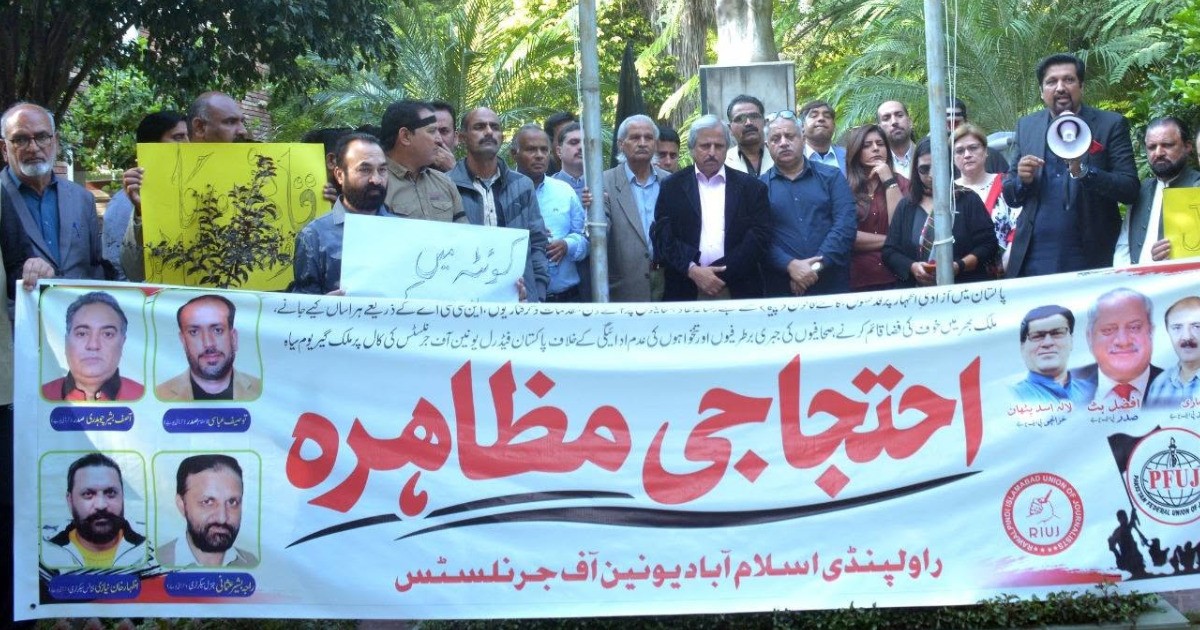
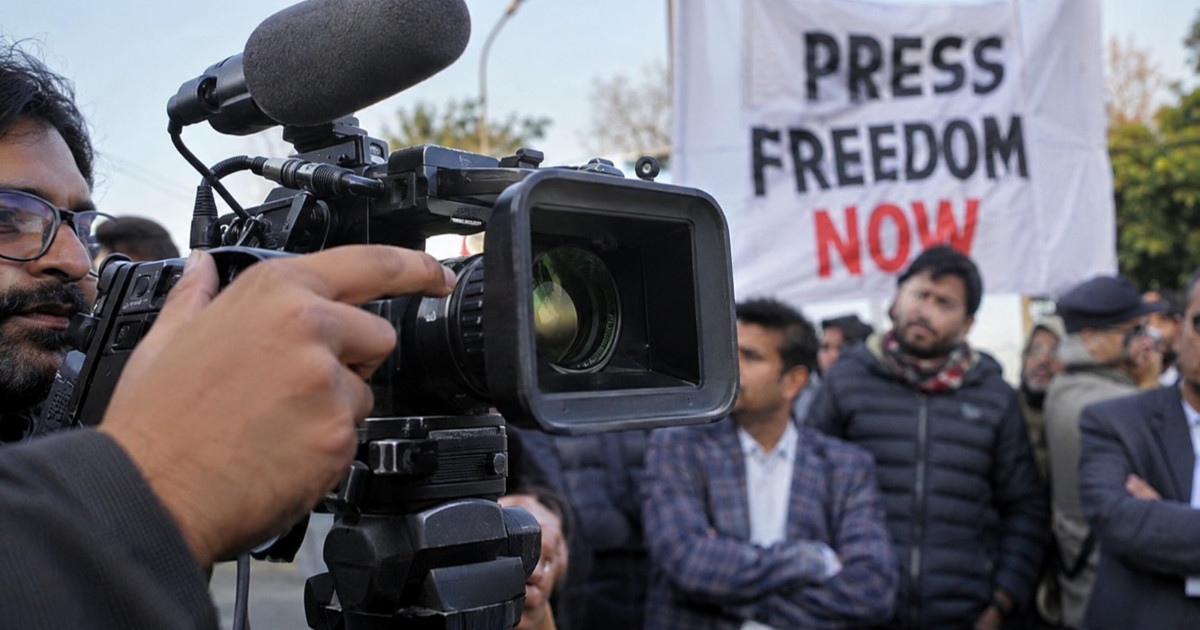
PHOTO: AI-generated illustration depicting threats to journalists and newsrooms worldwide. For illustrative purposes only.
Key Points
- Fox completed a $22 billion acquisition of Roku, combining content and distribution.
- Closures and financial collapses illustrate fragility of newsroom business models.
- AI, commercial pressures and political influence are reshaping news production.
- Publishers and journalists are pushing back against disputed commercial terms and automated summaries.
- Philanthropy and regulatory accountability are highlighted as ways to support independent reporting.
Key Questions & Answers
What is the significance of Fox's Roku acquisition?
The deal merges a major content owner with a distribution platform, concentrating control over what audiences see and how content is monetised.
Why are some newsrooms closing or facing financial collapse?
Many outlets struggle due to declining advertising revenues, shifts to platform-driven distribution, rising costs and difficulties adapting to new business models.
How is artificial intelligence affecting journalism?
AI is changing newsgathering and distribution through automated summaries and tools, raising concerns about accuracy, attribution and editorial oversight.
Can independent publishers survive without traditional advertising?
Some explore subscriptions, philanthropy and platform negotiations; survival often depends on diversified revenue, institutional support and regulatory protections.
Relevant Topics
Ask AI: Understand this story your way
AI EnabledDig deeper, ask anything — get instant context, background, and clarity.
Disclaimer: This feature is powered by AI and is intended to help readers explore and understand news stories more easily. While we strive for accuracy, AI-generated responses may occasionally be incomplete or reflect limitations in the underlying model. This feature does not represent the editorial views of JournalismPakistan. For our full, verified reporting, please refer to the original article.