
NCCIA again: Why Pakistan's journalists face repeated scrutiny
JournalismPakistan.com | Published: 19 November 2026 | JP Special Report
Join our WhatsApp channel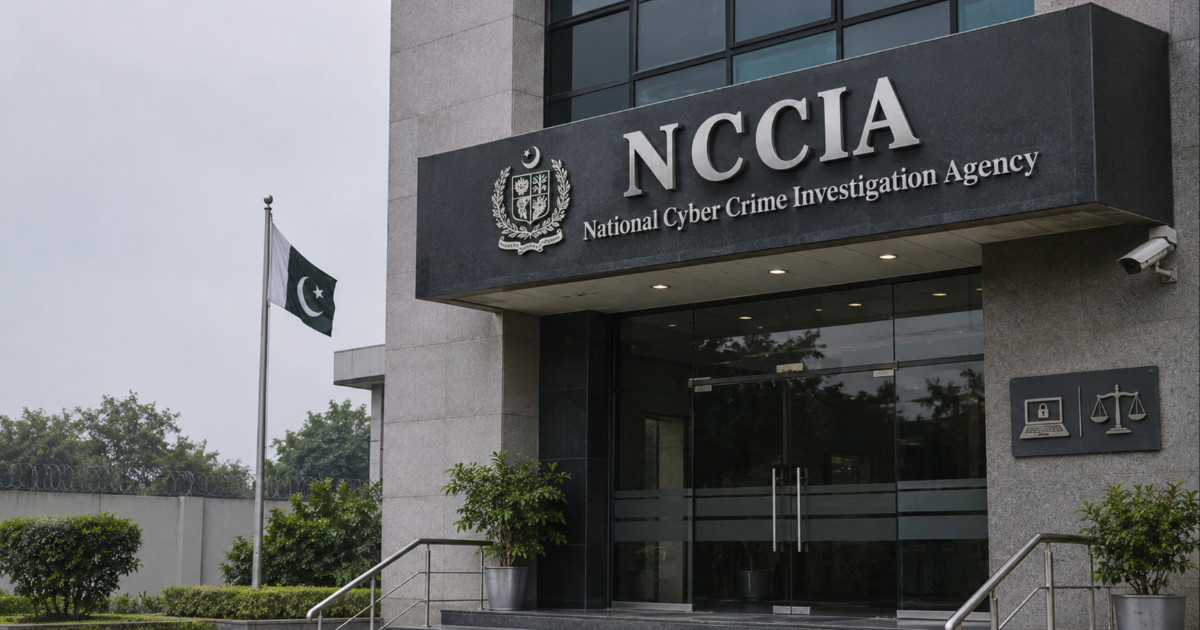
JournalismPakistan reviewed 28 of its stories and found recurring NCCIA investigations, summonses, and arrests of TV and digital journalists. They raise questions about due process, investigative powers, judicial remedies, and the effects on independent journalism.Summary
From summonses and arrests to court interventions, JournalismPakistan examines its coverage of cybercrime proceedings involving journalists during 2026. The reporting reveals recurring questions about due process, investigative powers, and whether Pakistan's cybercrime enforcement system adequately protects legitimate journalism.
ISLAMABAD — The arrest of journalist Shahid Maitla has brought renewed attention to the National Cyber Crime Investigation Agency (NCCIA), whose actions involving journalists have repeatedly featured in JournalismPakistan's reporting throughout 2026. What initially appeared to be a succession of separate legal disputes now presents a broader question: why do journalists continue to face investigation, summonses and detention under Pakistan's cybercrime laws?
A review of 28 stories published by JournalismPakistan between February 13 and November 18 reveals a recurring pattern of legal scrutiny involving television journalists, digital commentators, reporters and media executives. The cases differ in their allegations and circumstances, but together they raise questions about investigative procedures, access to legal remedies, the role of the courts and the effect of prolonged legal proceedings on independent journalism.
A recurring pattern of legal action
Maitla's case illustrates several of these concerns. The journalist was taken into custody on November 17 in connection with proceedings initiated in Quetta following a complaint by former caretaker prime minister Anwaar-ul-Haq Kakar. On November 18, an Islamabad magistrate granted NCCIA a two-day transit remand for his transfer to Balochistan. His lawyer opposed the request, raising concerns about his safety and saying the defence had not received a copy of the first information report. The International Federation of Journalists and the Pakistan Federal Union of Journalists condemned the arrest in a statement issued on November 19.
From summonses to court protection
In February, JournalismPakistan reported on proceedings involving journalist Nadir Baloch, who approached the Islamabad High Court to challenge NCCIA summonses. The court subsequently restrained the agency from arresting him. That same month, journalist Khurram Iqbal was released after an NCCIA detention that prompted criticism from press freedom advocates.
By May, the agency's actions had become a more prominent part of the media freedom debate. JournalismPakistan covered the reported detention of journalist Hammad Hassan over a social media post and a separate NCCIA operation involving the arrest of 13 people accused of offences linked to online activity.
The pattern became particularly visible in July and August, when journalists Asad Toor, Azaz Syed and Imran Shafqat challenged aspects of the agency's investigative procedures. Their cases drew attention not only to the allegations being investigated but also to the manner in which notices were issued, the time allowed for responses and the territorial jurisdiction of investigators.
Toor challenged an NCCIA notice issued under Section 26A of the Prevention of Electronic Crimes Act (PECA). On August 6, the Islamabad High Court directed the agency not to harass him during the inquiry and sought clarification about the material forming the basis of the allegations. The intervention highlighted the importance of informing an individual precisely what conduct is under investigation.
In a separate matter, the Lahore High Court restrained NCCIA's Multan office from taking action against journalist Imran Shafqat while considering a challenge concerning territorial jurisdiction. Shafqat's lawyers questioned whether investigators based in Multan could lawfully proceed against a Lahore resident in the circumstances of the case.
The journalist Azaz Syed also questioned the manner in which notices were served. JournalismPakistan reported on August 4 that Syed had received two notices within a short period and had raised concerns about the absence of clearly specified allegations.
These proceedings did not establish that NCCIA had acted unlawfully in every instance. Nor did interim judicial protection settle the underlying allegations. They nevertheless demonstrated that procedural safeguards had become an important point of contention between journalists and cybercrime investigators.
Why judicial intervention matters
The courts have emerged as an important source of protection for journalists seeking to challenge NCCIA proceedings.
Apart from the cases involving Toor and Shafqat, JournalismPakistan reported in August that the Sindh High Court had protected executives of digital news platform Raftar from coercive NCCIA action. Earlier, Nadir Baloch had also approached the courts after receiving summonses.
The importance of these interventions extends beyond the individuals concerned. Judicial scrutiny helps establish whether an investigating agency is acting within its authority, whether an accused person has been adequately informed of the allegations, and whether legal procedures are being followed.
However, obtaining judicial relief is not the same as securing a final resolution. An interim order may protect a journalist from immediate arrest or other coercive action while leaving the investigation unresolved.
That distinction is central to understanding the pressures associated with cybercrime proceedings. Even where an allegation is eventually withdrawn, dismissed or remains unproven, a journalist may already have faced legal expenses, repeated court appearances, uncertainty about arrest, and disruption of professional work.
For journalists without institutional legal support, those burdens can be particularly difficult to manage.
When investigation becomes a burden
The Prevention of Electronic Crimes (Amendment) Act, 2025, introduced Section 26A, which criminalizes the intentional dissemination of information that a person knows or has reason to believe is false or fake and that is likely to cause fear, panic, disorder or unrest among the public. The offence carries a maximum punishment of three years' imprisonment, a fine of Rs2 million, or both.
The provision applies beyond journalism, and its enforcement can serve legitimate purposes where the statutory requirements of an offence are met. The concern arises when complaints about public-interest reporting, political criticism or commentary become criminal investigations without a clear distinction between deliberately harmful falsehoods and material protected by freedom of expression.
JournalismPakistan's reporting has documented journalists receiving summonses, contesting allegations, challenging investigative jurisdiction, and seeking judicial protection. In October, journalist Alifya Sohail said NCCIA had summoned her and demanded access to electronic devices, raising another question about the extent of investigators' access to journalists' digital material.
For a journalist, a mobile phone or computer may contain far more than the information relevant to a particular investigation. It can hold confidential communications, unpublished reporting, contacts and material identifying sources. Access to such information therefore raises questions about necessity, proportionality and safeguards for journalistic confidentiality.
The consequences of an investigation cannot be measured solely by whether it ultimately produces a conviction.
A journalist repeatedly required to appear before investigators, arrange legal representation or defend published work may face pressures unrelated to the eventual outcome of the case. This is particularly significant for independent reporters and digital journalists who may lack the financial and legal resources of established news organizations.
The expanding reach of NCCIA
The agency's responsibilities have also expanded beyond responding to individual complaints.
On October 4, NCCIA announced the activation of cyber-patrolling units across Pakistan and special arrangements to monitor what it described as fake news and anti-state propaganda. JournalismPakistan reported on October 5 that the agency had not publicly explained important operational details, including the staffing of the units, the technology being used or safeguards governing monitoring activities.
The announcement added another dimension to the debate over cybercrime enforcement. Investigating a specific complaint is different from systematically monitoring online activity to identify potential offences.
For journalists working through social media, online video platforms and independent digital publications, the distinction matters.
The absence of publicly explained operational safeguards makes it difficult to assess how investigators distinguish unlawful conduct from criticism, disputed reporting or legitimate political discussion. It also raises questions about what oversight applies to monitoring decisions and whether individuals have effective remedies when their content becomes the subject of an investigation.
An agency journalists also need
Yet NCCIA's relationship with journalists is not exclusively one of confrontation.
JournalismPakistan reported on October 15 that Dawn News bureau chief Ali Akbar had approached the agency over videos allegedly using artificial intelligence to imitate his appearance and voice. The complaint concerned material he said falsely associated him with allegations against public officials.
These cases highlight an important distinction. Journalists need effective protection against online harassment, impersonation, threats and other unlawful digital conduct. They also need assurance that investigative powers will not be exercised arbitrarily against legitimate reporting.
The two responsibilities are not contradictory.
An agency capable of investigating online harassment and cybercrime should also be able to demonstrate that complaints involving journalism are handled transparently, proportionately and in accordance with the law.
Press freedom concerns extend beyond individual cases
The wider implications of NCCIA proceedings have been documented by press freedom organizations.
In its Impunity Report 2026, released on October 29, Freedom Network identified the growing use of legal and administrative procedures against journalists as a major concern. The organization argued that the burden of criminal proceedings could become punitive even where allegations did not result in convictions.
Its findings highlighted the costs of repeated summonses, legal representation, travel, device examination and uncertainty about the outcome of investigations. The report also called for stronger safeguards governing notices, arrests and access to electronic devices.
From Nadir Baloch and Khurram Iqbal in February to Toor, Syed and Shafqat during the summer, and from Iqrar-ul-Hassan in October to Maitla in November, the cases show how frequently cybercrime proceedings have entered the professional lives of journalists.
They also demonstrate why it would be misleading to treat every NCCIA action as part of a single coordinated campaign. Complaints arise from different circumstances, involve different legal provisions and may have different outcomes. Some proceedings remain unresolved, and the available public record does not establish wrongdoing by the agency in every case.
What the reporting does establish is the persistence of a question that authorities have yet to answer comprehensively: how are investigative powers being applied when the subject is journalism?
Who scrutinizes the investigators?
The NCCIA operates under federal law and is subject to judicial scrutiny. Parliamentary committees have also examined aspects of its functioning.
In July, JournalismPakistan reported that a Senate panel had summoned the agency's chief over delays in cybercrime investigations, demonstrating that concerns about its performance extend beyond cases involving journalists.
But oversight requires more than the ability to challenge individual actions after they occur.
Greater transparency about complaints involving journalists, the legal provisions invoked, the outcomes of investigations and the handling of electronic evidence would help establish whether enforcement practices are consistent and proportionate.
Several questions deserve public answers.
How many journalists have faced NCCIA complaints or proceedings during 2026? How many investigations resulted in registered cases, arrests, prosecutions or convictions? How many were closed without charges? What procedures govern access to journalists' electronic devices and confidential information? And what internal accountability measures apply when an investigation is challenged successfully in court?
The published record examined for this article does not provide comprehensive answers. JournalismPakistan has not independently verified a nationwide case-by-case dataset, and the 28 articles reviewed should not be mistaken for 28 distinct investigations or proven violations.
Nevertheless, the questions are legitimate matters of public interest. Answering them would benefit both journalists seeking safeguards and an investigative agency seeking public confidence in its work.
A question that will not go away
Maitla's arrest has again brought the issue into focus. His case remains subject to legal proceedings, and the allegations against him must be assessed through the proper judicial process.
But the larger debate cannot be resolved through any one arrest, bail order or court judgment.
During 2026, JournalismPakistan has repeatedly reported on notices, investigations, arrests and judicial interventions involving the same federal agency. Each case has its own legal circumstances, but the cumulative record points to the importance of stronger procedural safeguards, transparent enforcement and effective independent oversight.
Pakistan has a legitimate interest in combating cybercrime. It also has a constitutional obligation to protect freedom of expression, subject to lawful restrictions.
The real test is whether both responsibilities can be fulfilled without criminal investigations becoming an unnecessary burden on the practice of journalism.
Until authorities can demonstrate clearly where legitimate investigation ends and undue pressure begins, the question behind this year's recurring headlines will remain.
Why is NCCIA so frequently part of the story when Pakistan's journalists come under legal scrutiny?
ATTRIBUTION: A JournalismPakistan review of its 28 stories published between February 13 and November 18, 2026, covering NCCIA actions, PECA proceedings, journalist complaints and court interventions. Additional sources: Freedom Network, Impunity Report 2026, October 29; Voicepk, November 18; Quetta Voice, November 18; and International Federation of Journalists, November 19, 2026.
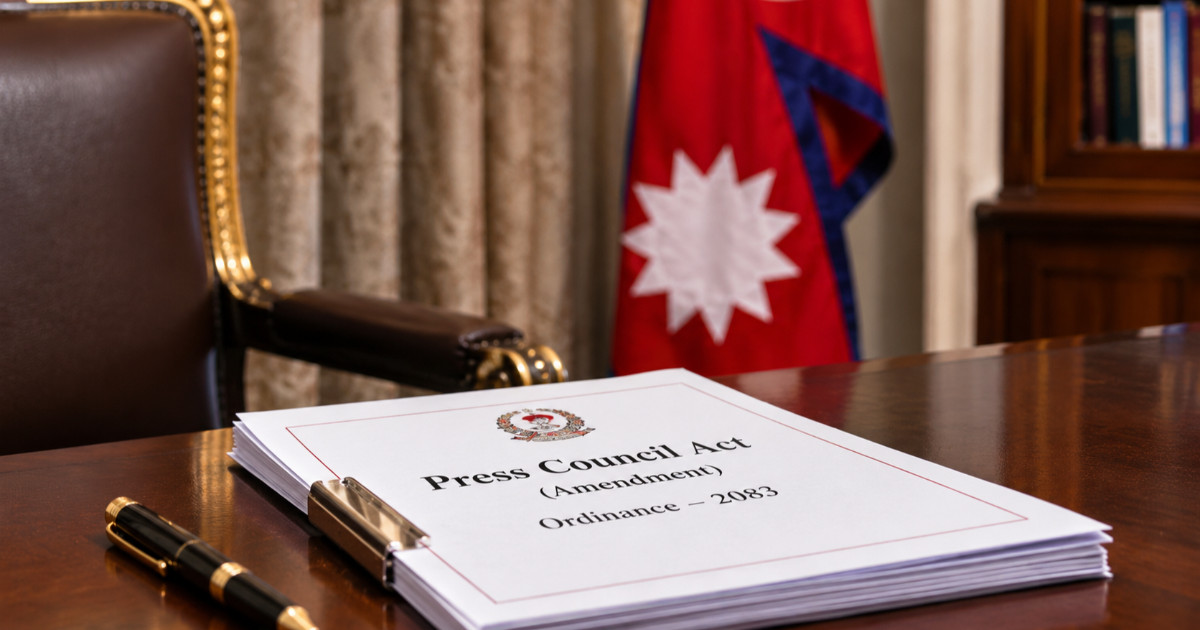
PHOTO: An AI-generated illustration of NCCIA offices. JournalismPakistan's review of its 2026 reporting examines recurring summonses, arrests, and court interventions involving journalists.
Key Points
- Review of 28 JournalismPakistan stories in 2026 shows repeated legal actions involving journalists.
- Those affected include TV anchors, digital commentators, reporters and media executives.
- Cases raise questions about NCCIA's investigative powers, procedure and oversight.
- Court interventions and access to legal remedies are central but sometimes constrained.
- Prolonged proceedings and detentions have tangible effects on independent journalism.
Key Questions & Answers
Why are journalists being investigated by the NCCIA?
Investigations typically follow complaints alleging cyber offences; JournalismPakistan's reporting shows a range of allegations and repeated use of cybercrime mechanisms against media figures.
Does the NCCIA have broad investigative powers?
The agency operates under Pakistan's cybercrime laws and conducts digital probes; coverage raises concerns about the scope, transparency and oversight of those powers.
What legal remedies are available to journalists?
Journalists can seek court relief such as bail and challenge agency actions; reports note varying access to timely remedies and dependence on judicial intervention.
How do these proceedings affect journalism?
Summonses, arrests and prolonged legal cases can chill reporting, burden outlets and affect journalists' ability to work freely.
Relevant Topics
Ask AI: Understand this story your way
AI EnabledDig deeper, ask anything — get instant context, background, and clarity.
Disclaimer: This feature is powered by AI and is intended to help readers explore and understand news stories more easily. While we strive for accuracy, AI-generated responses may occasionally be incomplete or reflect limitations in the underlying model. This feature does not represent the editorial views of JournalismPakistan. For our full, verified reporting, please refer to the original article.