
US court strikes down foreign journalist visa restrictions
JournalismPakistan.com | Published: 19 November 2026 | JP Global Monitoring
Join our WhatsApp channel
A federal court in Massachusetts struck down a DHS rule that would have capped admission periods for foreign journalists, finding it arbitrary and unlawful. The Nov. 16 ruling preserves current admission practices and was welcomed by press freedom groups.Summary
WASHINGTON — A federal court in Massachusetts has struck down a US Department of Homeland Security rule that would have imposed shorter, fixed admission periods on foreign journalists working in the United States, delivering a significant outcome in a lawsuit brought by media unions and education organizations.
The November 16 ruling sets aside the regulation in its entirety, preserving the longstanding system under which foreign correspondents can remain in the country while maintaining their authorized status. The Committee to Protect Journalists (CPJ) welcomed the decision on November 18, describing it as an important development for press freedom.
Court finds DHS rule unlawful
The US District Court for the District of Massachusetts ruled that the regulation was arbitrary and capricious, an abuse of discretion and otherwise inconsistent with the law.
The rule, finalized in July, would have limited most foreign journalists admitted under the I classification to 240 days at a time. Journalists traveling on Chinese passports, except those from Hong Kong and Macau, would have faced a 90-day admission limit.
Correspondents requiring longer assignments would have needed to seek extensions, raising concerns among press freedom organizations about uncertainty, administrative costs and possible interference with independent reporting.
The rule was originally scheduled to take effect on September 15. However, the court temporarily blocked its implementation on September 14 before issuing the November 16 decision setting it aside.
Lawsuit followed warnings from press groups
JournalismPakistan reported on August 20 that The NewsGuild-CWA, alongside a coalition of education and labor organizations, had challenged the restrictions in federal court.
The plaintiffs argued that DHS had failed to adequately assess the costs and benefits of the changes, consider less burdensome alternatives or respond meaningfully to public concerns.
In its November ruling, the court found deficiencies in the department's justification for the new requirements, including its reliance on national security and immigration fraud concerns.
DHS had maintained that fixed admission periods would allow authorities to review immigration status more frequently and strengthen oversight of foreign nationals.
The court's decision also affects international students and exchange visitors, whose admission arrangements were covered by the same regulation.
Press freedom groups welcome decision
CPJ, which opposed the proposed restrictions from August 2025, said the policy threatened to expose international correspondents to unnecessary government interference and potential censorship.
Jose Zamora, CPJ's regional director for the Americas, welcomed the ruling as an affirmation of efforts to defend press freedom in the United States.
The NewsGuild-CWA, a plaintiff in the lawsuit, also welcomed the outcome. Its president, Jon Schleuss, said international journalists had faced considerable uncertainty while awaiting the court's decision.
The ruling preserves the existing duration of status framework, rather than imposing the fixed admission deadlines contained in the DHS regulation.
For foreign correspondents and their employers, the decision removes the immediate prospect of recurring extension applications under the rejected rule. It also addresses concerns that repeated immigration reviews could place additional pressure on journalists covering sensitive political and public-interest issues.
The ruling does not eliminate existing immigration requirements for foreign journalists, but it prevents the contested new restrictions from taking effect.
ATTRIBUTION: Based on the Committee to Protect Journalists, November 18, 2026; the US District Court for the District of Massachusetts ruling and The NewsGuild-CWA statement, November 16, 2026. Background: JournalismPakistan's reporting, August 20, 2026.
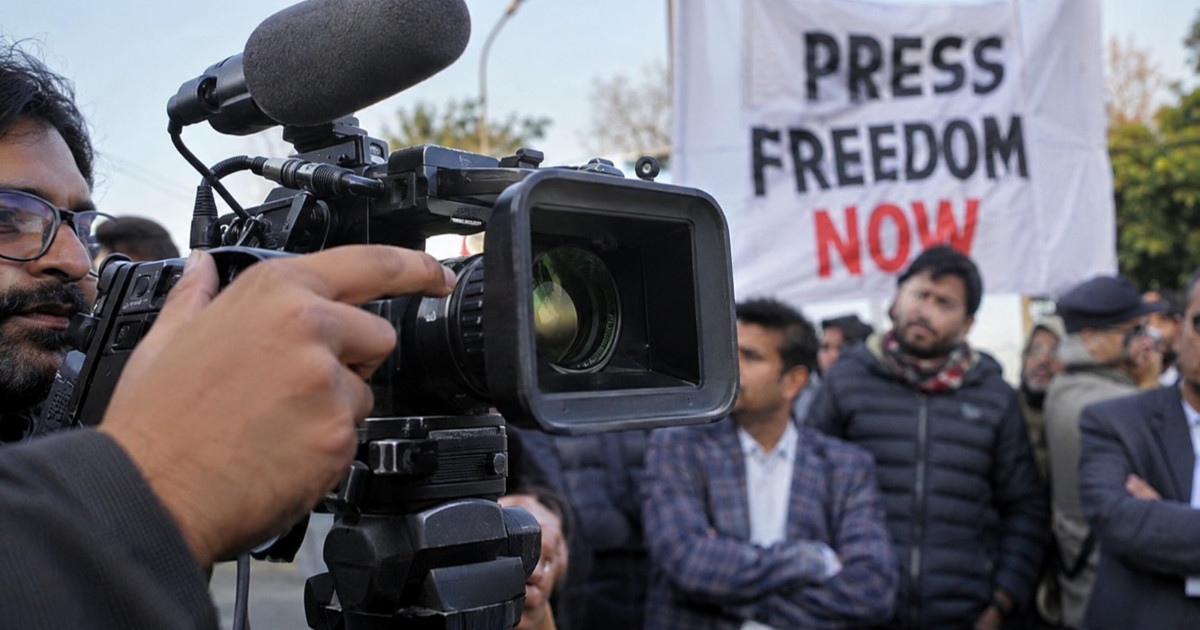
PHOTO: Foreign correspondents face fewer immigration uncertainties after a US federal court struck down restrictions on their admission periods. (Illustrative photo)
Key Points
- The US District Court for the District of Massachusetts struck down the DHS regulation on Nov. 16.
- The rule would have limited most I-classification journalists to 240 days and many Chinese passport holders to 90 days.
- The court found the regulation arbitrary, capricious and inconsistent with the law.
- A temporary injunction had blocked the rule from taking effect on Sept. 14 before the final decision.
- The ruling was welcomed by press freedom organizations including the Committee to Protect Journalists.
Key Questions & Answers
What did the court decide?
The court set aside the DHS rule that would have imposed fixed, shorter admission periods on many foreign journalists, finding the regulation unlawful and arbitrary.
When was the ruling issued?
The court issued a temporary block on Sept. 14 and then issued its final decision setting the rule aside on Nov. 16.
Who brought the lawsuit?
The case was brought by media unions and education organizations challenging the DHS rule; several press freedom groups also raised concerns.
What does the decision mean for foreign journalists?
The ruling preserves the longstanding system allowing correspondents to remain in the US while maintaining authorized status, avoiding short fixed stays and extra extension burdens.
Relevant Topics
Ask AI: Understand this story your way
AI EnabledDig deeper, ask anything — get instant context, background, and clarity.
Disclaimer: This feature is powered by AI and is intended to help readers explore and understand news stories more easily. While we strive for accuracy, AI-generated responses may occasionally be incomplete or reflect limitations in the underlying model. This feature does not represent the editorial views of JournalismPakistan. For our full, verified reporting, please refer to the original article.