
An American news website and its invisible journalists
JournalismPakistan.com | Published: 20 November 2026 | JP Special Report
Join our WhatsApp channel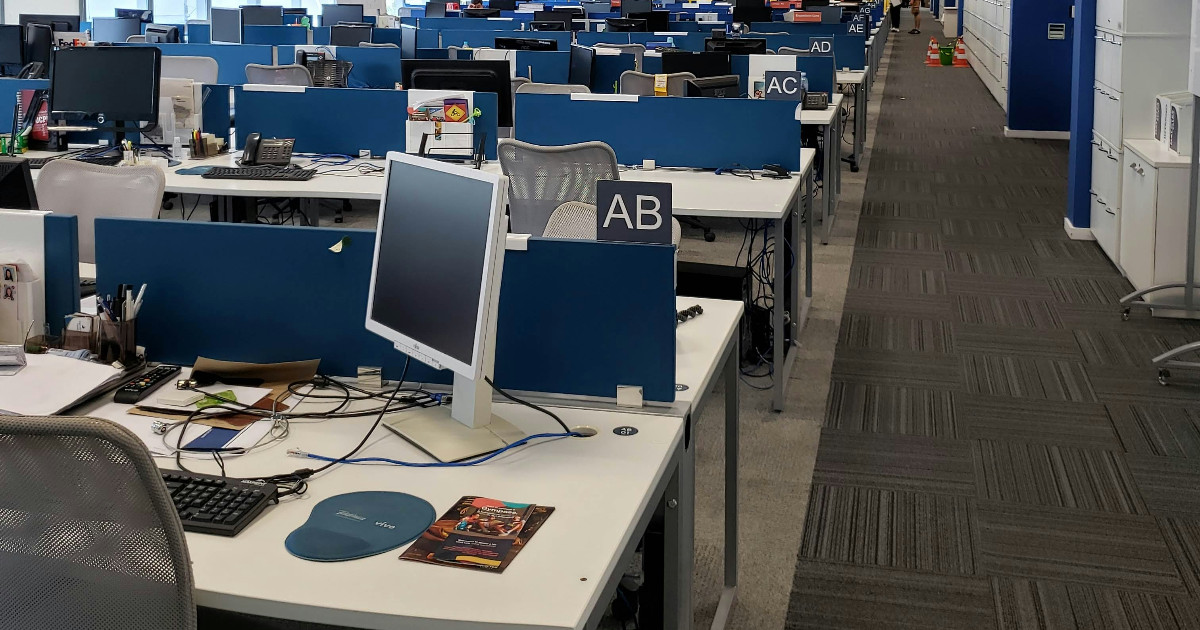
The Winchester Gazette in Virginia published over 6,000 stories since 2023 without naming its journalists, editors or owners. Investigations by VCIJ, IRE and WHRO raised concerns about disputed interviews, opaque ownership and potential AI-generated reporting.Summary
An American local news website published thousands of stories without identifying its journalists or editors. An investigation has raised questions about disputed interviews, hidden ownership, and possible AI-generated reporting. The case highlights a growing challenge for journalism: how can readers trust news when they cannot establish who is responsible for producing it?
WASHINGTON — A local news website in Virginia has become the centre of a controversy that goes well beyond one American community. The Winchester Gazette, which began publishing in 2023, produced more than 6,000 stories in three years without publicly identifying its journalists, editors, or owners. Its activities have raised an increasingly important question: can readers still tell who is producing their news?
The controversy follows an October 6 investigation by the Virginia Center for Investigative Journalism (VCIJ) at WHRO, which examined the website's operations, ownership and reporting practices. A November 16 account published by Investigative Reporters and Editors and further coverage on November 17 brought renewed attention to the findings, particularly allegations involving artificial intelligence and interviews that some quoted individuals say never happened.
The mystery behind a prolific news website
The Winchester Gazette appeared in a community where traditional journalism had been steadily losing ground. The city's long-established newspaper, The Winchester Star, had experienced staffing reductions, while local television coverage had diminished. The Gazette offered residents free reporting on crime, government meetings, public affairs, and community events.
Its productivity was remarkable. According to the investigation, the website published thousands of articles and attracted an estimated 11,000 monthly visitors. Yet its journalists remained largely invisible. The publication adopted a policy of withholding bylines, saying that doing so protected reporters from undue influence. Local officials told investigators they had never encountered anyone identifying themselves as a Gazette reporter at a public event.
The investigation uncovered corporate records connecting the Gazette's founding company, Commonwealth Media, to a local attorney and political figure, Carroll "Beau" Correll, and one of his relatives. Correll denied owning the publication or controlling its editorial direction. The website's current ownership remained unclear, and the Gazette declined to provide detailed information about its internal operations.
Those findings do not establish that the publication has no journalists. However, they demonstrate how difficult it can become for readers, public officials and even other reporters to establish who is responsible for a news organisation's output.
Interviews that may never have happened
Some of the investigation's most troubling findings involved quotations attributed to people who disputed having spoken with the Gazette.
VCIJ interviewed individuals who said the publication had presented their comments as interviews despite never contacting them. One woman disputed a report that described her comments about a missing teenager as an exclusive interview. Another person denied giving an interview about a payroll dispute.
The Gazette defended its reporting. In a subsequent response, it maintained that interviews had taken place, but investigators reported that it had not provided evidence resolving the disputed accounts.
The controversy illustrates a fundamental problem for journalism. A published quotation represents more than a collection of words. It tells readers that a journalist obtained or verified a statement and can account for its origin. When that assurance becomes questionable, the credibility of the entire reporting process is affected.
Where artificial intelligence enters the picture
Questions about AI emerged when investigators interviewed a former Gazette freelancer, Milly Mullins, who described working with editors she communicated with remotely.
Mullins alleged that editors used artificial intelligence to generate stories from reporting material and that the resulting articles sometimes contained errors. She also described pressure to obtain information about people involved in road accidents, including personal details.
The Gazette did not directly answer investigators' questions about its use of AI. Its alleged use of the technology has therefore not been independently established across its reporting, and the investigation did not prove that its unidentified journalists were fictitious.
Nevertheless, the allegations point towards a wider concern. Generative AI makes it possible to produce and distribute large quantities of readable material quickly and cheaply. A website no longer requires a substantial newsroom to maintain the appearance of continuous news coverage.
That capability can benefit legitimate publishers, particularly smaller independent operations. But without transparent editorial procedures, the same technology can also make inaccurate, recycled or unverified content appear indistinguishable from original journalism.
The disappearance of local journalism
The Winchester controversy cannot be separated from the weakening of local news organisations.
Across the United States, newspaper closures, newsroom reductions and declining advertising revenues have left communities with fewer journalists covering local government, public services and civic affairs.
In Winchester, investigators found a community still hungry for news even as established reporting resources had diminished. The Gazette entered that space with regular updates and an accessible website.
This raises an uncomfortable possibility: as traditional newsrooms disappear, readers may increasingly turn to publishers whose editorial practices are difficult to examine.
The problem is not necessarily that alternative websites exist. Independent digital publishers can fill important reporting gaps, challenge established media and serve communities overlooked by larger organisations.
The concern arises when the public cannot establish whether published information comes from actual reporting, automated production, recycled material or a combination of these methods.
A publication's visibility online does not automatically establish its credibility.
Transparency matters more than newsroom size
The rise of AI-assisted journalism also requires a distinction between the size of a news operation and the integrity of its reporting.
A one-person newsroom can produce credible journalism. It can use AI for research assistance, transcription, translation, editing, and other routine tasks without surrendering editorial responsibility.
Similarly, a large organisation with extensive resources can still publish misleading or inaccurate material.
The essential questions concern accountability. Who owns the publication? Who decides what is published? How are facts checked? Who verifies quotations? And who takes responsibility when something goes wrong?
Anonymous bylines are not inherently suspicious. Journalists working under threats or in restrictive environments may have legitimate reasons to protect their identities. But protecting individual reporters is different from concealing every aspect of a publication's ownership and editorial responsibility.
AI use, too, should not automatically undermine trust. The more significant issue is whether technology is being used within a verifiable reporting process or as a substitute for one.
Why the questions matter for Pakistan
The Winchester case offers lessons beyond the United States, including for Pakistan's expanding digital news environment.
Pakistan has seen the growth of independent websites, online news platforms, social media-based news operations and small publishing teams working with limited resources. At the same time, the financial pressures facing traditional newspapers and broadcast organisations have made sustainable journalism increasingly difficult.
AI provides opportunities for these smaller operations to improve efficiency and compete with better-resourced publishers. But the technology also increases the importance of clearly established editorial responsibility.
Readers should be able to distinguish between original reporting, commentary, aggregated information, and AI-assisted material. They should also be able to identify a publication's responsible editorial authority, even when individual reporters require anonymity.
These questions become especially important when websites cover political controversies, legal disputes, allegations against individuals or sensitive public affairs.
The Winchester investigation does not establish that comparable practices are widespread in Pakistan. It does, however, provide a warning about what can happen when publishing technology advances faster than public understanding of who is producing the information.
Can readers still recognise real journalism?
The challenge facing journalism is no longer simply distinguishing credible newspapers from unreliable websites. It is determining whether the reporting process behind a professional-looking publication can be independently verified.
A news website can carry a familiar design, publish regularly, attract readers and present itself as an authoritative source without revealing much about the people behind it.
Artificial intelligence makes that appearance easier to create. It does not, however, replace the obligation to verify information, question sources, correct errors, and accept responsibility for published work.
The Winchester Gazette controversy demonstrates why these distinctions matter.
For readers, the most important question may no longer be whether an article was written with AI assistance. It may be whether there is an identifiable and accountable journalist or editor standing behind the information.
Journalism's future will depend not only on how effectively newsrooms use technology, but also on whether audiences can continue to trust the people responsible for what they publish.
ATTRIBUTION: A JournalismPakistan analysis based on the Virginia Center for Investigative Journalism at WHRO investigation by Jaysun Silver and Laura Thompson, October 6, 2026; VCIJ follow-up, October 20; Investigative Reporters and Editors account by Louis Hansen, November 16; and Tomorrow's Publisher, November 17, 2026.
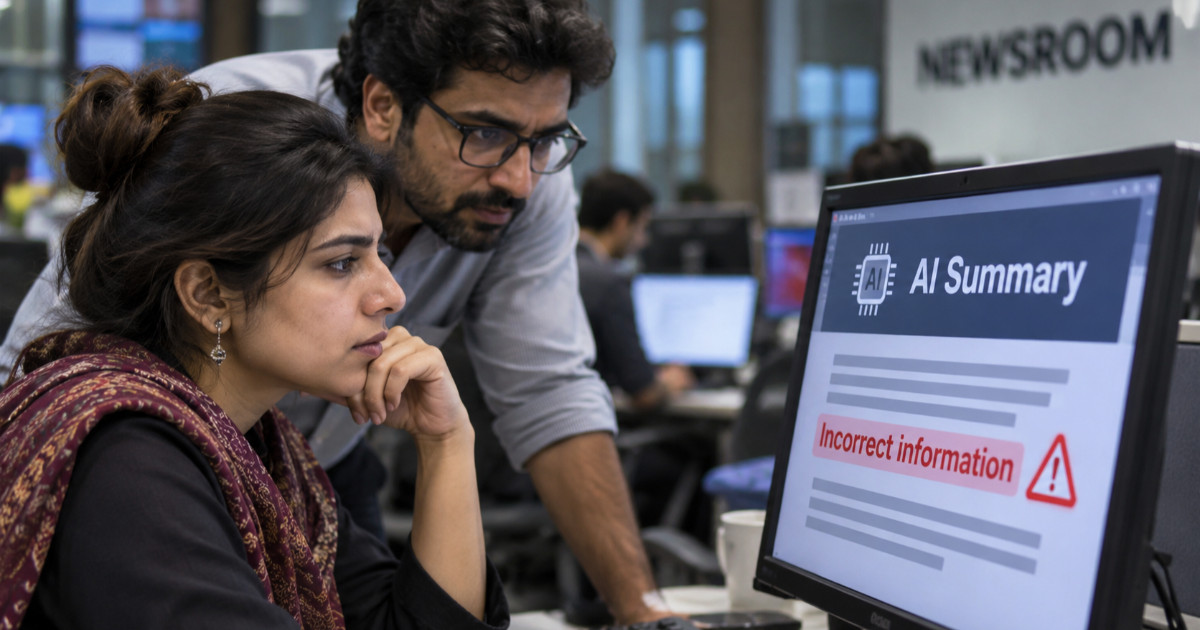
PHOTO: An office filled with computer workstations illustrates growing questions about newsroom transparency, editorial accountability and the people behind online news publications. (Illustrative photo: Eduardo Alexandre/Unsplash)
Key Points
- The Winchester Gazette published more than 6,000 articles in three years.
- Many stories ran without bylines and the site's ownership was not clearly disclosed.
- Investigations by VCIJ, IRE and WHRO examined reporting practices and ownership.
- Allegations include disputed interviews and possible use of AI in reporting.
- The case raises broader questions about trust, transparency and accountability in local news.
Key Questions & Answers
What did the investigations find?
They found the Winchester Gazette published thousands of stories without identifying journalists or clear owners, and noted allegations of disputed interviews and possible AI use.
How many stories were published?
Reporting says the site produced more than 6,000 stories over about three years.
Were individual journalists named?
Most articles lacked bylines and the site did not publicly disclose editors or owners, making authorship unclear.
Why does this matter to readers?
Without clear authorship or transparent ownership, readers cannot easily assess credibility, accountability or whether content may be generated or controlled by hidden interests.
Relevant Topics
Ask AI: Understand this story your way
AI EnabledDig deeper, ask anything — get instant context, background, and clarity.
Disclaimer: This feature is powered by AI and is intended to help readers explore and understand news stories more easily. While we strive for accuracy, AI-generated responses may occasionally be incomplete or reflect limitations in the underlying model. This feature does not represent the editorial views of JournalismPakistan. For our full, verified reporting, please refer to the original article.