.png)
The price of reporting: Prison, violence and intimidation
JournalismPakistan.com | Published: 15 November 2026 | JP News Desk
Join our WhatsApp channel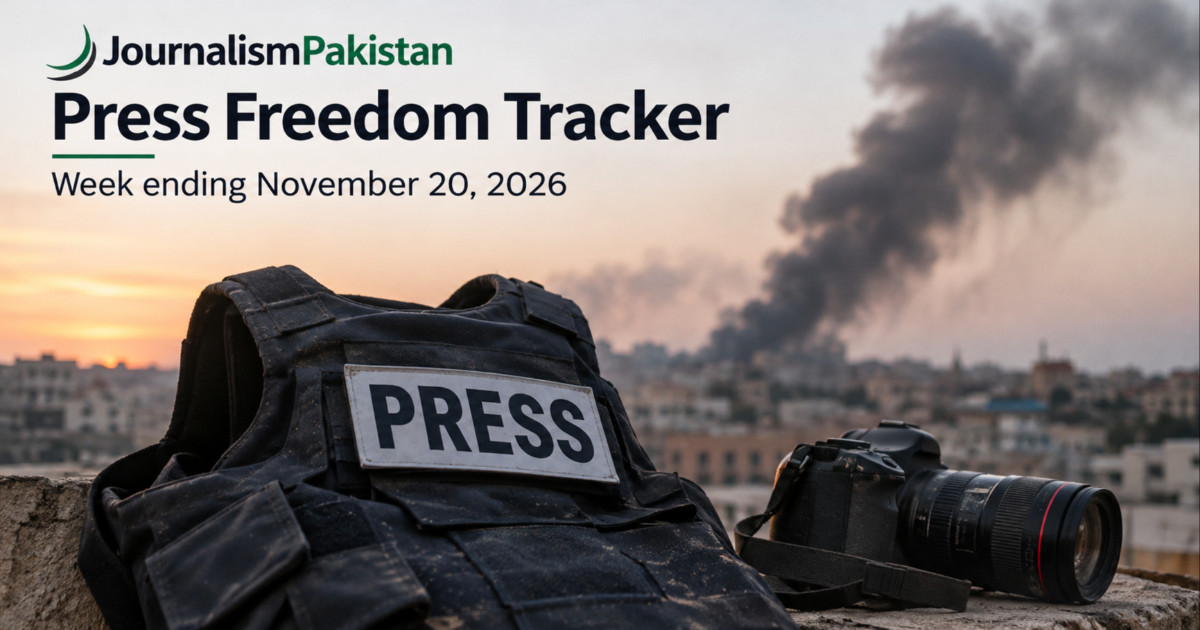
Journalists faced arrests, prosecutions, threats, attacks, and murder across several countries, revealing vulnerabilities even where legal protections exist. The report also highlights economic strains on newsrooms and the international reach of threats to reporters.Summary
Editor's note
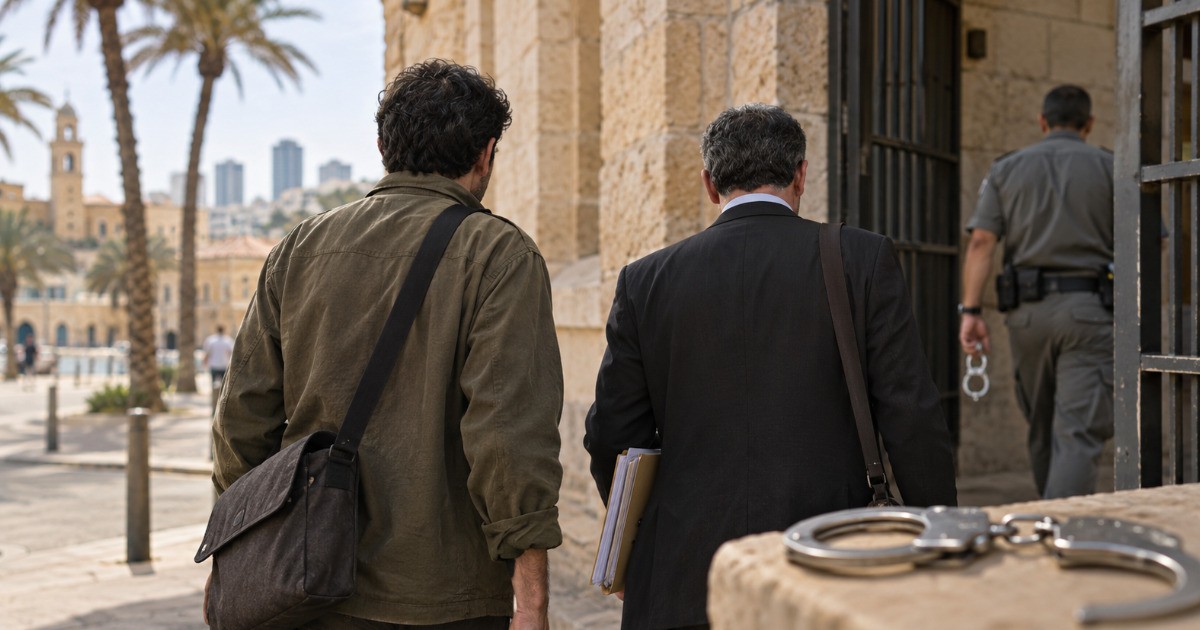
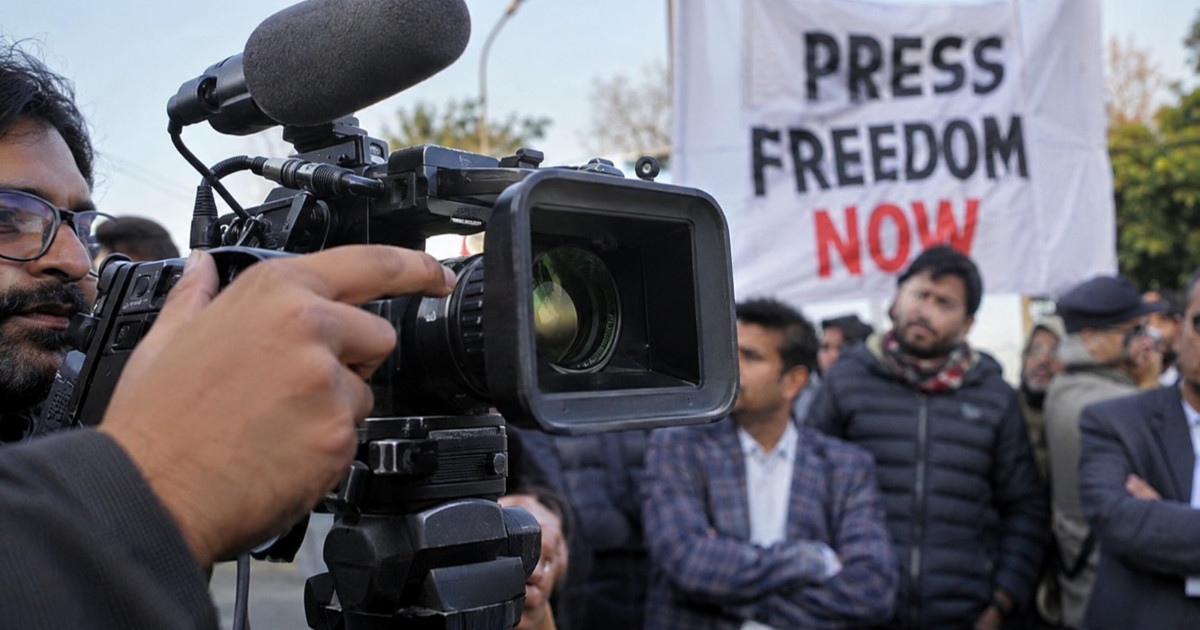
Press freedom faced another difficult week as journalists were detained, prosecuted, threatened and attacked across several regions. The most troubling developments were not confined to countries with long records of repression. They also exposed vulnerabilities in nations where legal protections, independent courts and established democratic institutions are expected to provide safeguards.
In Azerbaijan, two journalists received lengthy prison sentences over funding-related charges. In Nigeria, an investigative reporter was remanded to prison over reporting that questioned public expenditure. In Ecuador, a journalist who had previously received threats was murdered, while in Colombia, threats and an attack targeting broadcasters renewed concerns about newsroom safety.
There were also reminders that journalists may remain at risk long after escaping persecution. The continued detention of an Afghan journalist seeking asylum in the United States, alongside the conviction of two men who spied on Iranian journalists in Britain, demonstrated the international reach of threats to reporters and the limits of protection abroad.
This edition also examines the economic pressures undermining journalism. The staffing upheaval at Türkiye's Halk TV and Pakistan's continuing salary crisis show how institutional decisions and employers' failures can weaken newsrooms without necessarily involving direct censorship.
The incidents differ in their circumstances, severity, and legal status. Some involve established court decisions, others documented attacks, and several remain allegations requiring independent investigation. What connects them is the continuing struggle to ensure that journalists can investigate, report and work without intimidation or arbitrary interference.
JournalismPakistan's Press Freedom Tracker documents these developments with attention to verified facts, attribution and accountability. Its purpose is not simply to record violations, but to examine what they reveal about the conditions under which journalism is practised.
Arrests, detentions, and kidnappings
TÜRKİYE — KHK TV editor Ahmet Erkan Yiğitsözlü and broadcaster Münir Korkmaz were detained, according to Evrensel. Liberal TR Haber reported that both were taken to Osmaniye and that authorities had not publicly explained the grounds for their detention. Their detention's connection to journalistic work remains unconfirmed. (Evrensel, November 9, 2026; Liberal TR Haber, November 9, 2026)
Why it matters: Detaining media workers without publicly explaining the grounds raises questions about due process, although a connection to their professional activities has not been established.
UGANDA — Nation Media Group correspondent John Kenneth Odele was arrested while covering a security meeting in Soroti, Daily Monitor reported. The newspaper said a local police commander was seeking to verify the circumstances of the arrest. No official explanation was available in the cited report. (Daily Monitor, November 10, 2026)
Why it matters: Arresting a journalist during a reporting assignment can interrupt news coverage and raise concerns about interference with newsgathering, particularly when the reasons remain unclear.
NIGERIA — A Federal High Court in Abuja ordered investigative journalist Daniel Ojukwu remanded to Kuje Correctional Centre on November 10 until a December 1 bail hearing. Ojukwu, a Foundation for Investigative Journalism reporter, pleaded not guilty to 12 charges involving cybercrime and criminal defamation arising from investigations into government contracts. The case also names FIJ founder Fisayo Soyombo. Ojukwu was previously detained over the reporting in 2024. (Committee to Protect Journalists, November 11, updated November 12, 2026; The Punch, November 10, 2026)
Why it matters: The prosecution and renewed detention of a reporter over investigations into public expenditure raise concerns about the use of criminal law against accountability journalism.
PALESTINE — Israeli forces detained journalist Mohammed Ali Atiq at his home in Burqin in the occupied West Bank on November 15, the Palestinian news agency WAFA reported, citing the Palestinian Prisoners' Society. His father told Al-Araby Al-Jadeed that soldiers also seized mobile phones belonging to Atiq and his wife. The reason for the detention was not established in the reports. (WAFA, November 15, 2026; Al-Araby Al-Jadeed, November 15, 2026)
Why it matters: The reported detention and seizure of communication devices raise concerns about personal liberty, access to information, and potentially sensitive journalistic material.
Legal and regulatory pressure
CUBA — The Committee to Protect Journalists called on Cuban authorities to drop espionage charges against jailed content creator and YouTuber Eddy Ceballos. He has been detained since June 1 following a visit to an abandoned radar and missile installation in Havana. CPJ said the allegations were connected to his satirical videos and called for his release. (Committee to Protect Journalists, November 12, 2026)
Why it matters: The use of serious criminal charges against a digital content creator raises concerns about freedom of expression and the treatment of online commentary as a security threat.
Attacks, threats, harassment, and killings
BANGLADESH — Three Dhaka Tribune journalists reported that armed men detained, assaulted, and threatened them while they were investigating drug trafficking in Tongi. The journalists alleged that their captors demanded they stop reporting and deleted material from a reporter's phone. Police said an officer was examining their written complaint. (Dhaka Tribune, November 8, 2026)
Why it matters: The reported assault and destruction of reporting material suggest an attempt to intimidate journalists and obstruct an investigation into suspected criminal activity.
ECUADOR — Journalist Tomás Beltrán Conforme was shot dead outside his home in Calceta on November 8, according to the Committee to Protect Journalists. Beltrán had previously received threats related to his reporting and had been granted protection measures. CPJ urged authorities to investigate whether he was targeted because of his work. The motive remains unconfirmed. (Committee to Protect Journalists, November 9, 2026)
Why it matters: The killing of a journalist who had reported receiving threats raises serious questions about the effectiveness of protective measures and the ability of authorities to prevent violence against media workers.
COLOMBIA — An explosive device was thrown at RCN's premises in Cali on November 11, causing minor damage but no reported injuries. The incident followed reported bomb threats against major broadcasters in Bogotá on November 7. CPJ and the Colombian press freedom organization FLIP called for investigations and stronger protection for media workers. Responsibility for the incidents remains unconfirmed, and no connection between them has been established. (Caracol Radio and El Espectador, November 11, 2026; Committee to Protect Journalists, November 10, 2026; FLIP, November 8, 2026)
Why it matters: Threats and attacks against media premises can intimidate entire newsrooms, disrupt reporting and restrict the public's access to information even when no one is physically injured.
PALESTINE — Photojournalist Alaa Badarneh was injured during an attack on olive harvesters near the West Bank villages of Qusra and Jalud. The International Federation of Journalists, citing the Palestinian Journalists' Syndicate, said Israeli settlers attacked Badarneh while he was covering the harvest. (Anadolu Agency, November 10, 2026; International Federation of Journalists, November 10, 2026)
Why it matters: The reported assault highlights the physical risks faced by journalists covering violence involving civilians and the importance of protecting media workers in the field.
PAKISTAN — Freedom Network documented five cases involving threats, alleged assaults and legal pressure against journalists and media workers during October. The cases included reported threats against ARY News reporter Atiya Akram and cameraman Aminullah Mengal, as well as the alleged assault of journalist Kashif Hashmi. The organization classified four cases as involving identified or alleged state actors. The figures reflect its monthly monitoring rather than a comprehensive national tally. (Freedom Network, November 13, 2026)
Why it matters: The findings point to continuing safety and legal concerns for Pakistani journalists, while highlighting the need for independent investigations and accountability.
Investigations and accountability
UNITED KINGDOM — Two Iranian men were convicted on November 12 of assisting a foreign intelligence service after spying on London-based journalists working for Iran International. Prosecutors presented evidence involving surveillance and preparations for serious violence. The Committee to Protect Journalists welcomed the convictions but called for accountability for those who directed and financed the operation. Both men are scheduled to be sentenced on December 17. (UK Crown Prosecution Service, November 12, 2026; Committee to Protect Journalists, November 13, 2026)
Why it matters: The convictions demonstrate the dangers posed by transnational surveillance and intimidation, while showing the importance of criminal accountability in protecting journalists working in exile.
Access to information and reporting restrictions
RUSSIA — Staff at Novaya Gazeta left the newspaper's Moscow newsroom on November 9 after sustained state pressure forced the publication to close its remaining operations in Russia. The newspaper cited the loss of its premises and donation-processing arrangements, alongside earlier restrictions on publication. Its difficulties followed years of pressure on independent Russian journalism. (Novaya Gazeta Europe, November 9, 2026; Novaya Gazeta, October 30, 2026)
Why it matters: The closure illustrates how administrative and financial restrictions can make independent reporting impossible even without an outright ban on individual journalists.
INDIA — Indian authorities defended the government's discretion over visa decisions but offered no specific public explanation for cancelling Norwegian journalist Helle Lyng Svendsen's visa ahead of the November 13–14 Bharat Summit. Norwegian press organizations sought clarification and questioned whether the decision was connected to her earlier questioning of Prime Minister Narendra Modi. No retaliatory motive has been established. (Press Trust of India/ThePrint, November 13, 2026; The Times of India, November 13, 2026; M24, November 13, 2026)
Why it matters: Visa decisions affecting journalists can restrict access to important events. When the grounds are not publicly explained, they can also create uncertainty about the treatment of critical questioning.
Policy and court developments
ALGERIA — A court in Chéraga sentenced journalist Abdelali Mezghiche to three years in prison on November 8 and fined him 200,000 Algerian dinars. The charges included publishing material deemed harmful to the national interest and incitement-related offences. Mezghiche had been detained since February. His lawyers intend to appeal, while CPJ has called for his unconditional release and the conviction to be overturned. (Committee to Protect Journalists, November 9, 2026; Maghreb Émergent, November 8, 2026)
AZERBAIJAN — A court in Baku sentenced Meclis.info founder Imran Aliyev to 10 years in prison and the outlet's data analyst Elgiz Gahraman to nine years on November 12. The charges concerned alleged violations of foreign funding laws. An accountant associated with the outlet also received a suspended sentence. The Committee to Protect Journalists condemned the convictions and said at least 26 journalists were imprisoned in Azerbaijan. (Committee to Protect Journalists, November 13, 2026)
UNITED STATES — A federal appeals court ruled that government orders requiring LinkedIn to disclose records associated with journalists and maintain secrecy about the demands were substantially overbroad. The court returned the matter to a lower court for reconsideration and narrowing of the orders but did not invalidate them entirely. The ruling leaves important questions about source protection and access to platform-held information unresolved. (Fourth US Circuit Court of Appeals, November 10, 2026; Associated Press, November 11, 2026)
Why it matters: Access to journalists' metadata can expose confidential sources and reporting relationships even without disclosure of message contents. The ruling highlights the need for proportionate safeguards when authorities seek digital records.
Economic pressure and media viability
PAKISTAN — The National Assembly Standing Committee on Information and Broadcasting directed the Ministry of Information to present a comprehensive plan within 15 days to address unpaid salaries and growing layoffs in media organizations. At its November 10 meeting, the committee expressed concern about delayed wages and dismissals without proper notice. Officials said government payments to media outlets were being released, but some employers were failing to meet their obligations to workers. (National Assembly Standing Committee on Information and Broadcasting, November 10, 2026; Associated Press of Pakistan, November 10, 2026)
Media operations and industry pressures
TÜRKİYE — Halk TV journalist Onur Dalar said approximately 70 employees had left the broadcaster since a state-appointed trustee assumed control in October. The figure includes staff who were dismissed and those who left voluntarily. Dalar also reported plans for further staff reductions. Authorities interrupted broadcasting during the October 14 takeover, prompting criticism from international journalists' organizations. (Karar, November 11, 2026; Committee to Protect Journalists, October 14, 2026)
Journalist safety and displacement
UNITED STATES — The Committee to Protect Journalists called for the release of Afghan journalist Shaban Ali Rafat, who has been held in US immigration custody in California since January 21, 2025. Rafat was detained after attempting to enter the country to seek asylum and now faces possible deportation to Afghanistan. CPJ warned that returning him could expose him to persecution and retaliation by the Taliban and urged authorities to allow him a full hearing on his asylum claim. (Committee to Protect Journalists, November 13, 2026)
Press freedom review
The week's developments reveal an increasingly complex press freedom environment in which traditional violence and detention coexist with legal, administrative, financial and technological pressures.
The most severe consequences were visible in Ecuador and Azerbaijan. The killing of Tomás Beltrán Conforme raised urgent questions about the protection of journalists who have already reported threats. In Azerbaijan, the lengthy prison sentences imposed on two Meclis.info journalists showed how financial and regulatory allegations can become central to prosecutions of independent media workers.
Nigeria provided another example of the risks faced by investigative reporters. Daniel Ojukwu's remand over stories examining public contracts illustrates how criminal proceedings can impose immediate consequences on journalists long before a court determines guilt or innocence.
Elsewhere, the nature of the pressure was less direct but potentially just as damaging. Russia's Novaya Gazeta lost the ability to sustain its remaining domestic operations, while staffing departures at Türkiye's Halk TV highlighted the consequences of state intervention in newsroom management.
A different problem emerged in Pakistan, where Parliament's concern over unpaid wages and layoffs placed newsroom employment conditions within the wider debate about media freedom. Journalists struggling to secure their salaries may face constraints on their professional independence even when they are not directly threatened by government authorities.
There were also developments pointing towards possible accountability. Britain's convictions in the Iran International surveillance case demonstrated that threats against exiled journalists can result in criminal consequences. In the United States, the LinkedIn ruling provided an opportunity for judicial scrutiny of government demands for information that could identify confidential sources.
Yet neither development settles the broader questions. Identifying those who order transnational surveillance remains a challenge, while the protection of journalists' digital records continues to depend on how courts balance investigative powers against press freedom.
The week's incidents underline a central concern: press freedom cannot be measured solely by the number of journalists arrested, attacked or killed. It also depends on whether independent newsrooms can operate, whether reporters can protect their sources, whether media workers are paid and whether journalists fleeing repression can find safety.
Global context
Several patterns connect this week's incidents with the broader challenges facing journalism worldwide.
The first is the growing use of legal and regulatory systems to exert pressure on independent reporting. Cases in Algeria, Azerbaijan and Nigeria demonstrate how criminal proceedings and financial regulations can affect journalists even when they are not directly accused of producing false information. The existence of formal legal proceedings does not, by itself, resolve concerns about proportionality, due process or possible retaliation.
The second is the international dimension of journalist safety. The Iranian surveillance case in Britain and the threatened deportation of an Afghan journalist from the United States show that leaving a dangerous country does not necessarily end a reporter's exposure to risk. Protection increasingly requires cooperation between immigration authorities, law enforcement agencies, courts and press freedom organizations.
The third concerns the economic and institutional sustainability of independent media. The difficulties facing Novaya Gazeta and Halk TV, alongside unpaid wages in Pakistan, highlight different routes through which news organizations can lose the resources, personnel and operating independence necessary to serve the public.
Finally, the week's developments reinforce the need to distinguish between immediate incidents and longer-term outcomes. An arrest may end without charges, a prosecution may continue for years, a judicial ruling may offer only partial relief, and an attack may remain unresolved long after public attention has moved elsewhere.
The effectiveness of press freedom protections therefore depends not only on responses to individual incidents but also on sustained monitoring, enforceable safeguards and meaningful accountability.
For independent newsrooms, the overriding challenge remains the same: maintaining the freedom, security and economic capacity to report in the public interest.
SUGGESTED TAGS: Press Freedom, Press Freedom Tracker, Journalist Safety, Journalists Under Attack, Media Freedom, Journalist Arrests, Journalist Detentions, Press Freedom Violations, Media Law, Digital Rights, Independent Journalism, Media Sustainability, Journalists in Exile, JournalismPakistan
ATTRIBUTION: Compiled and analyzed by JournalismPakistan.
ABOUT THIS TRACKER: The Press Freedom Tracker is a weekly product of JournalismPakistan.com, published every Sunday. Read previous editions here.
Key Points
- Journalists in Azerbaijan received lengthy prison sentences over funding-related charges.
- A Nigerian investigative reporter was remanded after reporting on public expenditure.
- An Ecuadorian journalist who had been threatened was murdered, and Colombian broadcasters faced threats and an attack.
- An Afghan journalist remains detained while seeking US asylum; two men were convicted in the UK for spying on Iranian journalists.
- Economic pressures hit newsrooms, including staffing upheaval at Türkiye's Halk TV and a salary crisis in Pakistan.
- Incidents highlight legal, physical and financial threats to press freedom that cross borders.
Key Questions & Answers
What types of threats to journalists are documented in this report?
The report records arrests, prosecutions, physical attacks, murder, intimidation, spying and economic pressures undermining newsrooms.
Which countries saw the most serious incidents?
Key cases occurred in Azerbaijan, Nigeria, Ecuador and Colombia, with related international concerns involving Afghanistan, Iran and the UK.
How do economic issues affect press freedom?
Staff cuts, unpaid salaries and management decisions weaken newsrooms' capacity to report independently and increase vulnerability to external pressures.
Are there cross-border risks for journalists?
Yes. Cases include detained asylum seekers and convicted spies, showing threats can reach journalists even outside their home countries.
Relevant Topics
Ask AI: Understand this story your way
AI EnabledDig deeper, ask anything — get instant context, background, and clarity.
Disclaimer: This feature is powered by AI and is intended to help readers explore and understand news stories more easily. While we strive for accuracy, AI-generated responses may occasionally be incomplete or reflect limitations in the underlying model. This feature does not represent the editorial views of JournalismPakistan. For our full, verified reporting, please refer to the original article.