
Why publishers want AI companies to pay Amar Guriro: Journalism's future is human-AI partnership The JournalismPakistan Global Media Brief | Edition 23 | June 5, 2026 As AI reshapes news, publishers seek a sustainable future Every frame at a cost: The safety crisis facing Pakistan's camerapersons Why journalists are increasingly targeted in conflict zones What the 60 Minutes controversy means for TV journalism Zee secures FIFA World Cup rights in India through 2030 How fact-checkers verify viral videos during breaking news Pentagon restrictions on reporters draw media backlash Israel-Lebanon talks proceed as conflict hinders reporting Why governments are tightening controls on foreign journalists China condemns US restrictions on Xinhua reporter Taiwan condemns China over New York Times reporter expulsion The biggest threats facing journalism in Asia today Why publishers want AI companies to pay Amar Guriro: Journalism's future is human-AI partnership The JournalismPakistan Global Media Brief | Edition 23 | June 5, 2026 As AI reshapes news, publishers seek a sustainable future Every frame at a cost: The safety crisis facing Pakistan's camerapersons Why journalists are increasingly targeted in conflict zones What the 60 Minutes controversy means for TV journalism Zee secures FIFA World Cup rights in India through 2030 How fact-checkers verify viral videos during breaking news Pentagon restrictions on reporters draw media backlash Israel-Lebanon talks proceed as conflict hinders reporting Why governments are tightening controls on foreign journalists China condemns US restrictions on Xinhua reporter Taiwan condemns China over New York Times reporter expulsion The biggest threats facing journalism in Asia today
Logo
Janu
AI in Media and Journalism

Sudanese journalist killed in RSF shelling in El Fasher

 JournalismPakistan.com |  Published: 7 October 2025 |  JP Global Monitoring

Join our WhatsApp channel
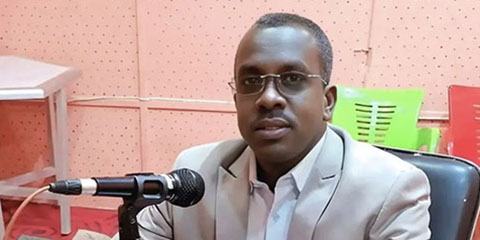
Sudanese journalist killed in RSF shelling in El Fasher
Al-Nour Suleiman, a Sudanese journalist, was fatally injured in a RSF shelling in El Fasher. His death has sparked outrage among media and press freedom organizations.

El Fasher—A Sudanese journalist, Al-Nour Suleiman, has died from injuries sustained after his home in El Fasher, North Darfur, was shelled by the paramilitary Rapid Support Forces (RSF), according to the Sudanese Journalists Syndicate (SJS).

Sudan Tribune (https://sudantribune.com) reported that Suleiman, who worked as a correspondent and presenter for local radio stations and served as media director for the North Darfur state governor’s office, was critically wounded in the October 3 attack. He was taken to the Saudi Hospital, the only operational medical facility in the besieged city, where he succumbed to his injuries the following day.

His killing has drawn strong condemnation from journalist groups and press freedom advocates. The Committee to Protect Journalists (CPJ) noted that reporters in El Fasher are enduring extreme hardship under the RSF siege, including bombardment, hunger, and violence.

Earlier this month, CPJ cited the case of a female journalist who was attacked and gang-raped by armed men in retaliation for her work, underscoring the grave dangers faced by media professionals in the city.

El Fasher has been under siege by the RSF for months, with the paramilitary force reportedly blocking the entry of humanitarian aid and medicine, erecting earth barriers around the city, and deploying fighters to surrounding villages. Power outages, restricted movement, and shortages of food and internet access have further isolated journalists and residents alike, worsening the humanitarian crisis in North Darfur.

Key Points

  • Al-Nour Suleiman was shelled at his home on October 3.
  • He died at the Saudi Hospital due to his injuries.
  • His death highlights dangers faced by journalists in El Fasher.
  • RSF's siege has severely restricted humanitarian aid and resources.
  • El Fasher is experiencing a humanitarian crisis due to ongoing violence.

Ask AI: Understand this story your way

AI Enabled

Dig deeper, ask anything — get instant context, background, and clarity.

Not sure what to choose? Try one of these.

The AI generates results based on your selected options
Your AI-generated results will appear here after you click the button.

Disclaimer: This feature is powered by AI and is intended to help readers explore and understand news stories more easily. While we strive for accuracy, AI-generated responses may occasionally be incomplete or reflect limitations in the underlying model. This feature does not represent the editorial views of JournalismPakistan. For our full, verified reporting, please refer to the original article.
Read Next

Newsroom
Why publishers want AI companies to pay

Why publishers want AI companies to pay

 June 06, 2026 Publishers want AI firms to pay for using their news to train models and power chatbots, arguing they deserve licensing fees and stronger copyright protection.


Amar Guriro: Journalism's future is human-AI partnership

Amar Guriro: Journalism's future is human-AI partnership

 June 05, 2026 Amar Guriro, founder of Pakistan's first AI-powered news platform, says journalism's future rests on human-AI collaboration to improve reporting while preserving editorial oversight.


The JournalismPakistan Global Media Brief | Edition 23 | June 5, 2026

The JournalismPakistan Global Media Brief | Edition 23 | June 5, 2026

 June 05, 2026 Global Media Brief reviews pressures reshaping journalism, press freedom, AI and platform power, and reports BBC's Emmy, 60 Minutes turmoil and Taiwan's protest.


As AI reshapes news, publishers seek a sustainable future

As AI reshapes news, publishers seek a sustainable future

 June 05, 2026 At the World News Media Congress in Marseille, publishers discussed how generative AI is altering newsroom workflows, audience engagement and content licensing.


Every frame at a cost: The safety crisis facing Pakistan's camerapersons

Every frame at a cost: The safety crisis facing Pakistan's camerapersons

 June 05, 2026 Pakistani camerapersons face serious risks covering floods, protests and attacks, often without training, protective gear or employer support.


Popular Stories