
(2).png)
Mike Hesson and Pakistan cricket's gathering chaos
JournalismPakistan.com | Published: 6 October 2026 | Dr. Nauman Niaz
Join our WhatsApp channel
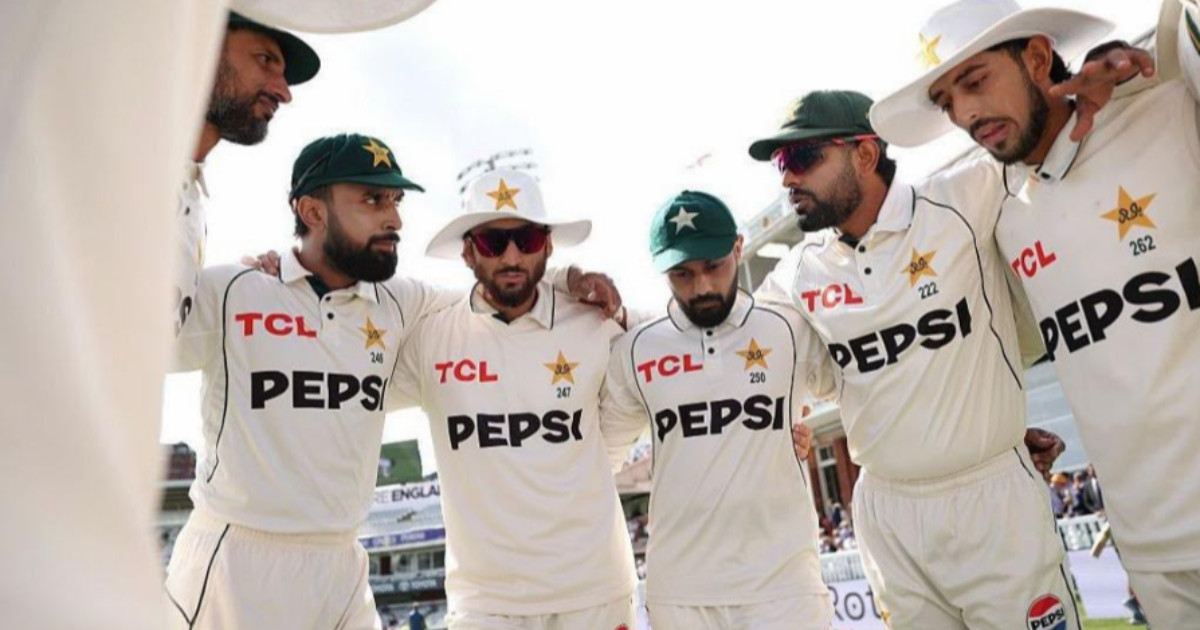
Mike Hesson's remark that Pakistan are 'accustomed to a little bit of chaos' came to define a fraught England tour. Heavy Test defeats at Headingley and Lord's were followed by the sacking of coach Sarfaraz Ahmed, bowling coach Umar Gul and the sending home of seven players.Summary
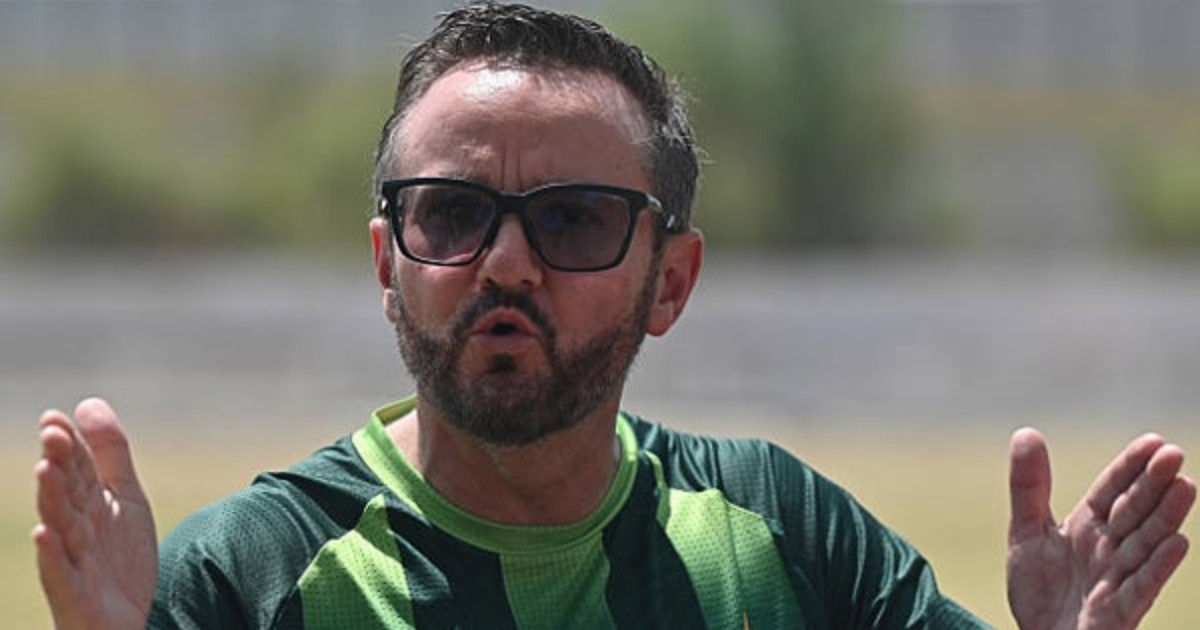
There is a sentence Mike Hesson let fall on the eve of the Edgbaston Test in September which deserves, in the fullness of time, to be chiselled into the stone above the gates of the Gaddafi Stadium, somewhere beneath the board's crest, where visiting dignitaries might linger and wonder whether they were reading a confession or a boast. Pakistan, he observed, were accustomed to "a little bit of chaos". He said it with a feather's touch, in the manner of a guest who has strayed into a house mid-quarrel and concluded that courtesy demands he admire the upholstery. But nothing uttered lightly in Pakistan cricket remains light for long; words here gather ballast as they travel, and what first sounded like a wry aside has settled, a month on, into the cadence of a creed.
Consider the sequence, for in Pakistan the sequence is always the story, and the story is always a kind of liturgy. At Headingley, defeat by an innings and 103 runs. At Lord's, defeat by 194. And then, with the series surrendered and a Test still to be played, the board did what no institution possessed of a working memory of its own dignity would ever contemplate. It dismissed the Test head coach, Sarfaraz Ahmed; it dismissed the bowling coach, Umar Gul; and it dispatched seven players home in the middle of the tour, among them Mohammad Rizwan, Imam-ul-Haq and Salman Ali Agha, who had captained the side in the first Test only weeks before. Into the vacated chair, summoned from his preparations for the Asian Games in Japan, stepped Hesson, the white-ball coach, who had been expected in England for nothing grander than an audience with the King.
From ceremony to command
That detail deserves to be held up to the light, for it has the shimmer of a parable. A man arrives for a ceremony and departs with a kingdom. Hesson was appointed in May 2025 to coach Pakistan's limited-overs teams, a commission clear in its borders and modest in its ambitions, the cartography of a province rather than an empire. Seventeen months later he presided over the Edgbaston Test, which closed in an eight-wicket defeat and the bleak numbers of a 3-0 whitewash. He then let it be known, with the unhurried candour of one who senses the room has already decided, that he was "open to" the Test post on a permanent footing. Reports had painted him as keen on an all-format role, provided he was granted freedom from interference. In Pakistan, freedom from interference is not a clause one negotiates. It is a throne one ascends.
And ascend it he has. Whatever the parchment eventually declares, the architecture of power is already legible: in the squads, in the selectors' eloquent silences, in the subtle expression of who was consulted and who was just informed. The white-ball coach has become simply the coach, and the coach has swollen into something larger still, an organising intelligence around which the rest of the apparatus now arranges itself, as iron filings bow to a magnet. Hesson did not seize this power; seizure implies a coup, and coups require resistance. He simply found it lying on the floor of a building in which nobody else could be bothered to stoop, and he has had the composure, or the effrontery, to wear it as though it had been cut for him on Savile Row.
The decline of Aaqib-ball
To grasp how complete the transfer of authority has been, one must first take the measure of how much of it Aaqib Javed once held. For the better part of two years, Aaqib was less a selector than the prevailing climate of Pakistan cricket, the barometer by which every pressure was read, and every storm foretold. He was senior selector and director of the High Performance Centre, for a spell interim head coach in every format, and before all of that the patriarch of Lahore Qalandars, the franchise that took more claims and ownership rather than teaching a generation of Pakistani fast bowlers that pace was a treasure to be hoarded rather than squandered. They barely produced one Haris Rauf and claimed having produced likes of Shaheen Shah Afridi or a Fakhar Zaman. Success has many fathers; failure is an orphan is so true for Lahore Qalandars. When Pakistan defeated England at home in 2024 with an all-spin attack, on surfaces baked like the beds of dried rivers, the method acquired a name, "Aaqib-ball", and for a few heady weeks the phrase carried the faint, intoxicating perfume of genius.
But genius in Pakistan is a perishable commodity, its shelf life measured in weeks rather than seasons. In March, after the T20 World Cup exit, Aaqib sat beside his fellow selectors in Lahore and let slip a confession of startling candour: the selectors had asked the board to curtail the head coach's say in selection. Until Hesson's arrival, he explained, the selectors had been involved even in choosing the playing XI. The subtext scarcely troubled itself to remain beneath the text. The selectors had been reduced to clerks, compiling a shortlist of fifteen names and surrendering it to a man who then did with it as he pleased. It was, in its melancholy way, a plea for relevance draped in the robes of a policy proposal.
The board's reply, delivered in instalments over the six months that followed, has been an emphatic and unsentimental no. By late summer it was Aaqib himself who was cast as the architect of the English purge, appearing on television to defend the expulsion of seven players and two coaches, insisting the team had failed to compete and that Hesson, who knew the players, would coax from them a better response. It was an act of self-effacement bordering on the theatrical: the senior selector publicly pleading the authority of the very man whose authority he had begged the board to clip. Reports soon followed that the chairman, Mohsin Naqvi, meant to remove him from the selection panel altogether. Others insisted he would remain both selector and director of the High Performance Centre. In Pakistan both can be true for a week, and neither can be trusted for a month.
Authority moves elsewhere
What lies beyond dispute is the direction of travel. Aaqib's natural habitat is migrating from the selection room to the High Performance Centre, from the room where national squads are chosen to the nursery where future ones are reared. The HPC is no mean place; it is precisely where a country blessed with Pakistan's prodigal talent ought to be investing its finest minds. Yet nobody in Lahore mistakes it for the seat of power, and nobody mistakes the journey for a promotion. The most commanding voice in Pakistan's selection for two years has dwindled, in the bloodless idiom of the corporate organogram, to a dotted line.
One must take care not to romanticise what Aaqib represented. His tenure bequeathed its own share of whiplash selections and obstinate loyalties, and his England squad was, by his own admission, the selectors' responsibility. Yet his marginalisation matters for a reason larger than one man's career: it removes the last institutional counterweight to the coach. A selection committee is meant to be a check, an argument, a second opinion armed with a vote. What Pakistan possesses instead is a committee from which Misbah-Ul-Haq, of all people, resigned in protest at not being consulted, and whose remaining members are departing, drifting sideways or, in one especially painful case, returning through the servants' entrance.
The rise and fall of Sarfaraz Ahmed
Sarfaraz Ahmed is the last Pakistan captain to have lifted an ICC trophy. That sentence, nine summers old now, still hums with a peculiar current, because the Oval in June 2017 was not just a victory but a rebuttal, a riposte delivered to the whole condescending world. A team ranked eighth, written off after a thrashing by India, rose on the shoulders of Fakhar Zaman's insouciance and Mohammad Amir's new ball to vanquish the same opponents in the final. Sarfaraz led that side with the stocky, perspiring, hoarse-voiced charisma of a Karachi street captain, and for one fleeting season it seemed the gods of Pakistan cricket had resolved, for once, to reward plain decency.
The gods have since revised their verdict. In March this year, days after being appointed a national selector, Sarfaraz retired from international cricket. In April, scarcely a month later, he was anointed head coach of the Test side ahead of the series in Bangladesh, with the 2026-28 World Test Championship cycle as his charge. He had overseen the Shaheens and the Under-19 pathway, and he had mentored an Under-19 side to the Asia Cup. That is a respectable apprenticeship. It is not a sample size. He passed from the selection room to the head coach's chair of a Test team without a single line of senior coaching on his curriculum vitae, and the board dressed the decision not as a wager but as a homecoming, garlanded and sentimental.
The elevation was a misjudgement, and it was misjudged in a manner that owed nothing to Sarfaraz's character and everything to the board's settled habits. Pakistan cherishes a long and sentimental tradition of treating former captains as though captaincy were a passport to every office that follows, as though commanding men upon a field and constructing a system off it were the selfsame craft. They are not. The head coach of a modern Test side is part strategist, part interpreter of data, part custodian of workloads, part diplomat to selectors and board alike. To bestow all of that upon a man a few months into his retirement was not to honour him. It was to lead him, garlanded, to the scaffold.
A dismissal without dignity
And then, having led him there, the board let the trapdoor fall in the most humiliating fashion available. Five Tests into his tenure, two defeats into a series in England, Sarfaraz was removed mid-tour and sent home in the company of the very players he had been charged with nurturing. An account in the Pakistani media, unconfirmed yet widely circulated, suggests that a dispute over selection preceded his fall: messages about whom to play at Lord's, a captain who wanted his own men, a coach ground between the millstones. Whether or not that account is accurate, the public record is damning enough. Mickey Arthur called the episode disrespectful. Mushtaq Ahmed observed that if coaches must be sacked, decency dictates it be done after the tour. Shahid Afridi pronounced it the most shocking selection decision ever made. Therein lies the double jeopardy: wrongly elevated, wrongly dismissed, and twice punished for a decision that was never his to make.
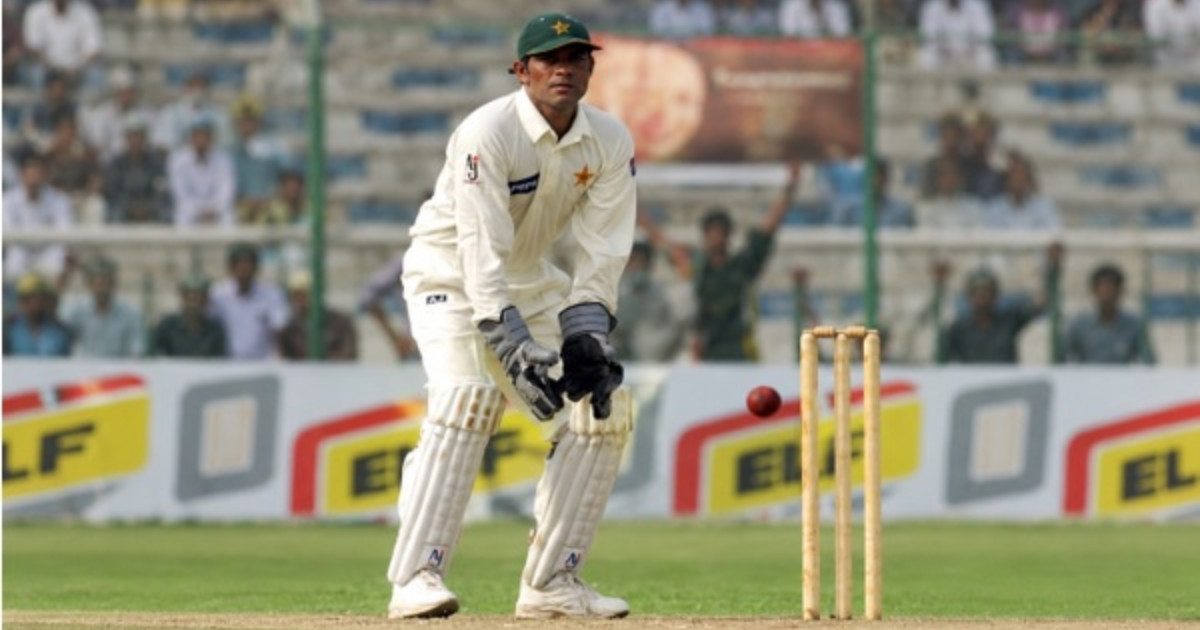
What has followed may be the saddest end of all. Sarfaraz has not departed. Reports that he remains tethered to the board's cricketing structures, and that he was glimpsed keeping wicket in a practice fixture after being flown home from England, sketch the portrait of a man who cannot quite bring himself to walk out of the building in which he was so publicly wounded. I cannot independently confirm every detail of that story, and it may have grown in the telling, as such stories do. But the very fact that it is told, and believed, says something about how Pakistan treats its former greats. It does not retire them with honour and a lap of the ground. It keeps them on a lanyard, useful as a name on a press release, available as a vote when a vote is wanted: a rubber stamp with a Champions Trophy medal in the drawer.
Were one asked to design a system that disrespected former cricketers while appearing to venerate them, one could scarcely improve upon the Pakistan Cricket Board. The stratagem is exquisitely simple. You never quite let anyone go. You remove them from one post and park them in another; you dismiss them in public and re-employ them in private; you pass them from room to room like a family heirloom that nobody wishes to display, and nobody dares discard. One recent tally counted eleven coaching resets in five years. The figure would be comic were it not also an obituary for eleven tenures, and for a team never permitted to settle long enough to discover what it might become.
Former players on the carousel
Asad Shafiq is the purest specimen of the type. A batter of quiet elegance, and of greater substance than he was ever credited with, he has been a selector, been relieved of selection duties, been reassigned to the High Performance Centre in Karachi and the women's selection committee, and then restored to the men's panel. His appointments have waxed and waned like the moon, and each departure has been followed, with a regularity grown almost liturgical, by a fresh arrival somewhere else beneath the same roof. Lean, softly spoken, conspicuously decent, Shafiq has never seemed the kind of man to demand anything. Perhaps that is precisely the point. The board does not value him; it values his availability.
Wahab Riaz inhabits a different niche in the same ecosystem. Chief selector, then senior team manager, then selector, a mentor, a mentor of the mentors, senior manager, he was removed from the panel after the 2024 T20 World Cup, a tournament in which Pakistan were humbled by the United States. He resurfaced as mentor to the women's team. Reports now suggest he is to be released from that role too, once the Asian Games are done. Across all these offices it is difficult to point to a single unambiguous triumph. Yet he has remained, cheerfully and durably, inside the tent, which tells one less about Wahab than about a system in which proximity to power is itself the qualification for the next post, and in which the rewards of employment are seldom tethered to its results.
It would be easy, and indolent, to lay all of this at the cricketers' door. The deeper rot lies higher up the staircase. Pakistan cricket is administered from offices in which the decisive figures are not cricketers, sports scientists or performance analysts but bureaucrats and political appointees, presided over by a chairman who has at the same time held one of the most formidable ministries in the federal government. Elsewhere, the professional game has matured into an industry in the fullest sense: an operational system founded on sports science, the integration of data, medical oversight, long-horizon workload planning and authority drawn in clean, unambiguous lines. Contracts are planned in cycles. Coaches are engaged to serve a strategy, not to serve as a scapegoat. Selectors answer to a framework rather than to a mood.
Pakistan has the raw material for such a system and almost none of its plumbing. It has a domestic structure perpetually on the drawing board, a high performance centre whose stewardship changes hands with the selection committee, and an administration whose reflex in every crisis is to replace people rather than repair processes. Into such a vacuum it is hardly surprising that a confident outsider with a coherent vocabulary should flow, as water finds the lowest ground. What is surprising, and faintly shaming, is how meekly everyone else has consented to be pushed to its margins.
The squads reveal the power shift
On October 5th, the board unveiled its white-ball squads for the home series against Sri Lanka and the ODI tri-series with England and Sri Lanka. Read as a roll-call of names, they are unremarkable. Read as a document of power, they are a palimpsest, every line betraying the hand that wrote beneath it. Here, at last, is the coach's cricket made visible, and it bears the unmistakable signature of a man selecting not only for form or role but for temperament, and above all for temperaments disinclined to argue back.
Some inclusions can be defended on their merits. Razaullah, the fast bowler handed his chance amid the Edgbaston upheaval, earned his place with red-ball work that hinted at genuine pace and nerve; that his reward should arrive in white-ball colours is a characteristically Pakistani irony, but not an indefensible one. Shadab Khan's presence is the confluence of two currents flowing in the same direction. He possesses the experience and the all-round utility any T20 team would prize, and he has long been a cricketer in whom Hesson visibly confides. Merit and preference coincide, which is fortunate for Shadab and convenient for the coach.
Preference overtakes evidence
Other names are harder to account for without invoking the coach's private inclinations. Khawaja Nafay is listed as the wicketkeeper, yet his record leaves the honest observer uncertain whether he is being chosen as a batter who keeps or a keeper who bats, and unpersuaded that he is yet good enough to be either at this altitude. Muhammad Imran Randhawa, a domestic all-rounder of serviceable rather than startling gifts, was capped in a Test in England because, on the most generous reading, the coach glimpsed something no scorecard has yet revealed. Now he is in the T20I squad. One need not be unkind to Randhawa to observe that his road to international cricket has run through one man's conviction rather than through any visible weight of evidence.
The omissions speak more eloquently still. Haris Rauf, at his best the quickest and among the most incisive fast bowlers Pakistan possess in any format, is absent from the T20I squad, retained, by most published accounts, only for the ODIs. Shaheen Shah Afridi, captain of the one-day side, is deemed unworthy of a place in the twenty-over one. Shahnawaz Dahani, whose energy and skill have never been in question, lingers on the fringes, apparently never quite to the coach's taste. And Babar Azam, the most prolific T20I run-scorer Pakistan have ever produced, a man who holds a raft of the format's records, cannot find a seat in a squad that has found one for Khawaja Nafay.
A dressing room built to agree
There is a pattern here, and it is not a cricketing one. Rauf, Shaheen and Mohammad Rizwan, sent home from England, are cricketers of strong personality, men with constituencies of their own and a long history of saying what they think. They are, in the old phrase, hard men to manage. A coach who craves control will find no comfort in such company; he will find antipathy, and they, in time, will find the door. It may be possible to construct a rational case for each omission. It is far harder to construct one for the collective shape, which resembles less a squad built to win in 2028 than a dressing room built to agree.
Which brings us to Sahibzada Farhan, the new T20I captain, and to the most delicate question of all. Farhan is, on recent evidence, the best thing to have happened to Pakistan's white-ball batting in years. At the T20 World Cup in February, he scored 383 runs at an average of 76.60 and a strike rate of 160.25, the most by anyone in a single edition, including two centuries. He then led a young side to silver at the Asian Games. It would be perverse to call him undeserving.
The burden placed on Farhan
And yet. His career numbers tell a more tempered story: 1,305 runs in 46 T20Is, at an average of 30.34 and a strike rate of 136.64. The World Cup was a summit, not a plateau. He has himself admitted that strike rotation remains a weakness. He is thirty, freshly arrived at the peak of his powers, and now he must carry the captaincy, the opening slot and the weight of being Pakistan's eighth T20I captain in three years, as one count has it. To hand a batter in the form of his life the job that has broken better-established men is to risk a different sort of double jeopardy: losing the captain and the opener at once.
Hesson will no doubt explain the logic. He is good at explaining logic. Over seventeen months he has built a vocabulary of process, of intent, of percentages: powerplay strike rates up, dot-ball percentages down, boundary frequencies trending in the right direction. Each statistic, taken alone, may be true. But a coach is not judged by trends; he is judged by trophies, series and the sense that a team is becoming something. Under Hesson, Pakistan have lost an Asia Cup final, gone out of a T20 World Cup before the semi-finals, and been whitewashed in England. His record in New Zealand, where he took a gifted generation to the 2015 World Cup final, was genuinely good; his record in Pakistan, so far, is a set of charts in search of a result.
Perhaps that is the cruellest irony. Hesson is not, by temperament, a showman. He is precise, articulate, methodical, and he believes, sincerely, one suspects, that the Pakistan system will improve if one intelligent person is allowed to make the decisions. In a country with a functioning board, that belief would be checked by selectors with spines, a director of cricket with authority, and a chairman with time. In Pakistan, it has been met with something closer to relief. Everyone, from the junior coaches to the selectors to the players hoping for a recall, has deferred. Not because Hesson has bullied them, but because deferring is easier than deciding.
The tragedy, then, is not that a New Zealander has taken over Pakistan cricket. It is that nobody else wanted to be responsible for it. A system that rewards loyalty over accountability, keeps former greats on lanyards, lets bureaucrats run operations and treats every defeat as a reason to replace people rather than repair processes will always hand power to whoever is most willing to hold it. For now, that is Mike Hesson, and the whole enterprise has begun to resemble a puppet theatre, a basket case in which every string runs to one pair of hands.
A great house in slow decline
Let us indulge, for a closing paragraph or two, in the melancholy art of extrapolation. Suppose Mike Hesson lingers in the coach's office a while longer, unchecked and unopposed, his authority thickening season by season like ivy upon a crumbling wall. What, then, might become of Pakistan cricket? Not, one suspects, a sudden and theatrical collapse, for Pakistan has never been granted the dignity of a clean ending. Its decline, should it come, will be gradual, almost courteous, the way a great house falls into ruin: a slate dislodged here, a shutter unhinged there, a lock rusting quietly on a door nobody thinks to open, until one morning the whole edifice is found to be a shell.
The portents are already legible to anyone willing to read them. The nation that gave the world Fazal Mahmood's cutters, Hanif Mohammad's monastic patience, Imran Khan's leonine defiance and the twin swing of Wasim Akram and Waqar Younis has, within living memory, been humbled by the United States at a World Cup. That defeat was dismissed at the time as an aberration, a freak of conditions and nerves. It may yet prove to have been a prophecy. The Associate nations are no longer the cheerful amateurs of old, grateful only to share a field with their betters. They are organised, coached by method, funded with intent and, crucially, untroubled by the factional theatre that consumes Pakistan's energies. A team that cannot decide who picks it, who coaches it or who leads it for longer than a season is a team inviting those hungrier sides to step over it.
The cost of one-man rule
This is the true peril of the present arrangement. It is not that Hesson is malign, nor even that he is incompetent; it is that a system built around one man's preferences ceases to be a system at all. Talent that does not suit the temperament of the dressing room is brazenly discarded. Fast bowlers of fire and opinion are told they are difficult. Former greats are kept on lanyards rather than consulted. The domestic game, already redesigned more often than it is played, loses its last reason to believe that excellence will be rewarded. Each of these is a small erosion, a single lock giving way. Together they amount to the slow draining of a reservoir that once seemed bottomless.
It need not end this way. Pakistan's genius has always lain in its capacity for resurrection, for rising, as at the Oval in 2017, precisely when the obituaries have been typeset. But resurrection requires something more than talent; it requires an institution willing to hold its servants to account, a selection process with a spine, and a board that measures progress in victories rather than percentages. Absent those, Pakistan risks becoming that saddest of sporting categories: a once-great power reduced to a cautionary tale, mentioned in the same breath as the sprats it once devoured, its glories preserved only in grainy footage and the fading memories of those who were there. The chaos, it turns out, was never the problem. Pakistan has always thrived amid chaos. The problem is the silence that settles when everyone stops arguing.
When the carousel turns again
The question is what happens when the results do not come, as in Pakistan they so rarely do on schedule. The board will do what it always does. It will remove the coach, recall the old names, promise a new structure, and the carousel will turn again. Somewhere, a former captain will be handed a role he is not ready for. Somewhere, a fast bowler will be told he is too difficult to manage. And somewhere in Lahore, someone will stand up at a press conference and say, with a straight face, that Pakistan are used to a little bit of chaos.
ABOUT THE WRITER: Dr. Nauman Niaz, a postdoctoral scholar (Oxford) and recipient of Pakistan's Tamgha-i-Imtiaz for sports broadcasting and journalism, has covered 54 international cricket tours and three ICC Cricket World Cups. He has written more than 3,700 articles, authored 19 books, including the official history of Pakistan cricket (Fluctuating Fortunes), and is the Sports Editor at JournalismPakistan.com.
Key Points
- Mike Hesson's offhand remark about Pakistan being 'accustomed to a little bit of chaos'.
- Heavy Test defeats at Headingley and Lord's during the England tour.
- Dismissal of Test head coach Sarfaraz Ahmed amid the series.
- Bowling coach Umar Gul was also removed and seven players were sent home mid-tour.
- Hesson, Pakistan's white-ball coach, stepped in to lead the side during the disrupted tour.
Key Questions & Answers
Who is Mike Hesson?
He is Pakistan's white-ball coach who made the remark about chaos and later stepped in to lead the team during the England tour.
What did Hesson say about Pakistan?
He said Pakistan were "accustomed to a little bit of chaos," a line that commentators say came to reflect the turmoil of the tour.
What actions did the PCB take during the tour?
After heavy Test defeats, the board dismissed Test head coach Sarfaraz Ahmed, removed bowling coach Umar Gul and sent seven players home mid-tour.
Which players were affected by the mid-tour departures?
Among those sent home were Mohammad Rizwan, Imam-ul-Haq and Salman Ali Agha; the decisions affected several members of the touring party.
Ask AI: Understand this story your way
AI EnabledDig deeper, ask anything — get instant context, background, and clarity.
Disclaimer: This feature is powered by AI and is intended to help readers explore and understand news stories more easily. While we strive for accuracy, AI-generated responses may occasionally be incomplete or reflect limitations in the underlying model. This feature does not represent the editorial views of JournalismPakistan. For our full, verified reporting, please refer to the original article.