
Pakistan cricket trapped in a house of mirrors
JournalismPakistan.com | Published: 25 September 2026 | Dr. Nauman Niaz
Join our WhatsApp channel
Pakistan's Test team endured a humiliating 3-0 series loss in England, with heavy defeats at Headingley, Lord's and Edgbaston revealing technical flaws, lack of cohesion and a dispirited dressing room. The tour exposed selection instability, coaching and management weaknesses and an urgent need for structural overhaul.Summary
There is a particular kind of silence that settles over a Pakistan dressing room when a Test is lost before lunch, and on the fourth morning at Edgbaston it settled early. England needed 130. They lost Ben Duckett and Emilio Gay in the first over, two down for two, and for the length of perhaps twenty deliveries a small, absurd hope flickered in the away balcony, the kind of hope Pakistan has always kept in a back pocket like a worn photograph of a lover who left long ago. Then Joe Root and Jordan Cox simply batted. Unhurried, unbothered, they took England home by eight wickets before the kitchens had even finished plating, and a 3-0 whitewash was sealed with the indifference of a clerk stamping a form.
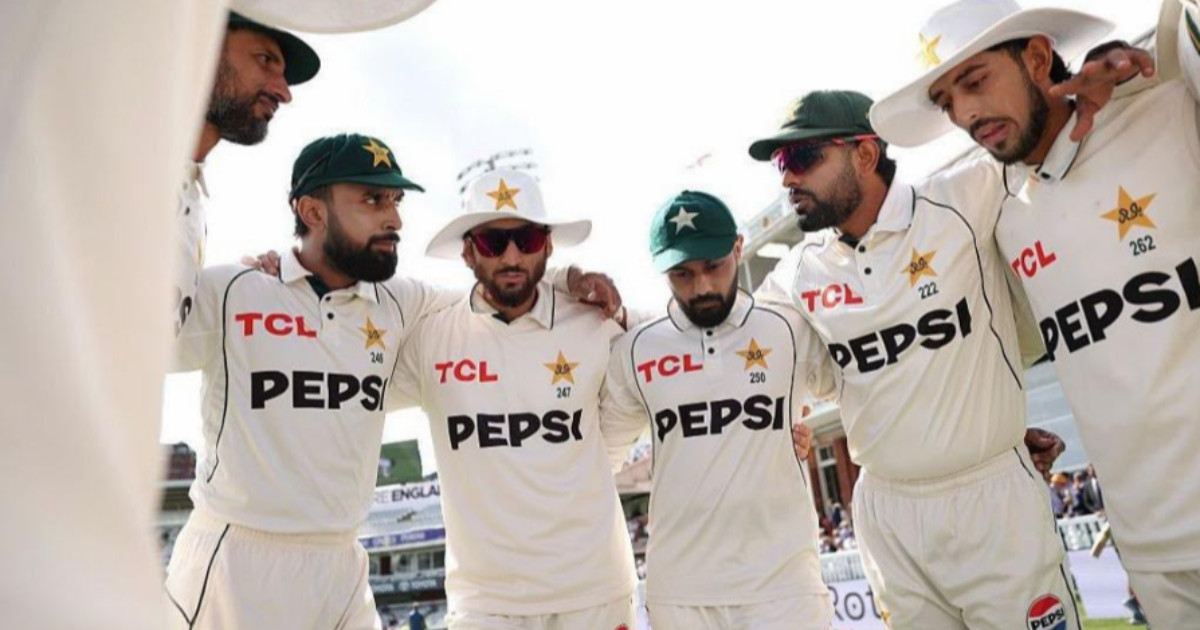
It was not the scoreline that wounded. Pakistan have been beaten in England before, and beaten badly; they have been humbled at Lord's and at The Oval, and they have also, in their inexplicable way, turned up and won there when nobody sane expected them to. What wounded was the texture of it. Headingley had gone by an innings and 103 runs. Lord's, that old sacred place where Pakistan once felt most themselves, had gone by 194, the first innings folding for 110 as though the ground itself had grown tired of pretending to be kind. By the time the team reached Birmingham it was no longer really a touring team. It was a set of reassigned people, some of them strangers to each other, wearing the same shirt.
A house of mirrors
This is where Pakistan cricket finds itself in the late September of 2026: in a house of mirrors, every surface throwing back a different image of the same body, and none of them quite true. In one mirror, the board chairman sees a revival, rankings climbing, win rates soaring. In another, the white-ball coach sees a team that is, by his numbers, among the three or four best in the world. In a third, the retired greats, lit by studio lamps, see a funeral and are already choosing the flowers. And in the last mirror, the one nobody likes to stand in front of for long, is the thing itself: a cricket culture that has stopped producing Test cricketers, stopped trusting its own institutions, and started to mistake noise for life.
What follows is an attempt to walk through that house slowly, to touch each glass and ask what is real behind it. Begin with the numbers, because in Pakistan the numbers are the only witnesses who cannot be shouted down on a talk show. Seven Tests this calendar year; one won, six lost, not a single draw to soften the fall. Across the last twenty-one Tests, sixteen defeats. There was a sweep in Bangladesh, which a decade ago would have been treated as a national emergency and is now absorbed like weather. There was the sweep in England. The Test team sits ninth in the rankings, and ninth flatters it, because the rankings are a slow instrument and the decline has been quick.
When chaos loses its meaning
But numbers only tell you that the patient is ill. They do not tell you how the face has changed, and it is the face that haunts anyone who grew up on this team. Pakistan's Test cricket was never tidy. Its genius was that it was untidy in a way that frightened opponents: the sudden spell of reverse swing on a dead afternoon, the teenage leg-spinner nobody had heard of, the middle-order batsman who looked as though he had wandered in from a Lahore rooftop and then batted for nine hours. The chaos had a language. It meant something.
That expression has been lost. The chaos remains; the meaning has gone out of it. At Edgbaston, the most dangerous bowler was a 36-year-old medium-pacer, Mohammad Abbas, who had taken ten wickets in the series by the old, honest method of hitting a length and asking questions, and around him the coach spoke openly of needing to find some variety. Variety. For Pakistan, of all nations, to be searching for variety in a bowling attack is like Florence running out of painters. The debutant Razaullah took four wickets in England's 453 and conceded 148 runs for them, and there was something both brave and heartbreaking in how hard he celebrated, as though he knew these moments are now rationed.
The batting tells a sadder story still. Pakistan's great Test batsmen, from Hanif Mohammad to Zaheer Abbas, from Javed Miandad to Inzamam-ul-Haq, or a Saeed Anwar, from Mohammad Yousaf to Younis Khan, were men of long patience, raised on first-class cricket that was dusty, underpaid and unglamorous, and all the better for it. The domestic structure that made them has been rebuilt, dismantled, renamed and rebuilt again so many times that nobody under 25 can remember a version of it that lasted. What it produces now are cricketers built for twenty overs and asked, occasionally and without warning, to survive five days. They are not bad cricketers. They are cricketers answering an exam set in a language nobody taught them. It used to be said, half in jest, that Pakistan did not play Test cricket so much as survive it with style. The style has gone. What is left is survival, and increasingly not even that.
A revolving door in mid-series
If the cricket has thinned, the drama around it has thickened, as though the institution has decided that what it cannot win on the field it will make up for in volume off it. The Lord's defeat sealed the series with a match to spare. Within days, the Pakistan Cricket Board had released seven players from the touring party, among them Mohammad Rizwan, Imam-ul-Haq and Salman Ali Agha, and dismissed the red-ball head coach Sarfaraz Ahmed and the bowling coach Umar Gul. Mike Hesson, the white-ball coach, was flown into a Test dressing room mid-series, with Ashley Noffke beside him, to supervise a dead rubber. Seven replacements, several of them uncapped, were summoned to England as if from a waiting room.
Consider what this means. A former captain, the only Pakistan leader since Imran Khan and Younis Khan to lift an ICC trophy, a man given the Test team as his first serious coaching assignment, was removed after two matches of a series. Umar Gul, whose bowlers had, by the account of several former players, been improving, went with him. The message to every young cricketer watching from Sialkot or Mardan was plain enough: nothing here lasts, so do not plan for anything to last. Hesson, a New Zealander of considerable composure, offered the most revealing sentence of the summer when he suggested that his players were probably more used to a little bit of chaos than he was. He meant it kindly. It landed as an indictment.
The institution and its mirrors
There are other progrssive boars an then there is the PCB. There is a difference between a board that has overseen some improved results as Mike Hesson inventing his own narrative, making his own numbers an template has tried arguing contrary to Pakistan’s bottom of the table position, and incessantly slithering further and a healthy board, and the difference lives in exactly the sort of decisions made after Lord's. A healthy institution does not fine its players for losing, as the PCB reportedly did after the T20 World Cup exit in March, where there had been no indiscipline to punish, only defeat. A healthy institution does not change coaches the way a nervous host rearranges furniture before guests arrive. A healthy institution does not make every setback feel like a referendum on the man at the top. In Pakistan, the chair has become the story, and when the chair becomes the story, the game becomes the backdrop.
Every great cricketing nation has its elders. England has its broadsheet columnists and its Test Match Special voices; Australia has a phalanx of former captains who comment with the brisk certainty of men who once won everything. Pakistan has something else entirely: a vast, restless republic of former players, each with a camera, a channel and a grievance, many of whom have at one time or another held the very jobs they now condemn.
This is the part of the story that is hardest to write without sounding ungrateful, because these men gave the country its most luminous afternoons. The problem is the sheer, relentless weight of it, and the circularity. The men criticising the coach today were often the selector, the mentor, the chief of the academy or the bowling consultant yesterday, and will be again tomorrow when the next chairman needs familiar faces to reassure a restless public. Wahab Riaz and Abdul Razzaq were selectors until the 2024 T20 World Cup cost them their posts. Aaqib Javed, after this year's exit, felt obliged to urge everyone to move past scapegoating, which in Pakistan is a little like urging Lahore to move past food. Sarfaraz Ahmed and Umar Gul were former players handed jobs and taken off them within a summer.
When the elders become executioners
The revolving door never stops turning, and every rotation leaves another voice outside, aggrieved and amplified. The effect on the dressing room is corrosive in a way no statistic records. A young Pakistan cricketer today does not only face England's seamers; he faces, every evening, a hundred hours of former stars dissecting his technique, his body language, his loyalties and occasionally his character, on platforms where outrage pays better than insight. He learns quickly that the safest innings is the one nobody talks about. He learns that failure is not a lesson but a verdict. He learns, above all, that the greats who were meant to be his guides are just as likely to be his executioners.
No cricket culture can grow under that kind of light. Plants need sun, but they also need the dark hours, the unseen time in which roots go down. Pakistan's cricketers are never given the dark. Which brings us to Mike Hesson, and to the mirror he has chosen to stand before. It is a flattering one, and he is too intelligent a man not to know it.
Hesson's flattering mirror
On the eve of the Asian Games, at the high-performance centre in Karachi, Hesson mounted what can only be called a passionate defence of his white-ball sides. The Test team, he conceded, was struggling, and everyone knew it. But over the past fifteen months, he said, his T20I side's win percentage had been the third or fourth best in the world. It was unfair, he argued, to judge all three formats together. The ODI team was developing towards next year's World Cup, improved but by no means finished. India were the benchmark; the task was to catch them.
Each of these statements, taken alone, is defensible. Taken together, they form a sort of lovely illusion, a mirror hung at precisely the angle that hides the stains on the wall. A T20I win percentage built over fifteen months is a number that depends enormously on whom you have played, and Pakistan's calendar has been generous with bilateral series against teams they are expected to beat. The truer measure of a white-ball team is what it does when the lights are brightest and the opposition is best, and there the evidence is stubborn and unkind.
The matches that matter
At the Asia Cup last September, India beat Pakistan by seven wickets in the group stage and by six in the Super Four, before edging them in a tight final that Hesson now holds up as proof of progress. Losing narrowly, it seems, has become a kind of victory. At the T20 World Cup in February, the pattern repeated with greater cruelty. Chasing 176 against India in Colombo, Pakistan were bowled out for 114. A washout against New Zealand and a two-wicket defeat to England, in which Harry Brook made a hundred, left them needing an absurd margin against Sri Lanka. They won by five runs when they needed 65. It was their fourth consecutive ICC men's tournament without a semi-final. Pakistan have not won a T20 World Cup since 2009, and their last global trophy of any kind, the Champions Trophy of 2017, already feels as if it belongs to another generation.
This is the delusion, if one may use the word gently: the idea that a side which consistently loses its biggest matches is on an upward curve because it wins its smaller ones. It is the logic of a student who aces the weekly quizzes and fails every final, and who concludes, reviewing his marks, that he is among the top four in the class. Nor has the ODI story been as clean as Hesson’s rankings suggest; a series in Bangladesh went the wrong way despite a fine hundred from Agha, remembered now as much for a run-out argued over by the MCC as for the runs.
One should be fair to Hesson. He inherited a side in pieces and has given it a clearer method, a more aggressive intent at the top, and a calmer public face than Pakistan cricket has had in years. He is not the author of its dysfunction. But a coach's first duty is to tell his employers, and his public, the truth about where they stand. And the truth is that this white-ball team is a decent side that has learnt to beat the teams below it. It has not learnt how to beat the teams above it, and until it does, every win percentage is a painting of a meal, not the meal.
The light and the way out
And yet. With Pakistan there is always an and yet, and it would be a betrayal of the country's cricket to write of it as though no light remained. The light this year has had a name, and the name is Sahibzada Farhan. At the T20 World Cup he did something no batsman had done before, scoring two centuries in the same tournament and breaking the record for the most runs in a single edition. Against Namibia he made a hundred; against Sri Lanka in Kandy, in that doomed and glorious final match, he added another in an opening stand of 176 with Fakhar Zaman that briefly made the impossible look only unlikely. There was something almost old-fashioned in how he did it: not the frantic swiping of the franchise age, but a kind of confident, upright hitting, the ball struck rather than bludgeoned. He will lead Pakistan at the Asian Games, where the side, as one of the four seeds, begins with a quarter-final on September 28th.
It is a sign of the times that one must reach for an Asian Games quarter-final to find a date worth anticipating. But the choice of Farhan as captain is not nothing. It suggests, at least, a willingness to let a new face stand at the front, and a new face is exactly what this team needs to show the world. Around him are other small lamps: Abbas, still hitting his length at 36 like a man tending a family shrine; Razaullah, raw and willing; a handful of spinners who can still make the ball do conversations.
But lamps in a corridor do not make a house bright, and even here the corridor keeps shifting. Ashley Noffke, the bowling coach who arrived with Hesson and was sent with him into the Test chaos, will leave after the Asian Games to become head coach of the Netherlands. It is a perfectly reasonable career step for him. For Pakistan it is one more departure, one more handover, one more set of relationships to be rebuilt from nothing, and one more reminder that the most stable thing about this team is its instability.
Resurrection is not a strategy
There is a temptation, when writing of Pakistan cricket in its lean years, to reach for the obituary. It is a temptation worth resisting, not because the obituary would be wrong in every particular, but because Pakistan has made fools of its mourners so many times before. The side of 1992 was dead in the water until it was not. The side of 2009 was playing in exile, homeless, the country's grounds emptied by terror, when it won the World T20 at Lord's. The side of 2017 was ranked eighth in the world and went to The Oval and destroyed India in a final. This is a cricket culture that has always lived closest to its own resurrection.
But resurrection is not a strategy, and it has never been a policy. Those miracles were made by extraordinary individuals rising through a system that, for all its faults, still produced them: domestic cricket with roots in departments and regions, captains given time, coaches allowed to fail and learn, elders who, for all their bluster, still largely believed they were serving something larger than their own reputations. It is that system which has decayed, and no win percentage, no ranking graph, no press conference in Karachi can disguise the decay.
What Pakistan needs is almost embarrassingly simple to state and almost impossible, in its present climate, to achieve. A board full of civil servants, the highly professional offices being run by the irrelevant. Coaches appointed for cycles, not for series. A domestic structure ignored for ten years, tampered with flashing regularity. Former players who choose, for once, the harder service of mentoring over the easier pleasure of indicting. And a white-ball coach honest enough to say that a team which cannot beat India, England or New Zealand when it matters is not yet good, however many bilateral series it wins in between.
The plain window at the end
Most of all, it needs to stop living in the house of mirrors. Every glass in that house tells someone what they want to hear. The authorities see vindication, the coach sees progress, the experts see catastrophe, and each of them is right just often enough to stay where they are. The only way out is to walk past all of them, to the plain window at the end of the corridor, and look at the field as it is.
On that field, on a September morning in Birmingham, Joe Root and Jordan Cox knocked off 130 runs before lunch, and Pakistan's cricketers stood and watched. Somewhere behind that silence, the old fire is still there. It always has been. The question, as ever, is whether anyone in charge is willing to stop admiring their own reflection long enough to tend it.
ABOUT THE WRITER: Dr. Nauman Niaz, a postdoctoral scholar (Oxford) and recipient of Pakistan's Tamgha-i-Imtiaz for sports broadcasting and journalism, has covered 54 international cricket tours and three ICC Cricket World Cups. He has written more than 3,700 articles, authored 19 books, including the official history of Pakistan cricket (Fluctuating Fortunes), and is the Sports Editor at JournalismPakistan.com.
Key Points
- Pakistan were whitewashed 3-0 in England with heavy defeats at Headingley, Lord's and Edgbaston.
- The dressing room displayed low morale and a worried silence after early collapses.
- Frequent selection changes left combinations unsettled and some players unfamiliar with each other.
- Technical and tactical shortcomings were repeatedly exposed by England's batting and bowling.
- The tour intensified calls for review of coaching, selection policy and wider structural reform.
Key Questions & Answers
Why did Pakistan perform so poorly in this series?
The series revealed a mix of technical deficiencies, disrupted team cohesion, inconsistent selection and visible low morale, which together undermined sustained performance.
What does the article mean by a 'house of mirrors'?
The phrase describes a team with no clear, consistent identity, where different decisions and changing personnel reflect conflicting versions of what the side should be.
What immediate steps are being suggested to address the problems?
Observers call for a thorough review of selection policy, coaching approaches and player support, alongside clearer leadership and longer-term planning to rebuild stability.
How might this affect Pakistan's future tours and Test status?
Continued instability risks further poor results and reputational damage; reversing the decline will require structural fixes to restore competitiveness and confidence.
Ask AI: Understand this story your way
AI EnabledDig deeper, ask anything — get instant context, background, and clarity.
Disclaimer: This feature is powered by AI and is intended to help readers explore and understand news stories more easily. While we strive for accuracy, AI-generated responses may occasionally be incomplete or reflect limitations in the underlying model. This feature does not represent the editorial views of JournalismPakistan. For our full, verified reporting, please refer to the original article.