
The rise and fall of Pakistan's fast-bowling tradition
JournalismPakistan.com | Published: 27 September 2026 | Dr. Nauman Niaz
Join our WhatsApp channel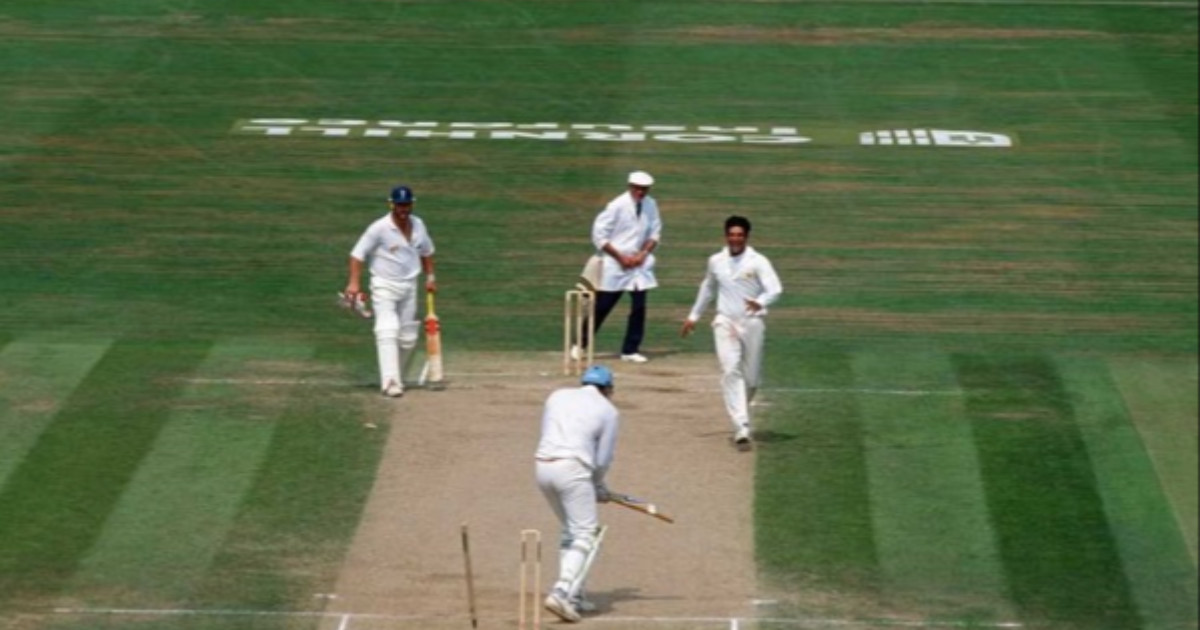
Pakistan's fast-bowling tradition grew from improvised grounds, scarcity and fierce individual temperament, producing bowlers marked by raw pace and unpredictability. It examines how weak domestic systems and changing conditions have eroded that legacy.Summary
There is a particular kind of afternoon that belongs to Pakistan and to nowhere else. It arrives in the dry months over a maidan in Lahore or a parched strip in Sahiwal. The sun has pressed the colour out of everything, and the ball has been hurled for the three-hundredth time against scrub and grit and the concrete lip of a boundary until it is closer to a stone than a cricket ball. One side is ragged, scuffed down to the raw fibre of the leather; the other has been loved and polished against a trouser leg until it shines like a boot on parade.
Out of that ball, and out of that afternoon, came the most singular tradition of fast bowling the game has known. It was not the most statistically dominant; the West Indies of the 1980s would have something to say about that. But it was the most idiosyncratic and the most wilful, the one most alive to the idea that pace was not a quantity to be measured but a temperament to be expressed.
A tradition shaped by temperament
To ask what made Pakistan's fast bowlers different is to ask a question about the country itself: about scarcity and invention, about the cult of the individual in a system that has rarely known how to nurture one, about a pride so fierce it borders on self-destruction. To ask what has gone wrong is to ask whether a tradition that grew wild, like a mulberry through a crack in a wall, can survive being tended in a greenhouse.
It is worth remembering how improbable the enterprise was. Pakistan came into being in 1947 with barely a first-class structure, a handful of turf pitches, and grounds whose outfields were closer to ploughed fields than lawns. Test status arrived in 1952. There was no fast-bowling lineage, no reservoir of instruction, no county system to feed it. What the country had was men.
The pioneers of Pakistan pace
Khan Mohammad was the first of them, and he carried himself like a man who understood he was beginning something. He had absorbed much of his craft in England, in the league cricket that shaped so many subcontinental players of that era, and he brought home an Englishman's respect for the seam and a Pathan's disregard for caution. He was upright, classical and genuinely quick for his time, and he bowled the first ball in Pakistan's Test history. Injury and circumstance kept his career brief, but his significance is not counted in wickets. In the country's first breath as a Test nation, he established that Pakistan would not be a side of spinners and grafters alone. It would have a man who ran in to hurt.
Mahmood Hussain was the workhorse to Khan's aristocrat. Broad-shouldered and tireless, he bowled spells that would today prompt a medical inquiry. He bowled into the wind, on pitches that offered nothing, when the captain had run out of ideas. His value lay in endurance, and endurance would become one of the quiet pillars of the Pakistani fast-bowling ethic long before anyone spoke of workloads or recovery windows.
And then there was Fazal Mahmood, who deserves to be spoken of not only as a pioneer of Pakistani cricket but as one of the great bowlers of the twentieth century. Tall, handsome in the matinee manner, a police officer by profession and by bearing, Fazal was not express, and he did not need to be. His weapon was the leg-cutter, delivered at a lively medium pace with a wrist of extraordinary suppleness and a control that made batsmen feel interrogated rather than bowled at. On the matting pitches of home he was close to unplayable; the ball gripped the jute and spat away with a malevolence no technique could fully neutralise.
It was at The Oval in 1954 that Fazal became myth. Pakistan, on their first tour of England and barely two years into Test life, beat the hosts in the final Test, and Fazal took twelve wickets in the match. Two years later, on the matting at Karachi, he dismantled Australia. The lesson lay as much in the method as in the results. Fazal proved that Pakistan's bowlers could win through craft, intelligence and an almost scholarly command of movement. He was the first to understand that on Pakistan's surfaces the ball's behaviour mattered more than its velocity. It was a lesson the country would learn, relearn, and eventually forget.
Keeping the craft alive
The decades after Fazal were thinner. The attack leaned increasingly on spin, and the seamers of the late 1960s and early 1970s were craftsmen of a more modest order. Yet they matter, because they kept the pilot light burning, and because one of them would light the fuse on the most important technical innovation in modern fast bowling.
Asif Masood was a peculiar and delightful figure, remembered by John Arlott for an approach to the crease so ungainly it seemed to belong to a silent comedy rather than a Test match. What arrived at the end of it was no joke. Asif swung the ball late and appreciably, particularly in English conditions, and on the 1971 tour he was a genuine menace. He represented a type Pakistan would produce again and again: the bowler whose action defied the textbook and whose results defied the critics. Pakistani cricket has always cared less about how a bowler looks than about what the ball does after it leaves his hand, and Asif was an early vindication of that heresy.
Salim Altaf was steadier, a disciplined operator of good line and sensible length, the kind of bowler who holds an attack together while others take the headlines. It would be dishonest to inflate his record. But he belonged to a generation that kept the craft of seam alive through lean years, and he later brought an administrator's view to a game that has too rarely been run by people who understood what bowling costs a body. Politis kept Etheshamuddin away from the Pakistan team. He could have been a devastating fast bowlers, he was regrettably he could only make his debut in Tests almost at the end of his career, and still managed picking a haul of five at Kanpur in 1979-80 when Imran had opted out due to a calf injury. Sikander Bakht, pencil-thin, sharp and enthusiastic, picked 8-69 at Delhi in the same series and tried picking up Pakistan when they were without their best bowlers.
The secret of reverse swing
Sarfraz Nawaz is another matter entirely. Large, combative and frequently difficult, he had a gift for controversy to match his gift with the new ball. His most famous day came at Melbourne in 1979, when Australia, cruising towards victory, lost their last seven wickets for a single run in a spell of such movement that it still reads like a misprint. Sarfraz finished with nine wickets in the innings. It was a masterpiece of seam and swing, but it hinted at something else, something Sarfraz understood better than almost anyone in the world at the time.
That something was reverse swing. Its origins remain disputed, as the origins of all great folk arts are. Many trace it to the club cricket of Lahore and to bowlers such as Saleem Mir, who found that an old ball, roughened on one side and kept heavy and glossy on the other, would begin to move in the opposite direction to conventional swing, and would move late, and at pace. Pakistan's conditions made the discovery almost inevitable. Abrasive outfields, dry air and bare pitches meant the ball deteriorated quickly, and a bowler who wished to stay relevant beyond the twentieth over had to find something to do with it. Necessity did not so much mother the invention as force it into being. Sarfraz carried the knowledge into first-class and Test cricket and, crucially, passed it on. The man who received it was Imran Khan.
Imran Khan reinvents the fast bowler
It is hard now to recall that Imran was not born fast. He arrived in Test cricket in 1971 as a gangly, inswinging medium-pacer with an unremarkable action and a forgettable debut. What followed was one of the great acts of self-reinvention in sport. Through the county circuit at Worcestershire and then Sussex, and through a programme of physical conditioning that was remarkable for its time, Imran rebuilt himself alongside John Snow, his ideal for that period. He remodelled his action, lengthened his run, and developed that famous leap in which his body coiled like a drawn bow before release. He ran long distances and trained with a seriousness that bordered on the monastic, and by the late 1970s he was genuinely fast.
In 1982 and 1983 he was, for a spell, the finest fast bowler in the world, producing performances against India and England that fused speed with the reverse swing he had learned from Sarfraz and refined into a weapon. A stress fracture of the shin in 1983 might have ended a lesser career. Imran returned a little slower, a great deal wiser, and a better captain.
It is as a creator of bowlers that he matters most to this story. Imran understood what has since been lost: that fast bowling is not a skill but a vocation, and that the fast bowler is a special creature who must be protected, encouraged, indulged and occasionally bullied into greatness. He scouted personally. He trusted his eye over the selectors' files. He placed his faith in raw teenagers because he recognised in them his own hunger, and he gave them the one thing a young fast bowler needs above all else: the certainty that the captain believes in him.
His philosophy was aggressive and unapologetic. Fast bowlers were there to take wickets rather than contain, to bowl the yorker and the bouncer without fear of the runs that might follow. Pakistan under Imran did not build pressure through maidens; it built pressure through menace. It was a philosophy of the individual rather than the system, and in his hands it produced a golden generation. In the hands of lesser men, it would eventually produce chaos.
The arrival of Wasim Akram
In 1984, Javed Miandad noticed a young left-armer in the nets at the Gaddafi Stadium attending Khan Mohammad Training Camp, a boy with almost no first-class experience and an arm so quick it seemed to run on a different clock from the rest of his body. Within months, Wasim Akram was playing Test cricket. He was a generational talent who had caught Javed’s eye. And in return, compellingly taking him to Rawalpindi and making him play, Akram, on his first-class debut, picked 7-52 versus New Zealand and there was no looking back.
What made Wasim different was not a single attribute but their sum. He could be mean with pace, generating beyond 145 km/hr though he hardly required it. A short, almost casual run-up gave nothing away; then came an arm speed no batsman could read. He swung the new ball both ways and reversed the old one both ways, with no visible change of action. He bowled the inswinging yorker from around the wicket, the outswinger that straightened, the bouncer that followed the batsman like a grudge, at all angles. His two deliveries in the 1992 World Cup final, which removed Allan Lamb and Chris Lewis in succession, remain perhaps the finest demonstration of reverse swing ever filmed. He finished with more than four hundred Test wickets and more than five hundred in one-day internationals, and the numbers somehow understate him. Wasim was less a bowler than a sorcerer.
Waqar Younis and the art of destruction
If Wasim was the magician, Waqar Younis was the executioner. Waqar was never spotted by Imran, he was handpicked yes. Ishaq Patel, a talent scout employed with the United Bank Limited had identified players for his departmental team, including Waqar, Mushtaq Ahmad, Inzamam Ul Haq, Rashid Latif, eventually Azhar Mahmood in between Basit Ali had also joined. Imran, the story goes, spotted him on television bowling in a Super Wills Cup match and summoned him at once. Waqar ran in from a great distance with a slinging, open-chested action that generated tremendous pace and, once the ball had aged, a late inswing so violent it earned the phrase "toe-crusher" and filled the physiotherapy rooms of the world. His Test strike rate remains among the finest in history, and his 1991 season with Surrey turned county batsmen into anxious men. A natural athlete, his run up was reserved for the aesthetes, the frenzied, the connoisseurs.
Together they were less a partnership than a conspiracy. With the new ball they probed; with the old ball, when other attacks were waiting for the spinners, they became lethal. The traditional rhythm of an innings, in which the fast bowler's threat declined as the ball aged, was turned upside down. Pakistan were most dangerous after forty overs of a one-day game and after sixty overs of a Test innings. It was a revolution in the architecture of the sport, and it produced a great deal of suspicion, much of it laced with a condescension Pakistani cricket has never quite forgiven. Accusations of tampering followed them around England in 1992, and while the laws have their place in that argument, the English reaction carried more than a trace of colonial reflex: a refusal to believe that such skill could have been honestly developed on dusty grounds far from Lord's. Within a decade English bowlers were practising reverse swing themselves, and the art had been rehabilitated as science.
Aaqib Javed was sometimes lost in that glare. He made his debut at sixteen, a bustling, skiddy, intelligent bowler whose finest hour came at Sharjah in 1991, when he took seven Indian wickets, a hat-trick among them, in one of the great one-day spells. He was never the equal of his famous colleagues, but he was a vital third seamer and proof that Pakistan's informal system could bring a teenager to the top and let him flourish.
The mentality behind the menace
What united these men was mentality more than method. They learned the game in streets and on rough grounds, often with a taped tennis ball whose skidding, dipping behaviour trained the wrist and the arm in ways no academy could replicate. The tape ball rewards a fast arm and a full length; concrete and dust punish anything short and lazy. They bowled for hours in heat that would wilt a county professional, and they bowled to take wickets because on those surfaces a bowler who only aimed to contain was a bowler who would be hit to the boundary.
Their fitness was functional rather than scientific: running, bowling, and more bowling. And their actions, unorthodox and sometimes biomechanically perilous, survived precisely because nobody tried to correct them. Waqar's back would pay the price of that mixed, twisting action, and stress fractures became a recurring shadow over the tradition. But an English or Australian coaching manual of the period would have remodelled half these men into ordinariness. Pakistan's neglect was, paradoxically, its genius.
Shoaib Akhtar, the last wild flowering
Shoaib Akhtar was the tradition's last great wild flowering, and perhaps its most extravagant, though he faintly missed competition from Mohammad Sami and Mohammad Zahid, both on their day could have been faster than him. Sami floundered in opportunities whilst Zahid became a victim of frail workload management; despite making Brian Lara hobble in Australia in the Carlton and United Series, he hobbled out due to a creaking back. Mohammad Sami belongs here too, and his story is the saddest of all. Sami was blessed with genuine pace, at times rivalling Shoaib, and took hat-tricks across formats. Yet he never found consistency, never had his rhythm and length refined into something durable, and drifted in and out of the side for years. Sami was the first clear symptom of a system that could still discover talent but no longer knew what to do with it.
Akhtar ran in from somewhere near the sightscreen with hair streaming and arms flung wide, the whole approach a declaration of intent. At the 2003 World Cup in Cape Town, he became the first bowler officially recorded beyond 100 miles per hour. His elbow, unusually hyperextended, drew suspicion and scrutiny, and the explanation, a physiological quirk rather than a flexed arm, only deepened the sense that he was a creature built outside the usual specifications.
Shoaib was pace as spectacle and pace as ego. He could terrify the finest batsmen of his era, and there were spells, against Australia and India especially, in which he seemed capable of winning a match by sheer violence. But he was also a lesson in what a random model could not guarantee. Without a captain of some stature to harness him, the talent leaked away through injuries to knees and hamstrings, disciplinary quarrels and a body pushed to the edge of its tolerance. His career was a series of magnificent eruptions separated by long silences.
Depth beyond the headline acts
Around and alongside him, Pakistan continued to produce seamers in the way other countries produce accountants. Azhar Mahmood, who scored a century on Test debut against South Africa, was a genuine all-rounder who bowled with shrewd, skiddy movement and later carried his wisdom into coaching. Abdul Razzaq, a hitter of ferocious power, bowled at around 140 kilometres an hour with late swing and took a Test hat-trick against Sri Lanka at Galle in 2000. That two all-rounders could operate at such pace is itself a comment on the depth of the reservoir; in most countries either would have been a frontline bowler. Shahid Nazir arrived with a five-wicket haul on debut and carried a bustling, honest quality through an intermittent career. Rana Naved-Ul-Hasan was a master of the death overs, with a deceptive slower ball and the nerve to bowl it when the match was on the line, and he brought that craft to county cricket with Sussex.
The return of pure craft
And then, briefly, the craft was reborn in its purest form. Mohammad Asif was not fast in the Shoaib sense. He was something rarer. With an upright seam, a wrist of astonishing precision and the ability to move the ball fractionally but decisively in either direction off the pitch or through the air, he was the closest thing to Fazal Mahmood that Pakistan had produced in half a century. Some, not unreasonably, call him the greatest swing and seam bowler of his generation. Kumar Sangakkara and Kevin Pietersen both named him among the most difficult bowlers they ever faced, and that is testimony worth more than any figures. Asif made batsmen feel that every ball was a riddle and that their technique was being examined line by line. He was a reminder that the Pakistani genius had never been only about speed; it was about intelligence applied to leather. Mohammad Aamir was the heir apparent, a left-armer who at seventeen and eighteen bowled with a maturity that invited comparisons to the young Wasim. At Lord's in 2010, he took six wickets in an innings of dazzling skill.
The chain of transmission breaks
That same summer, at that same ground, both men were caught in the spot-fixing scandal that stands as the darkest episode in Pakistan's cricketing history. The bans that followed ended Asif's career in any meaningful sense and cost Aamir five years at the very age when a fast bowler is built. Aamir returned in 2016, and there were glimpses of the old brilliance, a fine Champions Trophy final in 2017 among them, but the lost years could not be recovered. The tragedy was not only personal. The two finest craftsmen of the post-Wasim era were removed from the game at the moment they might have passed their knowledge to the next generation. The chain of transmission, from Saleem Mir to Sarfraz to Imran to Wasim and Waqar, was snapped at a crucial link.
What went wrong?
The obvious answer is that nothing has gone wrong, since Pakistan still produces fast bowlers of genuine quality. Shaheen Shah Afridi, Naseem Shah and Haris Rauf are gifted, and Mohammad Abbas, with his unhurried accuracy, was a small, dignified throwback to the Fazal tradition. But the question is not whether talent exists. It is whether the system turns that talent into sustained greatness, and here the honest answer is that it no longer does.
A system in constant upheaval
The first failure is structural. Pakistan's domestic cricket has been demolished and rebuilt so often, in the name of this reform or that, that no young bowler can be sure what system he is being developed within. The old departmental sides, for all their flaws, gave cricketers employment, continuity and long first-class seasons. The rough grounds and endless overs that forged Wasim and Waqar have been replaced, at the top level, by short tournaments and a bewildering turnover of formats and personnel.
The economics of four-over cricket
The second is economic. Franchise cricket, the PSL and the global leagues pay handsomely for four overs of pace and variation, and a young bowler would be foolish not to shape himself to that market. But the four-over bowler is a different creature from the Test bowler. He learns to bowl flat and hard in short bursts, to trust slower balls and wide yorkers, and he rarely develops the stamina, patience or old-ball craft that defined his predecessors. Reverse swing is not learned in four overs; it is learned in the fortieth over of a hot afternoon, when the batsmen are set and the captain needs something from nothing.
The third is the law itself. The introduction of two new balls in one-day cricket effectively killed reverse swing in that format, since neither ball grows old enough to turn. The permanent ban on saliva has further reduced a bowler's ability to maintain the shine. Pakistan's defining art has been legislated to the margins, and the country has not found a new art to replace it.
Managing bodies and losing continuity
The fourth concerns bodies. Where the old generation was fit through bowling, the new one is trained in gyms, often with a strength-first philosophy borrowed from elsewhere and applied without enough regard for the individual. Bulk is not flow. A bowler can lift heavier weights and lose the whip of the wrist, the looseness of the shoulder, the springing run that once made the ball hiss. Pakistan has also swung between neglecting biomechanics and over-applying it, alternately leaving dangerous actions untouched and remodelling natural ones into caution.
Meanwhile, the injury record of recent years - Shaheen's knee, Naseem's shoulder, a lengthening list of young men rushed back too soon - speaks of a medical and conditioning apparatus that reacts rather than anticipates. Shaheen's pace in the seasons after his knee injury was noticeably lower, and the management of his recovery was open to reasonable question.
The fifth is leadership. Pakistan has cycled through head coaches, bowling coaches, selectors and chairmen at a speed that makes long-term development impossible. No figure has emerged with Imran's authority to protect and shape young fast bowlers, and the culture of the team, under shifting captains and constant administrative turmoil, has too often favoured survival over growth.
When spin became the answer
And then there is a quiet irony that says more than any statistic. In October 2024, at Multan, Pakistan beat England by dropping their premier fast bowlers and preparing pitches for spin, with Sajid Khan and Noman Ali taking nearly every wicket. It was a sensible tactical decision and a victory well earned. But one could not help noticing what it implied. The nation that gave the world reverse swing, that turned the old ball into a weapon and the dust of its grounds into an advantage, had concluded that its fast bowlers were a liability in its own conditions. The mulberry had not been pruned; it had been pulled up.
The loss of necessity and hunger
The last failure is harder to name. Call it hunger, or perhaps the loss of a particular kind of necessity. The old bowlers invented because they had to; nothing was given to them, not grounds, not coaching, not money, and so they made something out of scuffed leather and heat. Today's bowlers have more of everything except that desperate inventiveness, and a system that protects its stars from failure also protects them from discovery.
Whether the understanding has survived
Somewhere in Pakistan, on this afternoon, a boy is running in on a scrap of dry ground, the ball rough on one side and shining on the other. He is bowling with a fast arm and a full length because the concrete punishes anything else. Whether he becomes the next Wasim or the next Sami will depend less on his gifts than on whether anyone in Pakistani cricket still remembers how the country once turned such boys into legends. The tradition was never an accident of genetics. It was an accident of circumstance, recognised and nurtured by men who understood what they were seeing. The circumstances have changed. What remains to be seen is whether the understanding has survived them.
ABOUT THE WRITER: Dr. Nauman Niaz, a postdoctoral scholar (Oxford) and recipient of Pakistan's Tamgha-i-Imtiaz for sports broadcasting and journalism, has covered 54 international cricket tours and three ICC Cricket World Cups. He has written more than 3,700 articles, authored 19 books, including the official history of Pakistan cricket (Fluctuating Fortunes), and is the Sports Editor at JournalismPakistan.com.
PHOTO: Getty Images
Key Points
- Originated on improvised grounds and in conditions of scarcity.
- Style driven by individual temperament rather than uniform coaching.
- Bowlers prized for raw pace, unpredictability and idiosyncratic skill.
- Structural and domestic weaknesses have undermined the talent pipeline.
- Revival would require reforms in infrastructure, coaching and opportunities.
Key Questions & Answers
What made Pakistan's fast-bowling tradition unique?
It combined raw pace, unpredictability and individual temperament forged on improvised grounds and in scarce conditions, producing a distinct, idiosyncratic style.
Why is that tradition now in decline?
Factors include weak domestic structures, changing playing conditions, professionalisation and less emphasis on the informal, inventive pathways that once produced fast bowlers.
Can the tradition be revived?
Revival would need targeted reforms: stronger domestic competitions, better infrastructure, youth coaching and opportunities that preserve individual expression alongside technical development.
What role did domestic cricket play in the rise and fall?
Domestic cricket both enabled raw talent to emerge historically through informal matches and now often fails to provide consistent, competitive environments and pathways for fast-bowling development.
Ask AI: Understand this story your way
AI EnabledDig deeper, ask anything — get instant context, background, and clarity.
Disclaimer: This feature is powered by AI and is intended to help readers explore and understand news stories more easily. While we strive for accuracy, AI-generated responses may occasionally be incomplete or reflect limitations in the underlying model. This feature does not represent the editorial views of JournalismPakistan. For our full, verified reporting, please refer to the original article.