
.png)
Pakistan's greatest Test wicketkeepers: Who was the best?
JournalismPakistan.com | Published: 30 September 2026 | Dr. Nauman Niaz
Join our WhatsApp channel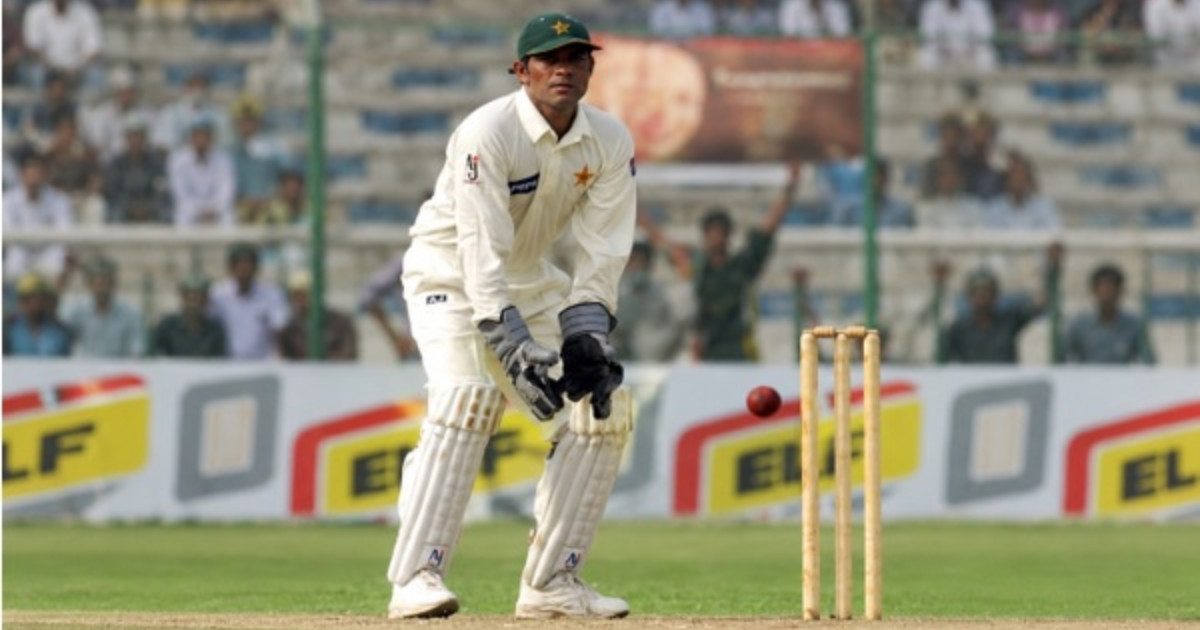
A look at Pakistan's greatest Test wicketkeepers, from Hanif Mohammad's unlikely early role in 1952 to later specialist keepers, and the debate over who was best. The piece weighs records, era context and standout performances to assess the contenders.Summary
Every tradition begins with an irregularity, some small fracture in the logic of things that later generations dress up as destiny. Pakistan, a country that seems to have been born improvising and has never entirely lost the habit, began its wicketkeeping tradition with an absurdity so complete that it passes, in the telling, for lyricism.
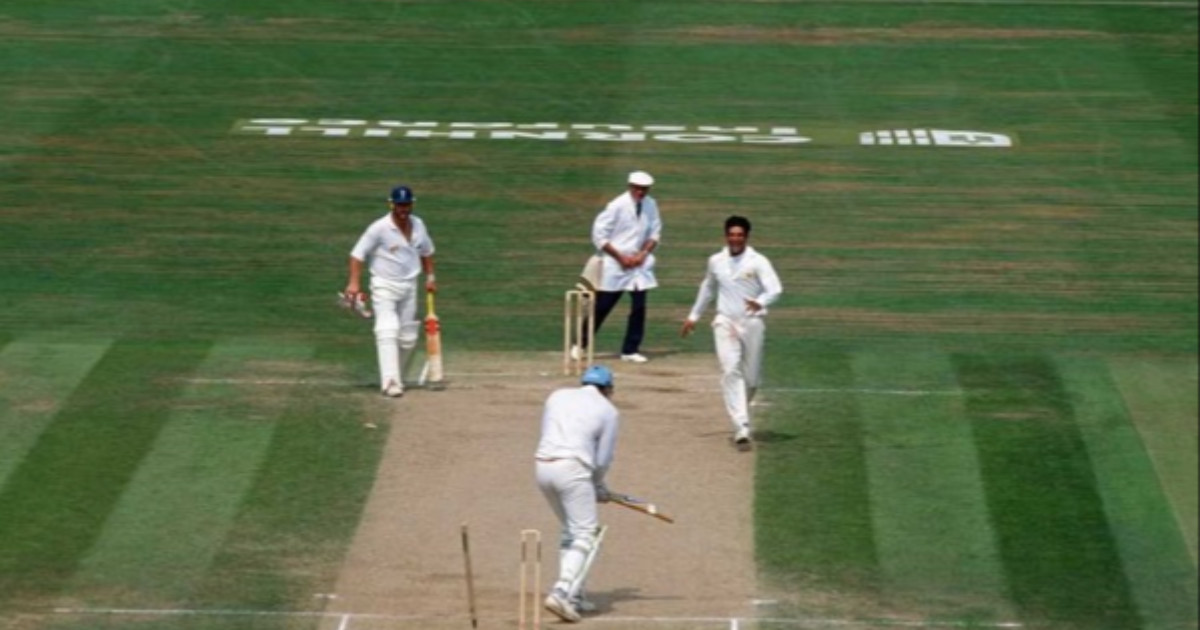
When Abdul Hafeez Kardar led his men onto the Feroz Shah Kotla in October 1952, in the dust and the thin autumn light of Delhi, to play the first Test match the new nation had ever played, the gloves were not worn by a wicketkeeper. They were worn by a boy. He was seventeen, small and grave, from Junagadh, with an unhurried backlift and a stillness of soul that would one day last 970 minutes at Bridgetown and outlast an entire West Indies afternoon, and then another, and then another. Hanif Mohammad was already the most precious batting property the country possessed, the one jewel it could not afford to scratch. And so, naturally, with that inverted genius for self-harm that would become the national signature, Pakistan put him behind the stumps, where the ball comes hardest, and the fingers break most easily.
A batsman in borrowed gloves
It was not pure eccentricity; very little in Pakistan's cricket is ever purely anything. Hanif had been moulded in Karachi by Master Abdul Aziz Durrani, a man of the old, undivided game, who had kept wicket for the Mohamedans and in All-India company. His son, Salim Durrani, would become one of the most romantic cricketers India ever produced, the man who hit sixes on demand because the crowd asked him to. Consider the delicious improbability of it. Pakistan's first Test wicketkeeper was trained by the father of an Indian Test cricketer. The Radcliffe line could carve a subcontinent in half, but it could not reach the quiet transmissions of a craft, which passed across the new border as though the border were a rumour.
Hanif kept in three Tests that year and took two catches. The record books note it as a curiosity, the sort of thing quiz-masters love, and historians ignore. But the anomaly is worth lingering over, because it contains, in miniature, the whole argument of the seven decades that followed. Pakistan has always coveted the wicketkeeper who can bat. It has always been faintly suspicious of the wicketkeeper who can only keep. The quarrel between the gloves and the runs, between the craftsman and the utility man, between the artist and the insurance policy, is the central drama of Pakistan's wicketkeeping history. Fittingly, it began with a batsman wearing pads he did not need, doing a job he had not chosen, because nobody had thought to choose anyone else.
The first specialist arrives
The specialist, to be fair, was not long in coming. Imtiaz Ahmed was already in the touring party, and he became the first genuine custodian of the Pakistan gloves. Travelling with them, too, was Khurshid Ahmad, one of those spectral reserves of the early years who crossed half a continent and never quite threatened to play, a man who exists now only as a name on a passenger list.
Imtiaz was a Lahori of the old kind: upright, military in bearing, a man who would later serve in the Air Force and go on playing first-class cricket into his forties with the unembarrassed stamina of a generation that did not know it was supposed to stop. He was not, by the standards of what came later, a stylist. He was solid where others would be supple, reliable where others would be beautiful. His worth lay in dependability and in a genuinely dangerous batting talent; his 209 against New Zealand at Lahore in 1955 still stands as one of the great early monuments of the country's cricket, a cathedral raised in an age of mud huts.
His numbers look modest now, and they will mislead anyone who reads them without context. Across 41 Tests he scored 2,079 runs at 29.28 and took 77 catches and 16 stumpings, 90 of those dismissals coming in the 38 Tests in which he kept. That is about 2.24 victims a match, a figure the modern wicketkeeper would regard as a lean week. But the numbers of the 1950s obeyed a different grammar. Pakistan's attack was built around Fazal Mahmood's leg-cutters, bowled at a brisk medium on matting and grass alike, and the slow bowlers who toiled after him. It was not a battery of fast men peppering the edge. A wicketkeeper of that age took fewer catches because there were fewer edges to take, and he bore a heavier responsibility precisely because every chance was so rare. To drop one was not a lapse. It was a betrayal.
Imtiaz's work to Fazal lay at the heart of those first improbable victories, above all at the Oval in 1954. There Pakistan, on their maiden tour of England, squared the series and informed the old imperial capital, with considerable relish, that the cricket of the new nation would not be a colonial footnote.
Batting fixes the early priorities
That tour also brought a young understudy, Shakoor Ahmad, who had forced his way into the reckoning by scoring a hundred in a trial match. Pause over that detail, for it is more eloquent than any editorial. A reserve wicketkeeper earned his passage not with his gloves but with his bat. The priorities were fixed early, and they have scarcely shifted since. Shakoor never dislodged Imtiaz and never played a Test. His is the first of many such stories in this history: the wicketkeeper who was good enough, born into the wrong times, and made to wait until the waiting became his career.
When Imtiaz's era closed in 1962, Pakistan drifted into a kind of interregnum, and the gloves were passed around the dressing room like a parcel nobody quite wanted to unwrap. Ijaz Butt, who decades later would preside over the Pakistan Cricket Board through some of the most wretched years in its generally wretched history, played eight Tests, mostly as an opening batsman. He kept wicket in just one of them, in 1962, and took two catches. One notes, without comment, that the man who later governed the game kept wicket for his country precisely once. Abdul Kadir, another opener, made 95 on debut against Australia at Karachi in 1964 and kept in two Tests, with a solitary stumping to his name. Naushad Ali kept in six Tests in 1965 and held nine catches.
None of them held the position long enough to leave a fingerprint on the craft. They were, in the phrase that fits so many Pakistani cricketers of that uncertain decade, men who happened to be present. They were not so much chosen as found standing nearby when a decision had to be made.
Beneath them, invisible to the Test record, lay a stratum of domestic wicketkeepers whose absence is its own quiet indictment. Rashid Fasihuddin never debuted in a Test. Ijaz Ahmad Khapra, spoken of in Lahore with the particular, wistful tenderness reserved for the unlucky, was by most accounts good enough, and was never chosen. Pakistan's domestic game produced wicketkeepers faster than its Test side could use them, and its selectors, as they have done in every decade since, preferred the familiar to the promising and the convenient to the correct. And then, in England in the summer of 1967, the waiting ended.
Wasim Bari sets the standard
It was the England under-25 side, of all people, who first said it plainly: this young man from Karachi was the finest wicketkeeper South Asia had yet produced. Wasim Bari made his Test debut in England that summer, aged nineteen. Over the next seventeen years he became the standard against which every Pakistani keeper since has been measured, and, almost without exception, found wanting.
The numbers are the plinth on which the statue stands. He played 81 Tests and 51 ODIs between 1967 and 1984, and when he walked away he was the most-capped Test cricketer Pakistan had ever had. He made 228 Test dismissals, 201 catches and 27 stumpings, still the national record and among the highest totals in the history of the game. At Auckland in 1979 he held seven catches in a single innings against New Zealand, equalling what was then the world record.
But numbers alone do not explain Bari, and in one respect they actively misrepresent him. His rate of 2.81 dismissals per Test is, as the statisticians have noted with a faint air of scandal, lower than that of several of his successors. The explanation lies in the bowling he was given. For most of his career Pakistan's attack rested on Intikhab Alam's leg-spin, the honest seam of Sarfraz Nawaz and Asif Masood, and an Imran Khan who had not yet become Imran Khan. The torrent of edges that later wicketkeepers would feast upon, the gift of the Wasim Akram and Waqar Younis years, still lay over the horizon. Bari had to wait for his chances like a heron waits for fish. When they came, he almost never missed.
The quiet beauty of Bari’s technique
It was his technique that his contemporaries spoke of first, and they spoke of it in the tone men use for a well-made sentence. He was forever being compared to his great English contemporary Alan Knott, and the comparison was not flattery. It was fact. Bari had the low, still crouch of the classical keeper: weight forward on the balls of the feet, hands relaxed, fingers pointing to the earth. He moved late, and he moved little. His glovework was so quiet that the ball did not seem to be caught at all. It seemed simply to arrive, as though it had always intended to end its journey in his hands. To the spinners he stood close and took the ball with soft hands, riding it back towards the stumps in one unbroken motion. His stumpings off Intikhab and Iqbal Qasim came so swiftly that batsmen sometimes looked up in mild surprise to discover they had been dismissed some moments earlier.
He could bat, too, in a stubborn, bloody-minded way that the scorebook undervalues. At Bridgetown in 1977 he and Wasim Raja added 133 for the last wicket against the West Indies, then a Test record for the tenth wicket, and his defiance that day was of a piece with his keeping: unglamorous, patient, and fantastically hard to shift.
Bari's reign was so complete that it cast a long, cold shadow over a whole generation of deputies. Taslim Arif, a batsman-keeper of real gifts, scored 210 not out against Australia at Faisalabad in 1980, one of the great innings ever played by a wicketkeeper anywhere, and was granted six Tests in which to prove what he had already proved. Masood Iqbal, Arifuddin and Ashraf Ali all hovered on the margins of selection. Ashraf would eventually play eight Tests and make 22 dismissals, but all of them spent the best of their careers standing before a door that Bari, in his quiet way, had bolted from the inside.
Selection, rivalry and a solitary cap
The one time that door swung open during Bari's prime, it swung for reasons that had nothing whatever to do with cricket. In 1976–77, as Bari closed in on the record for the most consecutive Tests by a Pakistani, the story goes that Kardar, by then the imperious presiding figure of the board, intervened. Shahid Israr was brought in for a single Test against New Zealand at Karachi. He took two catches and never played again. It remains one of the most peculiar episodes in a selection history not short of peculiarity: a debut apparently engineered for the purpose of breaking another man's sequence. It tells us, more eloquently than any memoir, how personal and how political the choice of a Pakistani wicketkeeper could be. A cap, in that world, could be an instrument of spite.
There is something austere about Bari's greatness, something monastic. He was a keeper's keeper, admired by professionals more than by crowds, because his excellence consisted chiefly in the absence of error, and the absence of error is not a thing crowds cheer. He was the purest wicketkeeper Pakistan has produced across a full career. That is the claim against which Rashid Latif's case must eventually be weighed.
Bari's retirement in 1984 handed Pakistan a problem it had not faced in seventeen years: a vacancy.
It was filled, eventually and not without bloodletting, by Saleem Yousuf. Yousuf was an altogether different creature. Where Bari was a monk, Yousuf was a street-fighter: combative, voluble, brave to the far edge of recklessness, a batsman-keeper who stiffened the lower order with strokes of real violence. He played 32 Tests between 1982 and 1990 and made 104 dismissals. His highest score, 91 not out against England at Edgbaston in 1987, came in the same series in which his competitive fire produced the notorious Headingley quarrel over a disputed catch, an episode that tells you everything about the man and not much that flatters him. His innings against the West Indies at the 1987 World Cup, which dragged a lost match back into the realm of victory, remains among Pakistan's most cherished one-day memories. In 1990 he became the first wicketkeeper to make three stumpings in a single ODI innings.
Behind the stumps he was never Bari, and never pretended to be. His footwork was less economical and his hands occasionally harder, the ball sometimes arriving with a slap rather than a sigh. But he kept to one of the most varied attacks Pakistan has ever assembled: Imran Khan at the height of his pace, Abdul Qadir's bewildering leg-spin, and the first stirrings of Wasim Akram. He did it with courage. Keeping to Qadir was an education in anticipation, a kind of cryptography. The googly, the top-spinner and the flipper all emerged from the same theatrical whirl of arms and wrist, each disguised as the other. The keeper had to read the hand, not the pitch, and he had to read it in the fraction of a second before the batsman did.
Dalpat and the fleeting tenancies
The other great keeper to Qadir was Anil Dalpat, who played nine Tests between 1984 and 1985 and made 25 dismissals. Dalpat is remembered for something that transcends his keeping: he remains the only non-Muslim wicketkeeper ever to represent Pakistan. A Hindu from Karachi, he brought to the national side a pluralism that the country's cricket, and indeed the country, has rarely been able to claim. He was also a genuinely fine keeper to spin, though he had his technical issues, and his brief career glitters like a coin in the dust of this history, bright, small, and too quickly pocketed.
Then came two fleeting tenancies. Zulqarnain Zaidi kept in three Tests in 1986 and made ten dismissals. Nadeem Abbasi kept in three Tests against India in 1989 and made six. Neither lasted. The position was waiting for someone capable of holding it through the most demanding decade in the history of Pakistani wicketkeeping. It got two such men, and it could not decide between them.
The golden rivalry for the gloves
The 1990s gave Pakistan its fiercest rivalry for the gloves, and out of that rivalry came something close to a golden age. Moin Khan and Rashid Latif, both Karachi men, both of exceptional gifts, spent a decade wresting the position from each other, like two claimants to a throne in a Mughal history. Their match dragged the standard of Pakistani wicketkeeping higher than it had ever been.
They kept to the most fearsome attack in the world. Wasim Akram and Waqar Younis were the supreme new-ball pairing of their age. With the old ball they bowled reverse swing at a pace that bordered on the indecent, a dark art that Sarfraz and Imran had discovered and they perfected. Behind them came Mushtaq Ahmed's leg-spin and, later, Saqlain Mushtaq's off-spin and his doosra, the ball that turned the wrong way and made liars of every batsman's eyes. No wicketkeeper anywhere faced a harder combination. None had so many ways to be humiliated.
Moin Khan thrives under pressure
Moin first. He played 69 Tests between 1990 and 2004 and made 147 dismissals in the 66 in which he kept. He also scored four Test hundreds and captained Pakistan. He was a fighter in the Karachi manner, loud behind the stumps, a ceaseless fountain of encouragement to his own bowlers and irritation to the opposition's batsmen. His glovework was energetic rather than elegant. He moved a great deal, dived often, and occasionally made a routine chance look like a cliff-edge rescue. But he rarely made a hard chance look impossible. His great strength was temperament: he was at his finest when the match was tight, and the crowd was baying. His batting in such moments, in the 1992 World Cup semi-final above all, was frequently decisive. Rashid Latif is the harder case, and the more rewarding one.
He played only 37 Tests between 1992 and 2003, fewer than a man of his gifts had any right to be granted. He spent so much of that decade either duelling with Moin or waging war on the administrators, and the second war cost him far more than the first. But in those 37 Tests he made 130 dismissals, 119 catches and 11 stumpings, about 3.51 a match. Among Pakistan's long-serving keepers, only Kamran Akmal took more per Test, and nobody, not even Bari, took them more cleanly. What made Rashid the technically finest wicketkeeper Pakistan has produced? Consider the demands of each species of bowling, and watch him meet them.
Rashid Latif’s command against pace
Against express pace, the keeper's first duty is positioning. He must stand deep enough to take the ball as it dips below the waist, and place himself so that edges on either side can be taken without lunging. Rashid stood fractionally wider of off stump than most. That gave him a truer sight of the ball's line and let him take the outside edge with his body behind it rather than at the full stretch of despair. His take was the soft, decelerating catch of the classical school: hands yielding with the ball so that it could not burst free, fingers pointing down for anything below the waist.
Against reverse swing, the problem is different and crueller. The ball moves late, often after it has passed the bat, and it can swerve a foot in the final yards. The keeper who commits early is undone, made a fool of before a watching world. Rashid's supreme virtue was stillness. He did not move until the ball had passed the bat and declared its intention, and then he moved sharply and exactly. Keeping to Waqar's late, inswinging yorkers and to the ball that came back at pace down the leg side demanded exactly this discipline, and Rashid possessed it in greater measure than anyone in Pakistan's history.
The craft stands naked against spin
Against spin, the craft stands naked. The wicketkeeper must rise with the bounce, not before it; stay low for as long as the ball allows; watch it off the pitch and not the hand; and take it close to the stumps, so that a stumping is one short movement and not two. Rashid kept to Mushtaq's leg-spin and to Saqlain's doosra, one of the most bewildering deliveries ever bowled, and he read both from the hand. He would stand up to the medium-pacers as well, as few modern wicketkeepers dare, pinning batsmen to their creases and stealing from them the comfort of the forward walk.
His biomechanics were close to textbook: a low crouch with the knees wide, the head level through the rise, the weight shifting laterally in small, rapid steps rather than long, lurching strides. He was balanced at the instant of the catch, and balance at the instant of the catch is the whole secret of the art.
The shadow over a master craftsman
His career was not without shadow, and honesty requires the shadow be named. His outspokenness about match-fixing in the 1990s made him one of the first Pakistani players to speak aloud what others only whispered, and it cost him dearly with those in authority. It is a measure of the institution rather than the man that telling the truth could damage a career so badly; he deserves nothing but credit for it. Against Bangladesh at Multan in 2003, he picked a catch that the replays showed he had grassed, and he was banned. It was an uncharacteristic lapse, and it must be recorded. But it does not diminish the craftsmanship. Taken purely as a technician, across pace, reverse swing, and spin, Rashid Latif was the best of the best.
In the narrow windows between their tenures, others flickered briefly into view. Atiq-Uz-Zaman kept in one Test in 2000 and held five catches. Humayun Farhat kept in one Test in 2001 and held none. Their careers lasted roughly as long as a sentence, and not a long one. Rashid's departure in 2003 delivered the gloves, eventually, to the most gifted and most exasperating wicketkeeper Pakistan has ever produced.
Kamran Akmal played 53 Tests between 2002 and 2010 and made 206 dismissals, 184 catches and 22 stumpings. He is the only Pakistani keeper besides Bari to pass 200. His rate of 3.88 dismissals per Test is the highest among the country's long-serving wicketkeepers. And he could bat, gloriously. His hundreds against India, among them the Karachi innings of 2006 that hauled Pakistan out of the wreckage of a first-over collapse, were among the most thrilling counter-attacks of his generation. They were proof that a man could walk into a burning building and come out carrying the furniture.
Kamran Akmal’s magnificent contradiction
And yet no Pakistani keeper is remembered so much for what he dropped. The Sydney Test of January 2010, where missed chances off Mike Hussey turned a certain victory into a defeat of almost operatic cruelty, became the defining image of his career, fairly or otherwise. Kamran's hands were quick and his reflexes superb. He was capable of the astonishing catch that no other keeper would have reached. But his technique carried a flaw that pace and swing exposed without mercy. He snatched at the ball, his hands travelling towards it rather than letting it come, and he rose too early from his crouch. Against reverse swing, that early rise was fatal, because the ball did its work after he had already committed to being wrong.
He embodied the Pakistani preference for the batting keeper in its most extreme and most expensive form. In form, he won matches with the bat and took the ordinary chances with ease. Out of form, he cost more than he gave, and he gave a great deal. That pendulum made him the magnificent contradiction of Pakistan's wicketkeeping history: its most prolific keeper, and its least trusted. The 2010s opened with Pakistan's cricket in ruins, reputations and faith alike in pieces, and the gloves passed through several hands in rapid, anxious succession.
Careers cut short, and craftsmen passed over
Zulqarnain Haider played a single Test, at Edgbaston in 2010, and made 88 in the second innings with a courage that seemed to promise a long career. It lasted exactly that one Test. Later that year, during a one-day series in the UAE, he slipped out of the team hotel and flew to London, saying he had received threats. It is one of the strangest episodes in modern cricket, a thriller rather than a scorecard, and it ended his international career almost as soon as it had begun.
Adnan Akmal, Kamran's younger brother, was in many ways the more natural keeper of the two. He played 21 Tests between 2010 and 2014 and made 77 dismissals. His technique was quieter, his hands softer and his take more classical. To spin, and to Saeed Ajmal's doosra in particular, he was genuinely good. What he lacked was the batting that Pakistan's selectors always wanted, and so, with the grim inevitability of this history, he was passed over. He was a craftsman sacrificed once again at the altar of runs. Mohammad Salman kept in two Tests in 2011 and made three dismissals. Umar Akmal, the third brother, sometimes kept in limited-overs cricket, but with no serious claim to be a specialist.
Sarfraz and Rizwan answer the old question
The two keepers of the recent era were answers to the question Pakistan had been asking, fretfully, since that first morning at the Kotla: what if a single man could be both? Sarfraz Ahmed kept in 49 Tests between 2010 and 2019, making 146 catches and 21 stumpings, 167 dismissals in all. He returned in 2022–23 and made hundreds against New Zealand that recalled his finest years. He reached 1,000 Test runs in 28 innings, sharing the Pakistani wicketkeeper record for speed with Imtiaz. He captained Pakistan to the Champions Trophy in 2017, a triumph so unexpected that it still feels faintly like a clerical error in the country's favour. As a keeper, he was busy and effective rather than refined: good hands, adequate feet, inexhaustible energy. He was at his best to spin, standing up to Yasir Shah on the slow, grey pitches of the UAE, where Pakistan played its exiled home Tests for most of his career. Against express pace and reverse swing abroad, he was less secure. His take was sometimes stiff, and his feet to the wider ball arrived a beat behind the ball.
Mohammad Rizwan inherited the gloves from 2019. His 95 at Brisbane in his first Test after his recall, and a near-flawless series behind the stumps in England in 2020, installed him as first choice. He played 47 Tests and scored 2,682 runs at 37.77, with three hundreds and a highest score of 171 not out, while making 127 catches and 10 stumpings. As a batsman, he was the most consistent keeper Pakistan had produced, and his sweep against spin was among the most dependable strokes in the side. As a wicketkeeper, he was fit, alert and endlessly vocal, an animating presence in the field.
Another succession settled in haste
But his technique drew criticism too. He took the ball well at hip height, but his lateral movement to pace was at times a fraction slow. He grew increasingly reluctant to stand up to the medium-pacers, and in England in 2026 that reluctance became a subject of open debate. He was released from the Test squad midway through that series, after the first two Tests were lost. The reasons for that decision, and the inquiries that followed it, have not been established publicly, and they have no place in a judgement of his craft. What can be said is that the succession, which in Pakistan has so often been settled by accident or in temper, was settled once again in haste, and on foreign soil.
In Pakistan's wicketkeeping history the understudy has usually been a figure of patience, and sometimes of tragedy. He waits for years in the shadow of an incumbent who is seldom injured and never dropped, until the waiting hardens into a vocation of its own. Taslim Arif and Ashraf Ali spent the best of their careers queuing behind Bari. Shakoor Ahmad queued behind Imtiaz. Adnan Akmal waited for his brother and was then passed over himself, the cruellest of all outcomes: to outlast the obstacle and still not be wanted. Ghazi Ghori's fate has been the inverse. His apprenticeship was not too long. It was cut short before it was complete, the fruit pulled from the branch while still green.
Ghazi Ghori inherits the gloves
He is a Karachi boy, born in 2003, who came up through the Pakistan Under-19 side. His first-class debut, for Karachi Whites against Faisalabad Region, came in a Quaid-e-Azam Trophy final, an early and unforgiving stage for any young man. He belongs to a lineage that Karachi has produced with a regularity bordering on the industrial: Bari, Saleem Yousuf, Anil Dalpat, Moin, Rashid and Sarfraz all learned their trade on its maidans, under its heavy, salt-laden skies. One close observer called him the typical Karachi keeper who does a bit of everything. He sweeps and reverse-sweeps and finds angles most batsmen do not think to seek. That description places him firmly in the tradition of Moin and Sarfraz rather than the stiller, more contemplative school of Bari and Rashid, though it is far too early to say where his glovework will finally settle.
On the 2026 tour of England he travelled as Rizwan's reserve. After defeat at Lord's, the selectors sent Rizwan home, and on 9 September at Edgbaston, Ghori received his Test cap. There is an irony in it that this history seems unable to resist: the Birmingham ground where Zulqarnain Haider's single Test began and ended became the ground where Pakistan's newest custodian was ushered, blinking, into the light.
The logic barely moves
One might argue, and it is argued here, that the cap should first have gone to someone else. Rohail Nazir, still uncapped in Tests, remains the better prospect. The selectors, as ever, have preferred the man who was nearest to hand over the man who was best prepared. Hanif stood behind the stumps at Delhi because he was there. Seventy-four years later, the logic has barely moved.
How should these men be weighed against one another? Any comparison across eras must reckon with different pitches, different attacks, different equipment and, in truth, a different game. The keeper who stood behind Fazal on the matting of the 1950s and the wicketkeeper who stands behind Shaheen Afridi in the 2020s practise the same art in two different languages.
In collection, the catching and gathering of the ball, the purists would set Bari and Rashid Latif in a class of their own. Adnan Akmal and Imtiaz stand a notch below, Moin, Sarfraz and Rizwan in the band beneath, and Kamran apart, the magnificent contradiction, brilliant and unreliable in exactly equal measure.
Positioning, spin and reverse swing
In positioning, Rashid's slightly wider stance and his stillness against pace set him apart. Bari's economy of movement makes him the other great exemplar.
Against spin, the finest were Bari, Rashid, Dalpat and Adnan Akmal. Their soft hands, their ability to read the hand, and their low crouch made them the most effective partners for Pakistan's great spinners. Sarfraz was the best of the moderns in this respect. Against reverse swing, the most distinctively Pakistani examination a wicketkeeper can sit, Rashid stands alone. His stillness and late movement were made for it. Moin met it with courage and energy. Kamran and Rizwan, each in his own way, were less at ease.
Pace, batting and the final verdict
Against express pace, Bari, Rashid and Moin were the most dependable. Kamran could take the catch nobody else would reach, and then miss the one anybody could have held. In batting, the quality Pakistan has always prized above all others, Rizwan, Kamran, Sarfraz, Moin and Imtiaz led. Taslim Arif's 210 not out and Zulqarnain Haider's 88 are brilliant fragments of careers that were never allowed to become whole.
So who was the greatest? If the question concerns the whole career, the longevity, the consistency and the classical beauty of the craft, Wasim Bari's claim is very hard to deny. He set a standard for seventeen years and left a record that still stands. If the question concerns technique, and which keeper could best meet every demand the modern game placed upon him, the answer is Rashid Latif. He kept to reverse swing at pace, to leg-spin and the doosra, and to express bowling, with a stillness, a softness of hand and an economy of movement no Pakistani wicketkeeper has matched. He was the best of the best. That he played only 37 Tests is not a mark against him. It is an indictment of the system that could not find a way to keep him, and that punished him for telling the truth.
A history of craft and waste
Pakistan's wicketkeeping history begins with a batsman in borrowed gloves at Delhi, and its latest chapter opens with a twenty-three-year-old in a Test cap at Edgbaston that came sooner than anybody had planned. In between lies a story of great craftsmen and great waste. There are wicketkeepers never capped because the selectors preferred another man's runs, keepers who played once and vanished like smoke, and wicketkeepers whose careers were shaped as much by the politics of the boardroom as by the work of their hands.
Yet the flame has passed from hand to hand: from Master Aziz Durrani to Hanif, from Imtiaz to Bari, from Bari to Yousuf and Dalpat, from Moin and Rashid to the Akmals, Sarfraz and Rizwan, and now, provisionally and too soon, to Ghazi Ghori. At its brightest, in Bari's stillness and Rashid's precision, it has burned as brightly as anything the rest of the cricketing world has produced. It has survived the selectors, which is perhaps the greatest compliment one can pay it.
ABOUT THE WRITER: Dr. Nauman Niaz, a postdoctoral scholar (Oxford) and recipient of Pakistan's Tamgha-i-Imtiaz for sports broadcasting and journalism, has covered 54 international cricket tours and three ICC Cricket World Cups. He has written more than 3,700 articles, authored 19 books, including the official history of Pakistan cricket (Fluctuating Fortunes), and is the Sports Editor at JournalismPakistan.com.
Key Points
- Pakistan's wicketkeeping began unconventionally with Hanif Mohammad keeping in the 1952 inaugural Test.
- Early choices mixed batting stars in gloves with later move to specialist wicketkeepers.
- Greatness debates weigh statistics, era context and memorable match performances.
- Notable Pakistani keepers include Imtiaz Ahmed, Wasim Bari, Moin Khan, Rashid Latif and Sarfraz Ahmed.
- The role evolved from ad hoc duties to a specialist, tactical position demanding athleticism and technique.
Key Questions & Answers
Who was Pakistan's first Test wicketkeeper?
Hanif Mohammad acted as wicketkeeper in Pakistan's inaugural Test in October 1952 at Feroz Shah Kotla.
Which players are commonly cited as Pakistan's greatest Test wicketkeepers?
Contenders frequently mentioned include Imtiaz Ahmed, Wasim Bari, Moin Khan, Rashid Latif and Sarfraz Ahmed.
Why did Pakistan use a batsman as wicketkeeper in the 1952 debut?
Limited resources and selection choices led to Hanif Mohammad keeping; he also had some keeping background from coaching in Karachi.
How has Test wicketkeeping in Pakistan evolved over time?
It shifted from makeshift arrangements to specialised, athletic keepers with greater technical skill and tactical responsibilities.
Relevant Topics
Ask AI: Understand this story your way
AI EnabledDig deeper, ask anything — get instant context, background, and clarity.
Disclaimer: This feature is powered by AI and is intended to help readers explore and understand news stories more easily. While we strive for accuracy, AI-generated responses may occasionally be incomplete or reflect limitations in the underlying model. This feature does not represent the editorial views of JournalismPakistan. For our full, verified reporting, please refer to the original article.