.png)
10 ways Pakistan can safeguard women journalists
JournalismPakistan.com | Published: 23 May 2026 | JP Staff Report
Join our WhatsApp channel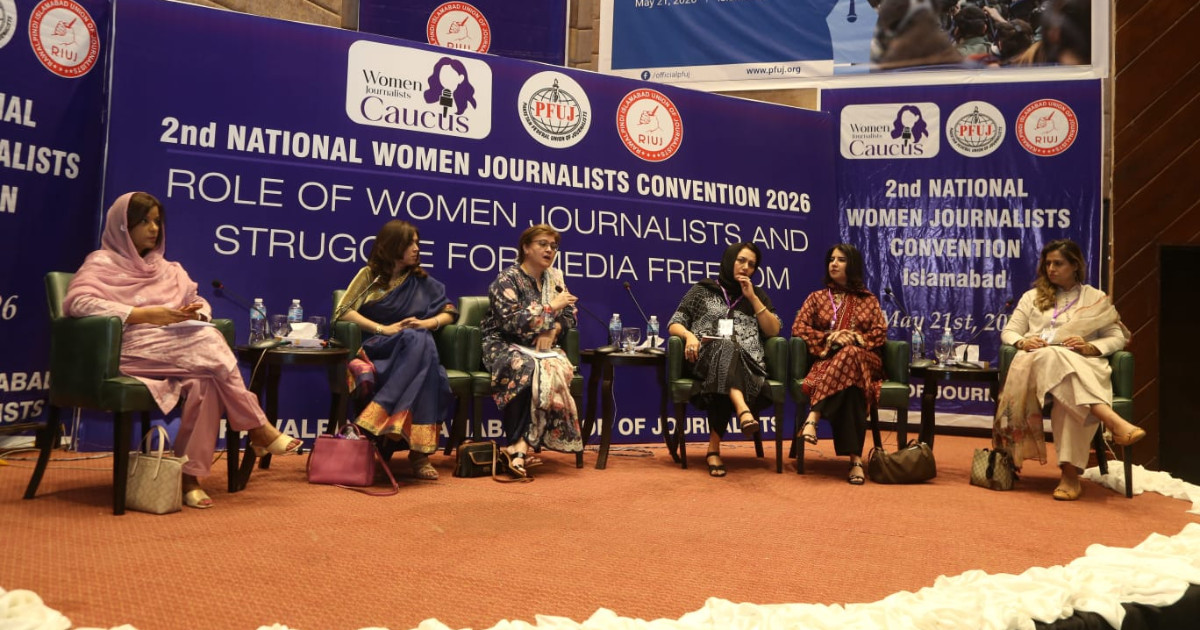
Calls to protect women journalists in Pakistan grew at the Second Women Journalists Convention in Islamabad, where participants urged legal reform, newsroom measures, digital security and independent complaint cells to address harassment and discrimination.Summary
ISLAMABAD — Pakistan’s media industry is facing renewed calls for stronger protections for women journalists as harassment, online abuse, workplace discrimination, and field safety risks continue to affect reporters across television, print, radio, and digital platforms.
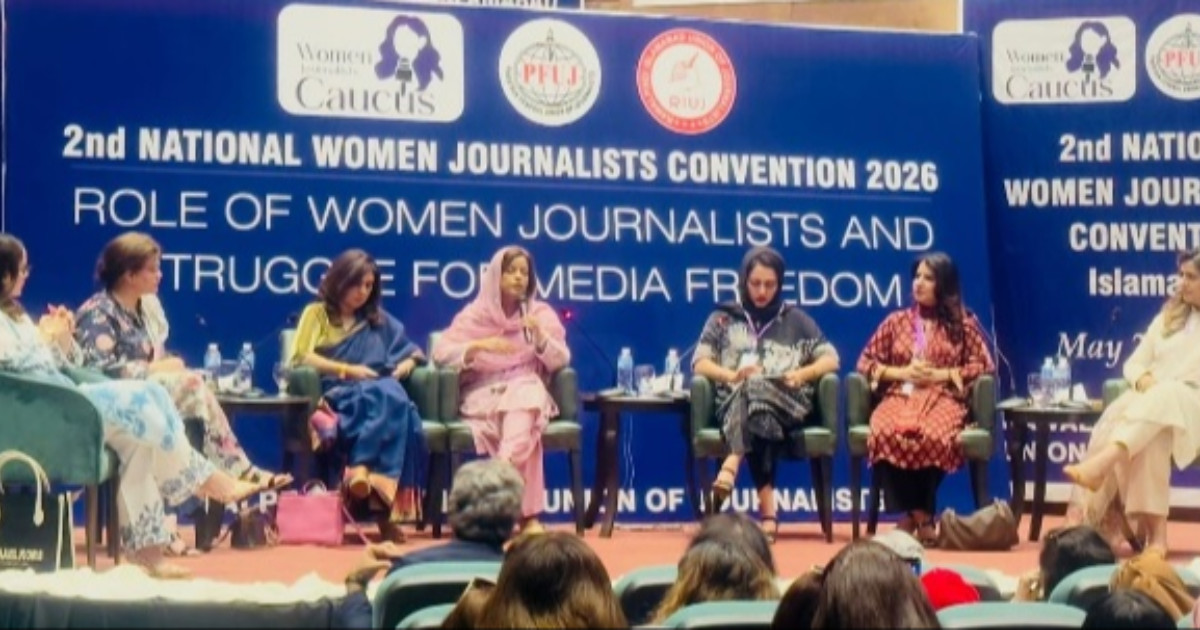
The issue gained fresh urgency this week during the Second Women Journalists Convention in Islamabad, where journalists, editors, media trainers, lawyers, and rights advocates discussed the structural barriers confronting women in Pakistan’s newsrooms. Participants emphasized that protecting women journalists requires not only stronger laws but also practical newsroom reforms, digital security systems, and sustained institutional accountability.
Women journalists in Pakistan increasingly report on politics, investigations, human rights, courts, and conflict-sensitive issues, but many continue to face coordinated trolling campaigns, intimidation, threats, and unequal professional opportunities. Media observers say the cumulative impact can lead to self-censorship, burnout, and the loss of experienced women reporters from the profession.
Create specialized complaint cells for journalists
Media experts and legal advocates say Pakistan should establish independent complaint mechanisms specifically designed for journalists facing workplace harassment, intimidation, or threats connected to reporting assignments. Existing institutional systems are often viewed as inaccessible or ineffective, particularly for freelance reporters and contract workers.
Participants at the Islamabad convention argued that journalist-focused complaint units could improve trust, speed up investigations, and encourage more women journalists to formally report abuse without fear of retaliation.
Fast-track investigations into online harassment
Women journalists in Pakistan have repeatedly documented coordinated online abuse campaigns, including threats, impersonation, doxxing, and disinformation attacks. Digital rights advocates say delayed investigations often allow harassment networks to intensify their campaigns unchecked.
Cybercrime investigators and media policy specialists have urged authorities to prioritize digital harassment complaints involving journalists, particularly cases linked to public-interest reporting or coordinated intimidation efforts.
Expand legal protections for freelancers
A growing number of women journalists now work for digital platforms, regional outlets, or on freelance contracts, leaving many outside traditional labor protections. Legal experts say this gap has created vulnerabilities related to workplace harassment, payment disputes, and arbitrary dismissal.
Media unions and advocacy groups are increasingly calling for labor protections that apply equally to permanent staff, freelancers, and digital contributors working across Pakistan’s evolving media landscape.
Make anti-harassment committees mandatory
Analysts say many media organizations still lack visible, independent, and gender-sensitive anti-harassment systems. Experts at the convention stressed that workplace safety mechanisms should be mandatory rather than optional.
Recommended reforms include confidential reporting systems, independent oversight, transparent disciplinary procedures, and protection against retaliation for employees who file complaints.
Introduce newsroom field safety protocols
Women journalists covering political rallies, protests, courts, crime scenes, or conflict-sensitive events often work without structured safety planning. Editors and newsroom managers are being urged to conduct assignment risk assessments and establish emergency response procedures before field deployments.
International media safety guidelines increasingly recommend that organizations integrate journalist safety planning into everyday editorial decision-making rather than treating threats as isolated incidents.
Provide trauma and mental health support
Journalists exposed to sustained online abuse, graphic reporting environments, or harassment may experience significant psychological stress. Media development specialists say mental health support remains one of the weakest areas within many Pakistani news organizations.
Participants at the convention urged media companies to provide confidential counseling services, peer-support systems, and trauma-awareness training for newsroom managers and editorial supervisors.
Increase women’s leadership in newsrooms
Media researchers argue that stronger representation of women in editorial leadership positions can improve institutional accountability and newsroom culture. Women editors and decision-makers may also be better positioned to recognize patterns of harassment or discrimination that are often overlooked.
Advocates say leadership diversity should extend beyond symbolic appointments and include decision-making authority in editorial operations, newsroom policy, and organizational governance.
Expand cybersecurity and digital safety training
Digital security has become a critical issue for journalists as harassment increasingly shifts online. Experts recommend mandatory training on encrypted communication, account protection, phishing awareness, password management, and secure handling of sensitive reporting materials.
International press freedom organizations, including UNESCO and the International Federation of Journalists, have repeatedly warned that online violence against women journalists poses growing risks to press freedom and professional participation.
Build newsroom digital response teams
Several international media organizations have established internal teams dedicated to responding to hacking attempts, coordinated trolling, impersonation campaigns, and privacy breaches targeting journalists.
Media policy specialists say larger Pakistani outlets could adopt similar models by creating rapid-response support systems to help journalists facing digital threats or online harassment campaigns.
Strengthen journalism education and peer networks
Journalism schools, press clubs, and media training institutes are increasingly being encouraged to integrate digital safety, gender-sensitive reporting practices, and harassment response training into journalism education.
Experts also emphasized the importance of peer-support networks and professional mentoring programs that help younger journalists navigate workplace risks and reporting pressures.
Observers say long-term improvements will require coordinated action involving lawmakers, media owners, editors, journalist unions, technology companies, and civil society organizations. Media analysts also note that ongoing documentation and reporting remain essential for tracking patterns of abuse and evaluating whether reforms are producing measurable change.
JournalismPakistan.com continues to monitor developments related to press freedom, digital regulation, workplace safety, and legal challenges affecting journalists across Pakistan, including women working in increasingly hostile online environments.
WHY THIS MATTERS: The safety of women journalists directly shapes newsroom diversity, editorial independence, and the quality of public-interest reporting available to audiences. For Pakistani media organizations, stronger workplace protections and digital safety systems are becoming operational necessities as harassment and online intimidation continue to evolve. The issue also reflects wider global debates over platform accountability, newsroom responsibility, and the future sustainability of inclusive journalism.
ATTRIBUTION: Reporting by JournalismPakistan, based on publicly available discussions and statements from participants at the Second Women Journalists Convention in Islamabad (May 2026), along with guidance and reporting published by UNESCO and the International Federation of Journalists.
Key Points
- Establish independent complaint cells tailored for journalists facing harassment or threats.
- Strengthen legal protections and enforcement for workplace harassment in media.
- Implement newsroom reforms to ensure equal opportunities and anti-discrimination policies.
- Upgrade digital security practices to counter coordinated online abuse and trolling.
- Provide protections for freelancers and field reporters, including safety training and institutional support.
Key Questions & Answers
What did the Second Women Journalists Convention emphasize?
Participants called for stronger laws, newsroom reforms, improved digital security and independent complaint mechanisms to better protect women journalists from harassment, threats and discrimination.
What are independent complaint cells?
They are dedicated, accessible complaint mechanisms designed to handle harassment, intimidation or threats faced by journalists, including freelancers and contract workers.
How can digital security help women journalists?
Improved digital security reduces risks from coordinated trolling, doxxing and online abuse, protecting journalists' data, accounts and mental well-being so they can report safely.
Who should implement these reforms?
Media organizations, regulatory bodies, legal institutions and civil society groups should cooperate to enact laws, enforce policies and maintain accountability to protect women journalists.
Relevant Topics
Ask AI: Understand this story your way
AI EnabledDig deeper, ask anything — get instant context, background, and clarity.
Disclaimer: This feature is powered by AI and is intended to help readers explore and understand news stories more easily. While we strive for accuracy, AI-generated responses may occasionally be incomplete or reflect limitations in the underlying model. This feature does not represent the editorial views of JournalismPakistan. For our full, verified reporting, please refer to the original article.