.png)
Why public trust in media is declining worldwide
JournalismPakistan.com | Published: 6 March 2026 | JP Special Report
Join our WhatsApp channel
Surveys and studies show global trust in news averages about 40 percent, with declines driven by perceptions of political bias, misinformation and changing technology. The trend varies by country but poses challenges for journalism and democratic accountability.Summary
ISLAMABAD — Public trust in news media has been declining across many parts of the world, raising concerns about the future of journalism and democratic accountability. Surveys, academic studies, and newsroom research increasingly show that audiences are questioning the credibility, independence, and relevance of traditional media institutions.
One widely cited indicator comes from the Reuters Institute Digital News Report, which found that average global trust in news remains around 40 percent across surveyed countries. The figure has remained largely stagnant in recent years after a long decline, signaling a persistent crisis of confidence in journalism, as researchers describe.
Declining trust is not uniform across countries, but the pattern is visible in many regions, including South Asia, Europe, and North America. Political polarization, misinformation, and changing technology have reshaped how audiences interact with news organizations and how they judge their credibility.
Political polarization and perceptions of bias
One major factor behind declining trust is the perception that media organizations are politically biased. In highly polarized societies, audiences increasingly believe that news outlets favor one political side over another.
Research cited in the Reuters Institute report indicates that around 60 percent of respondents believe news organizations show political bias. This perception is particularly strong in countries where political competition is intense and where media outlets openly align with political actors or ideological positions.
In South Asia, including Pakistan and India, similar concerns have been raised about editorial independence. Critics often argue that some outlets appear closely aligned with political parties, business interests, or state institutions, which can erode public confidence in their reporting.
The misinformation and social media challenge
The rapid spread of misinformation online has also contributed to declining trust in traditional media. Social media platforms allow unverified information to circulate widely, sometimes reaching audiences faster than fact-checked journalism.
According to international surveys, more than half of news consumers say they regularly encounter false or misleading information online. When misinformation circulates alongside legitimate journalism, audiences may struggle to distinguish credible reporting from fabricated or manipulated content.
The rise of artificial intelligence and automated content generation has added another layer of complexity. While AI tools are increasingly used for research, translation, and content production, concerns remain about accuracy, accountability, and transparency.
Economic pressures and shrinking newsrooms
Economic challenges facing the news industry have also affected public trust. Many news organizations have reduced staff or closed local bureaus due to declining advertising revenue and competition from digital platforms.
These pressures can lead to less original reporting and greater reliance on syndicated or wire content. Audiences may perceive this shift as a decline in quality or independence, particularly when investigative journalism becomes less frequent.
At the same time, sensational headlines and click-driven digital strategies, often used to compete for online traffic, can reinforce public skepticism about journalistic priorities.
Lessons from Pakistan and South Asia
In Pakistan and other South Asian countries, trust in the media is influenced by additional factors, including regulatory pressure, political disputes, and digital disinformation campaigns.
The growth of social media has created alternative information ecosystems where political influencers, YouTube commentators, and partisan digital channels compete directly with traditional news outlets. These platforms often operate outside established editorial standards, yet they attract large audiences.
At the same time, repeated conflicts between media organizations and political actors have sometimes framed journalism itself as partisan or adversarial, further complicating public perceptions of credibility.
Strategies to rebuild trust
Despite these challenges, many news organizations are experimenting with strategies to rebuild audience confidence.
One approach involves increasing transparency about reporting processes, sources, and editorial decisions. Some outlets now publish detailed explanations of how stories are reported or provide access to supporting documents and data.
Another strategy focuses on stronger fact-checking initiatives and collaboration with independent verification organizations. Newsrooms are also investing in explanatory journalism that helps audiences understand complex issues rather than simply reporting events.
Finally, engagement with audiences through community reporting, public forums, and reader feedback has become a growing priority. Media researchers argue that trust often improves when audiences feel that journalists understand their concerns and local realities.
For the global news industry, rebuilding trust may ultimately depend on demonstrating accuracy, independence, and public service in an increasingly fragmented information environment.
WHY THIS MATTERS: For Pakistani journalists, the global decline in media trust highlights the need for transparency, accuracy, and editorial independence in a polarized information environment. Newsrooms in Pakistan can strengthen credibility by investing in fact-checking, community engagement, and explanatory reporting. The experience of other countries suggests that rebuilding trust requires consistent newsroom practices rather than short-term public relations campaigns.
ATTRIBUTION: Based on the Reuters Institute Digital News Report 2025 and analysis published by Journalism.co.uk (July 4, 2025).
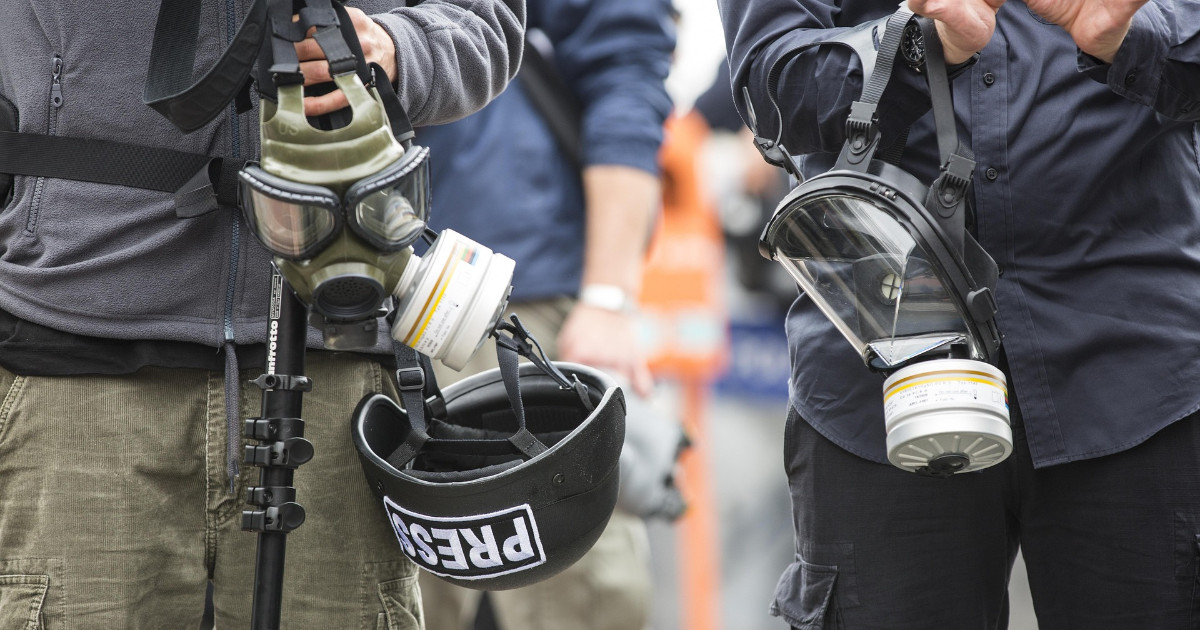
PHOTO: By Michal Kryński from Pixabay
Key Points
- Global trust in news averages around 40 percent, according to the Reuters Institute.
- About 60 percent of respondents perceive political bias in news organizations.
- Declines are uneven but evident in regions including South Asia, Europe and North America.
- Major drivers include political polarization, misinformation and technological change.
- Falling trust raises concerns for journalism's role in democratic accountability.
Key Questions & Answers
Why is public trust in media declining?
Multiple factors contribute, including perceptions of political bias, the spread of misinformation and changes in how audiences access and evaluate news.
How low is trust in news globally?
Surveys such as the Reuters Institute Digital News Report place average global trust at about 40 percent; the figure has remained largely stagnant.
Does political polarization affect trust?
Yes; in polarized societies audiences are more likely to view outlets as favoring one political side, which heightens perceptions of bias.
What can news organizations do to rebuild trust?
Newsrooms can increase transparency, strengthen fact‑checking and editorial independence, and engage audiences to counter misinformation.
Relevant Topics
Ask AI: Understand this story your way
AI EnabledDig deeper, ask anything — get instant context, background, and clarity.
Disclaimer: This feature is powered by AI and is intended to help readers explore and understand news stories more easily. While we strive for accuracy, AI-generated responses may occasionally be incomplete or reflect limitations in the underlying model. This feature does not represent the editorial views of JournalismPakistan. For our full, verified reporting, please refer to the original article.