
Why Pakistani journalists deserve two days off
JournalismPakistan.com | Published: 9 May 2012 | Daud Malik
Join our WhatsApp channel
The article argues that Pakistani journalists should receive two weekly days off to improve work-life balance and professional performance. It links long hours and breaking-news pressure to burnout and declining quality, especially amid media layoffs and shrinking business revenues.Summary
Asking for two holidays a week for journalists in Pakistan may be asking for something out of this world. But perhaps this is one thing Pakistani journalists need urgently that would help them have more time for themselves, for their families and above all enable them to perform better professionally.
Curiously when it comes to talking about the rights of journalists in the form of better pays, better working conditions, benefits etc., this aspect is never discussed as if a no-go area. At a time when print and electronic media are shedding staff apparently to meet the expenses of dwindling businesses, this suggestion may seem even more outrageous.
But apart from its economic aspect, the aversion to two-day weekly off is steeped in the feeling that journalists are doing some kind of all-important work, that requires their presence round the clock – a hangover from the days when a sense of ‘mission’ was attached to journalism.
But looking at the way journalism has evolved over the last 15 years in Pakistan, it would be better for journalists to slow down a bit and give more time to reviewing one’s work than meeting ‘deadlines’ day in day out. The number of journalists in Pakistan over the last 10 years has increased manifold, thanks to the opening of the airwaves.
According to InterMedia, from 3000 in 2005, Pakistan had 17,000 working journalists in 2011, as the country witnessed a surge in the number of private TV channels and radio stations.
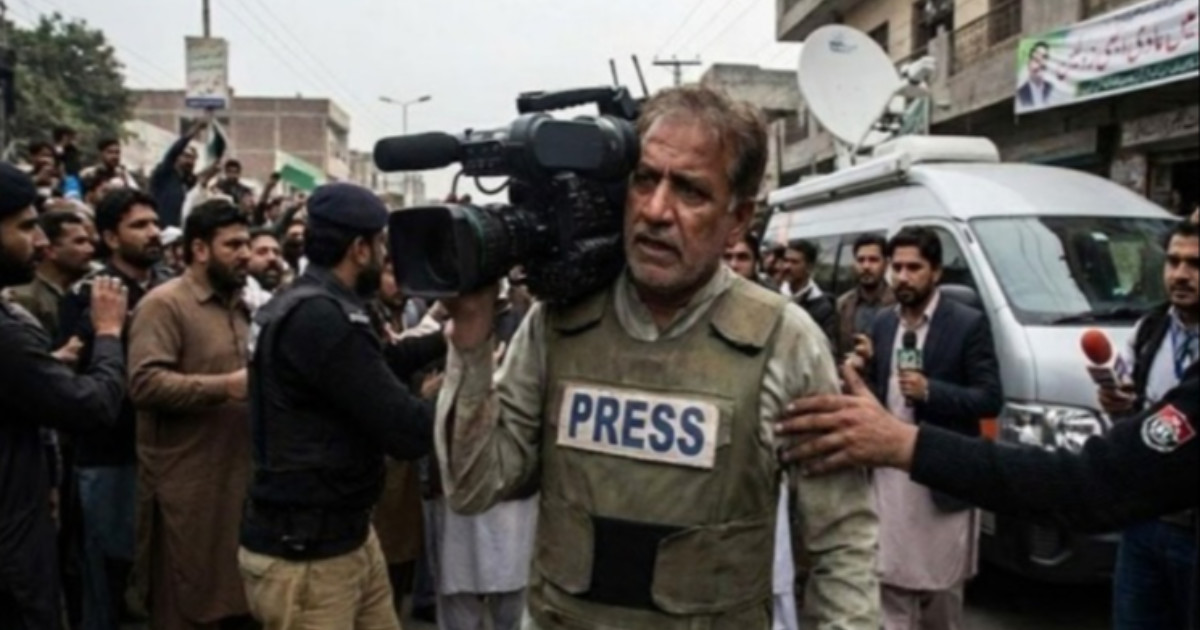
From 2001 onwards, Pakistan has been caught in a whirlwind of “breaking news”, hurtling from one tragedy to another, sending journalists, especially those working for TV channels, in a constant struggle of ‘breaking’ the news first and be on the spot all the time to provide the people minute by minute account, which becomes repetitive after a few minutes.
If the journalists associated with the electronic media are working under constant pressure of being on top of the news, their counterparts in the print media bring with them a long history of working their lives out in the ungodly hours and living apart socially. They have been brought up in the tradition of journalism as ‘mission’ where you may not get regular salaries, and sackings are arbitrary.
In other words you have to be at it all the time. Though the aura of ‘mission’ associated with journalism has faded, journalists in the print media still work longer hours, thinking that they are doing something more than earning livelihood and are different from others. Two weekly offs may give them the welcome rest that their bodies need.
It may also allow them to think more about the quality of their work than its quantity. As the electronic media have a heavy presence in Pakistani journalism, with the people being kept informed every minute, the print media may have to think hard about getting half the attention it used to draw15 years ago. Printing lots of news may not be the answer. The answer lies in improving the quality of work.
And that only comes when one has some time to spare, relax and ‘think’, instead of rushing and reporting (and of course editing also) everything that has already been reported. Some may laugh off at the suggestion of giving journalists two weekly days off, and dismiss it as not ‘feasible’.
But when the entire country is switching to five-day week because of power outages, what’s the harm in giving journalists two days of rest. (Daud Malik is a senior journalist who has worked for The News and Dawn)
Key Points
- The piece calls for two weekly holidays for journalists to support rest, family time, and better performance.
- It says the culture of constant deadlines and round-the-clock presence is tied to a legacy of journalism as a mission.
- It cites rapid growth in working journalists with the expansion of private TV and radio, intensifying competitive pressure.
- It argues print media should focus on improving quality rather than producing more repetitive news.
- It notes Pakistan’s broader shift toward a five-day week due to power outages as a precedent for more weekly rest.
Relevant Topics
Ask AI: Understand this story your way
AI EnabledDig deeper, ask anything — get instant context, background, and clarity.
Disclaimer: This feature is powered by AI and is intended to help readers explore and understand news stories more easily. While we strive for accuracy, AI-generated responses may occasionally be incomplete or reflect limitations in the underlying model. This feature does not represent the editorial views of JournalismPakistan. For our full, verified reporting, please refer to the original article.