
A global story, locally missing: Pakistan media under scrutiny
JournalismPakistan.com | Published: 12 April 2026 | JP Special Report
Join our WhatsApp channel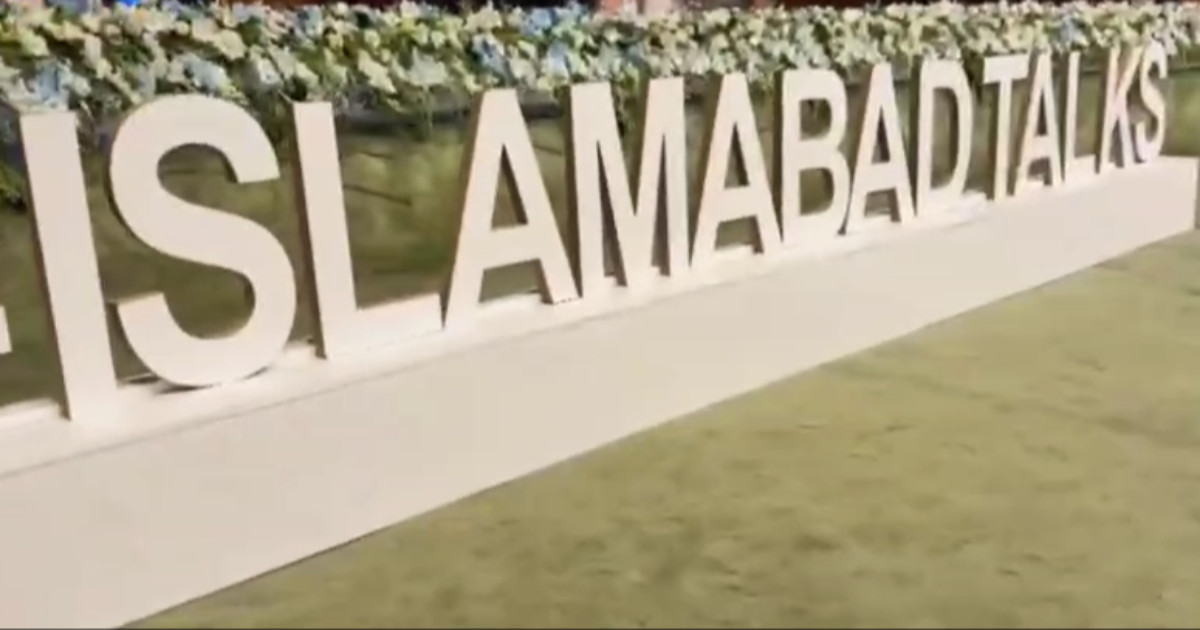
While Islamabad hosted Iran-US negotiations, Pakistani media mostly ran agency updates and optics-focused coverage; the episode exposed newsroom weaknesses, notably lack of beat specialization and limited on-site analytical reporting.Summary
ISLAMABAD — When high-stakes talks between Iran and the United States unfolded in Islamabad, the city briefly became the center of global diplomatic attention. For Pakistan, it was a moment of strategic relevance and international visibility.
But as negotiations progressed behind closed doors, a different story began to emerge, one that had little to do with diplomacy and everything to do with journalism.
Despite hosting the talks, much of Pakistan’s media struggled to produce original, substantive reporting. Instead, television screens and digital platforms were filled with ticker updates sourced from international agencies, while on-ground coverage remained largely limited to logistics, arrangements, and official optics.
A major global event was taking place in Islamabad. Yet, in many ways, it was being reported from outside Pakistan.
A story reported from elsewhere
The contrast was difficult to ignore. Foreign media organizations deployed correspondents with deep regional expertise, many specializing in Iran, the Middle East, or US foreign policy. Their reporting, while still constrained by limited access, was framed by years of subject knowledge and geopolitical context.
Within Pakistan, however, the gap was evident.
Journalist Kamran Yousaf argued that the problem went beyond access. In his view, it reflected a deeper issue within the profession itself.
He pointed to the absence of specialized reporting in Pakistani newsrooms, where journalists are often rotated between beats with little time to develop subject expertise. Covering an event like the Iran–US talks, he suggested, requires not just presence but preparation, an understanding of history, diplomacy, and regional power dynamics that cannot be improvised overnight.
The result, critics say, was predictable: when faced with a complex international story, much of the local media defaulted to surface-level coverage.
No access, no story?
Others, however, see the situation differently.
Senior journalist Omar R Quraishi argued that the lack of meaningful reporting was not necessarily a failure of journalists, but a consequence of the circumstances. Sensitive negotiations of this nature are rarely transparent, and in this case, there were no regular briefings, verified leaks, or official disclosures to work with.
Without credible information, reporters were left with few ethical options: wait, report only what could be confirmed, or risk speculation.
In that context, he suggested, restraint may have been the more responsible choice. The absence of reporting, in some cases, reflected the absence of verifiable facts.
Yet, even this argument underscores a broader challenge: how the media operates when access is restricted and information is tightly controlled.
Optics over substance
While the talks themselves remained opaque, coverage within Pakistan often focused on what was visible: the venue, arrangements, and official management of the event.
Images and reports highlighting preparations at the Islamabad Convention Center circulated widely, offering a curated glimpse of the occasion. But for many observers, this emphasis on presentation over substance only reinforced concerns about the direction of local journalism.
In the absence of hard news, optics appeared to fill the vacuum.
This raised uncomfortable questions: Had journalism been reduced to event management? And was the media too willing to align itself with official narratives rather than push for independent reporting?
A deeper industry crisis
For journalist Fahim Akhtar Malik, the episode reflects a more troubling reality.
He placed responsibility squarely on the structural conditions shaping Pakistan’s media landscape: ownership pressures, financial instability, and a shrinking space for editorial independence. In his assessment, when news organizations become overly dependent on advertising, institutional influence, or political considerations, their ability to perform during critical moments is compromised.
The consequences, he argued, were visible during the talks: a reliance on ready-made content, an absence of critical inquiry, and a failure to assert journalistic autonomy even when the world’s attention was on Pakistan.
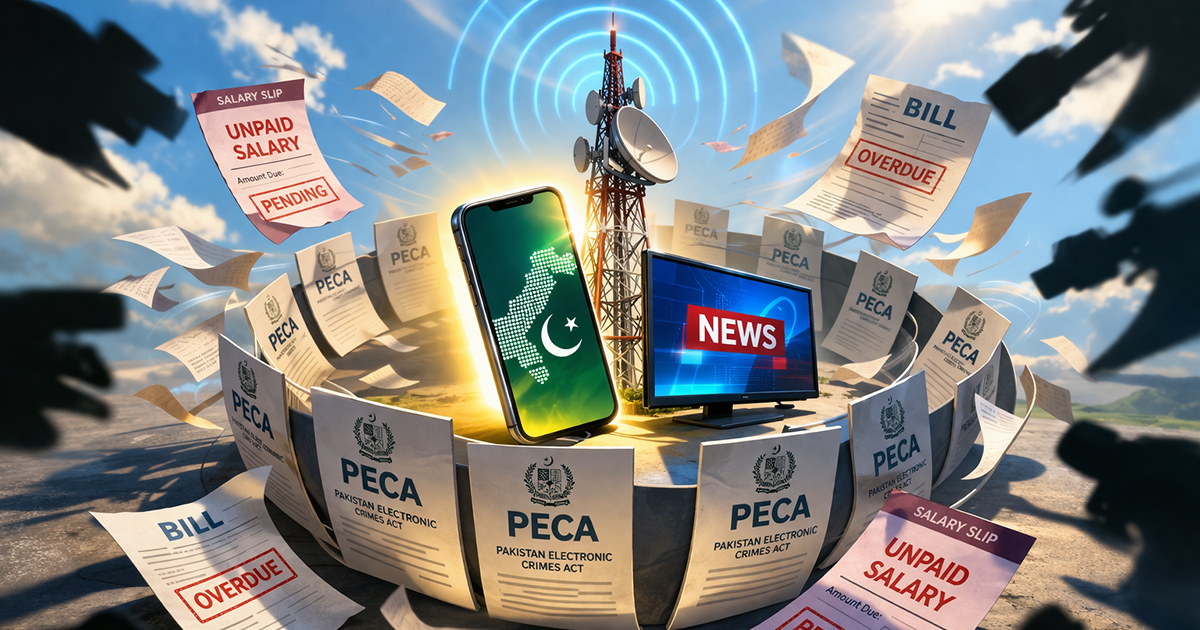
This critique ties into a wider trend. Pakistan’s media industry has been under financial strain for years, with delayed salaries, shrinking budgets, and increasing competition from digital platforms. Many journalists now straddle multiple roles, with some turning to YouTube and other platforms to supplement their income.
In such an environment, long-term investment in specialized reporting, foreign affairs expertise, or investigative journalism often takes a back seat.
More than a missed opportunity
The Iran–US talks may not have produced a diplomatic breakthrough, but for Pakistan’s media, they served as a revealing test.
They highlighted gaps in capacity, exposed the limits of access, and brought into focus the pressures shaping modern newsrooms. Perhaps most importantly, they showed how easily a major international story, unfolding on home ground, can slip beyond the grasp of local media.
For a country that frequently finds itself at the crossroads of regional and global politics, this raises a pressing question: who gets to tell Pakistan’s story when it matters most?
Until there is sustained investment in expertise, stronger editorial independence, and a renewed commitment to original reporting, moments like these may continue to pass in a similar fashion, witnessed locally but told by others.
WHY THIS MATTERS: The episode highlights structural gaps in Pakistan’s media ecosystem, particularly the lack of specialized reporting and overreliance on access-driven journalism in high-stakes situations. It also underscores how financial pressures and editorial constraints can limit original reporting, especially when information is tightly controlled. For newsrooms, it serves as a reminder of the need to invest in expertise, strengthen editorial independence, and develop reporting strategies that go beyond official narratives.
ATTRIBUTION: This report is produced by JournalismPakistan, with reporting, analysis, and compilation by JP staff based on publicly available statements, journalist commentary, and open-source information.
PHOTO: JournalismPakistan
Key Points
- High-profile Iran-US talks in Islamabad drew international coverage but limited original local reporting.
- Many Pakistani outlets relied on agency tickers and official visuals rather than analytical on‑the‑ground journalism.
- Foreign correspondents deployed with subject expertise provided deeper geopolitical context.
- Newsrooms showed a lack of beat specialization and frequent rotation of reporters between topics.
- The episode highlights the need for capacity building in specialized reporting and sustained on-site coverage.
Key Questions & Answers
Why did Islamabad attract media attention?
Islamabad hosted high-stakes Iran-US negotiations, temporarily making it a focal point for regional and international diplomacy.
Why did Pakistani outlets rely on agency updates?
Limited specialist reporters and rapid news cycles led many outlets to use agency tickers and official material instead of original reporting.
How did foreign media coverage differ?
Foreign correspondents often brought regional expertise and historical context; their reporting tended to be more analytical despite access constraints.
What solutions does the episode suggest for Pakistani journalism?
Strengthening beat specialization, investing in on-site reporting capacity, and longer-term journalist training are key measures to improve substantive coverage.
Relevant Topics
Ask AI: Understand this story your way
AI EnabledDig deeper, ask anything — get instant context, background, and clarity.
Disclaimer: This feature is powered by AI and is intended to help readers explore and understand news stories more easily. While we strive for accuracy, AI-generated responses may occasionally be incomplete or reflect limitations in the underlying model. This feature does not represent the editorial views of JournalismPakistan. For our full, verified reporting, please refer to the original article.