
Why media layoffs persist even as audiences continue to grow
JournalismPakistan.com | Published: 25 January 2026 | JP Staff Report
Join our WhatsApp channel
Despite rising page views, video and podcast consumption, news organizations are cutting staff because audience growth has outpaced the ability to monetize users; digital advertising yields lower per-user revenue and platforms capture most ad spending.Summary
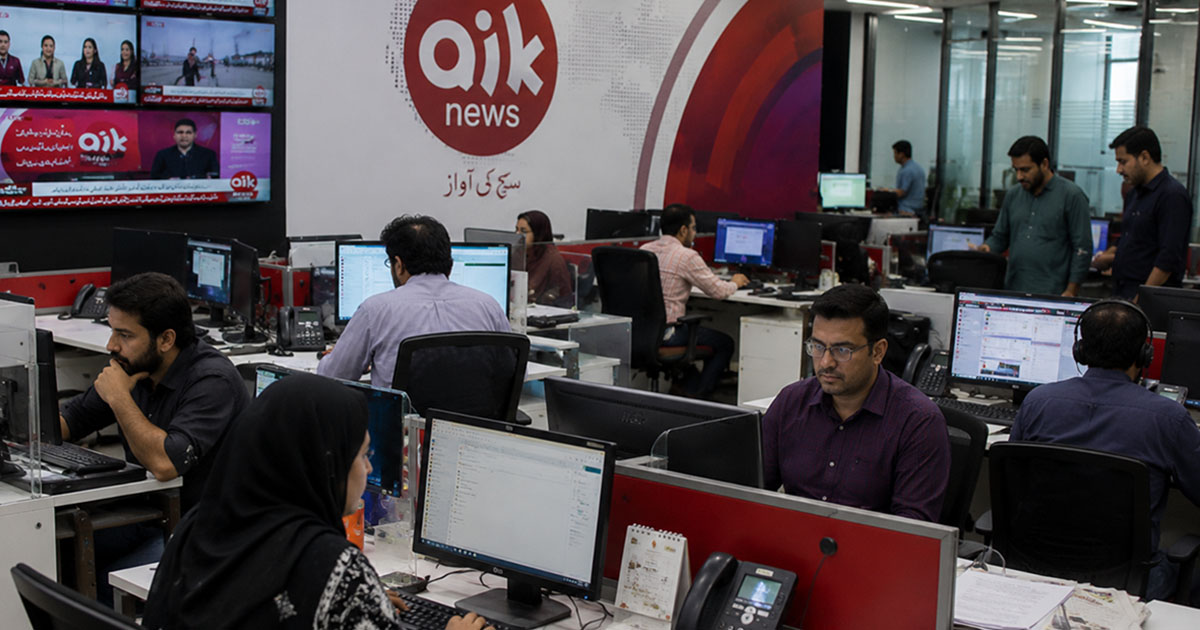
ISLAMABAD — News organizations across the world continue to announce layoffs even as their digital audiences expand, newsletters gain subscribers, and social media reach remains high. For many readers, the contradiction is confusing. If more people are consuming journalism, why are newsrooms shrinking?
The answer lies in the widening gap between audience growth and sustainable revenue. Over the past decade, digital consumption has steadily replaced print and broadcast habits. Page views, video views, podcast downloads, and app installs are often rising, but the business models that once funded journalism have not kept pace with that shift.
Audience size and financial health are no longer tightly linked. A growing readership does not automatically translate into higher profits or even stable income. Media companies are increasingly judged by margins, cash flow, and long-term viability rather than reach alone.
Audience growth does not equal revenue growth
Digital audiences are easier to grow than to monetize. Much of the growth comes from platforms such as search engines, social media feeds, and news aggregators, where publishers have limited control over pricing, distribution, or user data. Advertising revenue generated from these channels is typically far lower per user than legacy print or broadcast advertising.
Digital advertising is also highly competitive and dominated by large technology companies. Publicly available market analyses consistently show that global digital ad spending is concentrated among a small number of platforms, leaving publishers to compete for a smaller share of remaining revenue. Even when traffic rises, the average revenue per user often declines.
Subscription models help, but they do not solve the problem for every outlet. Only a limited number of global or national brands have reached the scale where digital subscriptions can fully support large newsrooms. Many regional, local, and niche outlets see subscription growth plateau after early gains, while costs continue to rise.
Cost structures built for a different era
Many media organizations still carry cost structures designed for an earlier business environment. Newsrooms expanded during periods when print advertising, classified ads, or broadcast licenses provided predictable income. Those revenue streams have either declined sharply or disappeared.
At the same time, operating costs have increased. Technology infrastructure, cybersecurity, audience analytics, video production, and platform-specific content teams all add expenses that did not exist in traditional newsrooms. Inflation and rising labor costs in many countries further strain budgets.
Layoffs are often used as a short-term response to these pressures. Executives frequently frame job cuts as necessary to align costs with current revenues or to fund investment in digital products. Public statements accompanying layoffs often emphasize sustainability rather than audience demand.
Platform dependence and volatility
A significant portion of audience growth depends on external platforms whose algorithms and policies can change without notice. Traffic from search or social media can rise rapidly and then fall just as quickly after an algorithm update, a product redesign, or a policy shift.
This volatility makes long-term planning difficult. Revenue forecasts based on platform-driven traffic are inherently uncertain, leading companies to adopt conservative staffing models. Even when audiences are growing at a given moment, management may anticipate future declines and cut costs preemptively.
Efforts by platforms to reduce the visibility of news content or deprioritize links have added to this uncertainty. These shifts are publicly documented through platform announcements and observed traffic changes reported by publishers and industry analysts.
Investor expectations and corporate ownership
For publicly traded or investor-backed media companies, financial expectations play a central role. Investors often prioritize profitability, cost discipline, and predictable returns over audience reach. In this context, layoffs can be driven by shareholder pressure rather than newsroom performance.
Private equity ownership has also influenced employment patterns in some markets. Financial disclosures and investigative reporting have shown that cost-cutting is sometimes used to extract short-term returns, even when audience metrics are stable or improving. While not universal, this dynamic has contributed to repeated rounds of layoffs at certain outlets.
Nonprofit and publicly funded media face different pressures but are not immune. Grants and donor funding can fluctuate, and many nonprofit outlets operate with narrow financial margins that leave little room for downturns.
Journalism output versus journalism investment
Another factor is the difference between producing content and investing in journalism. Audience growth can be driven by fewer journalists producing more content, supported by wire services, automation, or syndicated material. While this may sustain traffic, it does not necessarily justify maintaining large reporting teams.
Investigative reporting, foreign correspondence, and specialized beats are costly and do not always generate immediate traffic or revenue. When budgets tighten, these areas are often the first to face cuts, even if overall audience numbers remain strong.
WHY THIS MATTERS: For Pakistani journalists and media professionals, the global pattern offers important lessons. Audience growth alone is not a guarantee of job security or newsroom stability. Sustainable revenue models, diversified income streams, and reduced dependence on platforms are critical. Understanding these dynamics can help Pakistani media organizations plan realistically and avoid overexpansion based solely on traffic metrics.
ATTRIBUTION: This explainer draws on industry research, newsroom hiring trends, and publicly documented media business practices.
PHOTO: AI-generated; for illustrative purposes only
Key Points
- News organizations are announcing layoffs even as digital readership and engagement increase.
- Audience growth no longer guarantees higher revenue due to weak monetization per user.
- Major tech platforms capture a large share of digital ad spending, reducing publisher income.
- Publishers face challenges converting platform-driven reach into subscriptions or profitable advertising.
- Business decisions now prioritize margins, cash flow and long-term viability over raw audience size.
Ask AI: Understand this story your way
AI EnabledDig deeper, ask anything — get instant context, background, and clarity.
Disclaimer: This feature is powered by AI and is intended to help readers explore and understand news stories more easily. While we strive for accuracy, AI-generated responses may occasionally be incomplete or reflect limitations in the underlying model. This feature does not represent the editorial views of JournalismPakistan. For our full, verified reporting, please refer to the original article.