
Five stories showing pressure on Pakistan media
JournalismPakistan.com | Published: 13 April 2026 | JP Staff Report
Join our WhatsApp channel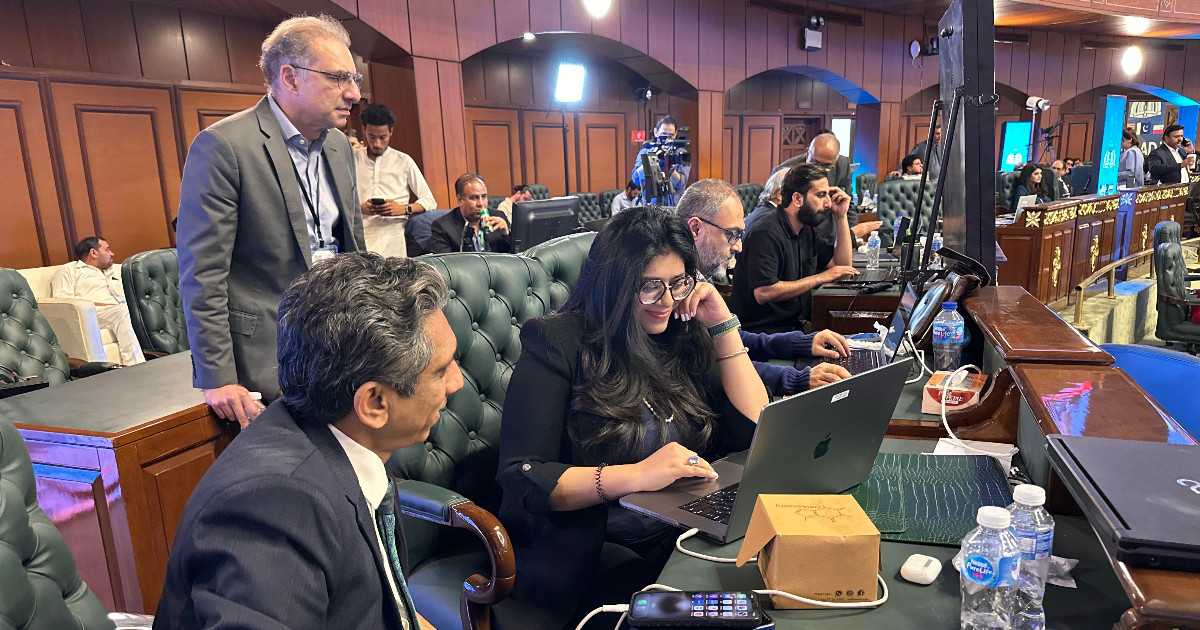
Five recent developments, drawn from parliamentary disclosures and journalist accounts, signal converging legal, economic and state pressures on Pakistan's media. They cite 187 PECA 26A cases, opaque ad practices, layoffs and access concerns.Summary
ISLAMABAD — Five recent developments, ranging from cybercrime cases and transparency gaps to layoffs and access concerns, highlight the multiple pressures shaping Pakistan’s media landscape. Together, they point to a convergence of legal, economic, and institutional challenges affecting journalists and news organizations.
The developments, drawn from parliamentary disclosures, journalist accounts, and union responses over the past week, underscore how constraints on journalism are emerging across different fronts rather than from a single source.
PECA cases raise legal concerns
The registration of 187 cases under Section 26A of the Prevention of Electronic Crimes (Amendment) Act 2025 has raised concerns about its implications for press freedom. The provision criminalizes the intentional spread of false or harmful information online, carrying penalties of up to three years in prison and fines of Rs2 million.
Officials say the measure is aimed at curbing misinformation, but media observers have warned that its broad language could allow for misuse against journalists and dissenting voices. The absence of publicly available details about those charged has further intensified concerns about transparency and selective enforcement.
The Interior Minister, Senator Mohsin Naqvi, informed the National Assembly that the registered cases involve 180 males, 21 females, and one minor suspect. The government did not provide a detailed list of individuals involved.
Transparency gaps in government advertising
Questions about accountability surfaced in the National Assembly when lawmakers sought details on government advertising expenditures from the Ministry of Information and Broadcasting. The official response recorded was “reply not received,” leaving key questions unanswered.
The lack of disclosure has raised concerns within media circles about how public funds are distributed among outlets and whether such allocations are made transparently. Advertising revenue remains a critical financial lifeline for many media organizations, making transparency in its distribution particularly significant.
Access barriers during diplomatic coverage
Concerns over unequal access emerged during recent Iran–United States diplomatic engagements linked to Islamabad. Journalists familiar with the situation reported difficulties for local media in obtaining accreditation and timely access to briefings.
In contrast, international media representatives were reportedly facilitated more efficiently, prompting debate about fairness in access. Media professionals say such disparities can affect the ability of domestic journalists to report comprehensively on major international developments taking place within Pakistan.
Layoffs highlight industry instability
Economic pressures within the media sector were underscored by layoffs at Aaj News TV, where 20 employees were reportedly dismissed from the Islamabad center amid restructuring efforts. The move was criticized by the Rawalpindi Islamabad Union of Journalists, which also raised concerns about delayed salary payments.
Industry observers note that cost-cutting measures, staff reductions, and delayed wages have become recurring issues in Pakistan’s media landscape, reflecting broader financial challenges faced by news organizations.
Low uptake of the journalist health scheme
Official figures presented in Parliament showed limited utilization of a government-backed health insurance scheme for journalists. Of the 4,537 media workers enrolled under the Prime Minister’s Health Insurance Program, only 187 have accessed benefits so far. The figures were presented in the National Assembly.
The low uptake points to possible gaps in awareness, accessibility, or administrative processes. While the initiative was designed to provide support to journalists, its limited impact raises questions about the effectiveness of welfare mechanisms in the sector.
A pattern of growing pressure
Taken together, these five developments reflect a broader pattern of strain on Pakistan’s media. Legal ambiguity, restricted access, financial instability, and underutilized welfare initiatives are collectively shaping the environment in which journalists operate.
Rather than isolated incidents, they point to interconnected challenges that influence newsroom capacity, reporting conditions, and the overall sustainability of independent journalism in the country.
WHY THIS MATTERS: This snapshot shows how pressures on Pakistani media are evolving beyond direct censorship into structural challenges involving law, funding, and access. For journalists and newsroom leaders, these trends affect not just what can be reported, but how sustainably and independently journalism can function.
ATTRIBUTION: Reporting by JournalismPakistan, based on publicly available statements from the National Assembly of Pakistan (April 2026), Ministry of Information and Broadcasting disclosures (April 2026), and Rawalpindi Islamabad Union of Journalists statements (April 2026).
PHOTO: JournalismPakistan
Key Points
- 187 cases registered under Section 26A of PECA 2025 have raised legal and press freedom concerns.
- Authorities say the measure targets misinformation; critics warn the provision's broad language could be misused against journalists.
- Parliamentary records reveal limited disclosure about those charged, transparency complaints over government advertising, and enforcement.
- Journalist accounts and union responses note recent layoffs and growing difficulties in news gathering and access.
- The combined legal, economic, and institutional pressures indicate constraints emerging from multiple fronts rather than a single source.
Key Questions & Answers
What is Section 26A of PECA?
Section 26A criminalizes the intentional spread of false or harmful information online, with penalties including up to three years in prison and fines; concerns focus on its broad wording and possible misuse.
How many cases have been registered under this provision?
Parliamentary disclosures indicate 187 registered cases under Section 26A, involving 180 males, 21 females and one minor suspect, according to the Interior Minister.
Are details of the accused publicly available?
No; the government did not provide a detailed public list of individuals charged, which has intensified transparency and selective enforcement concerns.
How have journalists and unions responded?
Journalists and unions have raised alarms about legal threats, opaque government ad practices, layoffs and restricted access, urging greater transparency and safeguards for press freedom.
Relevant Topics
Ask AI: Understand this story your way
AI EnabledDig deeper, ask anything — get instant context, background, and clarity.
Disclaimer: This feature is powered by AI and is intended to help readers explore and understand news stories more easily. While we strive for accuracy, AI-generated responses may occasionally be incomplete or reflect limitations in the underlying model. This feature does not represent the editorial views of JournalismPakistan. For our full, verified reporting, please refer to the original article.