.png)
EU court adviser says Google Gemini may breach copyright
JournalismPakistan.com | Published: 6 November 2026 | JP Global Monitoring
Join our WhatsApp channel
An adviser to the CJEU says Google's Gemini chatbot may infringe news publishers' copyrights by retrieving protected articles and reproducing their original expression via retrieval-augmented generation, potentially reducing user visits to publishers' sites.Summary
LUXEMBOURG — Google's Gemini artificial intelligence chatbot could infringe the rights of news publishers when it retrieves and reproduces protected material from their websites, according to a legal opinion issued by an adviser to the European Union's highest court on November 3, 2026.
The opinion, delivered by Advocate General Maciej Szpunar at the Court of Justice of the European Union (CJEU), addresses a dispute between Google Ireland and Hungarian digital publisher Like Company. It raises important questions about the use of journalistic content by generative AI services, although the court has yet to deliver a binding ruling.
When AI reproduces news content
Szpunar said AI chatbots could violate publishers' rights when they access protected news articles without authorization or reproduce their original expression so extensively that users no longer need to visit the publisher's website. His assessment distinguishes between reporting factual information, which copyright does not protect in itself, and reproducing the protected expression of published journalism.
The opinion examines how Gemini uses retrieval-augmented generation, a technology that allows AI systems to obtain information from websites in real time before producing answers. This process can involve retrieving news articles and using their contents to generate responses to questions about current events.
Hungarian publisher challenges Google
The case originated when Like Company, which operates several Hungarian web portals, accused Google of using its articles without permission. The publisher alleged that Gemini had reproduced and made available material from its publications between June 13, 2023, and May 31, 2024. It also questioned whether its content had been used to train Google's large language models.
A Hungarian court referred four questions to the CJEU seeking clarification of European copyright law. Two concerned the use of copyrighted material in AI training, while the remaining questions examined whether chatbot-generated answers could constitute unauthorized reproduction or communication of protected publications to the public.
Opinion separates AI training from AI-generated answers
Szpunar recommended that the court decline to answer the two questions concerning AI training because there was no evidence establishing that Like Company's articles had been used to train Gemini. He also considered that training a language model did not constitute the online use of press publications covered by the specific publishers' right at issue.
Nevertheless, he addressed the broader legal question and suggested that using copyrighted material to train AI models could generally fall within the European Union's text and data mining exception. That exception is subject to conditions, including the ability of rights holders to reserve their rights against certain uses.
His assessment of chatbot-generated answers was more restrictive. He suggested that publishers' rights could be infringed when a chatbot obtains material unlawfully, including by circumventing effective technical protections, or reproduces the recognizable expression of an article to such an extent that its answer substitutes for reading the original publication.
The opinion also examined responsibility for potential infringement. Szpunar indicated that an AI service provider could be held responsible where unauthorized uses were inherent in its business model or where it failed to take appropriate measures to prevent them.
No finding of infringement against Google
Importantly, Szpunar did not conclude that Google had infringed Like Company's rights. His preliminary assessment suggested that the particular example presented in the Hungarian proceedings might not satisfy the conditions necessary to establish infringement.
He observed that the publisher did not appear to have implemented effective technological measures restricting access to its articles, while the example submitted did not demonstrate recognizable reproduction of protected expression. He also considered Google's measures to reduce the risk of infringement.
Google has defended Gemini's operation, maintaining that the system generates original responses rather than simply reproducing articles. According to Reuters' November 3 reporting, the company also pointed to controls available to publishers over the use of their content.
The Advocate General's opinion is advisory and does not bind the CJEU. The court's judges will determine how the relevant European laws should be interpreted, after which the Hungarian court will apply that interpretation to the dispute.
What the opinion means for news publishers
The case comes as news organizations increasingly question the relationship between AI-generated answers, website traffic and the commercial value of original journalism.
Publishers invest in reporting, editing, verification and maintaining news operations. AI services can draw on that work to answer users' questions without necessarily directing those users to the publications responsible for the reporting.
The distinction is significant because publishers traditionally rely on advertising, subscriptions and reader relationships to finance journalism. If AI-generated summaries replace visits to original reports, publishers could face additional pressure on revenues, although the economic effects will vary across organizations and services.
The legal opinion does not establish that every AI summary requires permission or payment. Instead, it suggests that the circumstances of access and the extent to which protected expression is reproduced are important considerations under European law.
For publishers, the eventual ruling could help clarify the boundaries between legitimate use of factual information and unauthorized reuse of journalistic work.
Implications beyond Europe
Although the proceedings concern European Union law, the issues have relevance for publishers elsewhere, including Pakistan and other Asian media markets where news organizations are experimenting with AI tools while struggling to sustain digital revenues.
The central question for these publishers is not simply whether AI systems can summarize news. It is whether the original publishers retain meaningful control over their protected content when technology companies incorporate that material into services that compete for readers' attention.
The European proceedings do not directly establish copyright obligations for AI companies operating under Pakistani or other non-EU laws. However, the legal reasoning may become relevant to discussions about licensing, attribution and the commercial use of journalism by AI platforms.
A future CJEU judgment could provide greater clarity for European publishers and technology companies. Until then, the November 3 opinion represents a significant legal interpretation rather than a final determination of Google's liability.
ATTRIBUTION: Based on the Court of Justice of the European Union's official announcement and Advocate General Maciej Szpunar's opinion in Case C-250/25, published November 3, 2026. Additional context from Reuters, November 3, 2026, and Pinsent Masons' Out-Law legal analysis, November 5, 2026.
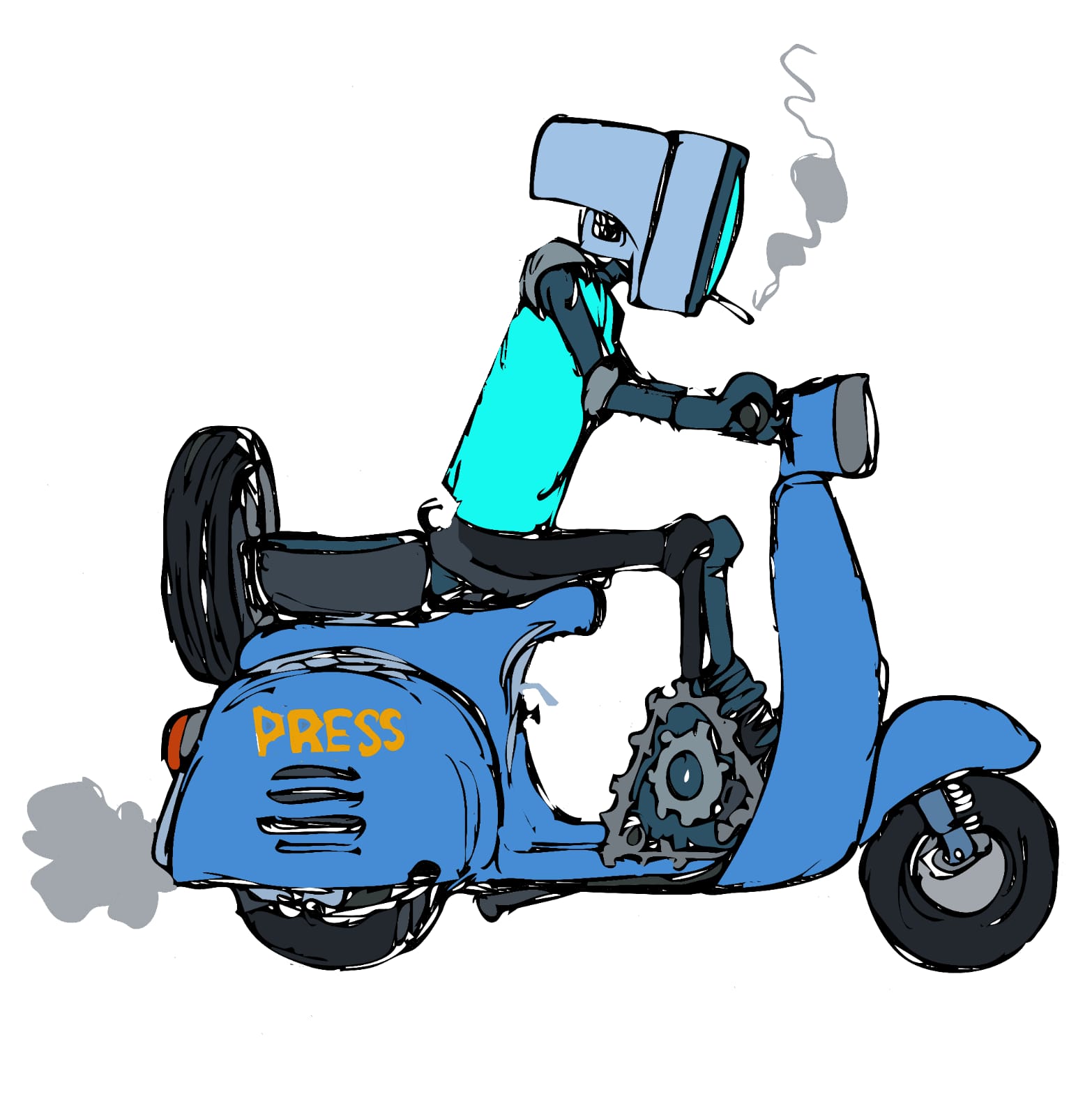
PHOTO: AI-generated; for illustrative purposes only.
Key Points
- Advocate General Maciej Szpunar issued a legal opinion on Google Gemini and copyright on Nov 3, 2026.
- Opinion focuses on retrieval-augmented generation (RAG) used to obtain and use web articles in real time.
- Distinguishes between unprotected facts and protected journalistic expression reproduced by AI.
- Like Company, a Hungarian publisher, alleges Google used its articles without permission.
- The CJEU opinion raises publisher rights and traffic-impact concerns but is not a binding court ruling.
Key Questions & Answers
Does the adviser's opinion bind the Court of Justice?
No. An Advocate General's opinion guides the CJEU but the court issues the final, binding judgment.
What is retrieval-augmented generation (RAG)?
RAG is a method where an AI retrieves information from external sources (like websites) in real time to help generate responses.
How could publishers be harmed?
Publishers may lose web traffic and potential revenue if AI reproduces protected expression so users no longer need to visit original articles.
Are facts protected by copyright?
No. Copyright does not protect facts themselves, but it does protect the original expression and presentation of journalistic content.
Ask AI: Understand this story your way
AI EnabledDig deeper, ask anything — get instant context, background, and clarity.
Disclaimer: This feature is powered by AI and is intended to help readers explore and understand news stories more easily. While we strive for accuracy, AI-generated responses may occasionally be incomplete or reflect limitations in the underlying model. This feature does not represent the editorial views of JournalismPakistan. For our full, verified reporting, please refer to the original article.