Amar Guriro: Journalism's future is human-AI partnership The JournalismPakistan Global Media Brief | Edition 23 | June 5, 2026 As AI reshapes news, publishers seek a sustainable future Every frame at a cost: The safety crisis facing Pakistan's camerapersons Why journalists are increasingly targeted in conflict zones What the 60 Minutes controversy means for TV journalism Zee secures FIFA World Cup rights in India through 2030 How fact-checkers verify viral videos during breaking news Pentagon restrictions on reporters draw media backlash Israel-Lebanon talks proceed as conflict hinders reporting Why governments are tightening controls on foreign journalists China condemns US restrictions on Xinhua reporter Taiwan condemns China over New York Times reporter expulsion The biggest threats facing journalism in Asia today Press freedom review: The many faces of pressure on the press Amar Guriro: Journalism's future is human-AI partnership The JournalismPakistan Global Media Brief | Edition 23 | June 5, 2026 As AI reshapes news, publishers seek a sustainable future Every frame at a cost: The safety crisis facing Pakistan's camerapersons Why journalists are increasingly targeted in conflict zones What the 60 Minutes controversy means for TV journalism Zee secures FIFA World Cup rights in India through 2030 How fact-checkers verify viral videos during breaking news Pentagon restrictions on reporters draw media backlash Israel-Lebanon talks proceed as conflict hinders reporting Why governments are tightening controls on foreign journalists China condemns US restrictions on Xinhua reporter Taiwan condemns China over New York Times reporter expulsion The biggest threats facing journalism in Asia today Press freedom review: The many faces of pressure on the press
Logo
Janu
JP Global Media Brief

HRCP warns of shrinking press freedom in Balochistan

 JournalismPakistan.com |  Published: 21 November 2017

Join our WhatsApp channel

HRCP warns of shrinking press freedom in Balochistan
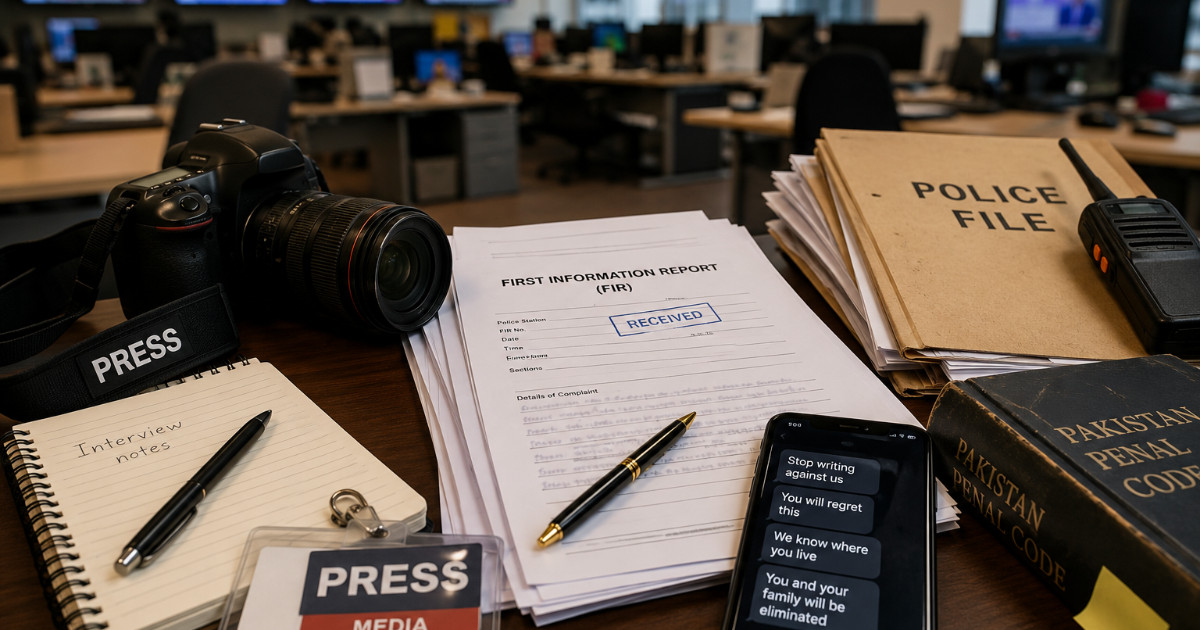
The HRCP has raised alarms regarding the decline of press freedom in Balochistan. Journalists face intimidation from both intelligence agencies and militants.

A leading rights group warned Tuesday of shrinking press freedom in Pakistan's troubled southwest a month after a series of media outlets restricted activities following threats from militants.

Journalists in Balochistan province said they were approached earlier this year by intelligence agencies who asked them to stop publishing statements by Baloch separatist groups.

After they did so the insurgents warned newspapers and private television channels of dire consequences for halting coverage of their activities.

The situation remains tense in the province where newspaper distribution is confined to 18 out of 34 districts, largely areas where the militants have little to no presence.

"In an already coercive environment where there are numerous restraints and threats to freedom of expression, the current suspension of newspapers only further exacerbates the situation," Mehdi Hassan, the chairman of the Human Rights Commission of Pakistan (HRCP), said in a statement.

"In the prevailing circumstances, HRCP calls on all sides to immediately desist from any activities that directly threaten journalists, newspaper employees and hawkers and their livelihoods."

Pakistan is routinely ranked among the world's most unsafe countries for reporters, and Amnesty International has singled out Balochistan for the deadly pressure journalists face there.

Rights groups say activists and journalists often find themselves caught between the security establishment and militant groups.

Reporting critical of security policies controlled by the powerful military is also considered a major red flag, with reporters at times detained, beaten and even killed.

As a result, while the Pakistani media is nominally free and noisy, many practice an unofficial form of self-censorship.

Balochistan, which borders Iran and Afghanistan, is Pakistan's most restive province and afflicted by Islamist militancy and sectarian violence as well as the separatist insurgency.

According to Reporters Without Borders (RSF), around 40 journalists have been murdered in the province since the start of the current conflict in 2006. - AFP

Key Points

  • HRCP warns of shrinking press freedom in Balochistan.
  • Journalists faced pressure from intelligence agencies to censor separatist statements.
  • The region remains dangerous for media, with limited newspaper distribution.
  • Around 40 journalists have been killed in Balochistan since 2006.
  • Self-censorship is prevalent due to threats from security forces and militants.

Ask AI: Understand this story your way

AI Enabled

Dig deeper, ask anything — get instant context, background, and clarity.

Not sure what to choose? Try one of these.

The AI generates results based on your selected options
Your AI-generated results will appear here after you click the button.

Disclaimer: This feature is powered by AI and is intended to help readers explore and understand news stories more easily. While we strive for accuracy, AI-generated responses may occasionally be incomplete or reflect limitations in the underlying model. This feature does not represent the editorial views of JournalismPakistan. For our full, verified reporting, please refer to the original article.

Explore Further

Newsroom
Amar Guriro: Journalism's future is human-AI partnership

Amar Guriro: Journalism's future is human-AI partnership

 June 05, 2026 Amar Guriro, founder of Pakistan's first AI-powered news platform, says journalism's future rests on human-AI collaboration to improve reporting while preserving editorial oversight.


The JournalismPakistan Global Media Brief | Edition 23 | June 5, 2026

The JournalismPakistan Global Media Brief | Edition 23 | June 5, 2026

 June 05, 2026 Global Media Brief reviews pressures reshaping journalism, press freedom, AI and platform power, and reports BBC's Emmy, 60 Minutes turmoil and Taiwan's protest.


As AI reshapes news, publishers seek a sustainable future

As AI reshapes news, publishers seek a sustainable future

 June 05, 2026 At the World News Media Congress in Marseille, publishers discussed how generative AI is altering newsroom workflows, audience engagement and content licensing.


Why journalists are increasingly targeted in conflict zones

Why journalists are increasingly targeted in conflict zones

 June 04, 2026 Journalists in conflict zones face rising danger as combatants, states and militias increasingly target independent reporting to control narratives.


What the 60 Minutes controversy means for TV journalism

What the 60 Minutes controversy means for TV journalism

 June 03, 2026 The 60 Minutes controversy at CBS exposes tensions over leadership, editorial independence and pressures on legacy TV journalism amid political polarization.


Popular Stories