
UK plans social media ban for under-16s Supreme Court shutters press room amid backlash Pele to Messi: How World Cup finals wrote football's greatest story Press freedom review: From jail cells to cyberspace, threats to journalists multiply The right to know: Comparing access-to-information laws across Asia Open-Source Intelligence (OSINT): How journalists verify information in the digital age Ethiopia expels French journalist after Tigray reporting Kane Williamson retires: The end of an era Javeria Siddique alleges cross-border smear campaign The JournalismPakistan Global Media Brief | Edition 24 | June 12, 2026 Four journalist legal cases, one death threat recorded in May Nahid Rana: Bangladesh's 152km/h fast-bowling force Global Fact-Checking Awards finalists spotlight AI misinformation fight Israel deports French journalist over West Bank reporting concerns World Cup hydration breaks open a new ad revenue stream UK plans social media ban for under-16s Supreme Court shutters press room amid backlash Pele to Messi: How World Cup finals wrote football's greatest story Press freedom review: From jail cells to cyberspace, threats to journalists multiply The right to know: Comparing access-to-information laws across Asia Open-Source Intelligence (OSINT): How journalists verify information in the digital age Ethiopia expels French journalist after Tigray reporting Kane Williamson retires: The end of an era Javeria Siddique alleges cross-border smear campaign The JournalismPakistan Global Media Brief | Edition 24 | June 12, 2026 Four journalist legal cases, one death threat recorded in May Nahid Rana: Bangladesh's 152km/h fast-bowling force Global Fact-Checking Awards finalists spotlight AI misinformation fight Israel deports French journalist over West Bank reporting concerns World Cup hydration breaks open a new ad revenue stream
Logo
Janu
Middle East

EU ban unreasonable: Press TV CEO

 JournalismPakistan.com |  Published: 13 March 2013

Join our WhatsApp channel
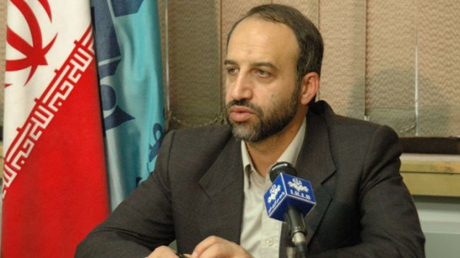
EU ban unreasonable: Press TV CEO
Press TV CEO Mohammad Sarafraz criticized the European Union's travel ban imposed on him and a director of the news channel. He believes the ban reflects the irrationality of EU policies and the influence of Iranian media.

Press TV CEO Mohammad Sarafraz (Picture) has dismissed the European Union (EU) travel ban on him and a director of Iran’s English-language news channel as “unreasonable,” Press TV reports.

“A media ban has been imposed for the first time in the world, showing the irrationality of the European Union and the influence of the [Islamic Republic of Iran Broadcasting's] world service,” Sarafraz said.

He pointed out that EU leaders have imposed the bans over a 10-second report about Iranian-Canadian journalist Maziar Bahari, who worked for Newsweek in Tehran.

On Tuesday, the European bloc blacklisted Sarafraz and Press TV Newsroom Director Hamid Reza Emadi for airing the interview with Bahari in 2009 following post-election riots in Iran.

Sarafraz said EU officials have given no response to Press TV questions about the imposition of the bans.

“In the text [of sanctions as published in the European Council’s official journal], it has been mentioned that Ofcom, an independent medium, has banned Press TV, but it is not an independent medium because its budget is approved by the UK parliament and its chief is appointed by [a] British secretary,” he noted.

“They think we, Iranians, are desperate to travel to Europe and open bank accounts in a continent which has been hit by harsh austerity measures due to economic difficulties,” he said.

“These bans and restrictions are not disturbing at all because they show we have achieved our goals and how influential we have become,” he added.

Sarafraz said Press TV has opened a new window for the public opinion in Europe where Capitalism has created a “hell” for people.

More here

Key Points

  • Press TV CEO dismisses EU travel ban as unreasonable.
  • The ban is linked to a report about journalist Maziar Bahari.
  • Sarafraz accuses EU of irrationality and media suppression.
  • Press TV's budget and leadership are state-influenced, contrary to EU claims.
  • Sarafraz states the bans show Press TV's growing influence.

Ask AI: Understand this story your way

AI Enabled

Dig deeper, ask anything — get instant context, background, and clarity.

Not sure what to choose? Try one of these.

The AI generates results based on your selected options
Your AI-generated results will appear here after you click the button.

Disclaimer: This feature is powered by AI and is intended to help readers explore and understand news stories more easily. While we strive for accuracy, AI-generated responses may occasionally be incomplete or reflect limitations in the underlying model. This feature does not represent the editorial views of JournalismPakistan. For our full, verified reporting, please refer to the original article.


Dive Deeper

Newsroom
UK plans social media ban for under-16s

UK plans social media ban for under-16s

 June 15, 2026 UK plans to ban under-16s from major social media like TikTok, Instagram, Facebook and X under new online safety rules, officials say, to protect children.


Supreme Court shutters press room amid backlash

Supreme Court shutters press room amid backlash

 June 15, 2026 Pakistan's Supreme Court shuttered its longstanding press room and tightened access for court reporters, drawing criticism from journalists and raising transparency concerns.


Pele to Messi: How World Cup finals wrote football's greatest story

Pele to Messi: How World Cup finals wrote football's greatest story

 June 15, 2026 From Pele to Messi, World Cup finals shaped football's global story, tracing triumphs and heartbreaks and showing how the game became a shared language.


Press freedom review: From jail cells to cyberspace, threats to journalists multiply

Press freedom review: From jail cells to cyberspace, threats to journalists multiply

 June 14, 2026 Press freedom faces mounting challenges worldwide as journalists confront arrests, legal pressure, cyberattacks, online harassment, deportations, and reporting restrictions across multiple countries.


The right to know: Comparing access-to-information laws across Asia

The right to know: Comparing access-to-information laws across Asia

 June 14, 2026 Across Asia, RTI laws range from effective tools for journalism and accountability to paper laws weakened by bureaucracy, broad exemptions and poor enforcement.


Popular Stories