

Crusading journalist and editor Julio Scherer dies in Mexico
JournalismPakistan.com | Published: 9 January 2015
Join our WhatsApp channel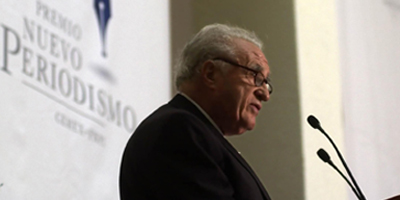
Julio Scherer Garcia, a pivotal figure in Mexican journalism, died at the age of 88. He was known for his fearless investigative reporting and founding Proceso.Summary
MEXICO CITY: One of Mexico's most important and influential journalists of the past half century, Julio Scherer Garcia, died Wednesday at the age of 88, reported Proceso, the newsmagazine he founded.
Scherer helped expose many of Mexico's greatest scandals for decades, probing a secret army unit to combat guerrillas, a multimillion-dollar Swiss bank account of a president's brother and official involvement in the assassination of a journalist.
His tough independence stood out at a time when independent reporting critical of the government was rare in Mexico and he inspired and trained a new generation of the country's journalists.
As editor of Excelsior, then Mexico's leading newspaper, from 1968 to 1976, Scherer took on the omnipotent ruling party over corruption and human rights abuses, and questioned the government's version of an army massacre of students. He so irked President Luis Echeverria that the government maneuvered to push him out of the newspaper in 1976.
Just months later, Proceso published its first issue with the help of journalists who left Excelsior with Scherer. In the decades since, the weekly newsmagazine has become the country's most consistent source of investigative journalism.
Proceso announced on its website that Scherer died early Wednesday from septic shock following two years of illness. He had made his last visit to the magazine's offices in October and penned his last piece in December on the occasion of the death of his friend, fellow journalist Vicente Lenero.
Scherer wrote nearly two-dozen books, often analyzing the terms of Mexico's presidents. In 1971, he won the Maria Moors Cabot award, the oldest international journalism prize. - AP
Key Points
- Scherer died from septic shock at age 88.
- He founded the newsmagazine Proceso and served as editor of Excelsior.
- Scherer exposed critical scandals and government corruption.
- He influenced a generation of Mexican journalists.
- Awarded the Maria Moors Cabot prize for his contributions.
Relevant Topics
Ask AI: Understand this story your way
AI EnabledDig deeper, ask anything — get instant context, background, and clarity.
Disclaimer: This feature is powered by AI and is intended to help readers explore and understand news stories more easily. While we strive for accuracy, AI-generated responses may occasionally be incomplete or reflect limitations in the underlying model. This feature does not represent the editorial views of JournalismPakistan. For our full, verified reporting, please refer to the original article.